

By Global Agricultural & Environmental Correspondent
Published: November 2023 / Updated for Advanced Research Review
Main Facts
As the global food supply chain groans under the compounding pressures of climate change, dwindling arable land, and intensifying water scarcity, scientists are looking toward the indoors for salvation. A pioneering research initiative at Virginia Tech, backed by the National Institute of Food and Agriculture (NIFA) and the United States Department of Agriculture (USDA), is harnessing cutting-edge biotechnology to transform how we grow staple and cultural crops.
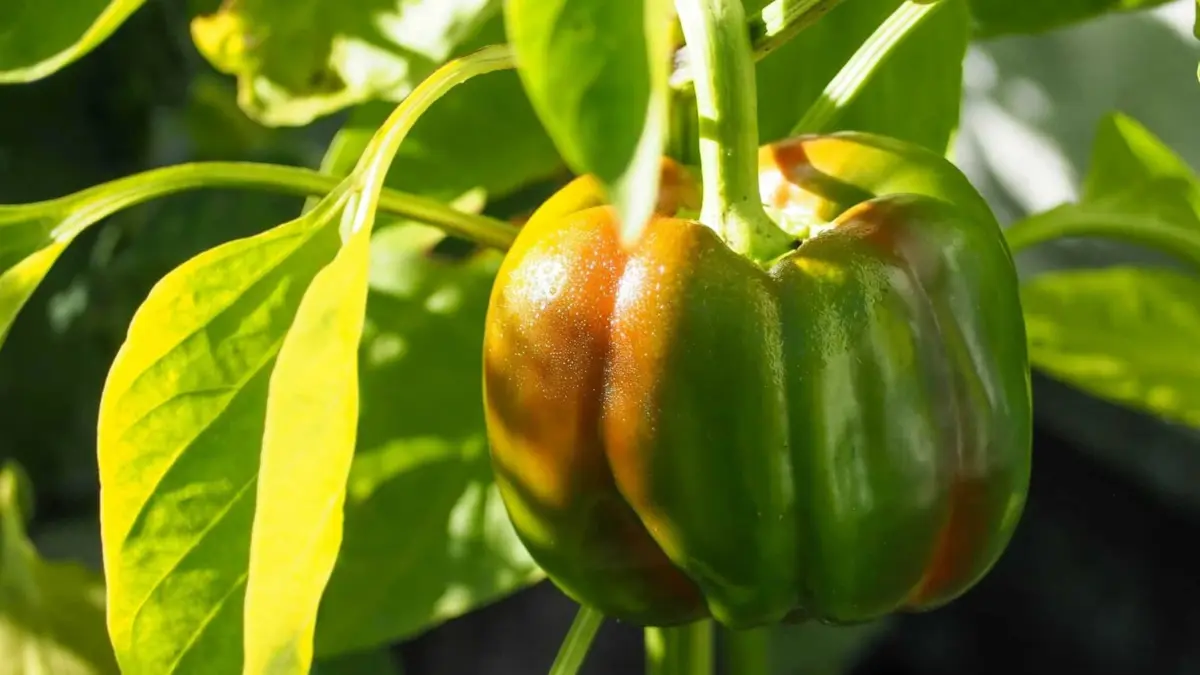
At the center of this movement is the humble pepper—a dietary and cultural cornerstone in regions spanning from California and New Mexico to Virginia. Dr. Bingyu Zhao, a leading professor and researcher at Virginia Tech’s College of Agriculture and Life Sciences, is spearheading a groundbreaking project that utilizes genetic improvement and plant genomics. The goal? To engineer compact, fast-growing pepper varieties tailor-made for controlled-environment agriculture (CEA) and indoor vertical farming.
Traditional agriculture, largely reliant on open-air fields, faces unprecedented vulnerabilities. Prolonged droughts, erratic weather patterns, extreme heatwaves, and aggressive pests routinely decimate yields, threatening local food systems and driving up consumer prices. By re-engineering crops through advanced genomics, researchers are developing resilient plant strains that thrive in indoor, climate-controlled spaces. These plants require significantly less land and water, mature in shortened growth cycles, and offer robust resistance to diseases and bacteria.
Crucially, this technological leap is not designed to eradicate traditional farming, but rather to complement it. By creating high-value, climate-resilient crops that can be produced reliably year-round regardless of outside weather conditions, agricultural scientists are forging a vital safety net for the global food supply chain.
Chronology of the Initiative
The journey toward climate-resilient indoor agriculture has evolved rapidly over the past decade, shifting from speculative bioengineering to federally funded, real-world deployment.
- The Early 2010s – The Rise of Controlled-Environment Agriculture (CEA): As urbanization accelerated and climate anomalies began to impact traditional farming belts, agronomists increasingly turned to greenhouses and indoor warehouses. Early iterations successfully produced leafy greens and herbs, but scaling the technology to fruit-bearing crops like peppers remained an elusive economic and biological challenge.
- Mid-2010s to 2020 – Identifying Bottlenecks: Researchers recognized that traditional field crops were fundamentally unsuited for indoor spaces. They grew too large, required extensive root systems, and had unprofitably long maturation cycles. Geneticists began cataloging plant traits to identify which genes controlled architectural compactness and stress tolerance.
- July 2023 – Virginia Tech Breakthroughs Gain Prominence: Dr. Bingyu Zhao’s research lab at Virginia Tech gained widespread recognition for its innovative approaches to molecular plant pathology and crop genomics. By focusing on how plants react to heat, humidity, and pathogens in confined spaces, Zhao laid the groundwork for targeted plant breeding.
- Current Phase (USDA/NIFA-Backed Expansion): Bolstered by significant grants from the USDA, Dr. Zhao’s team is actively utilizing advanced biotechnology—including genome editing and targeted mutagenesis—to accelerate the development of elite pepper varieties. Field and lab tests are currently evaluating how these modified plants balance structural compactness, rapid growth, exceptional flavor, and disease resistance under warm, humid simulated indoor conditions.
Supporting Data & Technological Frameworks
To understand the magnitude of this agricultural pivot, one must examine the metrics driving traditional versus indoor, biotech-enhanced farming.
The Vulnerability of Open-Air Fields
According to environmental and agricultural data, open-air farming currently accounts for the vast majority of global crop production, yet it consumes roughly 70% of all freshwater withdrawals globally. Furthermore, fertile topsoil is degrading at an alarming rate due to intensive tilling, chemical overuse, and climate-induced erosion.
The Indoor Farming Advantage
Controlled-environment agriculture fundamentally alters this resource equation:
- Water Efficiency: Indoor vertical farms and advanced greenhouses utilize closed-loop irrigation systems, recycling up to 90% to 95% of the water used compared to traditional surface irrigation.
- Land Productivity: Because plants engineered for indoor growth are structurally compact and can be stacked vertically, crop yields per square foot can exceed traditional field farming by a factor of 10 or more.
- The Biotechnology Mechanism: Dr. Zhao’s team relies on a mix of natural genetic variation, induced mutations, and modern genomic tools (such as gene editing). By precisely identifying the specific genetic sequences responsible for flavor profiles, structural dwarfism, and resilience against environmental stress, researchers can remove undesirable traits while locking in optimal characteristics in a fraction of the time required by traditional selective breeding.
Official Responses and Expert Perspectives
The intersection of biotechnology and agricultural resilience has drawn strong support from federal institutions and academic leaders alike, who view these innovations as matters of national food security.
"The pressures facing our modern food supply chains demand innovative, highly adaptable solutions. By optimizing crops for indoor systems through advanced genomics, we are not just saving water and land; we are insulating local communities against the volatility of a changing climate."
— Dr. Bingyu Zhao, Professor and Researcher, Virginia Tech
Federal agencies echo this sentiment. The United States Department of Agriculture (USDA) and the National Institute of Food and Agriculture (NIFA) have consistently prioritized funding for projects that secure domestic food production against climate shocks. In official statements regarding agricultural grants, NIFA representatives have emphasized that biotechnology must be leveraged responsibly to create robust, sustainable farming ecosystems that can withstand extreme weather events without sacrificing nutritional quality or taste.
Agronomists and industry stakeholders also point out that these developments validate the economic viability of regional farming. By enabling local producers in states like Virginia and New Mexico to grow high-value crops locally and year-round, communities can insulate themselves from supply chain disruptions originating thousands of miles away.
Implications for the Future of Global Agriculture
The successful integration of indoor-optimized, biotech-enhanced peppers carries profound implications that stretch far beyond the borders of the United States.
1. Transforming Regional Economies
For agricultural communities traditionally reliant on seasonal weather patterns, climate volatility represents an existential economic threat. When a severe drought or unseasonal frost wipes out a harvest, local farmers absorb devastating financial losses, which in turn spikes prices for consumers. By shifting production—or diversifying a portion of it—into controlled indoor environments utilizing resilient plant varieties, farmers can guarantee a baseline yield. This stabilizes income streams and secures local jobs.
2. Redefining Sustainability
While critics have historically eyed agricultural biotechnology with caution, the existential pressures of climate change are shifting public and regulatory perceptions. Sustainable agriculture in the 21st century is increasingly defined by resource efficiency. Genetically adapting plants to require less land, tolerate high-density indoor cultivation, and thrive with minimal water inputs represents a cornerstone of environmental conservation. It reduces the agricultural footprint on fragile natural ecosystems and halts the relentless conversion of wild forests and grasslands into farmland.
3. A Blueprint for Other Staple Crops
The methodologies currently being perfected on peppers at Virginia Tech serve as a proof-of-concept for other valuable agricultural commodities. Once the genetic markers for indoor adaptability, stress tolerance, and rapid growth are fully mapped and optimized, these techniques can be translated to tomatoes, leafy greens, root vegetables, and eventually grain crops.
4. The Path Forward: Science Meets Tradition
Ultimately, the transition toward biotech-driven indoor agriculture does not spell the end of traditional farming. Soil-based, open-air agriculture will remain a vital pillar of global food production. However, as extreme weather events become the global norm rather than the exception, integrated systems—combining traditional knowledge, sustainable land stewardship, and state-of-the-art indoor biotechnology—will form the ultimate shield for humanity’s food supply.
Through the dedicated research of institutions like Virginia Tech and the forward-thinking investments of federal agricultural bodies, the future of farming is moving indoors, ensuring that the crops we love—and the communities that grow them—will endure for generations to come.



Leave a Reply