

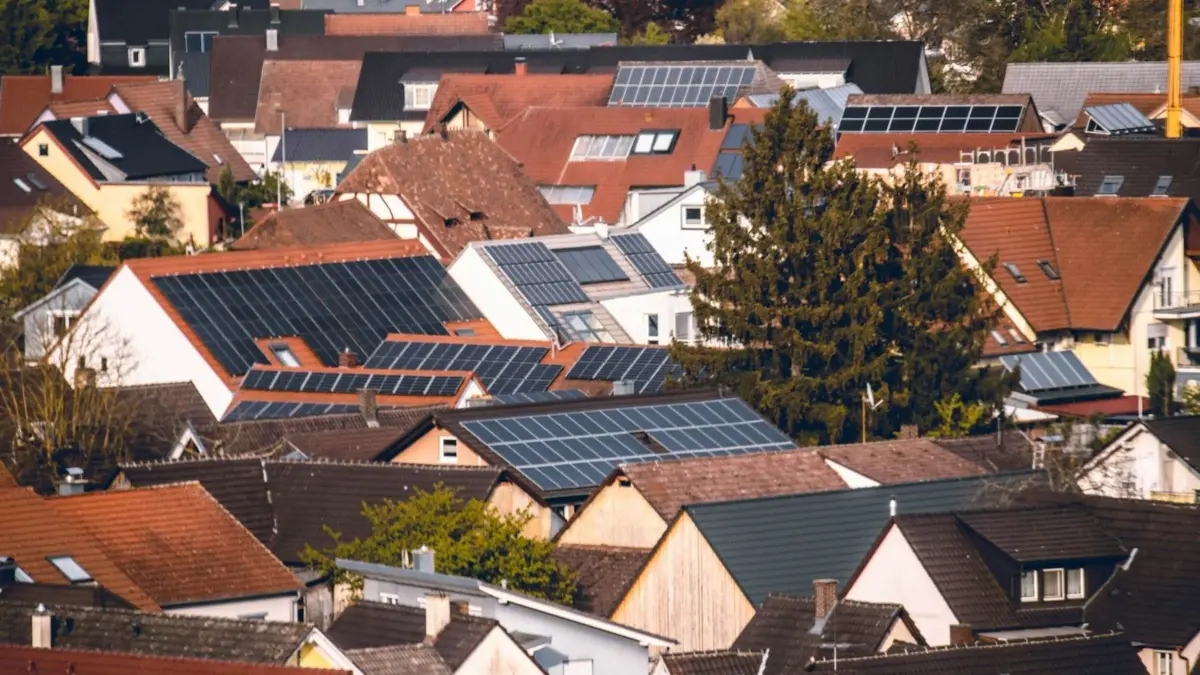
ALBANY, N.Y. — In a sweeping policy rollout designed to fundamentally reshape the state’s energy landscape, the New York State Energy Research and Development Authority (NYSERDA) has launched an ambitious statewide initiative aimed at democratizing access to solar power. By bypassing the traditional requirement of installing bulky, expensive photovoltaic panels directly onto private rooftops, the new program opens the door for urban apartment renters, suburban homeowners, rural residents, and commercial enterprises alike to seamlessly integrate renewable energy into their daily lives.
At the heart of this strategy is "community solar"—a decentralized energy model that allows individuals and businesses to subscribe to local, large-scale solar generation farms. In exchange for their subscription, participants receive direct credits on their monthly utility bills, marrying financial relief with tangible climate action.
Main Facts: How New York’s Community Solar Revolution Works
The foundational architecture of New York’s updated public policy centers on utility-scale community solar projects. Rather than placing the burden of generation on individual properties, these initiatives utilize large parcels of land—often spanning dozens of acres—dedicated entirely to capturing solar radiation through expansive photovoltaic arrays.
This centralized infrastructure generates renewable electricity at an industrial scale, feeding massive amounts of clean energy directly into the state’s commercial power grids, which distribute electricity across hundreds of miles.
By aggregating the power demand of an entire community, project developers can drastically slash the traditionally high costs associated with land acquisition, heavy infrastructure, hardware installation, and long-term maintenance. Forward-thinking developers then pass these financial savings directly down to residential and commercial subscribers in the form of reduced monthly electricity expenditures.
Breaking Architectural and Financial Barriers
For decades, the clean energy movement faced a rigid physical limitation: rooftop solar was practically exclusive to homeowners with structurally sound roofs, unshaded exposures, and significant upfront capital. Renters, residents of multi-family apartment complexes, and owners of shaded properties were effectively locked out of the solar market.
Community solar obliterates these architectural hurdles. When individuals formally join a local solar project, they secure a proportional stake in the clean energy produced on their behalf. This proportional share translates directly into credits on their monthly electricity bills, effectively neutralizing their daily carbon footprint without requiring a single nail in a shingle.
Chronology: The Path to Statewide Energy Democracy
The realization of New York’s community solar framework did not happen overnight. It represents the culmination of years of legislative planning, regulatory adjustments, and strategic technological deployments.
- Phase I: Laying the Regulatory Groundwork (Late 2010s): Recognizing that rooftop solar adoption rates would plateau due to physical and economic constraints, NYSERDA and the New York Public Service Commission (PSC) began exploring shared renewables. Initial policy frameworks were drafted to establish virtual net metering and allow multiple utility customers to draw credits from a single off-site renewable energy generator.
- Phase II: Scaling Up Infrastructure (2020–2022): State investments catalyzed private-sector development. Large-scale solar developers began securing underutilized acreage across upstate and western New York, designing expansive solar farms capable of interconnecting with major utility providers like ConEdison, National Grid, and NYSEG.
- Phase III: Introduction of Consumer Navigation Tools (2023): As the number of operational solar farms multiplied, the state recognized a growing need for consumer protection and market transparency. NYSERDA rolled out specialized digital directories and educational portals to help citizens evaluate subscription terms without falling prey to predatory contracting practices.
- Phase IV: Equity and Inclusion Initiatives (Present): With the market mature enough to handle mass participation, the state launched targeted inclusion efforts—most notably the "Solar for All" program—ensuring that low-income households are not left behind in the green transition.
Supporting Data: Economic Impact and Energy Metrics
To understand the magnitude of NYSERDA’s initiative, one must look at the quantitative data driving New York’s ambitious climate goals, primarily established under the Climate Leadership and Community Protection Act (CLCPA).
- Carbon Offset: According to state environmental assessments, transitioning even a fraction of a regional utility’s customer base to community solar offsets tens of thousands of metric tons of carbon dioxide annually—equivalent to taking thousands of gasoline-powered vehicles off the road.
- Bill Reductions: Typical subscribers to New York community solar projects report immediate savings of up to 10% on their electricity supply charges, depending on the specific developer, utility territory, and local solar generation capacity.
- Land Efficiency: Modern utility-scale solar farms utilize advanced dual-use configurations, frequently combining photovoltaic generation with agricultural practices such as "agrivoltaics" (grazing livestock or growing shade-tolerant crops beneath the panels), maximizing land-use efficiency.
- Low-Income Participation: Under the "Solar for All" umbrella, thousands of qualifying households have achieved fully subsidized subscriptions, completely eliminating their electricity expenditure burdens for the duration of the program agreements.
Official Responses and Institutional Oversight
The transition toward a decentralized energy network requires rigorous oversight to protect consumers and maintain grid stability. State officials and industry stakeholders have praised the initiative as a model for the rest of the nation.
Digital Navigation and Consumer Protection
To navigate this decentralized landscape, NYSERDA has engineered a comprehensive digital directory. This institutional tool allows users to locate operational community solar farms within their specific zip codes. Through the portal, consumers can compare various generation plants, analyze subscription terms, and estimate precise financial savings before entering into any legal agreements.
Furthermore, NYSERDA has published extensive technical guides and pedagogical materials. These resources enable everyday consumers to decipher complex utility billing structures, compare fluctuating market offers, and choose the optimal subscription model for their household budgets. Transparency has become the cornerstone of the state’s consumer protection strategy, ensuring that the marketplace remains fair, competitive, and clear.
Bridging the Equity Gap: "Solar for All"
A central tenet of New York’s clean energy strategy is ensuring that the green transition does not exacerbate economic inequality. To achieve this, the state engineered the "Solar for All" program.
Designed specifically for low-income families and historically underserved communities, this financial assistance initiative provides fully subsidized subscriptions to local community solar projects for households meeting predetermined income thresholds. By absorbing the subscription costs through state-managed clean energy funds, New York ensures that vulnerable populations share equally in the economic and environmental dividends of the renewable energy revolution.
Implications: The Future of New York’s Energy Grid
The widespread deployment of community solar in New York carries profound implications for the state’s economy, environmental footprint, and grid resilience.
Decentralization and Grid Security
Traditionally, power generation was concentrated in massive, centralized fossil-fuel plants that required extensive transmission lines prone to bottlenecking and weather-related disruptions. By scattering localized solar generation facilities across diverse rural and metropolitan districts, New York is building a more resilient, decentralized grid. If one local solar farm experiences maintenance issues or localized weather anomalies, the broader network remains stable, supported by diverse generation inputs.
Economic Stimulus and Green Jobs
The boom in community solar construction has catalyzed a surge in local employment. From civil engineers and heavy machinery operators to data analysts, digital marketers, and customer service representatives, the green economy is creating thousands of stable, well-paying jobs across the state. This workforce expansion supports local tax bases, particularly in rural upstate communities where solar developers lease land from local agricultural families, providing farmers with a reliable, diversified income stream.
A Blueprint for National Climate Policy
As federal and state governments across the United States grapple with the urgency of decarbonization while managing cost-of-living crises for everyday citizens, New York’s model offers a compelling roadmap. By successfully divorcing renewable energy consumption from rooftop ownership and prioritizing low-income equity, the state has proven that aggressive climate action and social justice can—and must—go hand in hand.
As NYSERDA continues to expand its digital directories and onboard new solar farms, New York stands poised at the vanguard of the 21st-century energy transition, proving that the sun truly belongs to everyone.


Leave a Reply