

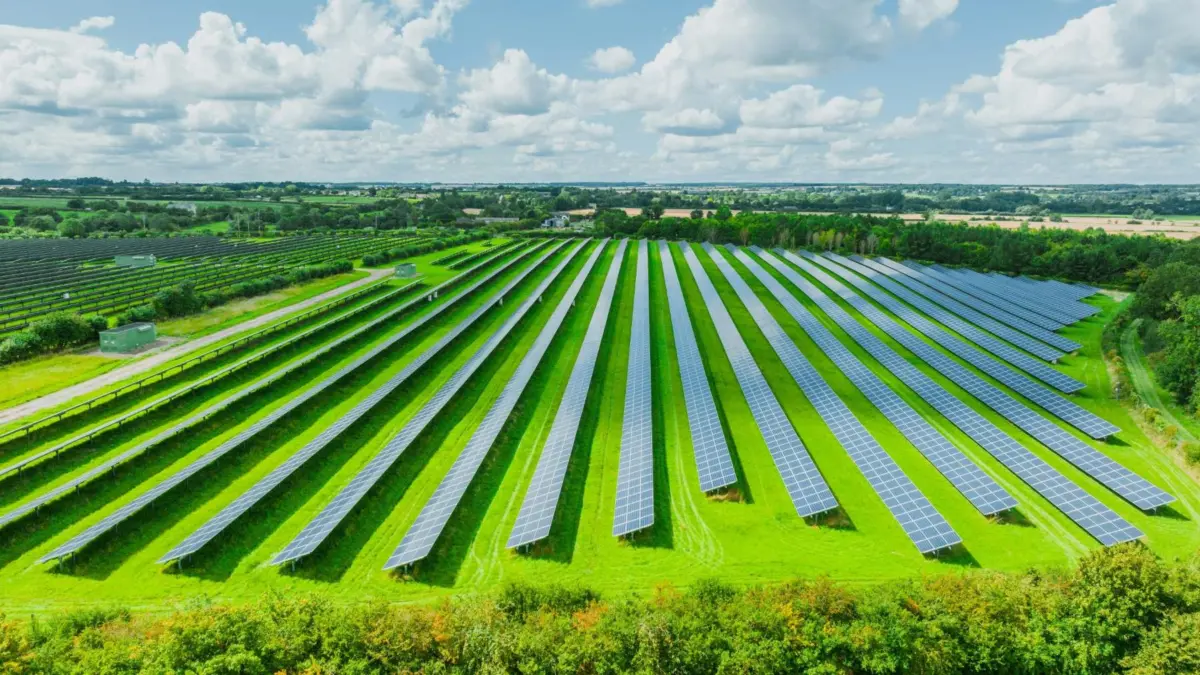
CHICAGO, ILLINOIS — In a landmark development for the American renewable energy landscape, the Solar Energy Industries Association (SEIA) has officially commended the commencement of commercial operations at McLean1, a state-of-the-art community solar project developed by clean energy leader PureSky Energy.
Beyond expanding the state’s solar capacity and reinforcing the nation’s ongoing transition away from fossil fuels, the McLean project introduces a vital socio-economic component. Designed from its inception to target energy equity, the installation directly addresses skyrocketing utility costs for vulnerable, low-income households. The rollout marks PureSky Energy’s official footprint in Illinois, signaling a broader nationwide push toward decentralized, community-focused renewable infrastructure.
Main Facts: The McLean1 Project and Its Impact
The McLean1 solar farm is a localized engineering feat with regional significance. Situated in McLean County, Illinois, the installation spans several acres and incorporates cutting-edge photovoltaic infrastructure.
- Capacity and Generation: The facility is equipped with more than 3,000 high-efficiency solar modules, boasting a total capacity of 1.98 MW. This output is capable of supplying clean electricity to approximately 439 residential homes annually.
- Environmental Impact: By replacing fossil fuel-generated electricity with pure solar power, McLean1 prevents the emission of roughly 4.6 million pounds of carbon dioxide ($CO_2$) into the atmosphere every year.
- The Social Mission: Crucially, McLean1 is not a standard commercial utility farm. Developed under the umbrella of the Illinois Solar for All program, the project is dedicated exclusively to supplying discounted clean energy to low-income households. Subscribers to the project will see an immediate, tangible reduction in their monthly electricity bills.
- Company Footprint: PureSky Energy, a recognized market leader in community solar development, currently manages a robust portfolio of approximately 300 MW of solar capacity distributed across 63 distinct geographic points.
Chronology: From Strategy to Switch-On
The realization of the McLean1 project is the result of years of strategic expansion, legislative groundwork, and targeted regional investments.
Phase 1: The National Pivot to Photovoltaics (2020–2023)
Over the past half-decade, the United States energy sector has undergone a profound structural reconfiguration. Faced with unprecedented spikes in domestic energy consumption, grid strain, and the unpredictable volatility of fossil fuel markets driven by geopolitical tensions, energy developers shifted heavy capital toward renewable alternatives. Wind and solar emerged as frontrunners, with solar claiming dominance due to its rapid scalability, low operation and installation costs, minimal degradation rates, and guaranteed long-term utility lifespans.
Phase 2: Illinois Rises in the Rankings (2023–2025)
As federal incentives under the Inflation Reduction Act took hold, individual states vied to capture clean energy capital. Illinois positioned itself as a progressive leader in the Midwest. According to data registered by the Illinois Solar Energy Industries Association (ISEIA) in 2025, the state achieved a total installed solar capacity of 6,187 MW. This performance secured Illinois the tenth position nationwide among states leading the transition to solar energy, creating a fertile regulatory and ecological ecosystem for national developers.
Phase 3: PureSky Enters Illinois (2024–Early 2026)
Sensing the state’s robust renewable framework, PureSky Energy targeted Illinois for its next phase of expansion. Choosing McLean County as its operational springboard, the firm broke ground on its first local project. Designed to bridge the gap between corporate renewable commitments and grassroots community needs, construction moved rapidly through late 2024 and 2025.
Phase 4: Commercial Operation and The Illinois Solar for All Integration (Present)
In early 2026, McLean1 officially synchronized with the local grid. By coordinating with state agencies and local non-profits under the Illinois Solar for All initiative, PureSky successfully onboarded its first wave of low-income subscribers, turning an engineering project into an active tool for economic relief.
Supporting Data: The Macroeconomic and Regional Landscape
To understand the significance of McLean1, industry analysts look to broader metrics provided by the SEIA and energy research groups.
National Solar Metrics
- Total U.S. Capacity: The United States currently commands a cumulative solar capacity of 299.4 GW, a volume sufficient to power approximately 50 million American households.
- Industry Ecosystem: This massive output is sustained by a workforce spread across more than 10,000 manufacturing, development, and installation companies. Together, they have deployed over 6 million individual solar systems nationwide.
- Growth Projections: Looking ahead to the 2026–2031 window, the SEIA projects a steady 1.2% compound annual increase in newly incorporated clean energy generation, led primarily by utility-scale and community solar deployments.
The Illinois Energy Crunch
The urgency of projects like McLean1 is underscored by grim economic realities facing everyday consumers in Illinois. Independent ecological and consumer action centers report that residential electricity rates in the state have surged by an alarming 135% over the past five years.
For working-class families and low-income citizens, these compounding tariff hikes have turned basic utility access into a monthly financial crisis, making alternative community solar models not just a climate preference, but an economic lifeline.
Official Responses and Stakeholder Perspectives
The launch of McLean1 has drawn praise from trade organizations, environmental advocates, and corporate executives alike, who point to the project as a blueprint for socially conscious energy infrastructure.
Industry Leadership
Highlighting the dual triumph of capacity growth and social equity, representatives from the SEIA formally praised PureSky Energy’s operational milestone during the state’s industrial briefing. The project exemplifies how private enterprise can align with public welfare goals.
Nicholas Topping, a key executive at PureSky Energy, emphasized the unique design philosophy behind the firm’s entry into the Midwest:
“The launch of McLean is dedicated exclusively to households with bajos ingresos (low-income). We designed this framework from the ground up to ensure that the transition to clean energy leaves no demographic behind.”
Ecological and Social Advocacy
The EcoAction Center (Centro de Acción Ecológica) issued a strong endorsement of the McLean1 initiative, contextualizing it within the broader fight against energy poverty. Representatives from the center noted that new infrastructure is no longer optional:
“Se necesita urgentemente infraestructura nueva de energía limpia para evitar aumentos de precios, escasez de capacidad y el incremento de emisiones contaminantes.”
*(“New clean energy infrastructure is urgently needed to avoid price increases, capacity shortages, and rising polluting emissions.”)***
Advocates underscored that the project successfully bridges the gap between environmental stewardship and human rights. By securing affordable power for vulnerable populations, McLean1 demonstrates how solar development can actively promote energy equity and strengthen local communities against economic shocks.
Implications: A Blueprint for National Expansion
The successful launch of McLean1 carries profound implications for PureSky Energy’s broader corporate trajectory and the future of community solar in the United States.
1. Scaling the Public-Private Partnership Model
PureSky Energy has long operated under a collaborative framework that bridges private capital with public policy. Alongside its new presence in Illinois, the firm maintains active, high-yield solar parks across New York, Maryland, Massachusetts, Minnesota, and Pennsylvania.
The company recently cemented its aggressive regional growth strategy by launching Heath Brook and Sand Brook—two massive community solar projects located in Corinth, New York. Together, these New York installations generate 18.8 million kWh, enough to power 2,725 homes annually. The successful deployment of McLean1 proves that PureSky can seamlessly replicate this community-centric development model in the Midwest.
2. Mitigating Grid Vulnerability and Price Volatility
As climate change drives record-breaking cooling demands in the summer and heating demands in the winter, the U.S. power grid faces unprecedented stress. Decentralized community solar arrays like McLean1 inject clean power directly into local distribution networks, reducing transmission losses, preventing regional blackouts, and insulating consumers from the volatile pricing of fossil fuel commodities.
3. Redefining the Green Transition
Historically, early-stage renewable energy investments disproportionately benefited middle- and upper-income homeowners capable of installing private rooftop solar arrays. Projects operating under frameworks like Illinois Solar for All fundamentally flip this paradigm. By democratizing access to utility-scale savings, McLean1 establishes a precedent for future clean energy legislation nationwide—proving that the green transition can, and must, serve as a vehicle for economic justice.


Leave a Reply