

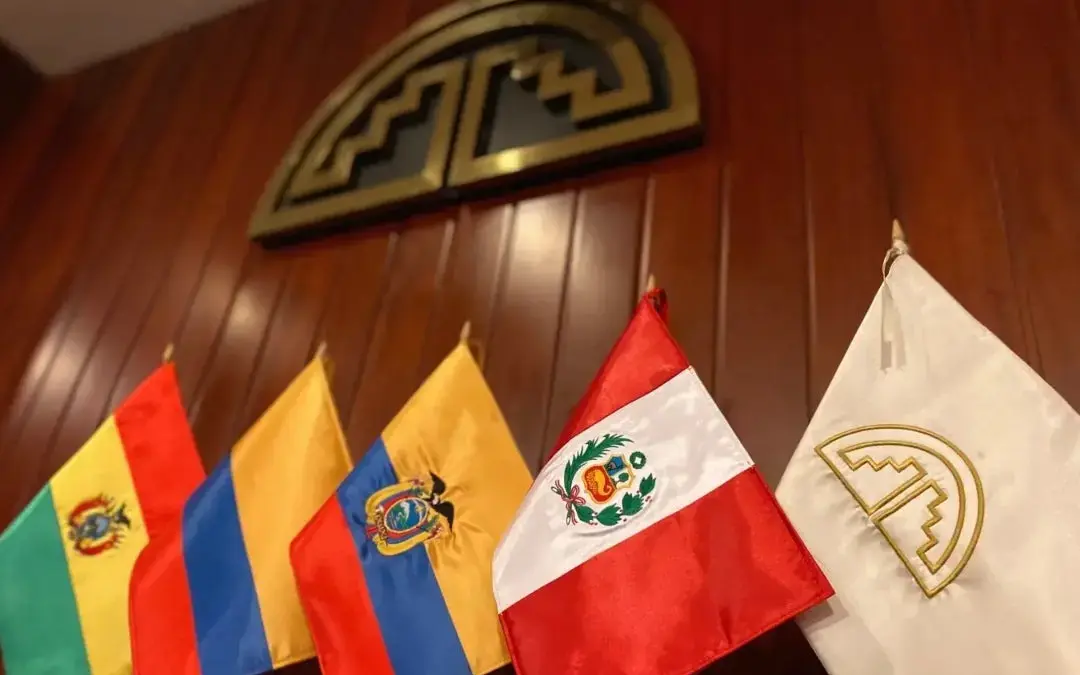
QUITO, ECUADOR — In a diplomatic ceremony held at the historic headquarters of the Ecuadorian Ministry of Foreign Affairs, Peru officially assumed the rotating presidency pro tempore of the Andean Community (CAN) for the 2026–2027 period. Receiving the ceremonial gavel from Ecuador, the incoming administration faces a pivotal moment in South American geopolitics. With mounting transnational security challenges, economic pressures, and infrastructural bottlenecks, the new leadership has pledged to pivot the 50-year-old trade bloc away from bureaucratic stagnation toward pragmatic, citizen-centric outcomes.
At the center of this new mandate is Peru’s Minister of Foreign Affairs, Carlos Está, who outlined an ambitious roadmap designed to fortify regional security, streamline commercial logistics, and pioneer visionary connectivity projects such as the "Andean Single Skies" initiative.
1. Main Facts: Core Takeaways of the Leadership Transition
The transition of the CAN presidency marks a critical juncture for the four member states—Bolivia, Colombia, Ecuador, and Peru. The core developments emerging from the Quito summit underscore a shifting paradigm within Andean integration:
- The Presidency: Peru holds the pro tempore presidency for the 2026–2027 term, succeeding Ecuador. Peruvian Foreign Minister Carlos Está leads the organism, steering its strategic and operational priorities.
- Core Security Focus: Faced with escalating regional violence, the CAN has elevated security cooperation to its highest tier. Priorities include dismantling transnational crime syndicates, combating illicit drug trafficking, and cracking down on devastating environmental crimes like illegal gold mining.
- Infrastructure and Economic Integration: The bloc has formally committed to advancing the "Andean Single Skies" initiative to lower air travel costs and improve connectivity. Additionally, plans for a unified cabotaje (coastal shipping) zone aim to streamline maritime and multimodal trade across member nations.
- Institutional Leadership: CAN Secretary General Gonzalo Gutiérrez continues to anchor the administrative framework of the bloc, detailing the technical roadmap required to harmonize disparate national regulations into cohesive community policies.
2. Chronology of the Quito Summit and the Handover Ceremony
The events leading up to the official handover reflect months of preparatory diplomatic negotiations, technical ministerial meetings, and high-level consensus-building among the Andean nations.
Phase 1: Preparatory Technical Sessions (Months Prior to the Handover)
Weeks before the presidential transition, technical committees composed of trade, security, and transportation ministers from Bolivia, Colombia, Ecuador, and Peru convened virtually and in-person to draft the 2026–2027 strategic agenda. Recognizing that previous iterations of the CAN had occasionally struggled with implementation delays, these preparatory sessions focused intensely on establishing measurable key performance indicators (KPIs) for each member state. Special emphasis was placed on aligning aviation regulatory frameworks to lay the groundwork for the "Andean Single Skies" project.
Phase 2: Arrival of High-Level Delegations in Quito
Delegations representing the four member states arrived at the Mariscal Sucre International Airport in Quito, setting a collaborative tone for the summit. Bilateral meetings between the outgoing Ecuadorian diplomatic corps and incoming Peruvian officials ensured a seamless transition of institutional memory, budgetary planning, and ongoing legislative dossiers.
Phase 3: The Handover Ceremony at the Ecuadorian Ministry of Foreign Affairs
The formal transition took place inside the ceremonial halls of the Ecuadorian Cancillería. Outgoing representatives summarized the achievements of the previous term—notably weathering regional economic fluctuations and bolstering post-pandemic trade recovery—before formally passing the mantle to Peru.
Phase 4: Inaugural Address by Foreign Minister Carlos Está
Taking the podium, Peruvian Foreign Minister Carlos Está delivered the defining speech of the summit. He emphasized that the CAN cannot remain an abstract diplomatic exercise, but must instead deliver tangible benefits to the daily lives of Andean citizens. Está laid out the four pillars of Peru’s upcoming tenure: transnational security, border integration, environmental sustainability, and cutting-edge logistical connectivity.
3. Supporting Data and Structural Priorities for 2026–2027
To understand the weight of Peru’s new mandate, it is necessary to examine the socio-economic and security metrics driving the CAN’s current agenda. The Andean Community represents a market of over 115 million consumers, boasting deep historical, cultural, and commercial ties. However, its geographic diversity—spanning the Pacific coast, the high Andes, and the Amazon basin—also creates unique vulnerabilities.
Transnational Security and Illicit Economies
The primary driver behind the CAN’s renewed security focus is the rapid expansion of transnational criminal networks. According to regional law enforcement data, drug trafficking corridors originating in the Andean region have grown increasingly complex, branching into maritime smuggling routes and leveraging porous borders.
Furthermore, illegal alluvial mining has devastated vast swaths of the Amazon basin, poisoning river systems with mercury and fueling human trafficking and money laundering. Under Peru’s leadership, the CAN has committed to enhancing real-time intelligence sharing, coordinating cross-border military and police operations, and harmonizing legal penalties for environmental crimes across all four nations.
The "Andean Single Skies" Initiative
One of the most innovative breakthroughs announced at the summit is the structural advancement toward an "Andean Single Skies" policy. Currently, intra-regional air travel in South America remains prohibitively expensive due to heavy taxation, restrictive bilateral air service agreements, and protective national flag-carrier policies.
CAN Secretary General Gonzalo Gutiérrez detailed the logistical requirements needed to bring the Single Skies initiative to fruition:
- Regulatory Harmonization: Aligning civil aviation safety standards, licensing procedures, and passenger rights across Bolivia, Colombia, Ecuador, and Peru.
- Passenger Recognition Systems: Implementing biometric and digital data-sharing frameworks to streamline immigration checks and enhance border security at high-traffic airports.
- Infrastructure Security: Upgrading safety and screening protocols at secondary and regional entry points to prevent illicit trafficking through commercial aviation corridors.
By breaking down these regulatory barriers, the bloc anticipates a substantial reduction in ticket prices, a surge in intra-regional tourism, and heightened business mobility.
Maritime Cabotaje and Multimodal Logistics
Complementing the aviation strategy, the CAN has prioritized the establishment of a unified cabotaje zone. This policy aims to facilitate seamless maritime and multimodal freight transport along the Pacific coast and through connecting riverine networks. By removing archaic protectionist barriers that limit coastal shipping to domestically flagged vessels, Andean exporters will be able to move goods more efficiently to international markets, particularly across the Pacific Rim.
4. Official Responses and Diplomatic Perspectives
The transition of the presidency elicited strong statements from key regional stakeholders, reflecting both optimism and a clear-eyed realism regarding the challenges ahead.
Peru’s Vision: Action Over Rhetoric
In his official statements following the ceremony, Foreign Minister Carlos Está reiterated that Peru intends to use its diplomatic capital to bridge ideological divides among member states.
"Our citizens do not care about bureaucratic declarations; they care about personal security, affordable travel, and economic opportunity," Está stated. "Peru assumes this presidency with the profound conviction that our integration must translate into concrete shields against criminality and concrete bridges for our commerce."
The Secretariat’s Perspective: Technical Implementation
CAN Secretary General Gonzalo Gutiérrez underscored the technical rigor required to achieve the bloc’s goals over the next two years. Speaking to the press, Gutiérrez highlighted that while the political will is stronger than it has been in years, the true test will lie in the legislative transposition of regional agreements into national laws.
"The roadmap for the Andean Single Skies and our border integration frameworks is clear," Gutiérrez noted. "The Secretariat will work hand-in-hand with the Peruvian presidency to ensure that technical committees meet their milestones, overcome regulatory hurdles, and deliver a modernized Andean Community by 2027."
Outgoing Ecuadorian Assessment
Reflecting on their tenure, Ecuadorian representatives expressed pride in maintaining institutional stability during a period of severe domestic security challenges. Passing the baton to Peru, Ecuador’s diplomatic corps emphasized that regional cohesion is the only viable counterweight to global supply chain disruptions and transnational organized crime.
5. Implications for the Future of the Andean Region
The 2026–2027 CAN presidency under Peru carries profound implications for the geopolitical architecture of South America.
Geopolitical Cohesion in a Fragmented Hemisphere
At a time when multilateral institutions across Latin America have occasionally struggled with ideological polarization, the CAN has historically maintained a pragmatic focus on trade, regulatory harmonization, and economic integration. By anchoring its current agenda in universal concerns—namely public security and economic competitiveness—Peru’s leadership insulated the bloc from partisan friction, ensuring that member states remain unified around mutual survival and prosperity.
Economic Competitiveness and the Free Trade Zone
The deepening of the Andean Free Trade Zone, coupled with the reduction of logistical friction via the Single Skies and cabotaje initiatives, positions the bloc to better integrate into global value chains. As nearshoring trends accelerate globally, a frictionless Andean market offers multinational investors a more predictable, harmonized regulatory environment.
Environmental Stewardship and Human Security
By formally weaving environmental sustainability and disaster risk management into its core mandate, the CAN is acknowledging that the future of the region is inextricably linked to the preservation of its natural ecosystems. Combating illegal mining and deforestation is no longer viewed merely as an environmental crusade, but as an urgent matter of national and regional security.
Conclusion
As Peru takes the helm of the Comunidad Andina for 2026–2027, the regional bloc stands at a critical crossroads. Backed by a pragmatic leadership team under Foreign Minister Carlos Está and supported by the technical expertise of Secretary General Gonzalo Gutiérrez, the CAN has laid out an ambitious, highly actionable agenda.
By tackling transnational crime, pioneering the Andean Single Skies, and modernizing multimodal trade logistics, Peru’s tenure promises to redefine what regional integration can achieve in the 21st century. If successfully implemented, these initiatives will not only secure the borders and economies of the Andean nations but also forge a deeply connected, resilient community capable of delivering tangible benefits to its 115 million citizens.


Leave a Reply