

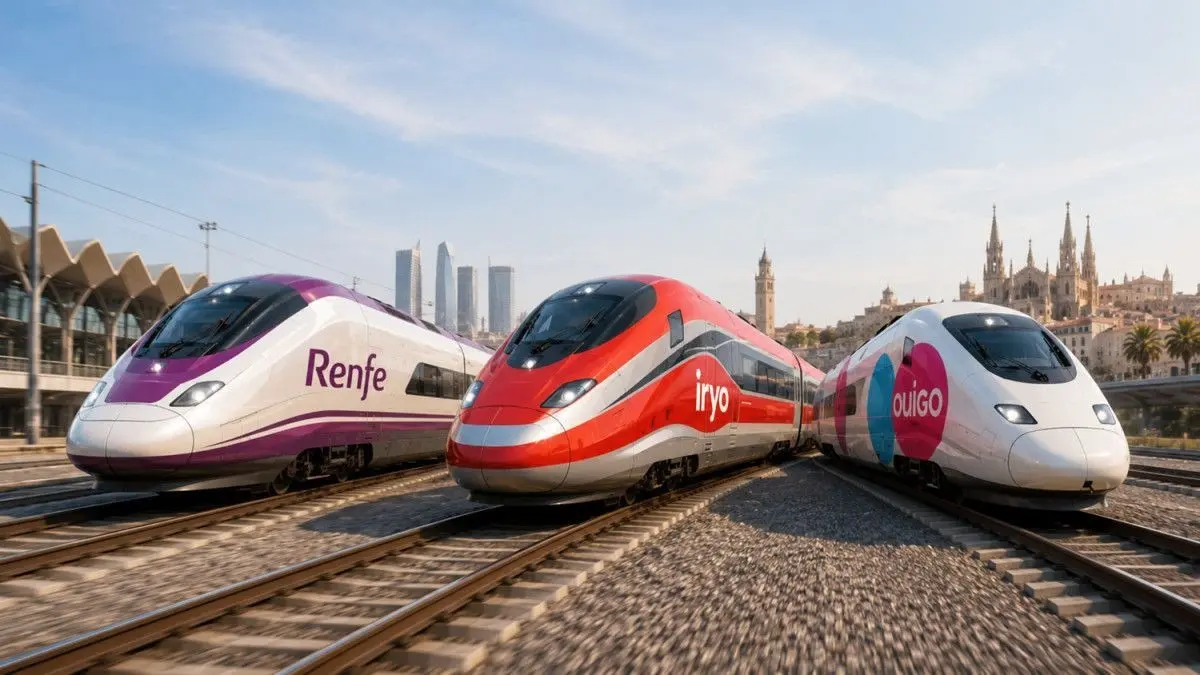
MADRID — The landscape of Spain’s liberalized high-speed rail network is facing its most critical financial juncture since private operators entered the market to challenge state-owned Renfe. In the wake of a catastrophic operational and demand shock—anchored by the tragic January high-speed train derailment in Adamuz, Córdoba, which claimed 46 lives—private operators Ouigo and iryo have formally demanded a drastic overhaul of the track access charges levied by infrastructure manager Adif.
Armed with a scathing, comprehensive economic study commissioned from global consultancy KPMG, the rival operators argue that the current financial framework is unsustainable. They warn that without substantial state intervention and a fundamental recalibration of Adif’s proposed 2026–2028 regulatory schedule, the financial viability of private high-speed rail in Spain risks collapse, directly impacting consumer pricing and market competition.
1. Main Facts: The Core Dispute and KPMG’s Findings
At the heart of the controversy are the cánones (track access charges or user fees) paid by railway undertakings to Adif for the right to operate trains on Spain’s extensive high-speed railway (AVE and cross-country) networks. These fees represent the single largest operational expenditure for rail operators, accounting for an astonishing 40% to 50% of the final cost of a passenger ticket.
According to the KPMG analysis—which evaluates the surcharges proposed by Adif in its upcoming 2026–2028 regulatory draft—the current fee structure fails to reflect the drastically altered economic and operational reality of the Spanish rail market. Ouigo and iryo assert that exceptional circumstances require an equally exceptional regulatory response.
Key Financial Takeaways:
- Direct Cost Principle: European Union directives stipulate that infrastructure charges do not necessarily need to cover 100% of the manager’s total costs. Member states are legally mandated only to recover the direct cost (the marginal cost directly incurred by train operations). Additional mark-ups to cover fixed infrastructure overheads are only permissible if the market can bear them.
- The Ticket Price Connection: Because track access charges make up nearly half of a ticket’s base price, any reduction in these fees translates directly into consumer savings. KPMG calculates that implementing the fee reductions demanded by the operators would yield passenger ticket price drops of up to 15.6%, injecting fresh momentum into a stalling market.
- Call for Public Funding: To bridge the financial gap without crushing operators or pushing Adif into insolvency, Ouigo and iryo are urging the Spanish government to increase direct public subsidization of the rail infrastructure manager. This injection of state funds, they argue, would incentivize cost-efficiency within Adif and prevent structural deficits from being unfairly offloaded onto ticket-paying passengers.
2. Chronology of a Crisis: From the Adamuz Tragedy to the First-Halt Slump
To understand the sudden erosion of demand across Spain’s flagship rail corridors, industry analysts point to a cascading sequence of safety incidents, infrastructure bottlenecks, and regulatory adjustments that began at the start of the year.
- January: A catastrophic high-speed train derailment occurs in Adamuz (Córdoba), resulting in the tragic deaths of 46 people. The disaster sends an immediate shockwave through the national consciousness, severely shaking passenger confidence in rail safety, particularly across southern corridors.
- Spring: As traffic resumes under heightened scrutiny, preliminary passenger data begins to expose the severe toll of the disaster. Concurrently, extensive infrastructure maintenance and temporary speed restrictions (Limitaciones Temporales de Velocidad, or LTVs) are imposed across several vital tracks, expanding journey times and frustrating travelers.
- April: The National Markets and Competition Commission (CNMC) releases an interim report warning of a looming market slowdown, projecting a loss of over half a million passengers on the Madrid–Barcelona line alone.
- Mid-Year (Q2): Closed data for the first semester of the year confirms that initial forecasts significantly underestimated the depth of the crisis. Demand collapses by 44% on the Madrid–Málaga line (the corridor directly impacted by the Adamuz accident). Meanwhile, lines connecting Madrid to Seville and Barcelona suffer double-digit declines due to extended travel times and safety-related speed caps.
- Late Year: Armed with the KPMG study, Ouigo and iryo formally petition Adif to scrap its 2026–2028 fee proposals, demanding immediate, retroactive adjustments. The dossier is forwarded to the Council of State (Consejo de Estado) for legal review prior to final deliberation by Adif’s Board of Directors.
3. Supporting Data: Corridor-by-Corridor Breakdown
The collapse in rail demand is not uniform; rather, it manifests with varying severity depending on the geographic corridor, local transport alternatives, and infrastructure constraints. The KPMG study details specific performance metrics across Spain’s four primary high-speed arteries:
A. The Madrid–Málaga / Seville Axis (Southern Corridors)
- The Impact: The Madrid–Málaga line—the site and administrative focal point of the January tragedy—experienced a staggering 44% drop in demand during the first semester. Seville and other Andalusian branches saw declines exceeding 15%, driven heavily by mandatory temporary speed restrictions (LTVs) that eroded the time-saving competitive edge of high-speed rail.
- The Fees: Adif initially proposed a fee of €5.47 per train-kilometer. While the CNMC recommended a modest reduction to €4.61, KPMG and the operators argue this is entirely disconnected from market realities. Ouigo and iryo demand that the fee be slashed to €2.71 per train-kilometer, alongside a retroactive restructuring of the entire corridor’s fees for the 2025 fiscal year.
B. The Madrid–Barcelona Axis (The Northern Corridor)
- The Impact: Once the crown jewel of liberalized rail competition—where three operators (Renfe, Ouigo, iryo) fought fiercely for market share—this corridor is experiencing a persistent bleeding of passengers. LTVs and maintenance works have bloated journey times by an average of 25 minutes, destroying the reliability proposition that business travelers depend upon.
- The Data: While the CNMC’s spring forecasts estimated a loss of 509,000 travelers, actual closed data for the first semester reveals a net loss of one million passengers.
- The Fees: KPMG calculates the economic penalty of these delays at €2.72 per train-kilometer, far outstripping the token €0.42 reduction floated by the CNMC.
C. The Levante Corridor (Valencia and Alicante)
- The Impact: Unlike the southern and northern tracks, the Levante lines to Valencia and Alicante have largely avoided major structural infrastructure cuts or direct safety-related speed limitations. However, demand has still dropped by roughly 5%, primarily because the overarching economic climate and high pricing structures have stalled market expansion. Furthermore, operators face intense competition from aggressive pricing on regional highways and coach networks.
- The Fees: Operators argue that the market simply cannot bear the current surcharges.
- For Valencia, they demand that Adif’s proposed surcharge be slashed from €3.09 down to €0.19.
- For Alicante, they argue the surcharge should be reduced to €0 (completely eliminated), contrasted against the €2.98 levy championed by Adif and the CNMC. Operators calculate that this specific adjustment alone would fuel a 15.6% drop in retail ticket prices, reviving stagnant passenger volumes.
4. Official Responses and Institutional Maze
The procedural path for altering track access charges in Spain is notoriously bureaucratic, involving a complex interplay between the infrastructure manager, independent regulators, advisory bodies, and executive authorities.
- Adif (Infrastructure Manager): Originally drafted the 2026–2028 Reglamento (Regulatory Framework) incorporating standard infrastructure maintenance surcharges designed to maximize cost recovery. Adif faces mounting pressure from operators who claim the manager is insulated from the commercial realities of the passenger market.
- CNMC (National Markets and Competition Commission): Acts as the regulatory arbiter. While the CNMC has acknowledged demand erosion—proposing incremental downward adjustments to certain fees (such as lowering Madrid–Málaga from €5.47 to €4.61)—Ouigo and iryo have dismissed these adjustments as superficial and mathematically insufficient to prevent market contraction.
- The Council of State (Consejo de Estado): Currently reviewing the disputed regulatory package. As the supreme consultative organ of the Spanish government, its non-binding legal and administrative reports carry immense weight before a final text is passed to Adif’s Board of Directors.
- The Ministry of Transport and State Subsidies: Both private carriers maintain that the systemic financial imbalance cannot be solved solely by squeezing Adif’s operational ledger. They are lobbying the central government for broader public financing commitments, arguing that robust rail infrastructure is a matter of state utility that justifies heavier treasury backing during national crises.
5. Strategic Implications for European Rail Liberalization
Spain’s rail market has frequently been cited by the European Commission as a gold standard for successful high-speed rail liberalization. The introduction of budget operator Ouigo (backed by France’s SNCF) and premium competitor iryo (backed by Trenitalia, Air Nostrum, and Globalvia) shattered Renfe’s decades-long monopoly, triggering an immediate surge in passenger volumes, unprecedented price competition, and modernized fleets.
However, the events of this year have exposed structural vulnerabilities in the European rail unbundling model:
- Vulnerability to Macro Shocks: When high-profile safety disasters or widespread infrastructure degradation occur, private operators—unlike state-backed incumbents with deep fiscal cushions—absorb the financial shocks directly. Without flexible, dynamic track access pricing, private entrants face rapid insolvency risks.
- The Danger of Re-Monopolization: Industry analysts warn that if Ouigo and iryo are forced to contract their networks or scale back operations due to unyielding track access charges, Spanish high-speed rail could slowly drift back toward a de facto state-managed oligopoly, reversing years of consumer-friendly gains.
- The Need for Dynamic Regulation: The KPMG report underscores that rigid, multi-year tariff frameworks (such as the proposed 2026–2028 schedule) are fundamentally obsolete in an era of climate disruptions, infrastructure aging, and sudden safety crises. Both consultants and operators insist that access fees must possess built-in shock absorbers that automatically adjust downward when external factors compromise network performance and public trust.
As the Council of State finalizes its review and Adif prepares for its upcoming board deliberations, the future of competitive high-speed rail in Spain hangs in the balance. Whether regulators choose to heed the warnings of the KPMG audit or press ahead with rigid fee structures will determine whether the Spanish rail miracle continues to thrive or enters a prolonged period of stagnation and retrenchment.

Leave a Reply