

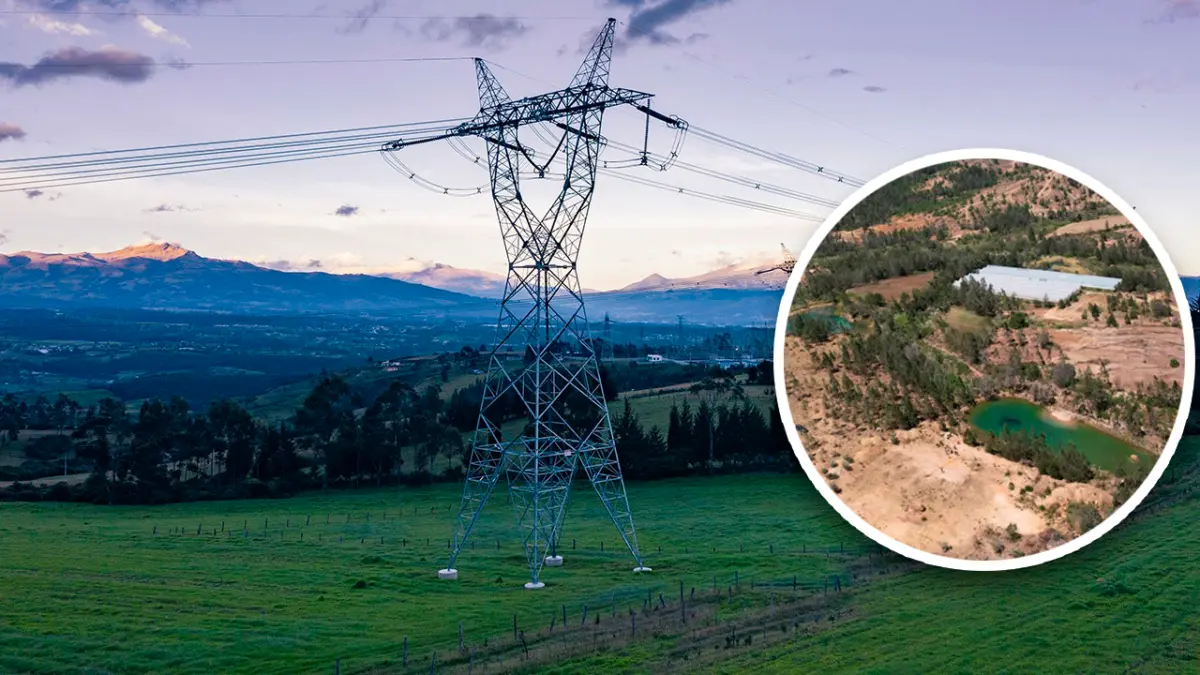
BOGOTÁ — As climate patterns shift across the equatorial Pacific, Colombia finds itself bracing for one of its most severe meteorological tests in recent years. The relentless strengthening of the El Niño phenomenon has triggered an orange-level alert across the nation’s energy sector. Officials, system operators, and regulatory bodies are racing against the clock to safeguard the reliability of the Sistema Interconectado Nacional (SIN)—the backbone responsible for generating, transporting, and supplying electricity to the vast majority of Colombian households, industries, and commercial hubs.
According to the latest advisory models from the Instituto de Hidrología, Meteorología y Estudios Ambientales (Ideam), the primary threat stems from a prolonged and severe reduction in regional rainfall. This precipitation deficit directly impacts the hydrological inflows feeding the massive reservoirs that drive Colombia’s hydroelectric generation fleet. With water levels receding and energy demand hitting unprecedented highs, the country’s energy matrix is entering a delicate balancing act designed to prevent supply shortfalls and avert a systemic crisis.
1. Main Facts: The Anatomy of the Current Energy Challenge
At the core of Colombia’s current vulnerability lies its profound structural dependence on water resources for electricity generation. Unlike nations dominated by fossil fuel or nuclear grids, Colombia relies on hydroelectric plants to supply roughly 70% to 80% of its daily power needs. When prolonged dry spells take hold, the margins for error in reservoir management shrink dramatically.
The SIN integrates vast centralized generation plants, extensive high-voltage transmission lines, strategic substations, and intricate local distribution systems. This interconnected architecture is designed to be resilient, allowing diverse energy sources to complement one another when a specific generation node falters. However, when the overarching constraint is water scarcity on a national scale, the flexibility of the grid is severely tested.
Recent operational data paints a sobering picture of the baseline conditions entering the peak dry season. Reports issued by XM, the market operator and administrator of the wholesale energy market in Colombia, indicate that water inflows into reservoirs closed out August at a concerning 74.46% of the historical mean. This marked the fourth consecutive month that water contributions remained stubbornly below historical averages. By mid-September, the inflows dropped further to 73.31%, while aggregate reservoir levels hovered around 79% of their total useful capacity—a comfortable buffer on paper, but one that depletes rapidly under sustained high demand.
Compounding the supply-side pressure is an unprecedented surge in electricity consumption. Driven largely by higher ambient temperatures across major urban centers, which compel residential and commercial users to ramp up cooling systems, Colombia registered a staggering new all-time high in energy demand: 266.6 GWh-day during September.
2. Chronology: The Escalation of the El Niño Crisis
Understanding the trajectory of the current alert requires tracking the meteorological and operational milestones that have shaped the crisis over the past several months:
- Late Spring (May – June): Initial anomalies in sea surface temperatures in the equatorial Pacific prompt Ideam to officially signal the early formation stages of a developing El Niño cycle, warning stakeholders of potential dry anomalies heading into the second half of the year.
- July: Hydrological inflows begin to detach from historical norms, recording their first month-long deficit. Energy operators initiate preliminary reviews of thermal backup capabilities and fuel inventories.
- August: XM officially reports that water contributions close the month at 74.46% of the historical average. This data point marks four consecutive months of sub-average hydrological replenishment, triggering heightened vigilance across technical committees.
- Mid-September: Inflows dip to 73.31%, while total reservoir capacity holds near 79%. Simultaneously, national energy demand smashes historical records, peaking at 266.6 GWh-day due to intense thermal conditions. In response, the Ministry of Mines and Energy steps in to coordinate strategic asset adjustments.
- Late 2026 Projections: Ideam models project a greater than 90% probability that El Niño will reach "very strong" intensity during the final quarter of the year.
- Early 2027 Outlook: Predictive meteorological models indicate a near 100% probability that the phenomenon will persist through February 2027, overlapping directly with the driest months of the traditional Colombian summer calendar.
3. Supporting Data and Technical Indicators
A rigorous examination of the operational metrics released by market operators and scientific institutes reveals the mathematical reality underpinning the current state of emergency. The interplay between declining water supply and surging electricity consumption leaves very little room for operational error.
| Indicator / Metric | Recorded Value / Threshold | Operational Implication |
|---|---|---|
| Water Inflows (August) | 74.46% of historical mean | Four consecutive months of sub-average hydrological contributions. |
| Water Inflows (Mid-September) | 73.31% of historical mean | Continued downward trend accelerating reservoir depletion rates. |
| Aggregate Reservoir Levels | ~79% of useful capacity | Adequate short-term buffer, but vulnerable to rapid depletion if dry conditions persist. |
| Peak Energy Demand (September) | 266.6 GWh-day | All-time historical high driven by high ambient temperatures and increased cooling loads. |
| El Niño Intensity Probability | > 90% for Q4 2026 | High certainty of severe meteorological conditions during critical operational months. |
| Persistence Horizon | Through February 2027 (~100%) | Covers the entire traditional high-stress dry season. |
These numbers underscore why energy planners cannot rely solely on historical assumptions. The confluence of a record-breaking demand curve and an extended meteorological drought forces the system to operate closer to its safety thresholds than utility managers prefer.
4. Official Responses and Proactive Interventions
Faced with mounting pressure from both environmental forecasts and market consumption data, government agencies, regulatory bodies, and major energy generators have mobilized a coordinated intervention strategy. The overarching objective is to maximize the availability of reliable thermal generation while performing delicate surgical interventions on critical hydroelectric infrastructure without compromising grid stability.
The Ministry of Mines and Energy Steps In
The Ministerio de Minas y Energía has taken direct leadership in coordinating preventive measures across the value chain. Recognizing that simultaneous outages of major generation plants could trigger a capacity deficit, the ministry brokered a critical pact between major energy stakeholders.
In a proactive move designed to fortify energy reliability, the government and private plant operators formally agreed to reprogram scheduled maintenance works at two of the country’s most vital hydroelectric assets: El Guavio and Chivor II. By staggering these heavy maintenance windows, authorities have successfully averted a scenario where both generation giants would be simultaneously offline during the peak months of the El Niño cycle. This tactical rescheduling ensures that maximum generation capacity remains online precisely when grid stress is projected to peak.
Monitoring and Market Adjustments
Behind the scenes, XM operates around the clock, running complex stochastic models to simulate various drought severity scenarios. The market operator continuously adjusts dispatch orders, prioritizing the conservation of water in multi-year storage reservoirs while calculating the optimal dispatch curve for thermal power plants—which burn coal and natural gas to compensate for falling hydroelectric output.
Furthermore, environmental authorities are exercising closer scrutiny over water rights and extraction limits. For instance, related regional disputes, such as ongoing legislative debates to grant legal rights to water bodies like the Lago de Tota in Boyacá, highlight a growing societal and political consensus: water resources must be protected not only for energy generation, but as vital ecosystems under extreme climate stress.
5. Implications for the Future: Grid Resilience and Citizen Responsibility
The intensification of El Niño serves as a stark reminder of the structural vulnerabilities inherent in regional energy transitions and climate adaptation strategies. As extreme weather events become more frequent and erratic due to global climate change, Colombia’s energy sector faces profound long-term implications.
1. Diversification of the Energy Matrix
While hydroelectric power remains clean, renewable, and cost-effective under normal climatic conditions, an over-reliance on a single generation vector exposes the national economy to systemic shocks. The current crisis accelerates discussions surrounding the urgent need to diversify Colombia’s generation matrix by aggressively scaling up non-conventional renewable energy sources—specifically utility-scale solar and wind projects. Although these sources are also subject to weather patterns, a diversified portfolio reduces the singular vulnerability associated with multi-month hydrological droughts.
2. Thermal Backup and Fuel Security
In the medium term, the country must maintain robust, reliable thermal backup infrastructure. This requires securing steady fuel supply chains—particularly for imported and domestic natural gas and coal—to ensure that thermal plants can run at high capacity factors for extended periods without facing fuel shortages or skyrocketing generation costs that could distort wholesale energy prices.
3. The Role of Citizen Stewardship
While high-level policy interventions, reservoir management protocols, and infrastructure rescheduling are vital, government and industry leaders emphasize that system security is a collective responsibility.
Although official projections suggest that a catastrophic nationwide blackout can be avoided through disciplined grid management, the margin of safety depends heavily on end-user behavior. Authorities have renewed calls for conscious, efficient management of water and electricity resources across residential, commercial, and industrial sectors. Simple measures—such as optimizing commercial cooling loads, reducing non-essential domestic water consumption, and curbing peak-hour energy waste—collectively alleviate the pressure on the SIN.
As Colombia navigates the coming months under the shadow of a strengthening El Niño, the resilience of its institutions, the adaptability of its technical operators, and the conservation mindset of its citizens will be put to the ultimate test. The challenges facing the National Interconnected System today are a preview of the climate realities of tomorrow, demanding a permanent shift toward smarter, more resilient energy governance.




Leave a Reply