


The roar of high-performance engines has long been the soundtrack of motorsport: a visceral, adrenaline-pumping symphony for fans, but an increasingly contentious issue for public health and urban planning. When the inaugural Gran Premio de Madrid brought the pinnacle of racing to the Spanish capital on September 13, it did more than just crown a victor on the asphalt—it reignited a critical, often overlooked conversation about urban acoustics.
Beyond the grandstands and the plumes of tire smoke lies a pervasive environmental factor that affects not only enthusiastic spectators, but also unsuspecting residents, pedestrians, and local wildlife living in the immediate vicinity of the circuit. As cities increasingly compete to host marquee racing events, experts are urging a fundamental shift in how we perceive, measure, and mitigate acoustic pollution.
1. Main Facts: Measuring the Impact Beyond the Grandstands
To understand the true footprint of a major motorsport event, researchers must look past the decibel meters planted inside the ticketed seating areas. While race promoters traditionally monitor noise levels to ensure compliance within the circuit perimeter, the experience of a neighbor living blocks away or a pedestrian walking down an adjacent avenue tells a very different story.
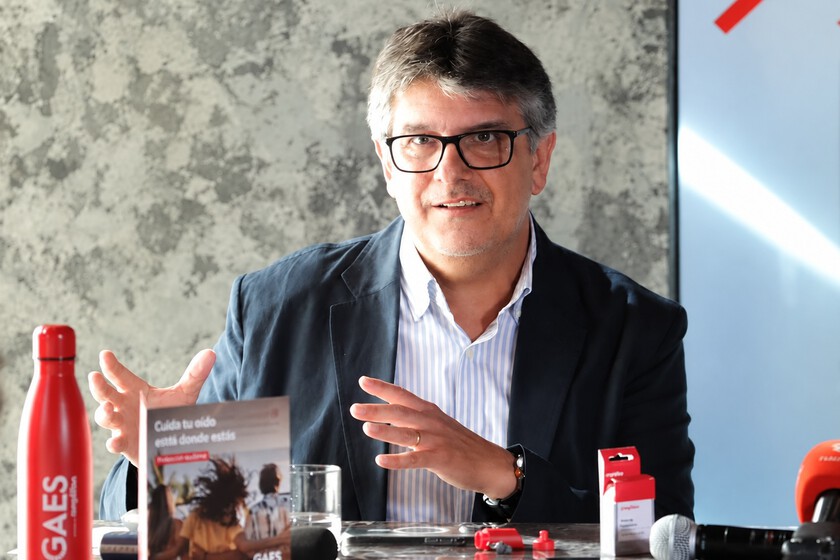
During the Madrid Grand Prix, a specialized team led by Francesc Carreño, Director of Audiology and Research at GAES, conducted ambient sound measurements from the exterior of the circuit. Their objective was simple yet vital: to quantify the acoustic reality faced by everyday citizens who never purchased a ticket to the race.
The findings underscore the widespread reach of high-performance automotive noise:
- IFEMA Exit: 79 decibels (dB) recorded in the immediate vicinity of the venue’s exits.
- La Monumental: 88 dB registered, representing a sharp, potentially hazardous acoustic spike for nearby areas.
- Ribera del Sena: 74 dB measured along this major urban corridor.
To put these figures into perspective, continuous exposure to sounds above 85 dB is widely recognized by occupational health and safety organizations as a threshold where long-term hearing damage can begin to occur. While these exterior measurements fluctuate depending on wind direction, topography, and the specific phase of the race (such as qualifying sessions versus full-grid starts), they demonstrate that major sporting events temporarily transform urban neighborhoods into industrial-grade noise zones.
Carreño acknowledges that modern race organizers implement various preventive measures within the event footprint. However, he issues a stark warning regarding continuous, unprotected exposure. His primary verdict for attendees and those lingering near the perimeter is unambiguous: "You must put on hearing protection the moment you step inside; do not wait for the loudest noises to arrive." He further emphasizes the need for heightened caution among vulnerable populations, specifically young children, individuals with pre-existing hearing loss, and those with heightened sound sensitivity (hyperacusis).
2. Chronology: The Evolution of Urban Racing and Acoustic Awareness
The tension between the thrilling spectacle of motorsport and the quiet enjoyment of urban life is not new, but the modern era of street circuits has intensified the debate.
- The Early Decades (Mid-20th Century): Historically, major racing circuits—such as Le Mans, Monza, or Silverstone—were constructed in rural or semi-isolated areas, far from dense residential zones. Noise was accepted as an isolated, rural phenomenon experienced primarily by willing spectators.
- The Turn of the Millennium: As urban sprawl expanded and sports promoters sought to bring events closer to metropolitan consumer bases, the concept of the temporary street circuit gained immense popularity (pioneered globally by events like the Monaco Grand Prix and later expanded to cities like Singapore, Valencia, and Miami). These circuits brought racing machinery directly beneath the apartment windows of tens of thousands of residents.
- September 13 (The Madrid Grand Prix): The staging of the event in Spain’s capital marked a watershed moment for local urban policy. While the race delivered economic stimulation and global media exposure, it triggered immediate pushback from neighborhood associations and public health advocates.
- Post-Race Scientific Assessment (Mid-September): In the days following the event, independent audiological studies—such as those published by GAES and covered extensively by outlets like ABC—brought empirical data to the forefront, shifting the public discourse from subjective complaints to measurable biological risks.
- Current Landscape (2025–2026): Regulatory bodies across Europe are facing mounting pressure to reconcile the commercial allure of temporary street races with stringent European Union environmental noise directives. The conversation has evolved from mere annoyance mitigation to a comprehensive public health review.
3. Supporting Data: Volume, Duration, and the Physiology of Hearing
When discussing acoustic trauma, the public often fixates solely on peak volume—measured in decibels (dB). However, audiologists and international health organizations stress that volume and exposure time are inextricably linked. A moderately loud sound experienced for hours can be just as devastating to delicate inner-ear hair cells as a sudden, deafening blast.
The World Health Organization (WHO) Safe Listening Framework
The WHO provides clear, easily visualized benchmarks regarding safe auditory limits:
- At 80 decibels: The human ear can safely tolerate this volume for approximately 40 hours per week before risks of cumulative damage begin to multiply.
- At 90 decibels: That safe threshold plummets drastically to just four hours per week.
In the context of a weekend motorsport festival, fans and nearby residents are frequently subjected to transient and sustained sound levels that easily bridge the 80 to 90 dB (and sometimes 100+ dB) thresholds. The math is simple: the higher the decibel level, the exponentially shorter the time an unprotected human ear can endure it without incurring permanent cellular degradation in the cochlea.
Practical Rules of Thumb for Acoustic Safety
To help the public gauge dangerous environments without carrying specialized decibel meters, health experts promote two reliable rules of thumb:
- The Conversation Test: If you have to shout at the top of your lungs for someone standing just an arm’s length away to understand you, the ambient environmental noise is dangerously high (typically exceeding 85 dB).
- The 60/10 Rule of Respite: For every hour spent in a moderately high-noise environment, the WHO recommends taking a mandatory 10-minute break in a genuinely quiet zone to allow the auditory system to recover.
4. Official Responses and Institutional Perspectives
As empirical data surrounding noise pollution mounts, local governments, international agencies, and medical professionals are being forced to take a synchronized stance on acoustic management.
The Medical and Scientific Community
Audiologists and public health specialists are unified in their message: prevention is the only reliable cure for noise-induced hearing loss (NIHL), which is entirely irreversible once sensory hair cells in the cochlea are destroyed. Organizations like GAES, alongside academic researchers, are lobbying for mandatory distribution of ear protection at all ticketed motorsport and large-scale entertainment venues, mirroring the complimentary distribution of safety equipment in industrial workplaces.
Urban Planners and Environmental Agencies
On a broader macro-environmental scale, institutions are tracking the cumulative toll of everyday urban noise. According to comprehensive data published by the European Environment Agency (EEA), an estimated 4.6 million people in Europe suffer severe sleep disturbances directly attributable to environmental transport noise.
While agencies are careful to distinguish between chronic, year-round urban background noise (such as continuous highway traffic or commercial aviation) and acute, short-term events (like a weekend Grand Prix or a summer music festival), the underlying physiological mechanisms remain a subject of intense study. Chronic exposure to high decibel levels has long been correlated in epidemiological studies with:
- Elevated cardiovascular stress (increased blood pressure and heart rate).
- Metabolic disruptions.
- Heightened levels of psychological fatigue, anxiety, and sleep deprivation.
Event Organizers and Promoters
In response to growing scrutiny, modern motorsport promoters are increasingly deploying sound-baffling acoustic barriers, optimizing racing lines away from residential pockets, and enforcing strict engine-mapping restrictions during practice sessions. However, critics argue that these measures largely fail to protect outdoor workers, local street vendors, and residents living immediately adjacent to circuit perimeters, where physical barriers are impractical to erect.
5. Implications: Balancing Entertainment, Urban Growth, and Public Health
The debate sparked by the Gran Premio de Madrid highlights a deeper, systemic challenge facing modern metropolises: how to balance the economic and cultural vitality of major events with the fundamental human right to a healthy, peaceful environment.
The Economic vs. Social Equation
Motorsport events inject millions of euros into local hospitality, tourism, and infrastructure, making them deeply attractive to municipal governments seeking international prestige. Yet, the hidden externalities—such as healthcare costs associated with hearing loss, sleep disruption, loss of property value, and general community friction—are rarely factored into the initial economic impact reports.
A Shift Toward Acoustic Responsibility
Moving forward, experts argue that urban racing cannot continue under a "business as usual" model. The implications of current audiological findings demand several proactive policy shifts:
- Preemptive Public Education Campaigns: Cities hosting major sporting events must launch public health advisories weeks in advance, educating citizens on the importance of carrying and utilizing high-fidelity earplugs.
- Mandatory Perimeter Monitoring: Environmental protection agencies must enforce independent, third-party noise monitoring outside circuit boundaries, with financial penalties tied to excessive acoustic bleed into residential neighborhoods.
- Equitable Protection for Vulnerable Groups: Special municipal provisions must be enacted to safeguard schools, hospitals, elder-care facilities, and residential zones located near transit corridors utilized for racing events.
Ultimately, the thrilling roar of motorsport will continue to captivate millions around the globe. But as science makes increasingly clear, that roar comes with a biological price tag. By acknowledging the hidden risks of acoustic pollution and implementing rigorous preventive standards, cities can ensure that the pursuit of speed does not come at the permanent expense of public health.




Leave a Reply