

FAIRFAX, IOWA — The clean energy transition has long celebrated the wind turbine as a towering symbol of environmental progress. With massive blades sweeping across the horizon, these modern engineering marvels capture invisible gusts and convert them into clean, reliable electricity. For roughly two decades, they perform their duties silently and efficiently, helping nations reduce their carbon footprints and pivot away from fossil fuels.
Yet, as the global wind energy boom of the early 2000s matures, the industry faces an inconvenient and increasingly urgent truth: what goes up must eventually come down.
While between 85% and 90% of a modern wind turbine—including its steel tower, copper wiring, and electronic components—is readily recyclable, the rotor blades have long represented an ecological blind spot. Designed to withstand extreme weather, gale-force winds, and blistering UV radiation for 20 to 25 years, these colossal structures are built from resilient, highly durable composite materials, primarily fiberglass bonded with thermosetting resins.
That very durability turns into an industrial headache the moment the blades reach the end of their operational lifespan. Historically, decommissioned blades had few places to go. Many were hauled to landfills, buried underground, incinerated, or left to pile up in desolate storage yards.
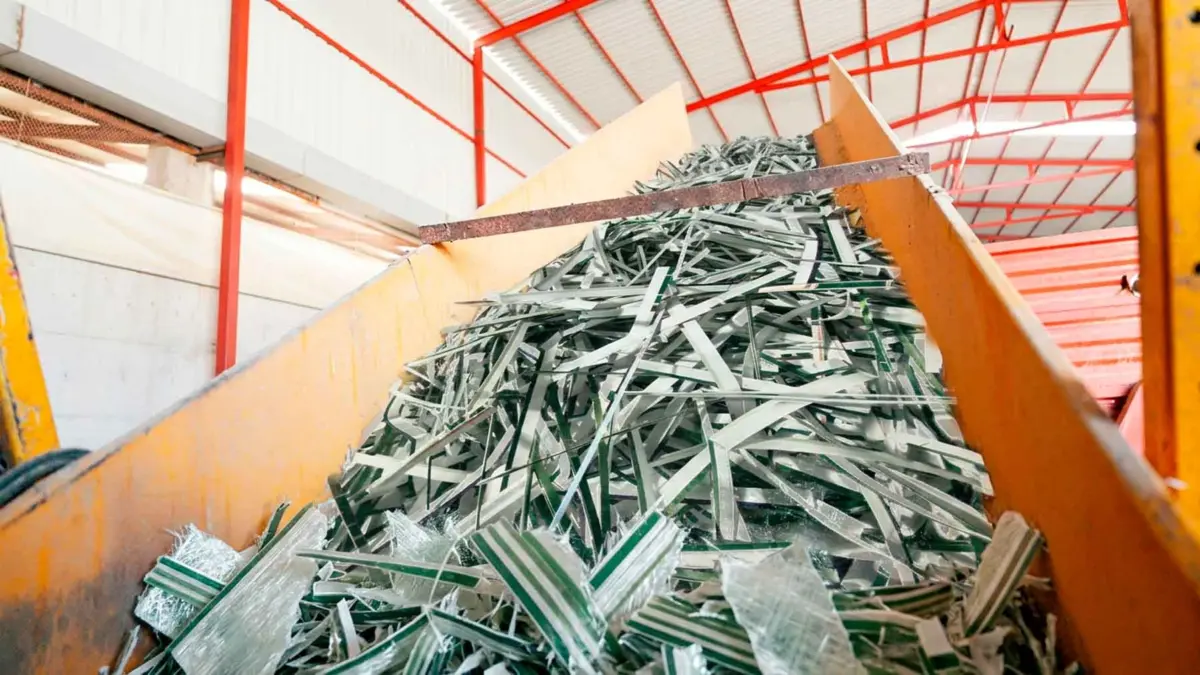
However, a groundbreaking industrial facility in Fairfax, Iowa, is challenging this paradigm. Eschewing chemical baths and energy-intensive furnaces, this plant is pioneering a mechanical recycling revolution that transforms pulverized wind turbine blades into high-performance reinforcement fibers for concrete, asphalt, and industrial composites.
Main Facts: The Composite Conundrum and the Iowa Solution
The scope of the problem is vast. As thousands of aging wind farms across North America and Europe approach retirement age, the wind industry faces a mounting wave of decommissioned blades. Because thermoset resins cannot be easily melted down like thermoplastics or metals, treating these composite materials has historically required complex chemical breakdown or thermal destruction—both of which are costly and carry their own environmental consequences.
Enter REGEN Fiber, a company that spent years researching and developing a sustainable method to process these unyielding structures. In 2024, the company officially opened a massive processing facility in Fairfax, Iowa, strategically situated in the heartland of America’s wind energy corridor.
- The Scale: The Fairfax facility was engineered to process an astonishing 30,000 tons (approximately 60 million pounds) of wind turbine blades annually.
- The Methodology: Eschewing high-heat furnaces and hazardous chemical solvents, the plant relies entirely on an advanced mechanical process involving multi-stage shredding, screening, and granulation.
- The Output: The rigid fiberglass-resin matrix is reduced into fine micro-fibers and particles. These byproducts are then repurposed as vital structural reinforcements for concrete mixes, paving asphalts, and manufactured composite materials.
By turning a notoriously stubborn waste product into a valuable industrial commodity, the Iowa plant is offering a blueprint for a truly circular renewable energy economy.
Chronology: From Landfill Stagnation to Mechanical Innovation
To understand the significance of the Fairfax facility, it is necessary to trace how the wind industry arrived at this crossroads and how innovators worked to rewrite the end-of-life narrative for turbine blades.
The Early Decades: The Growth Without a Plan (2000–2015)
During the rapid expansion of wind energy in the late 1990s and early 2000s, engineering focus was almost exclusively concentrated on efficiency, structural integrity, and energy output. Little regulatory attention or commercial capital was directed toward what would happen to the materials once the turbines were decommissioned. As a result, when the first generation of utility-scale wind farms reached the end of their functional life cycles, operators found themselves with massive, non-biodegradable fiberglass structures and limited disposal options. Landfilling became the default, albeit controversial, solution.
Research and Development Phase (2016–2023)
Recognizing the impending ecological backlash, material scientists and recycling entrepreneurs began searching for alternative treatments. Chemical recycling and pyrolysis (burning materials in an oxygen-deprived environment) were tested, but both proved economically unviable or environmentally counterproductive on a commercial scale.
Engineers at REGEN Fiber shifted the focus toward mechanical down-sizing. They hypothesized that if the composite material could be ground down physically without destroying the structural integrity of the individual glass fibers, those fibers could serve as a high-strength additive in construction materials. Years of trial, error, and industrial testing led to the refinement of specialized cutting and granulation machinery capable of tackling the notoriously tough epoxy-and-fiberglass matrices.
The Opening of the Fairfax Facility (2024)
With the technology proven and demand for sustainable construction inputs rising, REGEN Fiber constructed its flagship commercial plant in Fairfax, Iowa. Chosen for its proximity to some of the densest concentrations of wind farms in the United States, the location drastically minimized transportation emissions associated with hauling massive, cumbersome blades across the country. By 2024, the plant was fully operational, marking a milestone in industrial recycling history.

Supporting Data: Numbers Behind the Blade Lifecycle
The challenge of wind turbine blade management can be quantified through engineering metrics, logistics, and material composition data:
- Lifespan Expectancy: Standard commercial wind turbine blades are engineered to operate continuously for 20 to 25 years before structural fatigue necessitates replacement.
- Material Composition: A typical blade consists of a balsa wood or foam core wrapped in layers of fiberglass and carbon fiber, all bound together by robust epoxy or polyester thermoset resins.
- Recycling Disparity: While 85% to 90% of a turbine—including the cast-iron hub, steel gearbox, and generator housing—is easily processed and reintroduced into metal markets, the remaining 10% to 15% (comprising the blades) has historically resisted standard recycling streams.
- Volume at Scale: Operating at peak capacity, the Fairfax facility’s processing target of 30,000 tons per year prevents millions of pounds of non-biodegradable composite waste from sitting indefinitely in regional landfills.
- Air Quality Management: Because mechanical shredding generates significant particulate matter, the Fairfax plant integrates advanced industrial dust-collection systems to capture airborne fiberglass particles, safeguarding worker health and environmental air quality.
Official Responses and Industry Reactions
The opening of the Fairfax facility has garnered widespread attention from environmental regulators, renewable energy developers, and construction industry stakeholders alike.
The Wind Energy Sector’s Perspective
Major wind energy developers and manufacturers have faced mounting public pressure regarding their environmental life-cycle footprints. Industry groups have warmly welcomed the Fairfax initiative, viewing it as a critical piece of the infrastructure puzzle.
"For years, our industry has delivered zero-emission electricity to the grid, yet we wrestled with a glaring sustainability paradox regarding our own waste," noted a representative from a prominent wind asset management firm. facilities like the one in Iowa finally provide developers with a responsible, domestic end-of-life solution that aligns with our core environmental ethos."
Construction and Materials Sector Response
Civil engineers and concrete manufacturers have also expressed enthusiasm for the recycled micro-fibers. Traditional concrete is prone to micro-cracking over time, a vulnerability traditionally mitigated by adding virgin synthetic or steel fibers.
Independent testing of REGEN Fiber’s products indicates that integrating pulverized wind turbine blade material into concrete and asphalt mixes enhances tensile strength, reduces cracking, and improves overall durability. By substituting virgin additives with upcycled industrial waste, construction firms can lower their embodied carbon while maintaining high structural performance standards.
Implications: A Blueprint for a Circular Clean Energy Economy
The implications of the Fairfax facility extend far beyond the borders of Iowa. As global climate goals drive an exponential increase in renewable energy installations, millions of tons of composite materials are projected to reach retirement age globally over the next two decades.
1. Mitigating the Landfill Crisis
Without scalable recycling solutions, the global wind industry faced the grim prospect of burying hundreds of thousands of tons of fiberglass annually. The mechanical processing model demonstrated in Iowa proves that large-scale diversion from landfills is not only technically feasible but economically viable, provided processing plants are strategically located near major wind hubs.
2. Closing the Loop in Infrastructure
The intersection of wind energy and civil construction highlights a powerful cross-industry synergy. By transforming retired energy assets into building blocks for roads, bridges, and foundations, the model embodies the principles of a circular economy. The wind turbine that once generated electricity in a rural field literally helps pave the roads that lead back to it.
3. Fostering Chemical-Free Innovations
By proving that mechanical processing can successfully prepare composite materials for secondary markets without relying on polluting chemical solvents or high-temperature furnaces, REGEN Fiber has set a new environmental benchmark. Future recycling facilities across Europe and Asia are already looking to replicate or adapt this low-emissions processing philosophy.
Conclusion
The wind energy revolution is entering its second generation. As pioneering wind farms age out of service, the industry is confronted with the physical legacy of its early expansion.
The success of the Fairfax plant in Iowa demonstrates that ingenuity can overcome even the most stubborn material science challenges. By treating decommissioned blades not as burdensome waste, but as a rich source of high-performance industrial fiber, this facility is helping to ensure that wind energy remains green from its first rotation to its final transformation.




Leave a Reply