

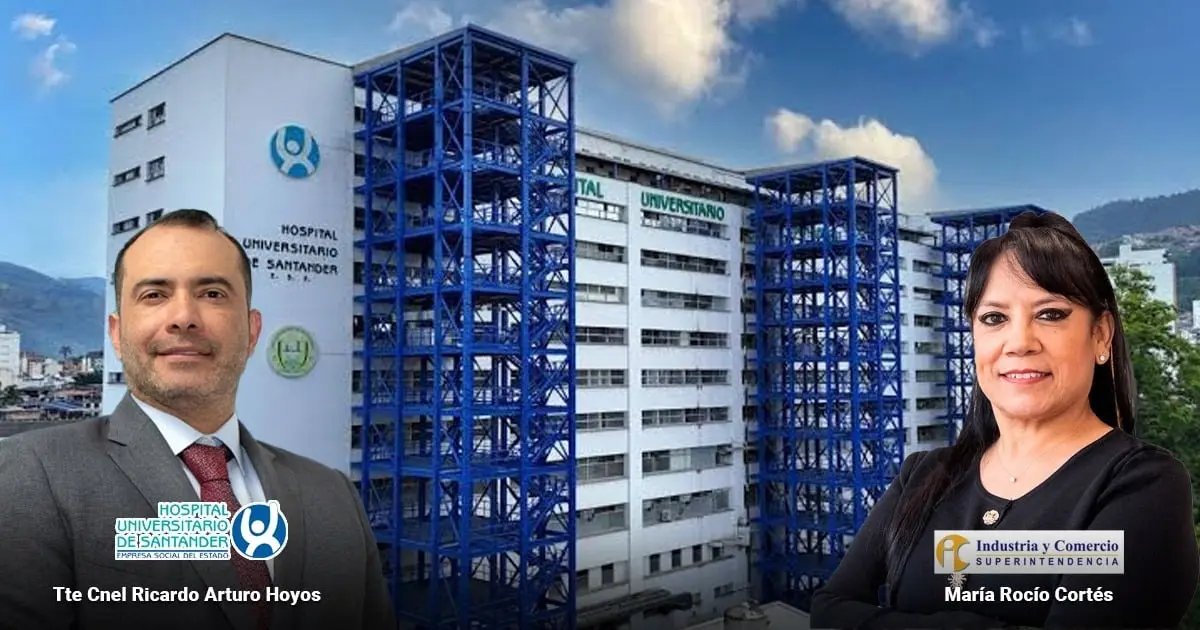
BOGOTÁ & BUCARAMANGA — The leadership of retired Lieutenant Colonel Ricardo Arturo Hoyos Lanziano at the helm of the Hospital Universitario de Santander (HUS) has entered a turbulent phase. As the institution’s general manager, Hoyos Lanziano now faces a high-stakes dilemma: whether to legally challenge or quietly pay a hefty financial penalty levied by Colombia’s Superintendence of Industry and Commerce (SIC). The sanction stems from alleged systematic overcharging on essential medications—a regulatory breach that strikes at the heart of public healthcare administration and fiscal ethics in the department of Santander.
The unfolding controversy places a seasoned military man turned public health executive under intense public scrutiny. While Hoyos Lanziano has drawn praise for modernizing infrastructure and prioritizing labor formalization within the regional medical center, his administrative record—spanning both his previous tenure at the prestigious Hospital Militar Central in Bogotá and his current post in Bucaramanga—is increasingly shadowed by antitrust and price-control investigations.
Main Facts
The core of the controversy centers on a formal investigation and subsequent sanction by the SIC regarding the commercialization of pharmaceutical products above legally mandated ceilings. According to regulatory findings, the Hospital Universitario de Santander (HUS) marketed at least 37 distinct pharmaceutical drugs at prices exceeding the maximum limits established by the National Commission for the Prices of Medicines and Medical Devices (CNPMDM).
As a direct consequence of these regulatory infractions, the State Social Enterprise (ESE) Hospital Universitario de Santander has been ordered to pay a financial penalty totaling $558,793,344 Colombian pesos.
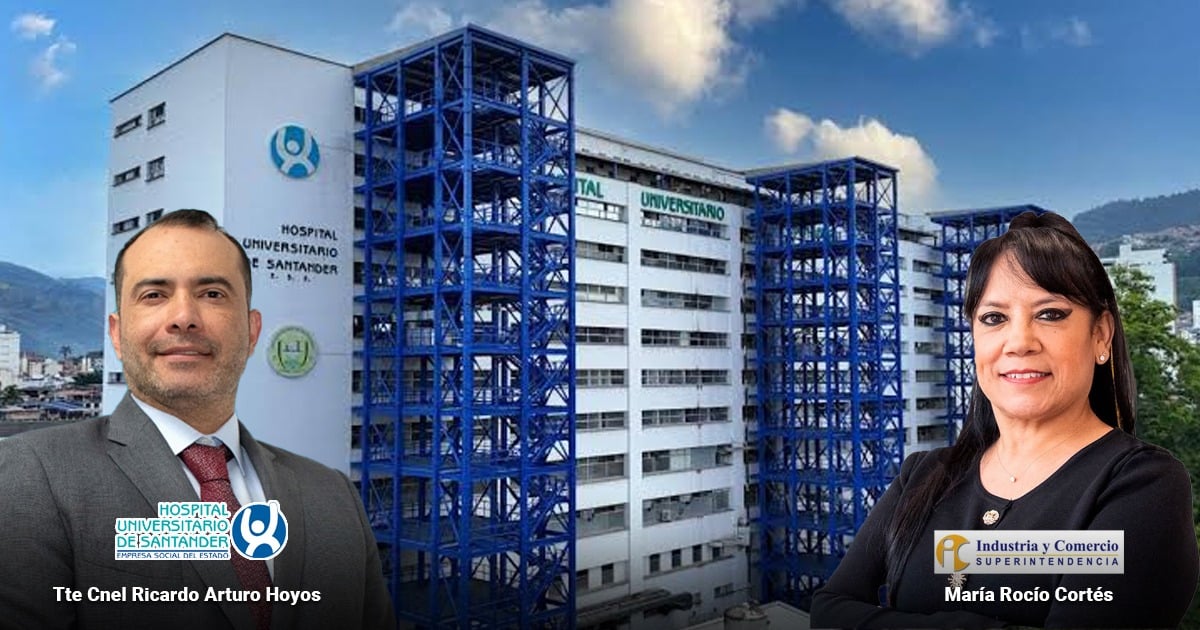
Among the specific medical products flagged in the regulatory dossier are several high-cost, life-saving drugs:
- Lantus: A vital insulin analog utilized for diabetes management, which the SIC found was sold at a staggering 234.98% above the legally permitted threshold.
- Clenox: An anticoagulant essential for preventing and treating dangerous blood clots, registered with a price excess reaching 173.03%.
- Curosurf and Octostim: Specialized treatments that were similarly commercialized outside of authorized pricing frameworks.
Lieutenant Colonel (Ret.) Hoyos Lanziano, who took office as the director of HUS on April 1, 2024, must now determine whether the hospital will exhaust its legal avenues to appeal the SIC’s ruling or accept the sanction and disburse the multi-million-peso fine from an already constrained public healthcare budget.
Chronology of Events
To understand the current legal and administrative crisis, it is essential to trace the timeline of events connecting Hoyos Lanziano’s past military-hospital administration to his present leadership in Santander:
- Pre-2024 (The Military Hospital Tenure): Ricardo Arturo Hoyos Lanziano serves in prominent administrative roles at the Hospital Militar Central in Bogotá, functioning as acting director, deputy administrative director, and head of contracting. During this period, the institution becomes entangled in a broader SIC investigation concerning alleged irregularities and anti-competitive practices in the contracting of orthopedic services and supplies.
- First Instance Sanction (Military Hospital): The SIC’s inquiry into the Hospital Militar Central concludes in a first-instance ruling, hitting the military medical institution with a substantial fine of $782,718,224 pesos over irregular contracting procedures—though investigators find no conclusive proof linking Hoyos Lanziano personally to an illicit cartel.
- April 1, 2024 (Transition to Bucaramanga): Backed by the administration of Santander Governor Juvenal Díaz Mateus—a retired major general—Hoyos Lanziano is appointed as the new director of the Hospital Universitario de Santander (HUS), bringing his military-administrative background to the department’s primary public health facility.
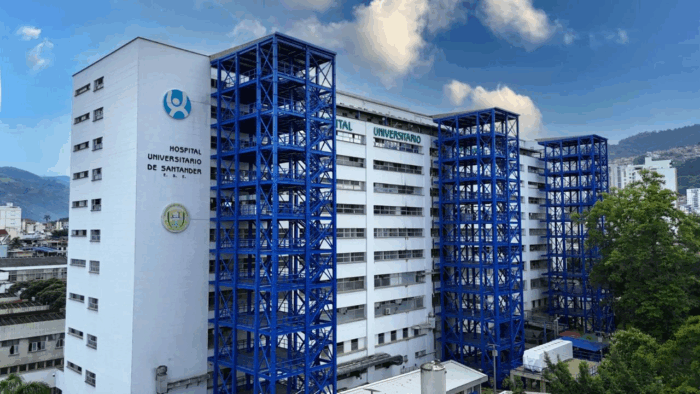
- 2024–2025 (Operational Reforms at HUS): Hoyos Lanziano initiates progressive internal reforms at HUS, focusing on worker formalization, timely salary disbursements, technological modernization, and infrastructural recovery. Notably, by 2025, the hospital successfully expands and revitalizes its Neonatal Intensive Care Unit (NICU) to handle up to 47 premature infants, recovering a critical unit after years of infrastructural stagnation.
- Present Day (The SIC Ultimatum): The SIC releases its findings regarding pharmaceutical overcharging at HUS, slapping the institution with a $558.793.344 peso fine. Hoyos Lanziano is left with a narrow window to decide whether to contest the penalty in court or pay the fine.
Supporting Data and Operational Metrics
The duality of Hoyos Lanziano’s tenure is defined by sharp contrasts: aggressive regulatory reprimands on one side, and notable infrastructural and clinical achievements on the other.

The Financial and Regulatory Burden
- Total HUS Fine: $558,793,344 COP.
- Products Flagged: At least 37 medications violating CNPMDM price caps.
- Lantus Price Deviation: +234.98% above the legal ceiling.
- Clenox Price Deviation: +173.03% above the legal ceiling.
- Historical Precedent (Hospital Militar Central): First-instance penalty of $782,718,224 COP related to orthopedic contracting.
Patient Care and Institutional Growth
Despite the legal clouds hanging over the administration’s compliance record, internal metrics at the Hospital Universitario de Santander reflect high-volume public service delivery:
- Annual Patient Volume: The clinic registers an average of 21,000 to 35,000 patients served annually across various specialized modalities.
- Neonatal Care Expansion: Following nearly a decade of setbacks and an investment nearing 3 billion pesos, the HUS successfully rescued and expanded its Neonatal ICU capacity to accommodate 47 newborns simultaneously by 2025.
- Labor and Infrastructure: Management reports point to sustained efforts to regularize healthcare workers’ contracts and streamline wage payments—a persistent bottleneck in Colombia’s departmental hospital networks.
Official Responses and Public Statements
The intersection of military pedigree, public health administration, and regulatory scrutiny has naturally drawn intense media interest across Colombia.
When previous allegations regarding the orthopedic contracting cartel at the Hospital Militar Central surfaced, national media outlets—including W Radio—pressed Hoyos Lanziano for direct explanations. In response to those inquiries, the retired military officer maintained that every administrative action executed under his watch strictly adhered to the legal framework governing public procurement and healthcare contracting.
To date, neither Hoyos Lanziano nor the departmental government of Santander has issued a definitive, final legal strategy regarding the newly imposed HUS fine. Public health advocates and legal analysts note that while challenging the SIC’s resolution is a standard administrative right, doing so requires committing institutional legal resources to a battle against a robust regulatory authority that has steadily increased its oversight over pharmaceutical pricing nationwide.
Broader Implications
The unfolding situation at the Hospital Universitario de Santander carries significant implications that extend far beyond the career of one retired military officer. It highlights systemic vulnerabilities within Colombia’s public healthcare infrastructure:
1. The Strain on Regional Public Hospitals
Public ESEs (Empresas Sociales del Estado) operate under immense financial pressure, often balancing chronic structural deficits with the duty to provide universal care to vulnerable populations. A multi-million-peso fine like the one imposed by the SIC represents a severe fiscal blow to an institution like HUS, potentially diverting critical funds away from patient care, medication acquisition, and technological maintenance.
2. Enforcement of Pharmaceutical Price Controls
The case underscores the SIC’s aggressive posture toward price gouging on high-cost medications. By penalizing hospitals that breach CNPMDM limits—regardless of whether the overpricing stems from internal administrative negligence, supply chain failures, or distributor markups—the regulatory body is sending a strong message that public institutions are not immune to market oversight.
3. The Militarization of Public Health Management
The appointment of retired high-ranking military personnel to direct major civilian public hospitals—a trend observed in various regional administrations—has been a subject of ongoing debate in Colombia. Proponents argue that military administrators bring strict discipline, organizational efficiency, and anti-corruption resolve. Critics, however, point to the persistence of complex procurement and regulatory scandals, questioning whether traditional military management styles successfully adapt to the highly nuanced, heavily regulated mechanics of the civilian public health sector.

As Ricardo Arturo Hoyos Lanziano weighs his legal options, the outcome of this dispute will test not only the financial resilience of the Hospital Universitario de Santander but also the institutional accountability of its leadership in an era of tightening state oversight.



Leave a Reply