

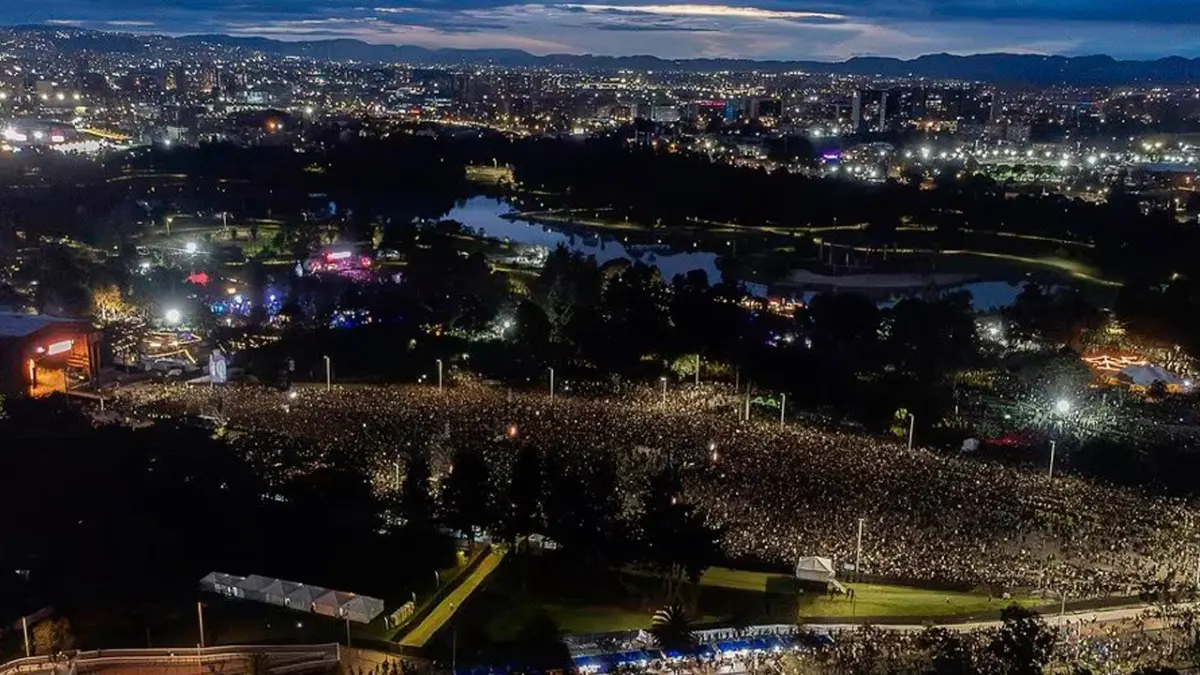
BOGOTÁ, COLOMBIA — The historic 30th-anniversary milestone of Rock al Parque—Latin America’s largest free open-air rock festival—has officially transcended expectations, cementing its status as a cultural titan. Before the final power chord even rang out, the festival achieved a monumental milestone. Over the course of Saturday, October 10, and Sunday, October 11, the Parque Metropolitano Simón Bolívar recorded an astonishing cumulative attendance of more than 465,500 people.
This staggering turnout not only surpasses the final visitor tallies of many legendary past editions, but it also redefines the sheer scale of what a free public music festival can achieve in the heart of Colombia’s capital. With a powerhouse lineup spanning decades of punk, metal, ska, alternative rock, and Latin American fusion, Rock al Parque 2026 has proven that three decades into its journey, the festival’s pulse is stronger, louder, and more unifying than ever.
Main Facts: A Historic Milestone in Numbers
The numbers coming out of the Parque Metropolitano Simón Bolívar are nothing short of extraordinary. According to data released by the District Secretariat of Culture, Recreation, and Sport, alongside local arts and cultural authorities, the festival’s demographic pull and mass appeal have reached unprecedented heights.
- Cumulative Attendance (First Two Days): Over 465,500 attendees.
- Saturday Opening Day: More than 191,000 people—setting an all-time record for a festival opening day in the event’s 30-year history.
- Sunday Peak Day: A massive surge of 274,500 music lovers circulating through the park grounds.
- The Venue: The iconic Parque Metropolitano Simón Bolívar, operating at maximum capacity across its multi-stage layout.
- The Milestone: Celebrating 30 years of free rock, counterculture, and community building since the festival’s inception in 1995.
What makes these figures particularly remarkable is that they represent partial totals. These metrics were locked in before the gates opened for the high-anticipated third and final day on Monday, October 12 (Labor Day holiday), meaning the final cumulative tally for the entire weekend is expected to shatter the psychological half-million visitor mark by a wide margin.
Chronology of the Weekend: From Record-Breaking Kickoff to Heavyweight Sunday
Saturday, October 10: A Record-Breaking Inauguration
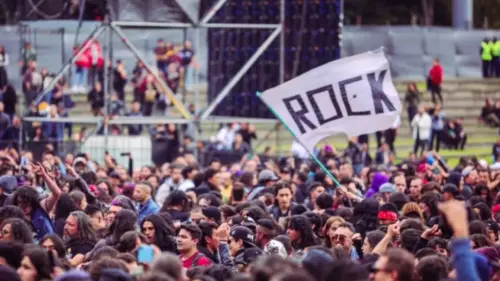
From the early hours of Saturday morning, long before the first amplifiers roared to life, serpentine lines of fans draped in black leather, band t-shirts, and combat boots formed around the perimeter of the Parque Simón Bolívar. There was an unmistakable electric current in the air, charged by the knowledge that Rock al Parque was entering its fourth decade.
When the dust settled on the opening night, the Secretariat of Culture, Recreation, and Sport confirmed a monumental statistic: over 191,000 attendees had passed through the security checkpoints. This single-day figure obliterated previous opening-day benchmarks, signaling to organizers and skeptics alike that the 30th-anniversary celebration would be an unmitigated mass phenomenon. Local acts, regional discoveries, and international heavyweights played to sprawling, euphoric sea-of-humanity crowds that stretched as far as the eye could see from the main stages.
Sunday, October 11: The Tidal Wave of Sound and Spectacle
If Saturday laid a formidable foundation, Sunday acted as an unstoppable tidal wave. The second day of the festival pulled an astronomical 274,500 people into the venue, transforming the Simón Bolívar park into a pulsating epicenter of continental and global alternative culture.
The curatorial ambition for Sunday’s lineup read like a dream playlist for generations of Spanish-language rock and alternative fans. Chilean singer-songwriter powerhouse Mon Laferte delivered a mesmerizing, emotionally charged performance that transfixed tens of thousands. Colombian alternative darlings Esteman brought vibrant energy and infectious pop-rock grooves, while the legendary Tokyo Ska Paradise Orchestra injected an explosive, brass-heavy burst of Japanese ska-punk that had the entire park bouncing in unison.
Further enriching the sonic tapestry were the hypnotic reggae rhythms of Chile’s Gondwana, the indie-rock sophistication of Argentina’s Bándalos Chinos, and a poignant historical nod when Chilean musician Claudio Narea took the stage. The sheer diversity of genres—ranging from ska and reggae to indie pop and brooding balladry—ensured that demographic lines blurred, uniting teenagers experiencing their first festival alongside veterans who had attended the inaugural 1996 edition.
Supporting Data: How 2026 Dwarfs Past Editions
To truly contextualize the magnitude of the 465,500-plus attendance recorded in the first 48 hours of Rock al Parque 2026, one must look back at the historical archives of the festival. While organizing bodies note that counting methodologies have naturally evolved over three decades, the officially published benchmarks provide a clear historical scale.
Major Attendance Records in Rock al Parque History (1996–2026)
| Rank | Edition / Year | Attendance Metric | Context / Notes |
|---|---|---|---|
| 1 | 2026 | More than 465,500 | Partial count recorded across the first 2 days (Oct 10-11). Final tally pending Monday close. |
| 2 | 2004 | More than 400,000 | Celebrated the festival’s landmark 10th anniversary across a 3-day schedule. |
| 2 | 2014 | Around 400,000 | Marked the 20th-anniversary edition, drawing massive crowds for a multi-day blowout. |
| 4 | 2023 | More than 390,000 | A major post-pandemic resurgence reported by Idartes across three days of heavy programming. |
| 5 | 2015 | More than 350,000 | Solidified mid-decade stability and strong international curation. |
Note: The comparison serves as a reference based on historical data published by municipal culture institutes during respective years.
When evaluating these figures, the 2026 edition stands in a league of its own. In previous landmark years—such as the 10th anniversary in 2004 or the 20th anniversary in 2014—it took the entire three-day span to brush up against or cross the 400,000 threshold. In stark contrast, the 2026 edition cleared that hurdle by the end of Sunday afternoon, leaving the entire Monday holiday program as a bonus victory lap.
Official Responses and Cultural Implications
Behind the roaring crowds, mosh pits, and food trucks lies a massive logistical operation managed by the Mayor’s Office of Bogotá, the District Institute of Arts (Idartes), and various security and civil defense agencies.
A Triumph for Public Culture
Cultural authorities have lauded the attendance figures not merely as a statistical victory, but as a profound validation of Bogotá’s cultural resilience. In statements released throughout the weekend, municipal leaders emphasized that Rock al Parque remains a vital democratic space where art, music, and public recreation are accessible to all citizens, regardless of socioeconomic background.
"Rock al Parque is more than a music festival; it is a living, breathing testament to Bogotá’s identity," noted representatives from the District Secretariat of Culture. "Reaching over 465,000 people in just two days proves that alternative music, rock, and countercultural expressions are not fringe movements—they are the heartbeat of millions."
Safety, Logistics, and Urban Integration
Managing half a million people in an open-air urban park requires military-precision planning. City officials highlighted the seamless collaboration between private security, the National Police, emergency medical services, and mobility transit systems.
Specialized public transport protocols were deployed across the city’s TransMilenio mass transit network, ensuring that fans could safely commute to and from the Parque Simón Bolívar. Despite the massive influx of people, security reports indicated a remarkably peaceful environment, characterized by the communal camaraderie, mutual respect, and peaceful coexistence that have long defined the culture of Rock al Parque.
The Grand Finale: Monday’s Closing Act
As the sun rose on Monday, October 12 (festive holiday), the energy within Bogotá did not wane; it intensified. The final chapter of the 30th-anniversary celebration promised an uncompromising slate of heavy metal, industrial rock, post-punk, and Latin American underground legends across the festival’s four distinct stages.
The final day lineup featured heavy-hitting international headliners such as American industrial metal pioneers Ministry, legendary Argentine heavy metal icons Rata Blanca, British post-punk visionaries Editors, and celebrated Chilean alternative rockers Los Bunkers. They were joined by the timeless Argentine rock outfit Ratones Paranoicos, Mexican melodic rock mainstays División Minúscula, and vibrant local and regional acts including Ghetto Kumbé, Los Elefantes, and La Severa Matacera.
Running from 2:00 p.m. until the final notes faded around 10:00 p.m., the closing marathon ensured that the 30th anniversary would go down in history not just for how many people showed up, but for the uncompromising artistic caliber delivered on stage.
Looking Forward: A Legacy Secured
As official final audits are completed and the dust settles on the Parque Metropolitano Simón Bolívar, Rock al Parque 2026 will be remembered as a watershed moment in Latin American music history.
By shattering historical attendance ceilings, uniting multiple generations of music fans, and executing a world-class cultural event free of charge, the festival has reaffirmed Bogotá’s title as a global capital of rock. Whether through the thunderous riffs of international metal icons or the shared voices of thousands singing along in the crisp Andean air, Rock al Parque has proven that after thirty years, the fire is burning brighter than ever.
For ongoing coverage, photo galleries, and artist interviews, follow the official broadcast streams and check out #RadiónicaEnRockAlParque.

Leave a Reply