

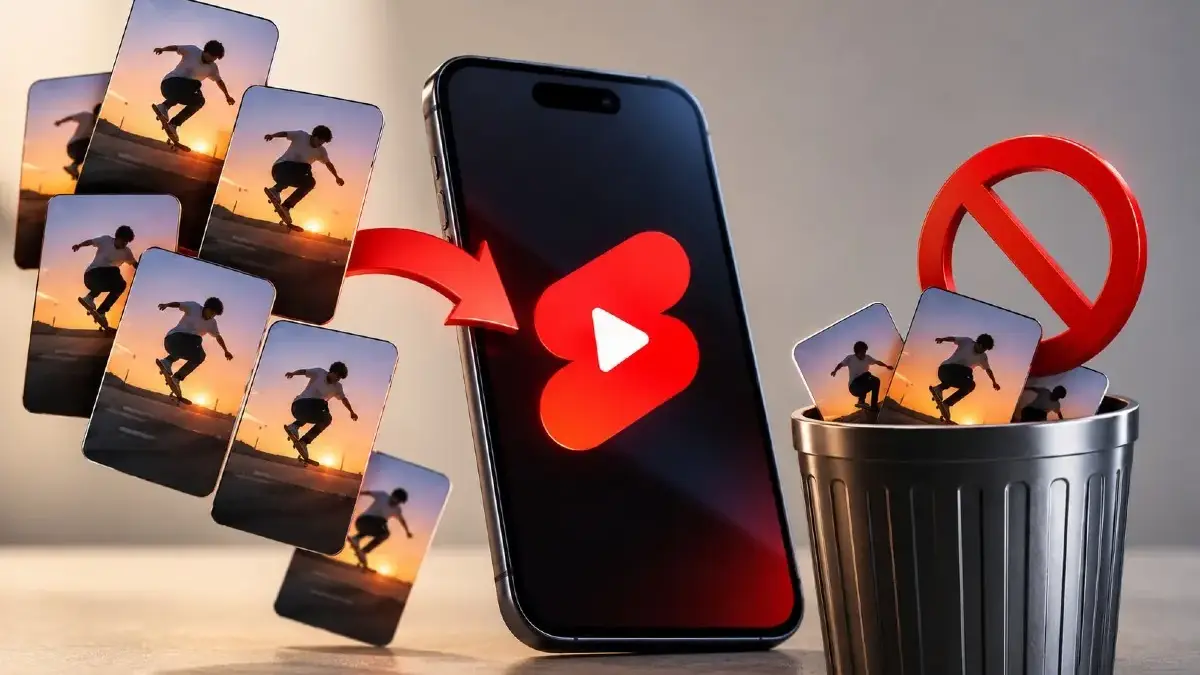
SAN BRUNO, CALIFORNIA — In a strategic pivot aimed at reshaping the digital video landscape, Google-owned YouTube has announced a significant update to the recommendation systems powering YouTube Shorts. Moving forward, creators who routinely lift videos from other channels and republish them with minimal alterations will find it exponentially harder to build an audience.
The update is designed to suppress the algorithmic reach of recycled content, prioritizing instead pieces that showcase authentic, original effort. While the platform has long discouraged plagiarism through copyright enforcement, this latest shift goes a step further: it targets the distribution model of lazy curation, directly impacting channels that rely on automated scraping, clip aggregation, and low-effort template editing to farm views.
As short-form video ecosystems face mounting pressure from floods of automated, repetitive, and artificial intelligence-generated media, YouTube’s move marks a crucial line in the sand. Creators who build their brands on the back of someone else’s hard work are about to see a steep decline in their algorithmic momentum.
1. Main Facts: What is Changing on YouTube Shorts?
At its core, the update alters how YouTube’s recommendation engine evaluates the content queue for the Shorts feed.
- Demotion of Recycled Content: Videos that reuse third-party material without adding significant value will receive substantially less distribution in the recommendations feed.
- Protection for Transformative Works: The policy does not issue a blanket ban on using pre-existing footage. Content featuring original commentary, deep structural edits, unique storytelling, or a distinct personal narrative will still be favored.
- The Death of "Surface-Level" Edits: Trivial modifications—such as applying a popular visual template, slapping a trendy filter on an unedited clip, or making minor cosmetic trims—will no longer satisfy the algorithm’s newfound appetite for originality.
- Visibility vs. Deletion: Videos deemed "unoriginal" will not necessarily be deleted from the platform or stripped from a creator’s channel page. Instead, they simply won’t be pushed out to new audiences via the Shorts discovery feed.
YouTube’s recommendation systems already balance thousands of complex signals, including user watch history, topical interests, and engagement metrics. Originality is now stepping to the forefront as a core metric for algorithmic health.
2. Chronology of the Shift: From Wild West to Algorithmic Policing
To understand how YouTube arrived at this juncture, it is helpful to trace the rapid evolution and subsequent growing pains of the short-form video market.
The Rise of the Short-Form Gold Rush (2020–2022)
When TikTok popularized the vertical, bite-sized video format, legacy platforms scrambled to keep pace. YouTube launched Shorts in late 2020, positioning it as a direct competitor. To fuel rapid adoption and populate the feed with engaging material, the ecosystem leaned heavily on aggressive distribution strategies. During this foundational era, virality was king, and the platform’s algorithms heavily rewarded watch-time and velocity, regardless of whether the footage was strictly original.
The Deluge of Automation and Scraping (2023–2024)
As monetization programs expanded and the barrier to entry plummeted, the ecosystem experienced a gold rush of optimization. Tools designed to rip content from TikTok, Instagram Reels, and YouTube itself became ubiquitous. Simultaneously, the explosion of generative artificial intelligence flooded platforms with automated, low-quality content. Industry analyses from late 2023 and 2024 revealed staggering statistics: studies tracking newly created accounts found that between 21% and 33% of their initial algorithmic recommendations consisted of low-quality, AI-generated, or heavily repetitive content.
The Algorithmic Correction (Late 2024–Present)
Recognizing that audience fatigue and creator burnout were threatening the long-term viability of the platform, YouTube leadership initiated a series of ranking adjustments. By explicitly downgrading unoriginal content within the Shorts recommendation pipeline, YouTube is attempting to restore faith in its discovery mechanisms, ensuring that human ingenuity and genuine creative effort are rewarded over algorithmic arbitrage.
3. Supporting Data: The Scale of the Problem
The necessity for YouTube’s algorithmic intervention becomes starkly evident when reviewing data concerning digital media consumption and content duplication.
The Weight of Automated Content
Independent digital media audits indicate that unoriginal and automated uploads have historically clogged recommendation funnels. Because scraping tools allow bad actors to mass-produce clips across dozens of dummy accounts, the sheer volume of recycled material frequently overwhelmed genuine human creators.
- The 30% Threshold: Various platform audits suggest that up to one-third of default recommendations served to fresh user accounts historically defaulted to recycled, low-effort aggregations.
- Audience Retention Paradox: While scrapers could occasionally game the algorithm to secure short-term spikes in views based on viral source material, audience retention curves for these channels typically plummeted over time as users grew tired of seeing identical clips reposted across multiple accounts.
The Gray Area of Transformation
Despite deploying advanced machine learning models to detect duplicate video hashes and audio tracks, YouTube faces a formidable technical challenge: quantifying "originality."
In its official guidance, YouTube has explicitly avoided setting rigid numerical thresholds. There is no specified percentage of a video that must be altered (e.g., "must change 40% of the visual frames") nor a mandated duration for added commentary. This lack of a hard boundary leaves creators operating in a gray zone, particularly those who rely on fair-use commentary, video essay breakdowns, and reaction formats.
4. Official Responses and Platform Clarifications
In a detailed post on the official Google Support Blog, YouTube engineers outlined the framework for prioritizing original content on Shorts.
"Our recommendation systems take into account billions of signals… To those criteria, we are adding a stronger prioritization for original content. Channels dedicated primarily to compiling or re-uploading the works of other creators without substantial changes will likely see a reduction in distribution within the feed."
Copyright vs. Recommendations: A Vital Distinction
YouTube has gone to great lengths to separate this algorithmic shift from formal copyright enforcement (Content ID strikes or DMCA takedowns).
- Not a Copyright Strike: Receiving less algorithmic distribution for a reposted video does not equate to a copyright strike. The video may remain active on the creator’s channel.
- Existing Guidelines Still Apply: Standard copyright policies remain entirely separate. If a creator reuses copyrighted material without permission, traditional takedown mechanisms still apply, entirely independent of whether the Shorts algorithm decides to recommend the clip.
- Valid Use Cases Protected: YouTube has reiterated that reaction videos, educational commentary, and creative remixes that integrate external media into a distinctly new narrative arc remain fully valid and protected under the platform’s broader creative ethos—provided they introduce substantial value-add.
5. Implications: What This Means for Creators and the Future of Shorts
The ripple effects of YouTube’s algorithmic update will be felt across every tier of the creator economy, forcing a rapid evolution in content strategies.
The End of the "Clip-Farmer" Business Model
For years, digital entrepreneurs operated automated channels designed purely to harvest viral clips, paste basic captions over them, and generate passive ad revenue or affiliate clicks. This business model is facing an existential threat. Without the tailwind of aggressive Shorts recommendations, these channels will likely see their view counts dry up, compelling operators to either pivot to genuine production or exit the space.
Pressure on Reaction and Compilation Channels
Channels that specialize in reactions, movie reviews, or internet culture roundups must now carefully evaluate their editing style. A simple reaction video consisting of a small picture-in-picture box staring silently at a viral clip will no longer suffice. Creators will need to lean heavily into active editing, pauses, analytical voiceovers, and dynamic storytelling to prove to the algorithm that their contribution is substantive.
A Level Playing Field for True Innovators
For independent creators, filmmakers, animators, and original personalities, the update is a long-awaited victory. By dampening the noise of unoriginal spam, YouTube is clearing a cleaner path for authentic voices to surface organically. However, platform executives are quick to note that originality is not a golden ticket: interests, watch history, and user engagement will remain heavy-handed determinants of success.
Unanswered Questions
As the dust settles, the greatest point of friction remains how YouTube’s automated systems will arbitrate the complex gray areas. When a video sits precisely on the border between creative transformation and superficial modification, human judgment is often required. How accurately YouTube’s machine learning models can distinguish nuanced creative edits from clever algorithmic workarounds will determine the ultimate success of this policy shift.
Ultimately, YouTube Shorts is sending an unmistakable message to its global community: the era of riding someone else’s coattails to algorithmic stardom is drawing to a close. From here on out, if you want reach on YouTube, you have to earn it with your own voice.




Leave a Reply