By Fitness & Science Desk Published: February 2025
Main Facts
When it comes to resistance training, gym-goers traditionally obsess over the "concentric" phase—the moment of glory when a weight is pushed, pulled, or lifted against gravity. However, a landmark systematic review and meta-analysis published in The Journal of Strength and Conditioning Research has upended conventional wisdom.
The comprehensive study, which analyzed data from 26 high-quality trials encompassing 682 participants, reveals that the eccentric phase (the lowering or negative portion of a lift) is not merely a transitionary step. In fact, it often matches or even exceeds the hypertrophic benefits of the concentric phase. Specifically, upper-extremity muscle groups demonstrated superior muscle growth outcomes when prioritizing eccentric actions.
Despite these findings, most athletes and casual gym attendees continue to drop weights haphazardly, ignoring the critical descent. By failing to control the negative phase, trainees are potentially leaving the most potent stimulus for muscle hypertrophy and strength adaptation on the table.
Chronology of a Repetition: Understanding the Biomechanics
To fully grasp the paradigm shift occurring in exercise science, one must first dissect the fundamental mechanics of a standard repetition. Every single movement against a load—whether in a commercial gym, a home setup, or during bodyweight calisthenics—is composed of three distinct structural phases:
The Concentric Phase: This is the shortening of the muscle fiber as it overcomes the external resistance. In a classic bench press, this occurs from the moment the barbell leaves the sternum until the arms are fully extended toward the ceiling. It is the phase of maximum conscious exertion.
The Isometric (Transition) Phase: This occurs twice during a repetition. The first happens at peak extension (the top of the bench press); the second occurs at the bottom of the movement just before reversing direction. It represents a momentary pause where tension remains high, but joint angles do not change.
The Eccentric Phase: This is the lengthening of the muscle under tension as it brakes the load back to its starting position. In the bench press, it spans the journey of the bar descending from lockout back down to the chest.
Historically, exercise programming has treated the eccentric phase as little more than a necessary evil—a biological tax paid just to get back into position for another concentric push. This chronological oversight has dominated training culture for decades. While powerlifters and bodybuilders have long utilized "negatives" as an advanced technique, the average fitness enthusiast treats the descent as a passive drop. Science, however, tells a radically different story.
Supporting Data: What the Latest Meta-Analysis Reveals
The scientific consensus surrounding muscle hypertrophy has historically favored total volume and mechanical tension without deeply separating the distinct physiological impacts of concentric versus eccentric contractions. That changed with the publication by da Silva et al. (2025) in The Journal of Strength and Conditioning Research.
Inside the Research
Scope: A systematic review and meta-analysis (the gold standard of empirical research, sitting just below a review of reviews).
Sample Size: 26 carefully vetted studies involving a total of 682 healthy adult participants.
Core Objective: To directly compare the hypertrophic impacts of exclusive or emphasized eccentric muscle actions versus concentric muscle actions.
Key Findings
Superior Upper-Body Growth: Muscle groups located in the upper extremities showed significantly greater hypertrophic responses during eccentric-focused protocols compared to concentric-only approaches.
Rapid Initial Adaptations: Eccentric training triggers neuromuscular and structural adaptations at a notably faster rate during the early phases of a new training block.
Enhanced Load Capacity: Humans possess significantly more strength during the eccentric phase than the concentric phase. Studies confirm that individuals can lower 20% to 40% more weight than they can lift. If an athlete can max out at 100 kg on a leg press concentrically, their eccentric braking capacity safely accommodates between 120 kg and 140 kg.
Official Responses and Expert Perspectives
Exercise physiologists, physical therapists, and high-performance strength coaches have increasingly sounded the alarm about the "concentric bias" in modern fitness culture.
Dr. Carlos Ruiz, a leading researcher in neuromuscular adaptations, notes:
"For years, we designed resistance programs around what people could lift. We completely ignored what people could lower. The data now shows that the micro-tears and mechanical tension generated during controlled deceleration are primary drivers of muscle protein synthesis. By ignoring the negative, you are cutting your growth potential in half."
Clinical rehabilitation specialists echo these sentiments. In physical therapy clinics, eccentric loading is considered a foundational pillar for treating tendinopathies and recovering from severe muscle atrophy. Because the body can handle supramaximal loads during the lowering phase without a proportional increase in metabolic cost or cardiovascular strain, clinicians can safely rebuild damaged tissue and restore strength in populations that cannot handle heavy concentric lifting.
Practical Implications: How to Transform Your Workout
Translating these scientific insights into actionable gym protocols does not require an entirely new gym membership, but it does demand a shift in execution tempo and technique.
1. Optimize Your Tempo
For general hypertrophy and everyday lifting, the simplest intervention is adjusting your cadence. A standard recommendation supported by sports scientists is:
Concentric Phase: Explosive and intentional (roughly 1 second).
Eccentric Phase: Highly controlled and deliberate (3 to 4 seconds).
Turning every repetition into a slow, controlled descent dramatically increases Time Under Tension (TUT) and maximizes the recruitment of high-threshold motor units.
2. Implement Supramaximal Eccentric Techniques
Because you are significantly stronger on the way down than on the way up, advanced lifters can exploit this disparity to break through plateaus. However, this creates a logistical challenge: how do you lift a weight that is 30% heavier than your concentric max?
The Bilateral-Up, Unilateral-Down Method: Perform the concentric phase using both limbs, but execute the eccentric descent with a single limb. For example, on a leg extension machine, push the weight up with both legs, but slowly lower it using only your right leg. This distributes a supramaximal load to a single limb during the negative phase.
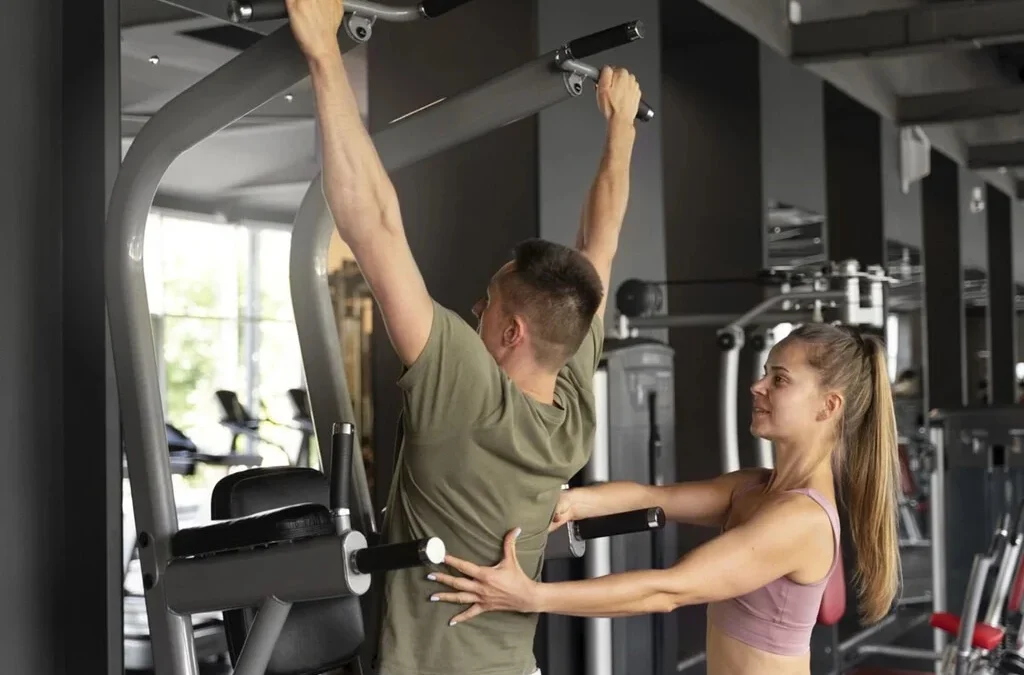
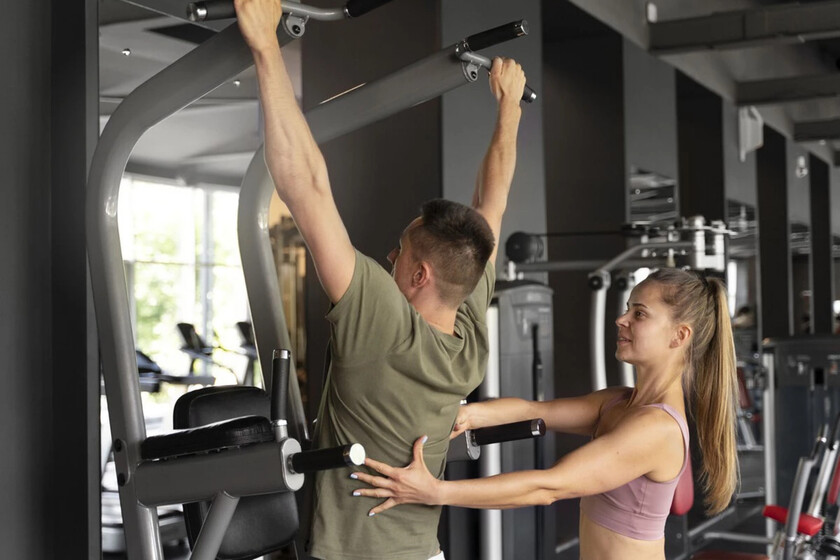
The Partner-Assisted Method: Have a training partner manually assist you during the concentric lift, then release control so you can fight the descent alone against a heavier-than-normal load.
Specialized Hardware: Utilize safety-release pins in power racks or specialized eccentric-overload flywheels that unhook weight once the concentric phase is complete.
3. Integrate Specialized Eccentric Movements
Certain exercises inherently emphasize the lengthening phase to such a degree that they serve as masterclasses in eccentric training.
The Nordic Hamstring Curl: Widely studied for its unmatched ability to prevent hamstring strains and build posterior chain hypertrophy, this bodyweight movement forces the hamstrings to work entirely in an eccentric regime as the body lowers toward the floor.
The Reverse Nordic Curl: Similarly targets the quadriceps through intense eccentric lengthening.
Conclusion
The traditional gym mantra of "just move the weight" is officially obsolete. As contemporary sports science demonstrates through robust meta-analytic data, the magic of muscle building and strength acquisition happens during the descent. By respecting the eccentric phase—slowing down your reps, embracing controlled negatives, and occasionally introducing supramaximal loads—you unlock the most powerful, yet historically overlooked, half of every single repetition. Stop leaving gains on the floor and start mastering the negative.







Leave a Reply