

Main Facts
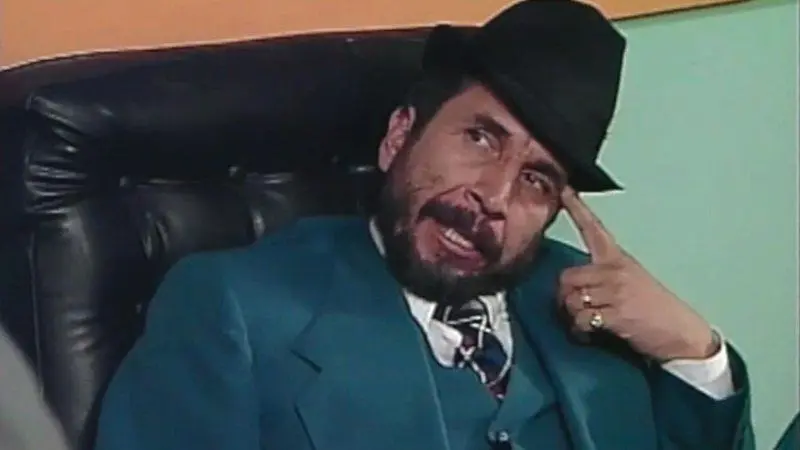
Jorge Velosa, born in the high-altitude Andean municipality of Ráquira, Boyacá, on October 6, 1949, stands as one of the most towering and enduring figures in Colombian cultural history. As a singer, songwriter, veterinarian, actor, radio broadcaster, and author, Velosa is universally recognized as the pioneer, architect, and ultimate master of carranga—a lively, narrative-driven folk genre that bridges the rustic realities of Colombia’s peasant heartland with the broader national consciousness.
For over half a century, Velosa has transformed the everyday speech, humor, struggles, and celebrations of the campesino (rural peasant) into a vibrant musical language. From his early days as a veterinary student at the prestigious National University of Colombia to his status as a living legend whose work is studied and celebrated across generations, Velosa’s career defies simple categorization. He is not merely a musician, but an essential cultural archivist of Colombia. Through iconic anthems such as "La cucharita," "Julia, Julia, Julia," and "La china que yo tenía," Velosa successfully brought the raw, acoustic pulse of the Andes out of rural obscurity and onto national and international stages.
His artistic footprint extends far beyond the traditional performance space. Velosa has left an indelible mark on Colombian television through iconic dramatic series like Don Chinche and Romeo y Buseta, enriched the airwaves as a radio scriptwriter and broadcaster, and cemented the oral traditions of his people through published literature, including La cucharita y no sé qué más and El convite de los animales. Even in his seventies, Velosa remains remarkably active, continually releasing new material—such as his 2024 collaborations with Los Carrangueros del 25—proving that the rhythm of the carrango is as vital today as it was when he first conceptualized it in the 1970s.
Chronology of a Musical Revolution
Early Roots and Rural Inspirations (1949–1969)
Jorge Velosa’s journey began in the rugged landscapes of Boyacá, where traditional customs, agricultural rhythms, and oral storytelling formed the bedrock of his upbringing. According to family recollections shared by his mother in a 1996 interview with journalist Consuelo Cepeda, Velosa’s musical inclinations manifested at the tender age of five. Long before he touched a professional instrument, the young Jorge was already crafting makeshift flutes, maracas, and capadores out of everyday objects found around his home. Blurring the lines between playfulness and artistic exploration, he frequently enlisted his childhood friends into impromptu neighborhood bands. This early fascination with sound and community laid the psychological foundation for his future career, embedding the communal spirit of rural music-making deep within his creative psyche.
Academic Pursuits and Musical Awakening (1970–1976)
As a young man, Velosa relocated to Colombia’s bustling capital, Bogotá, to pursue formal higher education. He enrolled at the National University of Colombia, eventually graduating as a doctor of veterinary medicine. However, even as he navigated the rigorous scientific demands of veterinary science, his ties to the Andean countryside remained unbroken.
While practicing his profession, Velosa found himself increasingly drawn back to traditional peasant music. He began to deeply explore its structural possibilities—not merely as entertainment, but as a vehicle for narrative. He realized that the cadence of rural life, the quirks of local characters, and the socio-economic realities of the peasantry could be woven into clever, humorous, and deeply observational verses. This period of academic discipline paired with cultural immersion served as the crucible for the carranga genre.
The Birth of Carranga and Commercial Breakthrough (1977–1989)
The defining moment of Velosa’s career arrived in 1977 when he founded Los Carrangueros de Ráquira alongside José Luis “El Chato” Lagos, Jorge González, and Ramiro Zambrano. Together, the group engineered a fresh musical proposal that synthesized traditional Andean peasant rhythms—such as the torbellino and merced—with witty, conversational lyrics, creating an entirely new genre christened carranga.
The group’s impact was swift and transformative. Songs like "La cucharita" (which tells the bittersweet tale of a lost wooden spoon carrying immense sentimental value), "Julia, Julia, Julia," and "La china que yo tenía" captivated listeners nationwide. These tracks achieved rare cultural penetration, resonating equally with rural farmers and urban elites in Bogotá and Medellín.
In 1984, Velosa and his collaborators released Pa’ los pies y el corazón, a landmark album that further solidified the genre’s commercial viability and artistic depth. During this decade, Velosa also expanded his artistic footprint into Colombian television, landing memorable acting roles in classic cultural sitcoms like Don Chinche and Romeo y Buseta, which further endeared him to the Colombian public as a beloved national icon.
Symphonic Explorations and Literary Pursuits (1990–2010)
As the decades progressed, Velosa refused to let his art stagnate. He diversified his output by entering the literary world, publishing works that preserved regional speech patterns, folklore, and the foundational history of the carranga movement. Books such as La cucharita y no sé qué más, El convite de los animales, and Historiando mi cantar became essential texts for understanding Colombian oral tradition.
A major milestone in this era of his career occurred in 2011 with the release of Carranga Sinfónica. In this ambitious project, Velosa bridged the gap between rustic folk music and high classical art, collaborating with symphonic orchestras to arrange his rustic compositions for grand orchestral instrumentation. This endeavor proved that carranga was not merely a regional novelty, but a sophisticated musical art form capable of transcending its acoustic origins.
Contemporary Legacy and Continued Creation (2011–Present)
Entering his seventies, Jorge Velosa showed no signs of slowing down. He continued to write, record, and advocate for the preservation of Colombia’s ecological and cultural heritage. In 2024, in collaboration with Los Carrangueros del 25, Velosa released El carrango y la carranga, a fresh production that seamlessly linked his historical sound with contemporary artistic energy. Additionally, projects like the single and video release El velorio del compadre demonstrated his ongoing commitment to keeping the comedic and narrative traditions of the countryside alive. At 77 years of age, Velosa remains an active beacon of cultural preservation, universally revered as the undisputed patriarch of Colombian peasant music.
Supporting Data and Repertoire
The enduring power of Jorge Velosa’s catalog lies in its thematic consistency, linguistic richness, and emotional resonance. Below is an overview of key data points and foundational works defining his career:
Discographic Milestones
- Key Eras: The 1970s experimentation phase; the 1977 founding of Los Carrangueros de Ráquira; the 1984 release of Pa’ los pies y el corazón; the 2011 Carranga Sinfónica project; and the 2024 release of El carrango y la carranga with Los Carrangueros del 25.
- Signature Anthem: "La cucharita" (widely considered the national anthem of carranga).
- Essential Tracks:
- "Julia, Julia, Julia"
- "La china que yo tenía"
- "La gallina mellicera"
- "Las diabluras"
- "El rey pobre"
- "El velorio del compadre"
Literary Contributions
- La cucharita y no sé qué más (Explorations of memory, songcraft, and history)
- El convite de los animales (Fables and verse rooted in rural wisdom)
- Historiando mi cantar (Autobiographical and historical accounts of the carranga movement)
Television and Radio Credits
- Television: Don Chinche, Romeo y Buseta (pivotal contributions to national television comedy and drama).
- Radio: Extensive work as a broadcaster, voice actor, and scriptwriter, utilizing radio waves to reach remote rural communities.
Official Responses and Cultural Recognition
Throughout his illustrious career, Jorge Velosa has received numerous accolades from cultural institutions, academic bodies, and governmental agencies across Colombia. However, the most profound official and public responses to his work are measured by the profound shift in how Colombian society perceives its rural population.
Cultural historians and musicologists have consistently praised Velosa for performing what many describe as an act of "cultural rescue." Before the advent of carranga, traditional peasant music in Colombia was frequently marginalized by urban radio stations, dismissed as outdated, unsophisticated, or purely regional. Velosa’s genius lay in packaging this music with sophisticated humor, poetic double-entendres (piques), and relatable human narratives that commanded respect in intellectual and urban circles without ever losing their rural authenticity.
Educational institutions regularly invite Velosa to speak on oral tradition, and his songs are taught in schools as primary texts for understanding regional Colombian sociology. When Carranga Sinfónica premiered in 2011, classical music critics lauded the adaptation of rural instruments like the requinto and tiple into symphonic arrangements, noting that Velosa’s melodies possessed an inherent harmonic complexity that easily rivaled European folk adaptations by composers like Béla Bartók or Aaron Copland.
Furthermore, public tributes across Boyacá and Bogotá routinely honor Velosa not only as an artist, but as a statesman of rural dignity. His songs have served as unofficial diplomatic tools, introducing international audiences to the warmth, wit, and resilience of the Colombian campesino.
Implications for Colombian Culture and Society
The legacy of Jorge Velosa extends far beyond chart positions and album sales; it carries deep socio-cultural, political, and environmental implications for Colombia.
1. Dignification of the Campesino
For generations, Colombia’s rural population has borne the brunt of systemic neglect, armed conflict, and socio-economic displacement. In this context, Velosa’s music acts as a powerful counter-narrative. By placing the daily lives, labor, speech patterns, and philosophical musings of peasants at the center of national culture, Velosa granted the campesino a sense of profound dignity and visibility. In Velosa’s universe, the peasant is neither a passive victim of poverty nor a simplistic caricature, but a witty, observant, and deeply wise custodian of the land.
2. Preservation of Linguistic and Oral Heritage
Velosa’s extensive use of Boyacense idioms, regional vocabulary, and traditional storytelling structures has safeguarded vanishing modes of communication. In an era dominated by rapid globalization and digital uniformity, Velosa’s lyrics serve as a linguistic vault. His books and songs document the specific ways in which Andean communities interact with their natural environment, preserving folk botanical knowledge, animal lore, and regional humor for future generations.
3. Environmental and Ecological Consciousness
Long before environmentalism became a mainstream commercial imperative, Velosa’s music championed a harmonious relationship with nature. His compositions frequently celebrate the flora, fauna, water sources, and landscapes of the Andean cordillera. Songs that playfully chronicle interactions with farm animals or lament the degradation of rural ecosystems carry an underlying ecological ethos, reminding listeners of their fundamental dependence on the earth.
4. The Institutionalization of Carranga as a National Genre
What began as an underground acoustic experiment by a veterinarian and his friends in 1977 has evolved into an institutionalized pillar of Colombian identity. Today, carranga festivals are held annually across multiple departments—most notably in Boyacá and Santander—drawing thousands of attendees and inspiring hundreds of younger bands (such as Los Carrangueros del 25, San Miguel Pérez, and others) to carry the torch. Velosa proved that a national identity does not need to be manufactured in metropolitan boardrooms; it can organically sprout from the soil of the provinces.
As Jorge Velosa continues to create well into his late seventies, his life’s work remains an open invitation to all Colombians—and the world at large—to listen closer to the countryside, to value the wisdom of the simple life, and to keep the resilient, joyful spirit of the carrango alive for generations to come.



Leave a Reply