

Main Facts
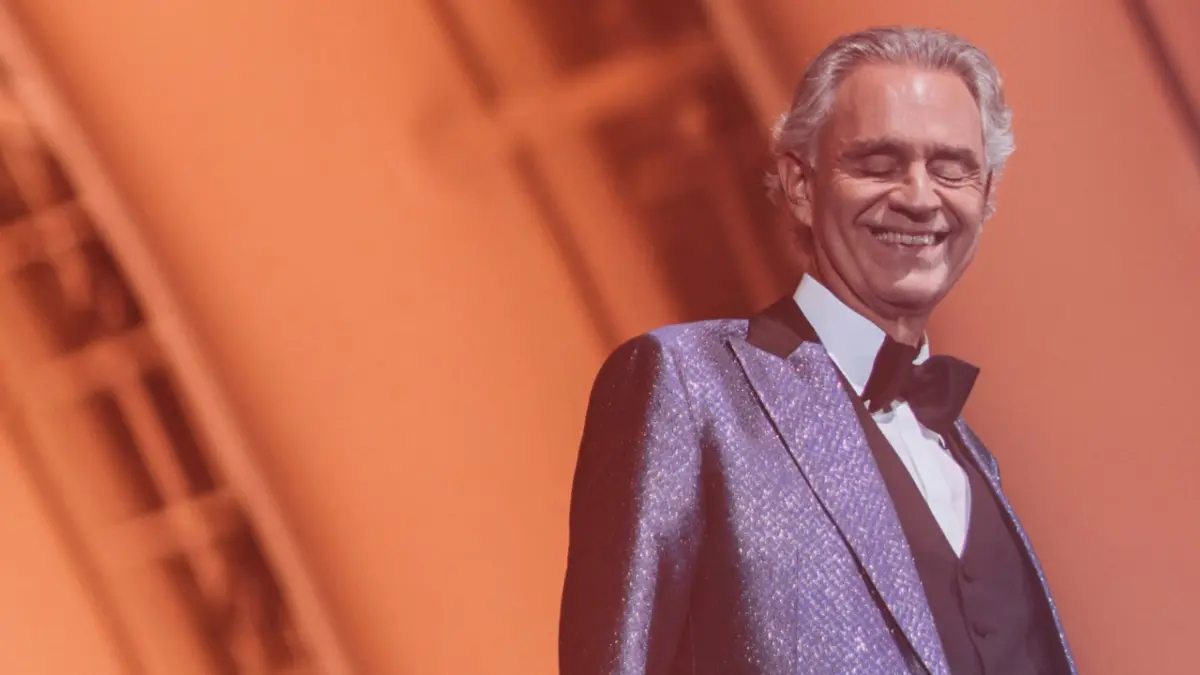
On September 22, the global music community pauses to celebrate a towering figure of contemporary classical and popular crossover music: Andrea Bocelli. Marking his 68th birthday, the world renowned Italian tenor is being fêted not merely for his longevity in an infamously fickle industry, but for an unprecedented career that has bridged the gap between traditional opera houses and mainstream global pop charts. Born in 1958 in the rural idyll of Lajatico, a small agricultural village in the heart of Tuscany, Italy, Bocelli’s life story is a profound testament to resilience.
From birth, Bocelli lived with congenital glaucoma, a degenerative eye condition that progressively impaired his sight throughout his childhood until a tragic accident involving a football at age 12 left him completely blind. Yet, rather than capitulating to adversity, Bocelli channeled his internal landscape into an extraordinary auditory sensitivity. Over the course of a career spanning decades, he has sold over 90 million records worldwide, performed for multiple popes, U.S. presidents, and British monarchs, and established himself as the most successful classical solo artist in music history.
His distinctive, instantly recognizable timbre—a seamless blend of operatic discipline and emotive, modern warmth—has redefined what it means to be a crossover artist. As we reflect on his birth anniversary, this retrospective examines the winding path of his life, his formative influences, the legal background that preceded his full-time musical dedication, and five pivotal masterpieces that cement his legacy in global culture.
Chronology: From the Tuscan Countryside to Global Stardom
The Early Years and Musical Awakening (1958–1970)
Andrea Bocelli was born to Edi and Alessandro Bocelli, whose family managed a farm and a heavy machinery business in La Sterza, a hamlet near Lajatico. Music was an ambient and foundational part of his upbringing. Showing an early fascination with sound, Bocelli began formal piano lessons at the age of six. The piano served as his initial linguistic gateway into the architecture of western music, swiftly followed by proficiency in the flute, saxophone, trumpet, trombone, guitar, and drums.
Despite his instrumental versatility, his true calling crystallized through a transformative gift from his nanny, Oriana. She presented the young Bocelli with a record featuring the legendary Italian tenor Franco Corelli. Captivated, the seven-year-old began obsessively studying the nuances of operatic performance. He developed an acute ear, rapidly learning to distinguish the vocal signatures of the golden era of opera and attempting to emulate monumental figures like Enrico Caruso, Giacomo Lauri-Volpi, and Aureliano Pertile.
Tragedy and Perseverance (1970–1980)
The defining rupture of Bocelli’s youth occurred when he was 12 years old. Following a blow to the head from a football during a match, the congenital glaucoma triggered a catastrophic hemorrhage. Despite multiple surgical interventions, including an unsuccessful attempt by specialists to restore his sight, Bocelli was left permanently and completely blind.
Rather than withdrawing from the world, Bocelli maintained an astonishing intellectual and academic discipline. He finished high school and subsequently enrolled at the University of Pisa, where he pursued a rigorous course of study in jurisprudence, ultimately earning a formal degree to practice law. For a period, Bocelli worked as a court-appointed defense attorney. However, the pull of music remained insurmountable. While navigating his legal career, he spent his nights performing in piano bars across Tuscany to hone his craft, paying for advanced private vocal coaching under the direct tutelage of his childhood idol, Franco Corelli.
The Breakthrough at Sanremo and International Crossover (1990–1999)
The watershed moment of Bocelli’s professional trajectory arrived in 1994. Entering the prestigious Sanremo Music Festival in the "Newcomers" section, Bocelli performed “Il mare calmo della sera.” His breathtaking rendition secured first place with a record-shattering score, immediately capturing the attention of Italy’s cultural elite and catching the eye of Italian rock icon Zucchero, who was looking for a tenor to record a demo of the song “Miserere” for Luciano Pavarotti.
Pavarotti himself listened to the recording and famously remarked, "There is no better voice." This endorsement opened the floodgates to international markets. In 1995, Bocelli released his sophomore album, Bocelli, featuring the international smash hit “Con te partirò.” When re-recorded in 1996 as “Time to Say Goodbye”—a bilingual duet with British soprano Sarah Brightman—the track exploded globally, shattering sales records across Europe and North America and embedding Bocelli into the global consciousness.
Supporting Data: Commercial Impact and Critical Acclaim
The quantitative metrics of Andrea Bocelli’s career paint the picture of a cultural phenomenon operating on a scale rarely seen in classical or crossover music:
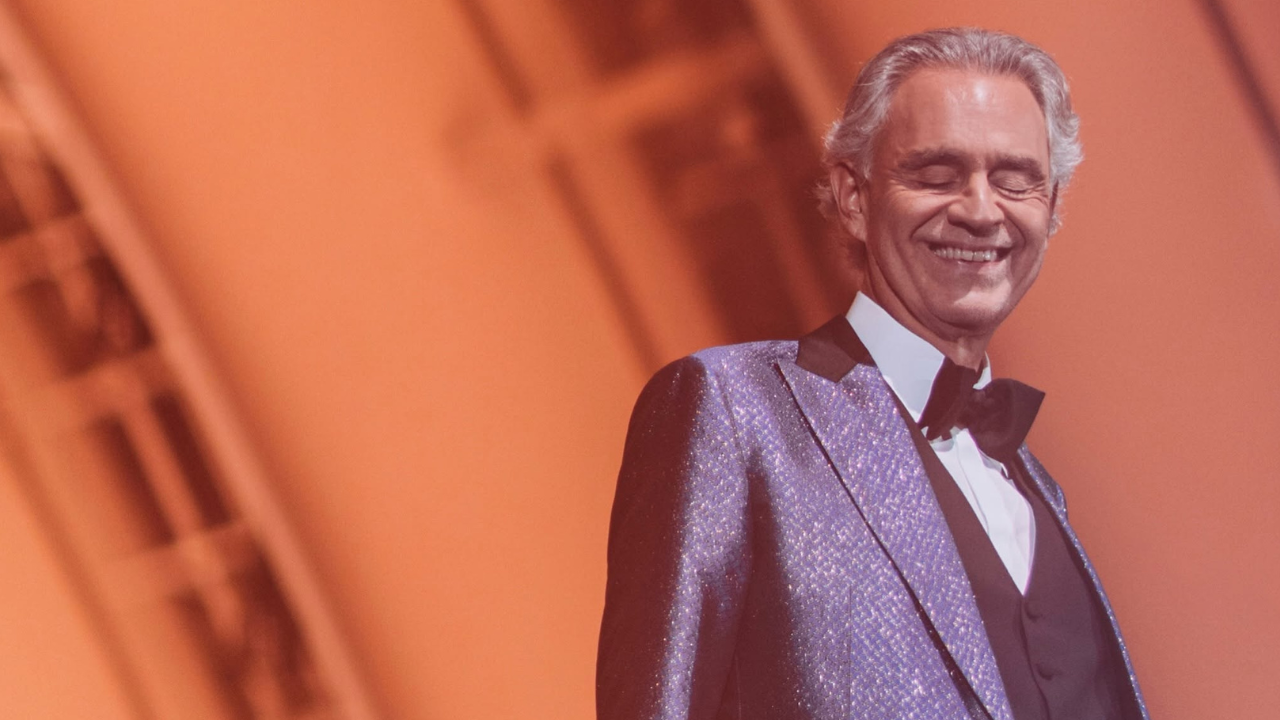
- Record Sales: Bocelli has sold over 90 million albums worldwide, making him the best-selling classical music artist of all time.
- Chart Dominance: His 1997 compilation album Romanza remains one of the best-selling albums in the history of Italian music, achieving multi-platinum status in numerous countries, including the United States, Canada, and throughout Europe.
- Global Collaborations: Bocelli has shared stages and recording studios with a dizzying array of pop and classical royalty, including Luciano Pavarotti, Céline Dion, Ed Sheeran, Ariana Grande, Jennifer Lopez, Mary J. Blige, Stevie Wonder, and his own son, Matteo Bocelli.
- Honors and Accolades: He has been nominated for multiple Grammy Awards (including Best New Artist in 2000) and Latin Grammy Awards. In 2010, his contributions to the arts were permanently cemented with a star on the Hollywood Walk of Fame. Furthermore, he has performed for four U.S. Presidents, three Popes, and the British Royal Family at events such as the Queen’s Diamond Jubilee.
- Philanthropy: Through the Andrea Bocelli Foundation (ABF), established in 2011, the tenor has spearheaded global initiatives empowering people and communities overcoming poverty, illiteracy, and distress caused by illness and social exclusion, raising tens of millions of dollars.
Official Responses and Cultural Legacy
Cultural leaders, political figures, and musical peers have consistently lauded Bocelli not only for his vocal artistry, but for his embodiment of the human spirit’s capacity to transcend physical limitations.
Upon presenting Bocelli with various international honors, cultural ministries across Europe have repeatedly emphasized his role as a modern ambassador of Italian heritage. Italian statesmen have frequently cited his voice as a unifying cultural force that projects the beauty of the Mediterranean artistic tradition onto the global stage.
Franco Corelli, reflecting on his time mentoring the young Bocelli, remarked: "Andrea possessed an intuitive understanding of the breath and the soul of the phrase that cannot be taught in academies. I merely helped him clear the path so his innate light could emerge."
Modern collaborators have echoed this sentiment. Céline Dion, with whom Bocelli recorded the iconic “The Prayer,” stated in a retrospective interview: "When you hear Andrea sing, you don’t just listen with your ears; you listen with your entire heart. There is an honesty, a pure emotional transparency in his voice that is utterly humbling to stand next to."
Implications: Five Masterpieces That Shaped Music History
To fully comprehend Bocelli’s monumental impact, one must examine the specific compositions that defined his artistic evolution. Here are five tracks that not only marked his career, but fundamentally reshaped the crossover genre.
1. "Time to Say Goodbye" (with Sarah Brightman, 1996)
Originally released as a solo Italian track titled “Con te partirò” (“I will leave with you”), the song transformed into a global seismic event when it was paired with English lyrics and reimagined as a duet with British soprano Sarah Brightman for the farewell fight of German boxer Henry Maski. The resulting single, “Time to Say Goodbye,” obliterated European sales records, remaining at the top of the German charts for an unprecedented 14 consecutive weeks and selling over 12 million copies worldwide. It established the blueprint for modern classical crossover.
2. "Vivo per lei" (with Giorgia, 1995)
Lyrically an ode to music itself (“I live for her”), this track was originally recorded by the Italian group O.R.O. before Bocelli and singer Giorgia turned it into a soaring anthem in 1995. Recognizing its universal appeal, Bocelli subsequently recorded multilingual versions across Europe and Latin America, partnering with luminaries such as Marta Sánchez in Spain, Hélène Ségara in France, and Sandy Leah Lima in Brazil. This strategic multilingual rollout brilliantly positioned Bocelli as a borderless artist, beloved in diverse cultural landscapes.
3. "The Prayer" (with Céline Dion, 1999)
Commissioned for the animated musical film Quest for Camelot, “The Prayer” featured separate solo versions by Bocelli and Céline Dion in the film. However, their joint recording for Bocelli’s classical album Sogno became a historic milestone. The soaring, spiritual ballad won the Golden Globe Award for Best Original Song and received Academy Award and Grammy Award nominations. Their live performance at the 1999 Oscars remains etched in television history as a masterclass in vocal synergy and emotional delivery.
4. "Fall on Me" (with Matteo Bocelli, 2018)
Marking an intensely personal chapter in his career, Bocelli teamed up with his son, Matteo Bocelli, for “Fall on Me”, the lead single from his critically acclaimed 2018 album Sì. The poignant track—which explores the delicate, enduring bond between parent and child—was featured in Disney’s film The Nutcracker and the Four Realms. The collaboration served as a formal torch-passing moment, introducing Matteo to the global stage while showcasing a tender, deeply vulnerable dimension of the veteran tenor’s artistry.
5. "Somos Novios" / "It’s Impossible" (with Christina Aguilera, 2006)
Demonstrating his mastery of Latin romantic repertoire, Bocelli turned his attention to the timeless bolero “Somos Novios”, originally composed in 1968 by Mexican legend Armando Manzanero. For his 2006 cinematic pop album Amore, Bocelli partnered with pop powerhouse Christina Aguilera. Their bilingual duet combined traditional Latin passion with contemporary vocal acrobatics, creating a lush, cinematic interpretation that introduced a classic Latin American standard to a fresh generation of listeners and further solidified Bocelli’s immense popularity across the Americas.

Leave a Reply