

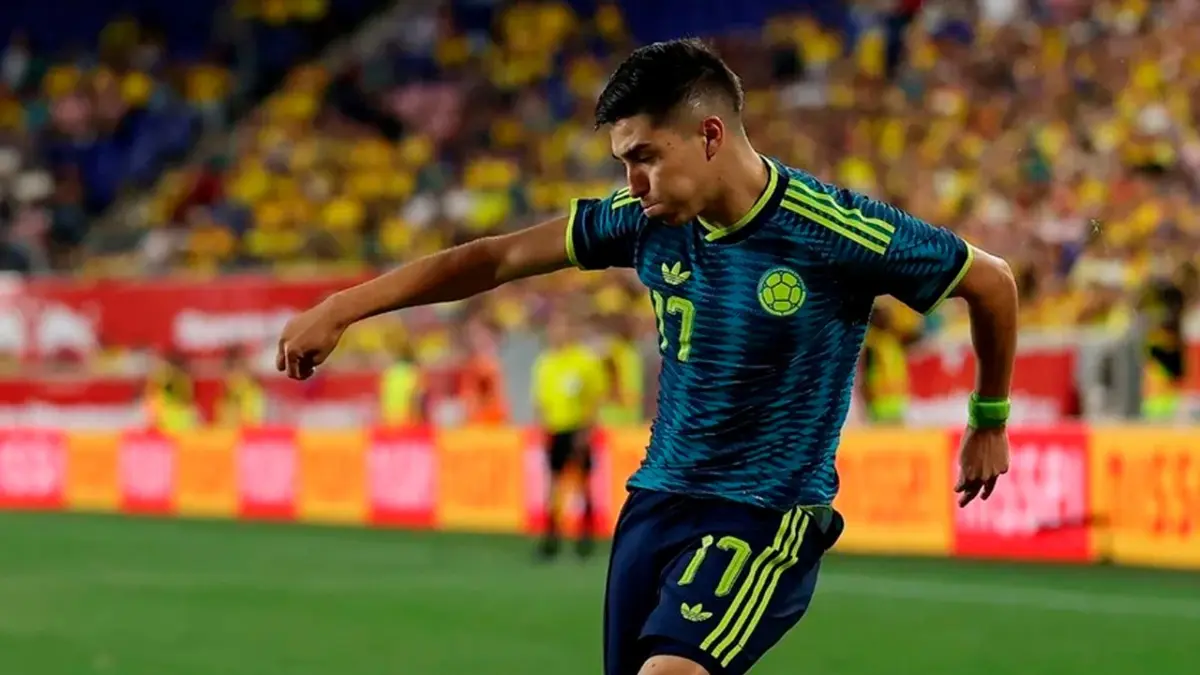
BOGOTÁ, Colombia — In a match that served as both a tactical laboratory and a psychological rebound, the Colombian Men’s National Team defeated Peru 2-0 to close out its initial series of international friendlies following the 2026 FIFA World Cup. Goals from debutants and emerging talents Samuel Velásquez and Daniel Arcila secured the first victory of this new quadrennial cycle for head coach Néstor Lorenzo, injecting fresh optimism into a squad actively undergoing generational transformation.
The fixture, played amidst an intensive FIFA international window, provided the technical staff with crucial data points regarding depth, tactical flexibility, and the integration of under-23 prospects. Having opened the post-World Cup period with a hard-fought 1-1 draw against Mexico and a troubling 1-0 defeat to Paraguay, La Tricolor finally found the offensive rhythm and defensive resilience that had eluded them earlier in the series.
With eyes now fixed on the upcoming November tests against Chile—including a high-profile humanitarian match in Cali—the Colombian coaching staff is meticulously laying the foundation for the long road toward the next global tournament.
Main Facts
The headline achievement of the evening at the Estadio Nacional was the clinical 2-0 scoreline, engineered entirely by players making significant breakthroughs in the senior national team setup.
- The Goalscorers: Samuel Velásquez, the Atlético Nacional left-back making his first-ever senior start for Colombia, broke the deadlock in the 68th minute with a thunderous first-time strike from outside the box following a Peruvian defensive clearance. Moments later, substitute Daniel Arcila—currently plying his trade with León in Mexico—put the game to bed with a curling effort from the edge of the area, capping off a dream senior team debut.
- Tactical Realignment: Coach Néstor Lorenzo abandoned the experimental five-man defensive block that backfired in the 1-0 loss to Paraguay, reverting to a more familiar and fluid back-four structure. This tactical pivot unlocked a far more dominant second-half performance against the Blanquirroja.
- Squad Rotation and Debuts: Lorenzo demonstrated his commitment to squad renewal by deploying 24 of the 26 called-up players across the three friendly fixtures. Alongside Velásquez and Arcila, young prospect Juan Manuel Rengifo also earned his maiden cap against Peru.
- Series Balance: Colombia finished the post-World Cup introductory tour with a balanced record of one win, one draw, and one loss (GF: 3, GA: 2).
- Next Fixtures: La Tricolor will return to action in November for a double-header against Chile. The opening leg on November 13 will take place at the Estadio Pascual Guerrero in Cali as a charity match, with 100% of ticket sales dedicated to disaster relief following a recent earthquake in Colombia. The return leg is scheduled for November 19 in Santiago.
Chronology of the Series: From Mexican Stalemate to Peruvian Redemption
To fully understand Colombia’s 2-0 victory over Peru, one must contextualize the evolutionary arc of this three-game September-October window. Néstor Lorenzo entered this FIFA date tasked with an unenviable assignment: rebuilding the mental and structural framework of a team that had just endured the emotional rollercoaster of the 2026 World Cup.
Phase One: The Mexican Test (1-1)
The opening fixture against Mexico served as an exploratory exercise. Lorenzo fielded a hybrid lineup combining seasoned veterans from the World Cup roster with hungry domestic league standouts. While the team showed flashes of enterprise, the lack of competitive cohesion was evident. Mexico capitalized on transitional spaces, forcing Colombia to grind out a 1-1 draw. The game exposed early vulnerabilities in central midfield, prompting the coaching staff to look for fresh legs ahead of the trip to Asunción.
Phase Two: The Paraguayan Stumble (0-1)
Seeking to fortify a defense that had looked occasionally porous against Mexico, Lorenzo made a bold tactical gamble against Paraguay. He deployed an unfamiliar five-man defensive line, hoping to suffocate the Albirroja attack. Instead, the tactical shift stifled Colombia’s own offensive engine. The team looked disconnected, hesitant in build-up play, and ultimately succumbed to a 1-0 defeat. Post-match analysis revealed a disgruntled fan base and a technical staff recognizing that over-experimentation could derail the squad’s confidence.
Phase Three: The Peruvian Redemption (2-0)
Under immense pressure to deliver a performance that justified the ongoing generational transition, Colombia faced Peru in the final friendly of the series. The first half was a cagey, tactical chess match. Peru’s veteran goalkeeper Pedro Gallese was largely untroubled as both sides felt each other out in the midfield muck.
However, the second half told a completely different story. Recognizing the structural flaws of the first 45 minutes, Lorenzo made pivotal tactical adjustments and introduced fresh blood from the bench. Reverting to the classic 4-2-3-1/4-3-3 shape immediately stretched the Peruvian defense.
The breakthrough arrived in the 68th minute. A sustained Colombian attack forced a hurried clearance from the Peruvian backline. The ball fell invitingly to Samuel Velásquez just outside the penalty arc. Without hesitation, the Atlético Nacional lateral unleashed a ferocious, low-driven volley that scorched past a sprawling Gallese, hitting the back of the net to break the deadlock and ignite wild celebrations on the Colombian bench.
With Peru forced to push forward in search of an equalizer, Colombia exploited the open spaces on the counter-attack. Enter Daniel Arcila. Substituted on late in the second half, the León midfielder seized his moment of glory. Receiving a square pass near the edge of the box, Arcila shifted the ball onto his preferred foot and curled a sublime, technical effort past Gallese’s outstretched fingertips, securing the 2-0 victory in the 83rd minute.
The final whistle confirmed not just a clean sheet and a win, but the successful integration of a new wave of talent into the senior international ecosystem.
Supporting Data and Tactical Analysis
A deeper dive into the numbers underscores the transitional nature of this Colombian squad and highlights the areas where Lorenzo must focus his attention before the official competitive qualifiers resume.
Squad Utilization and Generational Turnover
One of the most notable takeaways from the recent FIFA window is Lorenzo’s willingness to blood new talent. Out of 26 players called up, 24 saw competitive minutes. This aggressive rotation was designed to test the mental fortitude of younger players under international pressure.
| Match | Opponent | Formation Used | Key Tactical Observation | Result |
|---|---|---|---|---|
| Game 1 | Mexico | 4-3-3 | Balanced mix of veterans and youth; defensive transitions lacked synchronization. | 1-1 (Draw) |
| Game 2 | Paraguay | 3-5-2 / 5-4-1 | Experimental 5-man backline; completely neutralized Colombia’s offensive fluidity. | 0-1 (Loss) |
| Game 3 | Peru | 4-2-3-1 | Return to back-four; high-pressing wingbacks and dynamic central midfielders unlocked the win. | 2-0 (Win) |
Offensive Efficiency vs. Creation
While scoring two goals against a seasoned defensive unit like Peru is commendable, Colombia’s overarching tactical concern throughout the post-World Cup period has been the final-third precision. In the games against Mexico and Paraguay, La Tricolor dominated possession stretches exceeding 60%, yet registered a remarkably low expected goals (xG) metric.
Against Peru, the introduction of Velásquez and Arcila proved that injecting players with high verticality and shooting confidence from distance can solve the "sterile possession" problem. Velásquez’s goal, in particular, highlighted the value of secondary-wave runs into the box—an element that was largely missing during the conservative tactical setups earlier in the week.
Defending the Transition
Defensively, reverting to the back-four against Peru restored the positional familiarity that central defenders such as Yerry Mina and Jhon Lucumí (or their rotational peers) rely upon. By eliminating the positional confusion inherent in the five-man experiment against Paraguay, Colombia limited Peru to zero high-danger shots on target during the second half, allowing goalkeeper David Ospina (or his deputy) a relatively quiet evening.
Official Responses and Internal Reactions
The aftermath of the 2-0 victory brought a palpable sense of relief and optimism to the Colombian camp. Speaking to the media in the post-match press conference, head coach Néstor Lorenzo addressed the criticisms of the Paraguay match while championing the resilience of his squad.
"We are in a phase of evolution. You cannot expect a team to transform its identity overnight after the emotional and physical toll of a World Cup. The match against Paraguay was a necessary lesson—we tried an alternative structure, it didn’t yield the fluidity we wanted, and we corrected it," Lorenzo stated to journalists.
Regarding the performances of his debutants, the Argentine tactician was visibly enthusiastic: "Samuel [Velásquez] and Daniel [Arcila] represent the future of this institution. They came into a tense environment, under heavy scrutiny after our recent results, and they played with the maturity of veterans. This is what this window was designed to achieve: to discover who is ready to carry the badge when the pressure is highest."
Samuel Velásquez, whose thunderous strike opened the scoring, spoke emotionally about his first senior start:
"Wearing the senior team jersey is a dream every Colombian kid has in the backyard. To cap my first start with a goal and a victory is indescribable. I want to dedicate this to my family and to the coach for trusting me. We knew we owed the country a complete performance after the Paraguay game, and we left everything on the pitch."
Daniel Arcila, the Mexican-league revelation who sealed the win with a brilliant cameo from the bench, echoed similar sentiments regarding the squad’s unity:
"The adaptation process to the senior level is demanding, but the older players welcomed us with open arms. When I stepped onto the pitch, my only objective was to impact the game, find space, and take my chance. Thankfully, the shot went in. This victory is for the entire group—we are building something special here."
Implications and Looking Ahead: The Road to November
The conclusion of this three-game series marks the end of the initial exploratory phase for Colombia, but the technical agenda remains packed. The data gathered over the last fortnight will dictate squad selection for the remainder of the year.
The November Test: Chile and Humanitarian Relief
The Colombian Football Federation (FCF) officially confirmed that La Tricolor will face Chile in a high-stakes double-header this coming November. Beyond the athletic rivalry, the opening encounter carries immense social significance.
- November 13 (Cali): The first match against Chile will be hosted at the iconic Estadio Pascual Guerrero in Cali. In an exemplary display of solidarity, the FCF announced that 100% of the gate receipts and ticket sales will be directly channeled into emergency reconstruction and humanitarian relief funds for regions severely impacted by the recent, devastating earthquake in Colombia. The match transforms a standard international friendly into a unifying national event, where sports and civic duty intersect.
- November 19 (Santiago): The return fixture will take place in the Chilean capital, providing Lorenzo with a hostile environment to test his younger players’ mental toughness away from home turf.
The Broader Horizon
As the team transitions toward the next major qualifying cycles and continental tournaments, the lessons learned from Mexico, Paraguay, and Peru will serve as North Star metrics. Lorenzo must now decide whether to institutionalize the tactical bravery shown by the younger generation or revert to the reliable core of veterans who carried the nation through the previous cycle.
One thing is certain: the emergence of players like Samuel Velásquez and Daniel Arcila has proven that Colombian football’s talent pipeline remains exceptionally vibrant. As La Tricolor prepares to pack their bags for Cali and Santiago in November, the 2-0 victory over Peru stands not merely as a friendly win, but as the dawn of a revitalized era for Colombian football.

Leave a Reply