

By Global Business & Investigative Desk
Published in partnership with international mining intelligence reports
Main Facts: The Collapse of a Multimillion-Dollar Vision
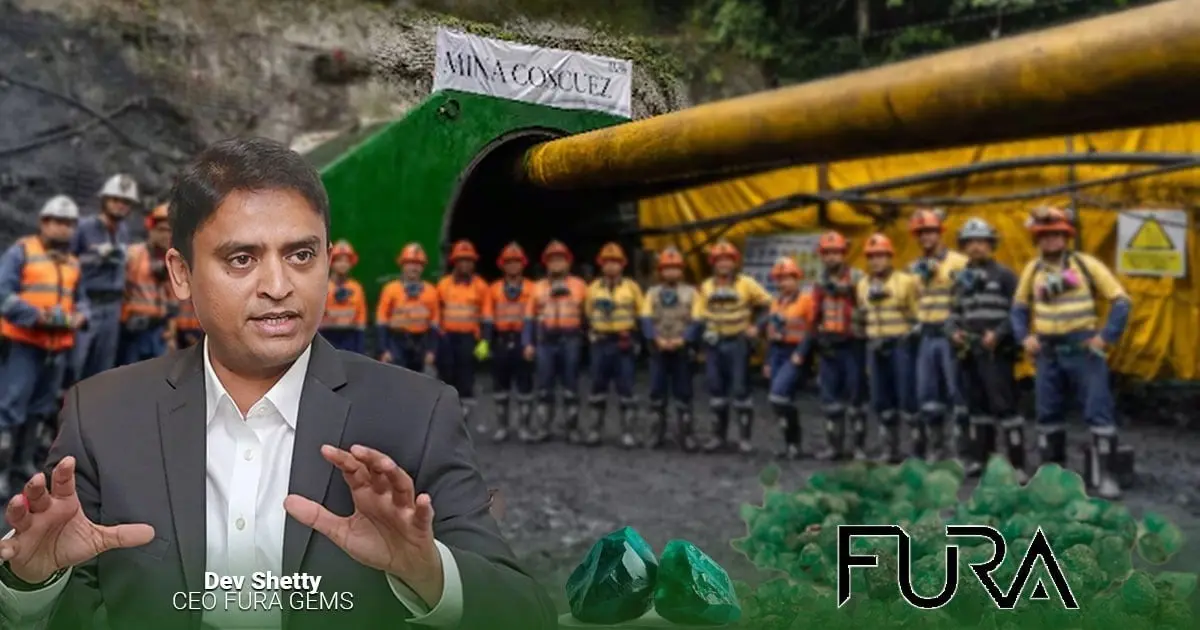
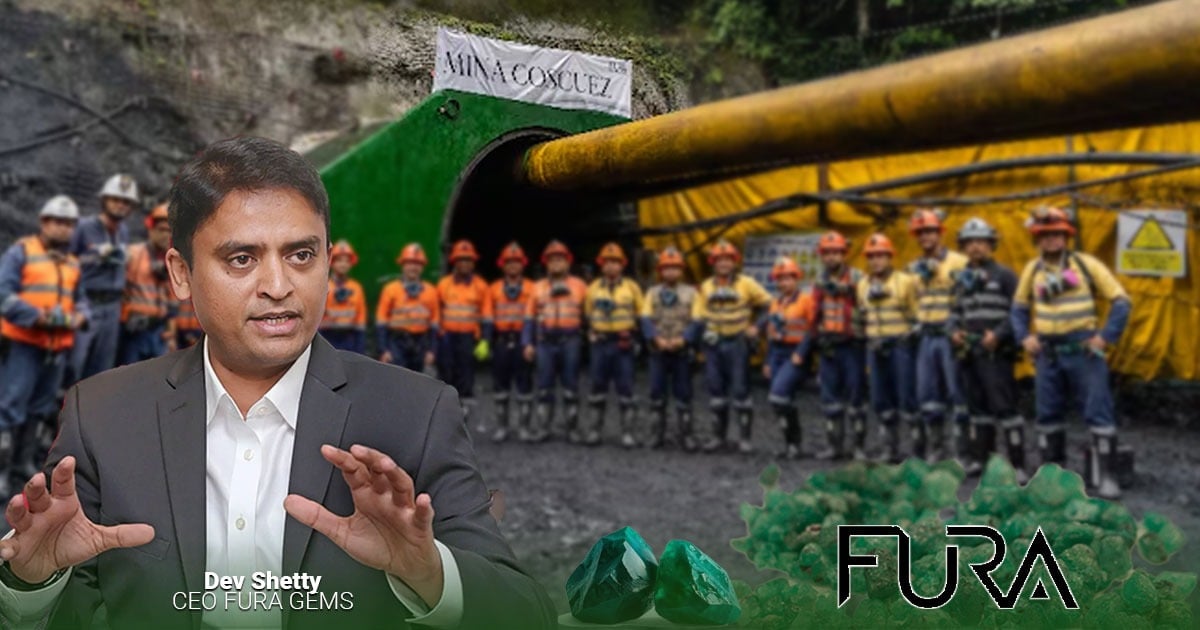
The dream of transforming Colombia’s historic emerald industry through corporate modernization, global standards, and foreign investment has officially hit a wall of violence, insecurity, and social unrest. Indian entrepreneur Dev Shetty, celebrated globally for pulling African gemstone mines out of bankruptcy and turning them into industry titans, has officially surrendered. His company, Fura Gems, has initiated the liquidation of its Colombian subsidiary, Coscuez S.A., and requested the suspension of operations at the legendary Coscuez mine.
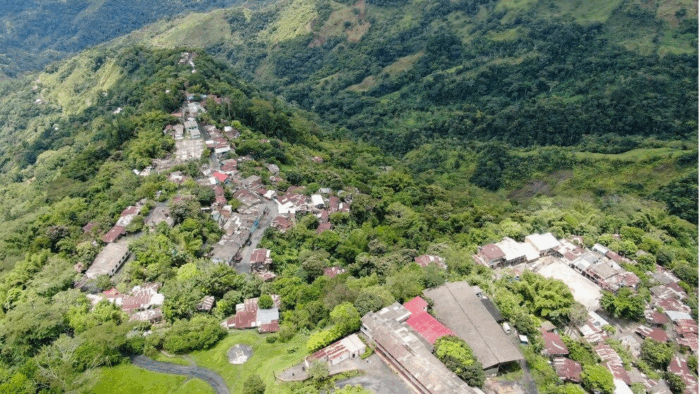
Located in the municipality of San Pablo de Borbur in the department of Boyacá, the Coscuez mine is a sprawling underground treasure trove. Technical studies estimate that the deposit still harbors up to 6 million quilates (carats) of emeralds beneath its surface, with active mining titles extending to 2050 and a full-scale environmental license secured in 2021. Yet, despite injecting over $480,000,000 COP ($480 billion pesos) into modernization, infrastructural overhauls, community projects, and employment formalization between 2017 and 2025, Fura Gems deemed the operation financially and operationally untenable.
The breaking point was not a lack of geological wealth, but an intractable security crisis. Plagued by armed incursions, violent takeovers by organized groups, aggressive sieges by informal miners (guaqueros) operating in unsafe conditions, and labor conflicts, Shetty’s grand vision collapsed. The departure of Fura Gems marks a sobering reality check for foreign mega-investors attempting to tame the volatile, historically conflict-ridden landscapes of Colombia’s "Green Wars."
Chronology of an Ambitious Venture and Its Eventual Undoing
To understand how a glittering international success story unraveled in the rugged mountains of Boyacá, one must trace the timeline of Fura Gems’ tenure and the deep-rooted history of the Coscuez mine.
The Legacy of the Emerald Czar (Pre-2017)
For decades, Coscuez was synonymous with Víctor Carranza, the legendary figures known as Colombia’s "Emerald Czar." Carranza controlled the mine with an iron fist from the 1980s until his death in 2013, operating primarily through the company Esmeracol. Jesús Hernando Sánchez, Carranza’s most trusted confidant and a central player during Boyacá’s violent "green wars," inherited much of that influence. However, following Carranza’s death and Sánchez’s waning control—culminating in Sánchez being gunned down in northern Bogotá—foreign capital stepped in. An investment group from Hong Kong, Emporium HS, acquired a majority stake, acting as the bridge for Dev Shetty’s Fura Gems to buy 76% of the operation in 2017.
The Rise and Modernization of Fura Gems (2017–2023)
Fresh off monumental successes—rescuing the Kagem emerald mine in Zambia (making it the world’s largest) and resurrecting a ruby mine in Mozambique—Dev Shetty arrived in Colombia armed with a proven playbook: corporate standardization, rigorous industrial safety, and long-term capital investments.
Fura invested heavily in upgrading underground infrastructure, ventilation, and pumping systems. By 2023, the company proudly announced plans for an additional $200 million USD investment program to rival global heavyweights, yielding a production of 240,000 carats of rough emeralds that year.

Mounting Tensions and Social Fractures (2024–2025)
Beneath the glossy corporate PR, trouble was brewing. Tensions between Fura’s corporate framework and local informal miners (guaqueros) escalated. On August 12, 2024, the Ministry of Mines and Energy brokered an agreement where Coscuez committed to recognizing ancestral mining traditions, attempting to bridge a chasm between its 500 formal employees and roughly 2,000 informal miners operating in the region.
Simultaneously, labor disputes erupted internally. Workers staged temporary work stoppages, protesting grueling shifts, delayed social security payments, and inadequate personal protective equipment.
The Security Collapse and Liquidation (2025–2026)
By late 2025, the security situation deteriorated beyond repair. Organized armed elements and waves of illegal miners began forcing their way into unstable underground sectors. These unauthorized entries frequently compromised critical mine safety infrastructure, forcing operators to shut down vital ventilation and water-pumping systems. The human toll was severe, highlighted by two tragic deaths in September 2025.
Recognizing the untenable risks to personnel and capital, Fura formally petitioned the National Mining Agency (Agencia Nacional de Minería) on February 12, 2026, for a temporary suspension of operations. Simultaneously, the company took the definitive step of filing with the Superintendency of Companies (Superintendencia de Sociedades) to initiate the formal liquidation of its Colombian subsidiary, Coscuez S.A., a process that began on February 10, 2026, and remains active.
Supporting Data: Financial Footprint and Market Realities
The collapse of Fura Gems in Colombia is framed by compelling financial figures, geological potential, and stark global market dynamics.
- Cumulative Investment: Between 2017 and 2025, Fura Gems reported pumping over $480,000,000 COP into infrastructure modernization, workforce development, and regional social initiatives in Boyacá.
- Fiscal Contributions: The company contributed approximately $45,000,000 COP in direct taxes and royalties during its operational window.
- Geological Reserves: Technical evaluations confirm that Coscuez remains a world-class asset, holding an estimated 6 million carats of accessible emerald reserves capable of supporting extraction for the next 30 years.
- Production Peak: At its operational height in 2023, the mine yielded 240,000 carats of rough emeralds.
- Global Market Size: The worldwide emerald market is relatively niche compared to other minerals, valued at approximately $2.78 billion USD.
- Colombian Exports: In the previous year, Colombia exported $116 million USD in emeralds, routing roughly 95% of its national production to foreign buyers.
Despite these strong macro-indicators, the high costs of maintaining rigorous modern safety and environmental standards in a region plagued by lawlessness proved mathematically unsustainable for Fura’s board.
Official Responses and Stakeholder Positions
The unfolding crisis at Coscuez has drawn sharp reactions from governmental bodies, labor representatives, and regional business factions.
The Ministry of Mines and Energy
The Colombian government has expressed deep concern over the formal withdrawal of a cornerstone foreign investor. While attempting to mediate between formal corporations and traditional guaqueros in August 2024, the Ministry acknowledged the immense challenge of formalizing artisanal mining traditions that have defined Boyacá for generations. Regulators are now tasked with ensuring that the liquidation process respects labor obligations and environmental remediation mandates.

Fura Gems and Dev Shetty
In official statements surrounding the exit, leadership characterized the decision as a matter of pure corporate responsibility. Shetty’s executive team concluded that continuing operations under constant threats of vandalism, worker endangerment, and unchecked illegal invasions was "neither responsible nor viable." The inability to secure basic rule of law inside the concession boundaries rendered their African-proven model inapplicable in the Boyacá mountains.
Implications: Who Will Pick Up the Pieces?
With Fura Gems in liquidation and Coscuez effectively up for grabs, the Colombian emerald sector stands at a critical crossroads. The ultimate question is who will dare to step into the vacuum left by the multinational firm.
1. Domestic Emerald Powerhouses
Industry insiders point to established Colombian heavyweights as the most logical successors. Companies like Muzo (historically tied to the Carranza clan and currently led by Charles Clifford Burge via The Muzo Companies Colombia) and Esmeraldas Santa Rosa possess the deep regional knowledge, political capital, and security apparatuses necessary to navigate Boyacá’s complex terrain.
Santa Rosa features a complex web of local stakeholders, including:
- Eight International (~23% stake, linked to Carranza heirs).
- Emerald Planet / Jesús Hernando Sánchez Sierra (~25%).
- Minesco S.A.S. / Rodríguez Daza brothers (~12%).
- Ruby Solanyu Rocha (~10%).
- Thorn Investment Limited / Carlos Alberto Molina (~30%).
Figures like Jonatan Carranza Vidal (nephew of Víctor Carranza and legal representative of Banco Negro S.A.S.) continue to maintain prominent positions in the regional ecosystem, proving that local clans maintain unmatched resilience compared to foreign corporations.
2. International Strategic Funds
Alternative buyers could emerge from international investment circles—particularly sovereign wealth funds or private equity groups based in Dubai, Hong Kong, or Switzerland—that specialize in high-risk, high-reward gemstone assets and possess robust supply-chain traceability frameworks. Emporium HS, which previously held stakes in Coscuez, fits this strategic profile. Furthermore, conglomerates diversified in gold, diamonds, or copper from the Middle East have shown growing interest in securing strategic gemstone assets.
Broader Industry Outlook
The departure of Dev Shetty serves as a cautionary tale for foreign direct investment in Colombia’s extractive peripheries. While Colombian emeralds remain undisputed world leaders in terms of quality, outcompeting rising industrial threats from Zambia and Brazil requires more than geological riches and capital injections. Without state-backed security, definitive containment of illegal mining, and stable social pacts with local communities, even the most successful mining executives in the world will continue to "throw in the towel."




Leave a Reply