

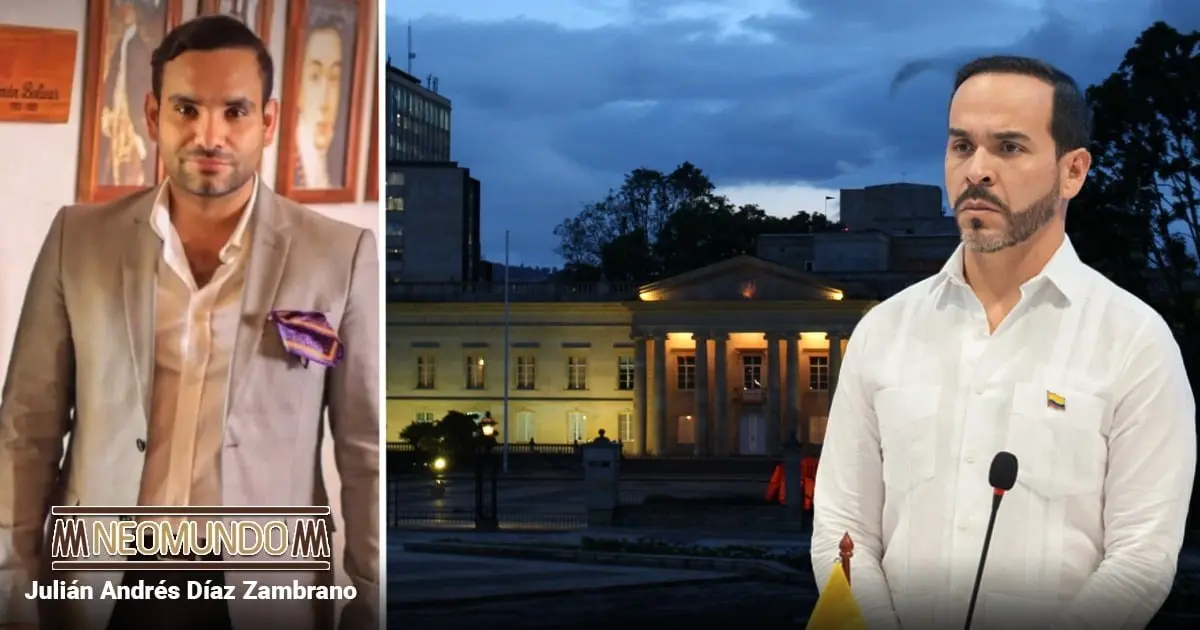
BOGOTÁ & BUCARAMANGA — In a move that bridges regional economic development with high-stakes national administration, the Department of Administrative of the Presidency (DAPRE) has awarded a lucrative logistics contract to Neomundo, a mixed-economy and non-profit organization based in Santander. The agreement, valued at over 5.3 billion Colombian pesos, places the operations and production of executive events directly in the hands of a regional entity with a deep history in public-private partnerships.
The contract has immediately drawn scrutiny and captured public interest due to its hefty price tag, the direct contracting mechanism utilized, and the intricate web of political alignments connecting local leaders in Santander to the highest levels of the national government under President Abelardo de La Espriella.
Main Facts
The core of the controversy and administrative arrangement centers on a direct inter-administrative agreement signed between DAPRE and the Regional Center for Fairs, Exhibitions, and Conventions of Bucaramanga, globally known as Neomundo.
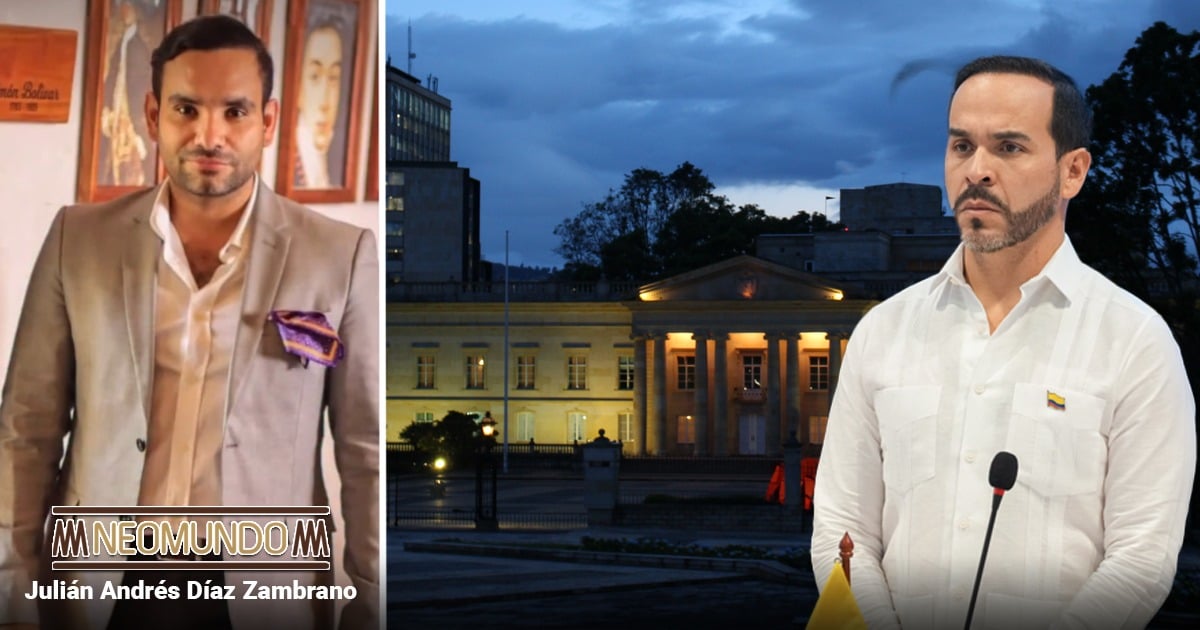
- The Contract Value: The 80-day agreement amounts to COP $5,389,296,263 (approximately $5.39 billion pesos).
- The Scope: Neomundo is tasked with the comprehensive planning, organization, operation, and production of logistics for all events, activities, and official engagements required by the executive branch and the Presidency of the Republic.
- The Contracting Method: Rather than undergoing a traditional, competitive public bidding process, the contract was awarded directly. This was legally justified under Colombian procurement laws permitting direct agreements between public and mixed-economy entities—in this case, because Neomundo boasts majority capital contributions from the Municipality of Bucaramanga and the Departmental Government of Santander.
- Key Leadership: DAPRE is currently headed by Carlos Andrés Ríos Puerta, who previously served as the general manager for Abelardo de La Espriella’s presidential campaign. Meanwhile, Neomundo is managed by Julián Andrés Díaz Zambrano, whose past professional history includes working within the Bucaramanga Mayor’s Office.
The intersection of these administrative appointments with the recent electoral map has amplified political chatter across the country. Santander emerged as a stronghold for the current administration, delivering massive vote tallies during the 2026 presidential race and aligning early regional political forces with the executive agenda.
Chronology: From Science Park to Presidential Logistics Hub
To understand how a regional convention center in Bucaramanga secured a multi-billion-peso national executive contract, it is necessary to trace the evolution of Neomundo over more than two decades.
1999–2006: Inception and the Science Museum Era
- December 27, 1999: Neomundo was legally established under the name Corporación Parque Interactivo de Ciencia y Tecnología de Bucaramanga (Bucaramanga Interactive Science and Technology Park Corporation). The initiative was spearheaded by figures such as Alfonso Maldonado, a professor at the Industrial University of Santander (UIS) and coordinator of the Regional Commission for Science and Technology. The vision was modeled after interactive science hubs like Maloka in Bogotá, designed to foster scientific literacy among youth.
- December 7, 2006: After years of development, Neomundo officially opened its doors to the public, featuring interactive exhibit halls dedicated to energy, physics, mechanics, and children’s education.
2012–2021: Strategic Pivots and Infrastructure Expansion
- December 2012: The organization underwent a crucial statutory reform. Recognizing shifting regional demands and economic sustainability challenges, the corporation incorporated a modern convention center into its mandate, expanding its scope far beyond pure scientific outreach.
- 2018: Neomundo officially commenced operations as a fully-fledged convention center, hosting large-scale corporate, cultural, and civic gatherings.
- 2021: Building upon its infrastructure capabilities, the corporation formally expanded its portfolio to include comprehensive event logistics management, setting the stage for its modern commercial operations.
2025–2026: Political Alignments and National Projection
- December 2025: Cristian Fernando Portilla assumed office as the Mayor of Bucaramanga, backed by a robust coalition ("Con paso firme Bucaramanga avanza") involving the Partido de la U, Centro Democrático, and Cambio Radical. Portilla was among the earliest local executives to back the "Defensores de la Patria" political movement tied to De La Espriella.
- First Half of 2026: During the presidential elections, Santander delivered an overwhelming mandate for Abelardo de La Espriella. In the first round, he secured 684,563 votes, while the final scrutiny figures for the second round confirmed a staggering 822,859 votes from the department.
- Mid-2026: Following the transition of power, Carlos Andrés Ríos Puerta assumed the directorship of DAPRE. Shortly thereafter, the 80-day executive logistics contract was awarded directly to Neomundo, cementing the organization’s transition from a regional science park into a key logistics provider for the national government.
Supporting Data and Institutional Framework
The financial and legal architecture underpinning the DAPRE-Neomundo agreement relies heavily on the unique legal status of mixed-economy corporations in Colombia.

Capital Structure and Governance
Neomundo operates as a non-profit corporation featuring a hybrid economic model. Its foundational pillars and ongoing operational backing draw from:
- Public Sector: Major capital contributions and institutional oversight from the Mayor’s Office of Bucaramanga and the Government of Santander.
- Private Sector: Private stakeholders and regional business associations that participate in its governance structure.
This status grants Neomundo a legal exemption from standard, lengthier public procurement thresholds under specific inter-administrative contracting rules. Proponents of these frameworks argue that they allow the government to move swiftly and leverage established regional infrastructure. Critics, however, contend that direct contracting bypasses free-market competition, potentially locking out specialized nationwide event-production companies.
Electoral Context in Santander (2026 Presidential Elections)
| Electoral Phase | Votes for Abelardo de La Espriella in Santander | Percentage / Relevance |
|---|---|---|
| First Round (Preconteo) | 684,563 | Solidified Santander as a top-tier electoral base. |
| Second Round (Preconteo) | 822,592 | Significant surge in regional mobilization. |
| Second Round (Official Scrutiny) | 822,859 | Final certified count, placing Santander among the top supportive departments nationwide. |
This heavy regional backing provides the socio-political backdrop against which the contract is being scrutinized by political analysts and opposition figures alike.
Official Responses and Public Debate
The award of the 5.3 billion peso contract has triggered a lively public debate surrounding transparency, cronyism, and geographic centralization of government operations.
Concerns Regarding Political Proximity
Public attention has homed in on the professional backgrounds of the principal actors involved in the deal:
- Carlos Andrés Ríos Puerta (Director of DAPRE): Having managed the presidential campaign of Abelardo de La Espriella, Ríos Puerta’s ascension to the head of DAPRE placed him directly at the helm of presidential procurement.
- Julián Andrés Díaz Zambrano (General Manager of Neomundo): Díaz Zambrano previously worked within the Bucaramanga Mayor’s Office during the administration of Jaime Andrés Beltrán (who later became Minister of Housing). While various local media outlets and political observers have drawn attention to these working relationships as evidence of regional political networking, institutional defenders emphasize that professional continuity in municipal administration is commonplace and should not automatically imply impropriety or legal violations.
Defense of Regional Capacity
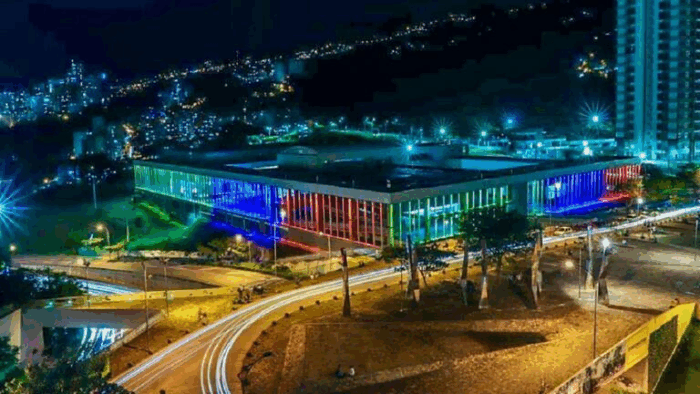
Defenders of the agreement point out that Neomundo has spent years building a reputation as Santander’s premier venue for large-scale conventions and events. Proponents argue that utilizing a mixed-economy entity with public-sector roots keeps state resources tied to institutional infrastructure rather than purely private speculative contractors, while simultaneously stimulating regional economies outside of the traditional Bogotá-Medellín axis.

Comparisons have also been drawn to past administrations. Historically, multi-million-peso presidential logistics contracts have frequently been awarded to major institutional operators—such as Plaza Mayor in Medellín, which handled massive logistical budgets across the administrations of Juan Manuel Santos, Iván Duque, and Gustavo Petro. Seen through this historical lens, contracting a prominent regional convention center like Neomundo follows a precedent of utilizing established public-private convention hubs for executive operations.
Implications
The contract between DAPRE and Neomundo carries broad administrative, political, and economic implications for the current Colombian government:
- Decentralization vs. Transparency: While the contract distributes federal procurement funds outside the capital to a regional Santander entity, it re-ignites the eternal debate in Colombian public contracting over the limits and risks of direct inter-administrative agreements versus open public bidding.
- The Reward of Electoral Strongholds: The timing of the contract—awarded immediately following a sweeping electoral victory for the administration in Santander—reinforces perceptions among critics that regional political alignment can heavily influence administrative patronage and state procurement pipelines.
- National Scaling for Neomundo: For Neomundo, managing the logistical footprint of the Presidency of the Republic represents a massive institutional leap. Moving from regional science fairs and local business conventions to orchestrating high-security, high-visibility executive events across the country will test the corporation’s operational capacity and forever alter its profile on the national stage.
- Scrutiny on the Executive: As oversight bodies, journalists, and civil society organizations continue to comb through the details of the 80-day, $5.39 billion agreement, DAPRE leadership will face sustained pressure to demonstrate absolute efficiency, cost-effectiveness, and strict adherence to transparency standards in every peso spent.



Leave a Reply