

By Global Mining & Commodities Desk
Published in-depth analysis on the breakdown of multinational investments in Latin American resource extraction.
1. Main Facts
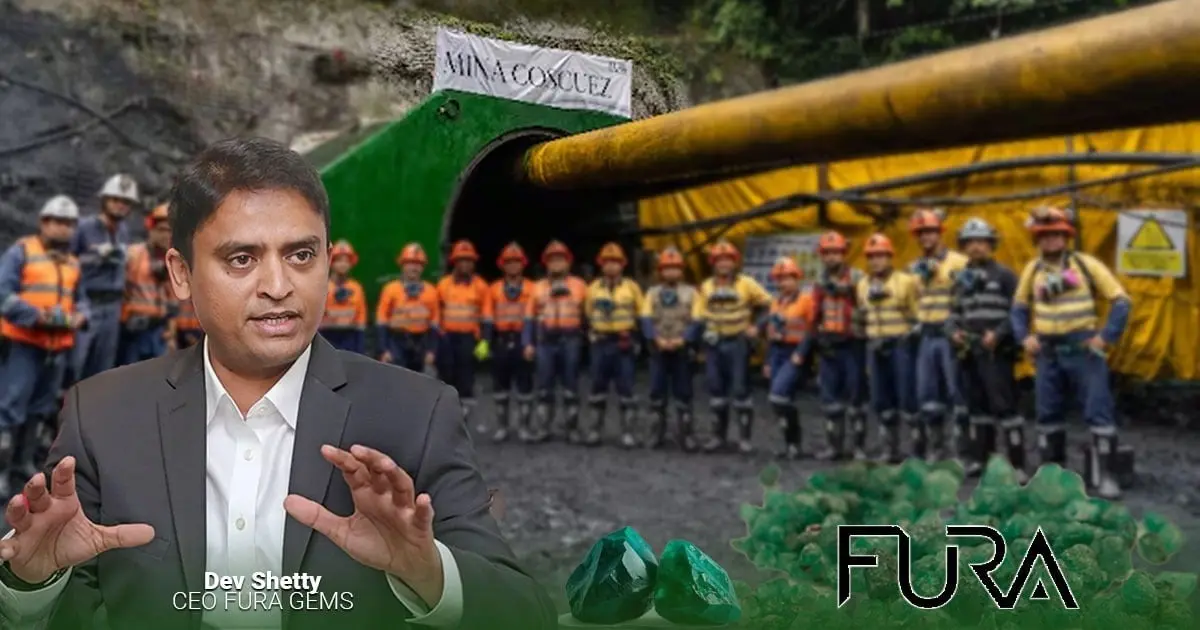
The announcement sent shockwaves through the international precious-stones market: Fura Gems, a multinational mining enterprise led by the seasoned Indian entrepreneur Dev Shetty, officially surrendered its operational control and initiated the liquidation of its Colombian subsidiary, Coscuez S.A.
For Shetty, who built a legendary reputation by resurrecting failing gem mines in Africa—most notably the Kagem emerald mine in Zambia and the Montepuez ruby deposit in Mozambique—Colombia proved to be an insurmountable frontier. Despite injecting hundreds of billions of Colombian pesos into modernization, infrastructure, and social programs, Fura Gems could not withstand the lethal combination of relentless security threats, aggressive illegal mining, social unrest, and shifting labor dynamics.
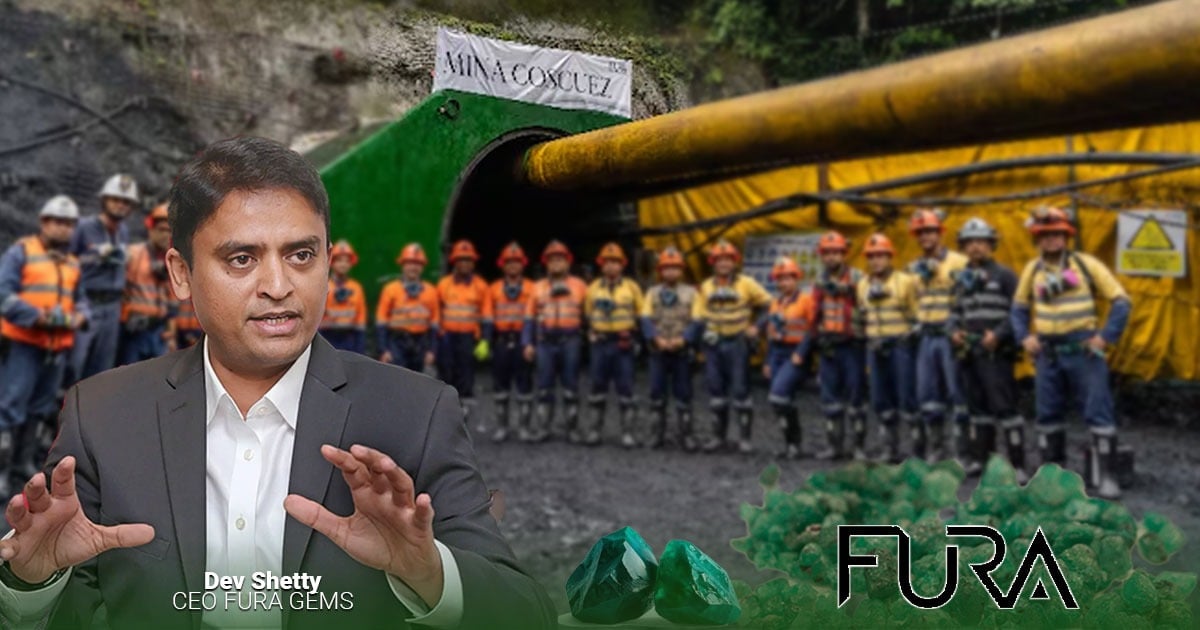
Coscuez is no ordinary deposit. Located in the municipality of San Pablo de Borbur in the rugged department of Boyacá, the mine holds an iconic and turbulent place in modern Colombian history. For decades, it was the crown jewel of Víctor Carranza, the self-proclaimed "Czar of the Emeralds," who ruled the region’s volatile gem trade through the "Green Wars" of the late 20th century.
When Shetty and his backers acquired a controlling 76% stake in Coscuez in 2017—building on a bridgehead established by Hong Kong-based Emporium HS—they promised to replicate their African success story. They envisioned a transparent, industrialized, and secure operation that would extract millions of carats under strict environmental and labor standards.
Instead, after years of trying to bridge the gap between industrial-scale machinery and generations of traditional guaqueros (artisanal miners), Fura Gems threw in the towel. On February 10, 2026, the company formally initiated liquidation proceedings before the Superintendency of Companies (Superintendencia de Sociedades), effectively closing the book on one of the most ambitious foreign direct investment plays in Colombia’s gemstone history.

2. Chronology of a Collapse
To understand how a multi-million-dollar venture with global backing unraveled, one must trace the timeline of Fura Gems’ tenure at Coscuez—a trajectory marked by initial high-stakes optimism followed by a steady descent into operational paralysis.
- Late 2016 – 2017: Following the post-Carranza era and the death of his close associate and enforcer, Jesús Hernando Sánchez (who was later gunned down in northern Bogotá), international capital began flowing into Boyacá. Fura Gems steps in, acquiring a 76% majority stake in Coscuez S.A., aiming to bring corporate governance to the chaotic historic site.
- 2021: Fura Gems achieves a major regulatory milestone, securing the environmental license required to operate Coscuez at a massive, industrialized scale. Technical reports indicate that the mine holds up to 6 million carats of reserves, with a valid mining title stretching out to 2050.
- 2023: At the peak of its ambition, Fura announces potential investments scaling up to $200 million USD. The company produces 240,000 carats of rough emeralds, positioning itself as a rising heavyweight ready to challenge traditional market titans.
- August 12, 2025: Amid rising local friction, the Ministry of Mines and Energy brokers a fragile agreement. Fura commits to recognizing ancestral and traditional mining practices, attempting to establish a dialogue bridge between its 500 formal employees and an estimated 2,000 informal, independent miners operating around the concession.
- September 2025: The security situation deteriorates sharply. Organized groups forcefully seize control of specific underground sectors, blocking access roads, vandalizing critical infrastructure, and putting workers at acute risk. Two fatalities are officially recorded within the mining zone.
- February 10, 2026: Recognizing the business model as entirely untenable, Fura Gems initiates formal liquidation proceedings for its Colombian operations through the Superintendency of Sociedades.
- February 12, 2026: Fura formally petitions the National Mining Agency (Agencia Nacional de Minería) for a temporary suspension of operations, citing imminent threats to personnel safety, widespread illegal tunneling that compromises structural integrity, and the physical impossibility of maintaining safe industrial ventilation and water-pumping systems.
3. Supporting Data & Economic Metrics
The financial footprint left by Fura Gems at Coscuez illustrates both the scale of their ambition and the severity of their losses. According to corporate balance sheets and government disclosures:
- Capital Expenditure (CapEx): Between 2017 and 2025, Fura Gems invested over COP $480,000 million in modernizing underground infrastructure, upgrading industrial safety systems, and launching regional social development programs.
- Fiscal Contributions: The company contributed approximately COP $45,000 million in direct taxes and statutory royalties to local and national coffers.
- Production Capacity: At its height in 2023, the mine yielded 240,000 carats of rough emeralds. Technical audits confirm that the subsoil still contains an estimated 6 million carats of high-grade reserves, with the underlying title remaining valid until 2050.
- Global Market Context: The international emerald market is relatively niche compared to base metals or gold, valued globally at approximately $2.78 billion USD. Colombia exported $116 million USD in emeralds (directing roughly 95% of its total output to foreign buyers). However, Colombian producers face fierce, highly organized competition from global heavyweights in Zambia and Brazil—territories where Dev Shetty previously found smoother ground.
4. Official Responses and Stakeholder Positions
The collapse of Coscuez has triggered reactive postures across government agencies, local operators, and labor unions.
The Corporate Stance
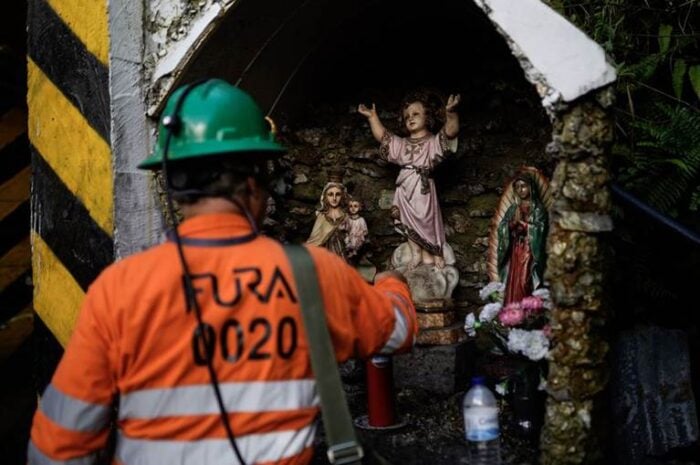
Executives at Fura Gems maintained that continuing operations under the prevailing climate of lawlessness was "neither responsible nor viable." The company cited unmitigated asset vandalism, constant intrusions into active mining faces by unauthorized individuals, and exorbitant security overheads as the primary drivers behind the liquidation.
Labor and Artisanal Pressures
While management pointed to security threats, labor organizations highlighted internal friction. Workers frequently denounced extended shifts, delayed social security remittances, and chronic shortages of personal protective equipment (PPE), which led to localized strikes and temporary shutdowns prior to the final corporate pullout.
Simultaneously, the relationship with the informal guaqueros remained a perpetual powder keg. Despite government-brokered pacts in late 2025 meant to harmonize industrial extraction with ancestral traditions, the influx of illegal miners into unstable zones forced engineers to shut down vital ventilation shafts and dewatering pumps, sealing the fate of commercial production.

5. Strategic Implications and Future Outlook
As Fura Gems winds down its corporate presence in Colombia, the central question shifts to who will inherit the fractured emerald empire of Coscuez, and what this failure signals for foreign investment in the nation’s extractive sectors.
Potential Suitors and Industry Consolidation
With the assets entering liquidation, market analysts are closely watching domestic and international players positioned to absorb the concession:
- Domestic Emerald Giants: Local powerhouses such as Muzo (led by The Muzo Companies Colombia and Charles Clifford Burge) and Santa Rosa are prime candidates. Santa Rosa’s ownership matrix includes prominent local stakeholders and heirs of the Víctor Carranza legacy, such as Jonatan Carranza Vidal (representing Banco Negro S.A.S.), Jesús Hernando Sánchez Siera (via Emerald Planet), the Rodríguez Daza brothers (Minesco S.A.S.), Ruby Solanyu Rocha, and Carlos Alberto Molina (Thorn Investment Limited).
- Global Gem Funds: Private equity vehicles and sovereign-backed funds from Dubai, Hong Kong, and Switzerland—regions heavily focused on gemstone traceability and luxury retail—may view the distressed asset as a high-risk, high-reward entry point, much like Emporium HS did years prior.
- Diversified Mining Conglomerates: International firms specializing in precious metals or copper looking to diversify portfolios into colored gemstones could step in, provided they possess the appetite for high-intensity community relations management in rural Colombia.
Broader Economic Lessons
The exit of Dev Shetty serves as a cautionary tale for multinational mining companies attempting to apply standardized African or Asian operational templates to regions deeply intertwined with complex local cartels, informal mining traditions, and historical civil conflict.
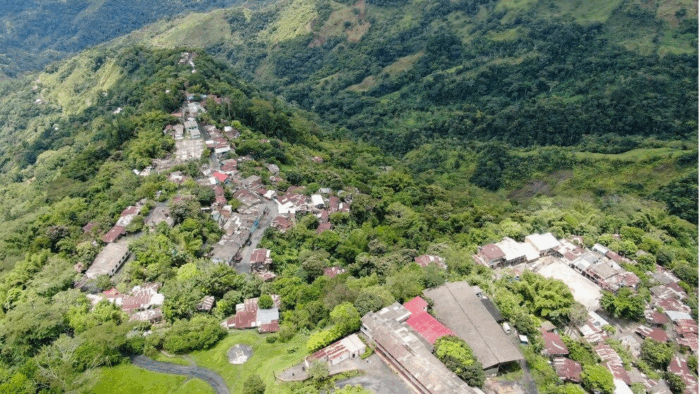
While Colombia’s subsoil continues to harbor some of the purest, most valuable green beryl on Earth, the Coscuez debacle demonstrates that geological wealth alone cannot survive an environment where the social license to operate is repeatedly fractured by insecurity, illegal encroachment, and institutional paralysis. For whoever dares to acquire Coscuez next, the greatest challenge will not be finding the emeralds underground, but surviving the human landscape above them.




Leave a Reply