

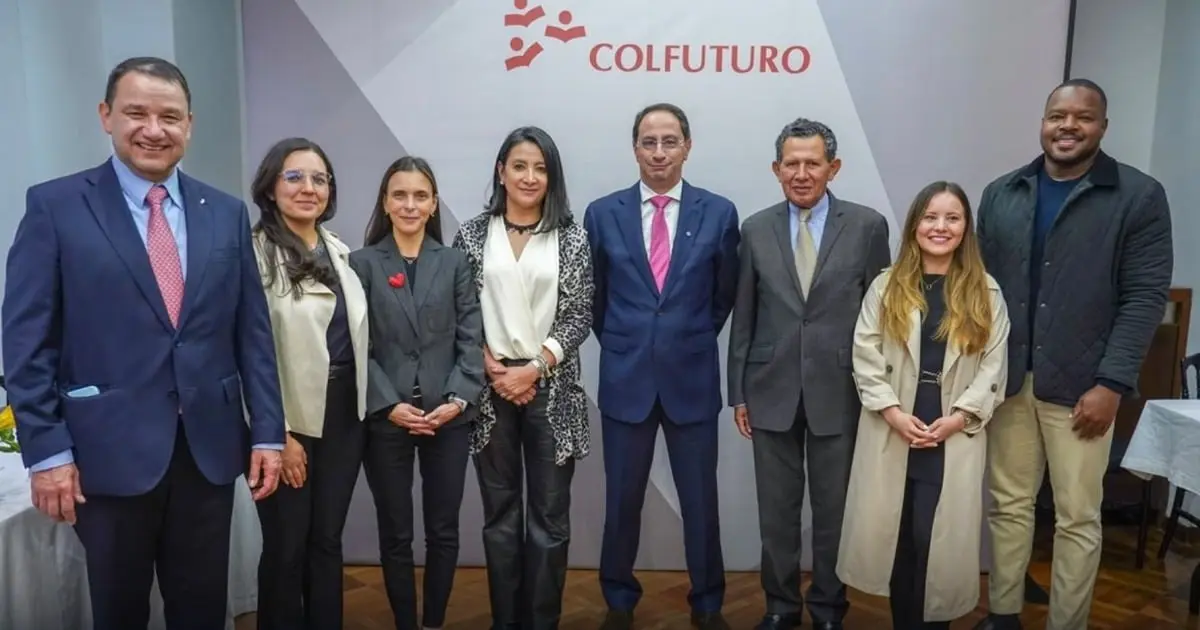
BOGOTÁ — In a major policy shift signaling a renewed emphasis on international academic mobility and high-level human capital development, the National Government has officially revived its strategic alliance with the Foundation for the Future of Colombia (Colfuturo). Backed by a robust investment of USD $25 million, the renewed partnership will directly finance master’s and doctoral degrees abroad for the 2026 and 2027 cohorts of the prestigious Credit-Scholarship Program (Programa Crédito Beca).
The high-stakes agreement aims to reverse a multi-year contraction in public funding for postgraduate education overseas, promising unprecedented opportunities for Colombian professionals while introducing stricter return-of-talent requirements geared toward national development, regional equity, and emerging technologies like Artificial Intelligence.
Main Facts
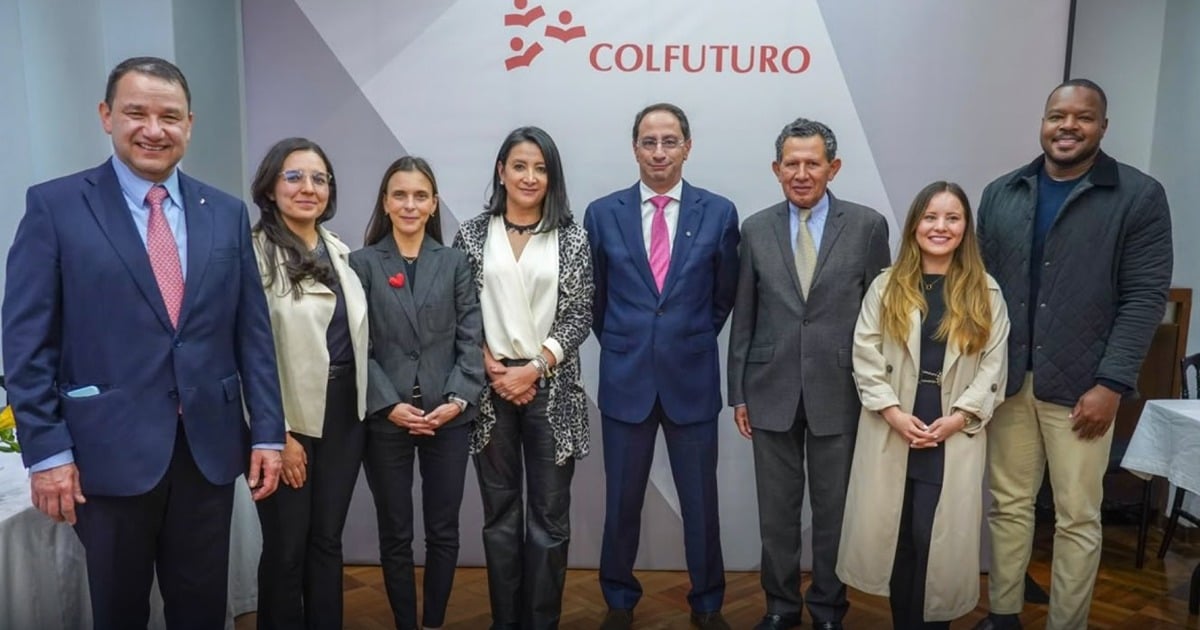
The formalization of the restored alliance took place during a high-profile ceremony on October 2, attended by key government figures and academic leaders. Among them were Vice President José Manuel Restrepo; the Minister of Science, Technology, and Innovation, Dr. Claudia Benavides Salazar; Eduardo Pacheco, President of the Board of Directors of Colfuturo; and Camila Escobar, Executive Director of the organization.
The core parameters of the renewed $25 million initiative include:
- Scope: Full or partial funding for master’s and doctoral programs at top-tier international universities for the 2026 and 2027 cohorts.
- Beneficiary Targets: Following a dip in selections due to previous funding freezes, the program projects a historic surge to 3,000 selected professionals for the 2027 cohort alone.
- Condonation Scheme: Beneficiaries will be eligible for a base scholarship of 25%, supplemented by additional condonable bonuses of up to 40%, bringing the total potential debt forgiveness to 65%.
- Strategic Alignment: The initiative operates under the umbrella of Talento ColombIA, a high-level talent development strategy coordinated by the Ministry of Science, Technology, and Innovation (MinCiencias).
- Return Obligations: To access the maximum benefits, scholarship recipients must commit to returning to Colombia to contribute to high-demand regions, domestic industry, and strategic sectors such as Artificial Intelligence.
- Upcoming Timeline: Colfuturo will officially open the application window for the 2027 cohort between January 4 and March 4.
Chronology: From Historic Collaboration to Policy Reversal
To understand the weight of the current announcement, it is necessary to examine the turbulent trajectory of state funding for international postgraduate studies in Colombia over recent years.
The Foundation Years (1998–2023)
For more than 25 years, the partnership between the Colombian government and Colfuturo served as the gold standard for public-private cooperation in education. During this quarter-century, the model successfully supported the overseas postgraduate studies of more, than 17,200 highly qualified Colombian professionals. The state traditionally covered the equivalent of 40% of the credit-scholarships awarded by the non-profit organization, creating a reliable bridge for local talent to access the world’s leading academic institutions.
The Petro Administration Freeze (2024–2025)
The landscape shifted dramatically under former President Gustavo Petro. Despite extensive lobbying by influential business and educational leaders who pointed to the proven 25-year track record of the model, the previous administration suspended state co-financing.
The suspension dealt a severe blow to the educational ecosystem. It triggered an immediate 34% reduction in the operational funds of the Credit-Scholarship Program—translating to a loss of approximately USD $15 million annually. The policy shift had an immediate chilling effect on academic aspirations nationwide. For the 2026 selection cycle, the number of beneficiaries plummeted to just 1,007 professionals, a steep decline compared to 1,214 selections in 2025 and nearly 1,400 in 2024.
The De La Espriella Reversal (Late 2025–Present)
Upon taking office, the administration of President Abelardo De La Espriella moved to overhaul various pillars of national development, identifying human capital as an indispensable engine for economic recovery. By formally abandoning the restrictive posture of the previous government, the current administration reinstated state backing for Colfuturo.
The restored alliance not only repairs the financial damage of the previous years but aggressively scales up ambitions. By targeting 3,000 beneficiaries for the 2027 cohort, the administration intends to triple the output of the previous year, setting an all-time record for the bilateral partnership. Furthermore, the administration has seamlessly integrated the funding mechanism into the Talento ColombIA program—a high-level training framework originally conceptualized under the Petro government, which the current administration has reoriented to maximize engagement with both Colfuturo and international exchange platforms like the U.S. government’s Fulbright Program.
Supporting Data and Financial Breakdown
The quantitative dimensions of the Colfuturo-Government partnership illustrate both the depth of the recent crisis and the magnitude of the current recovery.
| Metric / Indicator | Historical Average (Pre-2024) | 2024–2025 Transition | 2026 Convocatory | 2027 Projections |
|---|---|---|---|---|
| Annual State Funding | ~$15 Million USD | Suspended / Reduced | Partial Recovery | $25 Million USD (Total) |
| Selected Professionals | 1,200 – 1,400+ | ~1,214 (2024) | 1,007 | 3,000 (Target) |
| Base Scholarship % | Variable (Up to 40%) | Restricted | Restricted | 25% Base + up to 40% Bonus |
| Max Condonation | Up to 80% (Historical) | Restricted | Restricted | Up to 65% |
The Mechanics of the 65% Condonation
Under the revised terms negotiated for the 2026 and 2027 cohorts, the financial architecture of the Credit-Scholarship is designed to balance institutional support with accountability:

- Base Scholarship: Every approved candidate automatically receives a 25% non-repayable grant.
- Condonable Bonuses: Students can accumulate an additional 40% in debt forgiveness by fulfilling specific criteria upon graduation.
- Geographic and Sectoral Requirements: To earn the maximum 65% condonage, professionals must deploy their newly acquired expertise where Colombia needs it most. This includes working in regions with historically low institutional and economic development, integrating into critical domestic industries, and driving innovation in high-priority fields such as Artificial Intelligence, biotechnology, and advanced manufacturing.
Official Responses and Institutional Leadership
The resurrection of the Colfuturo agreement has been met with widespread acclaim from both the public sector and the academic-corporate nexus.
Minister of Science, Technology, and Innovation, Dr. Claudia Benavides Salazar—who also sits on the Board of Directors of Colfuturo—emphasized the forward-looking nature of the policy during the October 2 formalization event:
"From the Ministry of Science, we are making decisive choices to ensure that Colombian talent has greater horizons and opportunities. The strengthening of this alliance is not merely a financial transaction; it represents a concrete, unbreakable commitment by the National Government to our researchers, scientists, and innovators."
Echoing this sentiment, Vice President José Manuel Restrepo framed the initiative as a cornerstone of the administration’s broader socio-economic strategy:
"This decision materializes our nation’s foundational drive to recognize merit, expand educational opportunities, and firmly back those professionals who wish to return and build a better country through science, technology, and innovation."
Leadership at Colfuturo: The Camila Escobar Era
Executing the ambitious mandate to triple candidate selection rests heavily on Camila Escobar, who assumed the role of Executive Director of Colfuturo in May of last year. Escobar brought to the table eight years of extensive executive experience as the president of Procafecol, the enterprise managing the global Juan Valdez coffee brand.

Now steering Colombia’s premier scholarship organization, Escobar and the restructured Board of Directors—which recently welcomed high-profile figures such as Germán Bahamón—face the logistical challenge of processing a historic wave of applicants. The upcoming application cycle, running from January 4 to March 4, will serve as the first major test of whether the administrative machinery can absorb the influx and successfully guide thousands of candidates toward global academic excellence.
Implications for Colombia’s Socio-Economic Future
The injection of USD $25 million into international postgraduate education carries profound implications for Colombia’s medium- and long-term development.
1. Reversing "Brain Drain" through Strategic Return
Historically, sending talented professionals abroad for world-class doctorates and master’s degrees carried the risk of permanent brain drain—with top graduates opting to remain in North America, Europe, or Asia. By structuring the Credit-Scholarship with strict, region- and sector-specific return conditions (up to 65% condonability tied to local impact), the government is effectively transforming international education into a localized development tool. Professionals returning with cutting-edge knowledge in AI, renewable energy, and advanced sciences are expected to directly inject global best practices into lagging domestic sectors.
2. Bridging the Regional Divide
A notable innovation in the current framework is the emphasis on high-demand regions. Rather than concentrating returning talent exclusively in major urban hubs like Bogotá, Medellín, or Cali, the program incentivizes professionals to apply their expertise in peripheral departments and secondary cities, thereby stimulating regional innovation ecosystems and reducing territorial inequalities.
3. Boosting Competitiveness in the Age of Artificial Intelligence
As global economies rapidly transition toward automated, data-driven frameworks, Colombia’s domestic capacity in fields like Artificial Intelligence has faced a deficit of specialized PhDs and senior researchers. By explicitly channeling scholarship recipients into strategic technological domains, the restored Colfuturo alliance acts as a direct catalyst for the nation’s digital and industrial transformation.
4. Rebuilding Public-Private Synergy
Finally, the agreement marks a triumphant return to collaborative governance. By reconciling state resources with the administrative efficiency and vetting capacity of a non-profit foundation like Colfuturo, the government has proven that public-private partnerships remain the most effective vehicle for executing large-scale educational transformations. With applications for the landmark 2027 cohort opening on January 4, Colombia stands on the precipice of its most ambitious chapter in human capital development to date.



Leave a Reply