

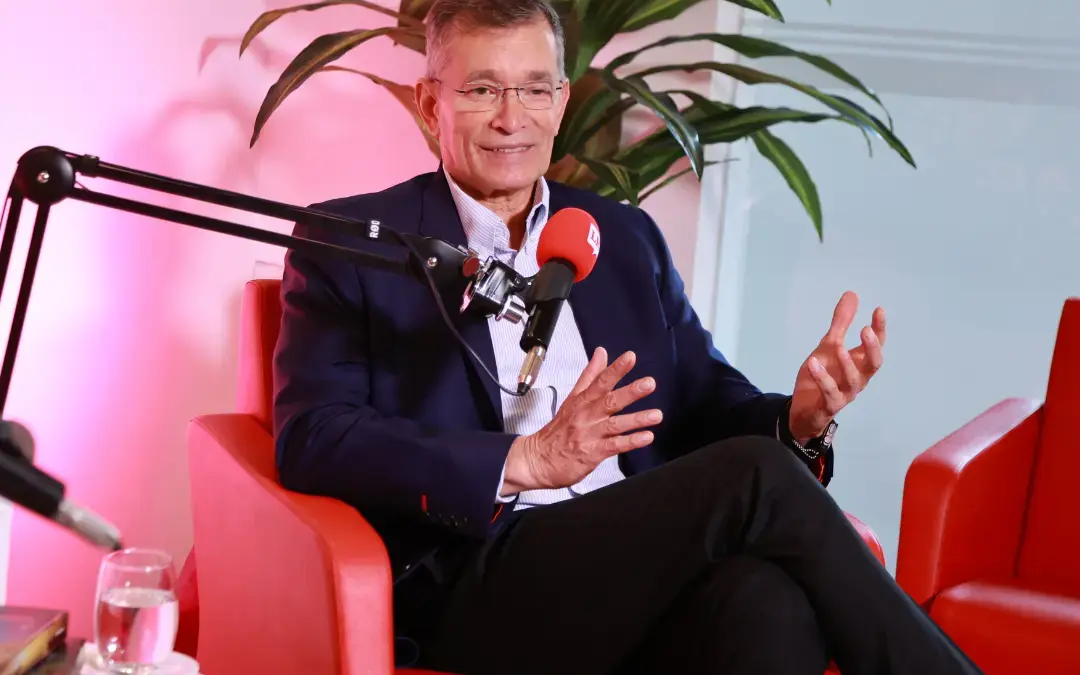
The National Association of Foreign Trade (Analdex), Colombia’s premier trade guild representing exporters, importers, and logistics providers, has announced a historic leadership transition. Javier Díaz Molina, who has served as the executive president of the association for nearly three decades, will step down from his post to enter retirement.
The Board of Directors of Analdex has accepted his resignation and appointed Santiago Pardo Salguero, a seasoned international trade negotiator, economist, and diplomat, as his successor. Pardo will assume the presidency immediately, initiating a structured transition process to ensure continuity during a pivotal moment for Colombia’s integration into global supply chains.
1. Main Facts of the Transition
The departure of Javier Díaz Molina marks the conclusion of one of the longest and most influential tenures in the history of Colombia’s private-sector associations (gremios). Díaz’s decision to retire and transition to his pension had been finalized several years ago but was repeatedly deferred at the urgent request of the Analdex Board of Directors, which sought to maintain his steady hand through recent periods of domestic and global economic volatility.
+-------------------------------------------------------------------------+
|                           LEADERSHIP TRANSITION                         |
+-------------------------------------------------------------------------+
| OUTGOING PRESIDENT: Javier Díaz Molina (Tenure: 1997–2024)              |
|   - Joined Analdex: 1987 (Technical Vice President)                     |
|   - Executive President: June 15, 1997                                  |
|   - Key Legacy: Transformed Analdex from export-only to full logistics  |
|                                                                         |
| INCOMING PRESIDENT: Santiago Pardo Salguero                             |
|   - Education: Universidad de los Andes (BS), Columbia University (MIA) |
|   - Key Roles: Former Ambassador to Japan, Chief Trade Negotiator       |
|   - Priority: Global supply chain integration & Asia-Pacific expansion  |
+-------------------------------------------------------------------------+
Santiago Pardo Salguero, the newly designated Executive President, brings more than twenty-five years of experience in international trade, bilateral negotiations, corporate public affairs, and diplomacy. Pardo previously served as the Technical Vice President of Analdex between 2004 and 2007, making his return to the association a homecoming of sorts.
The transition comes at a challenging juncture for the Colombian economy. The country is currently navigating sluggish export growth, high domestic logistics costs, regulatory overhauls in customs procedures, and a pressing national need to diversify its export basket away from fossil fuels.
2. Chronology of Leadership
The careers of both the outgoing and incoming presidents reflect the modern history of Colombia’s economic liberalization, known as the Apertura Económica, which began in the early 1990s.
The Javier Díaz Era: Four Decades of Trade Advocacy
- 1987: Javier Díaz Molina joins Analdex as Technical Vice President. During this period, Colombia operates under a highly protectionist import-substitution model. Díaz begins advocating for structural reforms to simplify customs and incentivize non-traditional exports.
- 1991–1993: Díaz actively participates in the institutional restructuring of Colombia’s foreign trade apparatus. This era sees the creation of the Ministry of Foreign Trade, the foreign trade bank Bancóldex, the promotional agency Proexport (now ProColombia), and the fiduciary Fiducoldex.
- June 15, 1997: Díaz is appointed Executive President of Analdex. He inherits an organization primarily focused on traditional agricultural and manufacturing exporters.
- 2000s: Under Díaz’s leadership, Analdex broadens its scope. Recognizing that exporting is impossible without efficient importing and logistics, he restructures the association to represent the entire supply chain, including customs brokers, port operators, shipping lines, and transport companies.
- 2010–2024: Díaz leads the private sector’s technical response to a wave of Free Trade Agreements (FTAs) signed with the United States, the European Union, South Korea, and others. He postpones his planned retirement multiple times at the board’s request to navigate the COVID-19 supply chain crisis and subsequent global inflation.
Santiago Pardo Salguero: A Global Trade and Diplomatic Trajectory
- Early Career: Pardo graduates as an economist from the prestigious Universidad de los Andes in Bogotá and later earns a Master of International Affairs (MIA) from Columbia University in New York.
- 2004–2007: Pardo serves as Vice President of Analdex, working closely under Javier Díaz and mastering the technical operational challenges of Colombian ports, customs, and logistics.
- 2008–2011: Pardo is appointed Chief Trade Negotiator for the Ministry of Commerce, Industry, and Tourism. During this period of intense bilateralism, he leads the Colombian negotiating teams for Free Trade Agreements with the European Union, South Korea, Turkey, and Panama.
- 2011–2019: Pardo moves to Tokyo, Japan, to serve as the Director for Asia of the National Federation of Coffee Growers of Colombia (FNC), successfully expanding the market share of Colombian premium coffee in highly demanding Asian markets.
- 2019–2022: The Colombian government appoints Pardo as Ambassador Extraordinary and Plenipotentiary to Japan. For his diplomatic service and contributions to bilateral relations, he is awarded the prestigious Grand Cordon of the Order of the Rising Sun by the Japanese government.
- 2022–2024: Pardo returns to the private sector as Director of Public Affairs and Government Relations for Tetra Pak in the Andean, Central American, and Caribbean regions.
- 2024–Present: Pardo serves as a partner, board member, and Director of Internationalization at Invet, before being tapped by the Analdex Board to assume the presidency.
3. Supporting Data and Economic Context
To understand the magnitude of this leadership transition, it is necessary to examine the evolution of Colombia’s foreign trade during Javier Díaz’s tenure and the current structural realities that Santiago Pardo must address.
The Growth of Colombian Foreign Trade (1997 vs. Present)
When Javier Díaz took the helm of Analdex in 1997, Colombia’s trade profile was highly concentrated and heavily reliant on a few key commodities. Over the past three decades, the volume and complexity of Colombia’s trade have expanded significantly, although structural challenges remain.
+-------------------------------------------------------------------------+
|                  COLOMBIAN FOREIGN TRADE EVOLUTION                      |
+-------------------------------------------------------------------------+
| INDICATOR                         | 1997                | 2023/2024     |
+-------------------------------------------------------------------------+
| Total Export Value (USD)          | ~$11.5 Billion      | ~$49.5 Billion|
| Active Free Trade Agreements      | Minimal (Andean)    | 17 FTAs       |
| Port Cargo Handled (Tons)         | ~70 Million         | ~170+ Million |
| Key Non-Traditional Exports       | Flowers, Bananas    | Hass Avocados,|
|                                   |                     | Metalworking, |
|                                   |                     | Tech Services |
+-------------------------------------------------------------------------+
The Logistics Drag: Colombia’s Competitive Bottleneck
One of Analdex’s primary areas of focus under Díaz—and a critical challenge for Pardo—is the high cost of logistics in Colombia. According to the World Bank’s Logistics Performance Index (LPI) and data compiled by the Colombian National Planning Department (DNP):
- Logistics Costs as a Share of Sales: In Colombia, logistics costs account for approximately 13.5% to 15% of total product sales, compared to an OECD average of approximately 9%.
- Infrastructure Deficits: The mountainous terrain of the Colombian Andes means that transporting a 20-foot container from the industrial heartland of Bogotá or Medellín to the port of Buenaventura on the Pacific coast can often cost more than shipping that same container from Buenaventura to Shanghai.
- Port Efficiency: Colombia’s main port terminals—Cartagena and Santa Marta on the Caribbean, and Buenaventura on the Pacific—have modernized significantly, but inland connectivity (highways and railways) remains a bottleneck.
4. Official Responses and Industry Reactions
The announcement of the transition has reverberated throughout Colombia’s public and private sectors, drawing statements from government officials, industry leaders, and the Analdex Board itself.
The Analdex Board of Directors
In an official communiqué, the Board of Directors expressed its profound gratitude to Javier Díaz for his decades of service, highlighting his role as a builder of institutions:
"Javier Díaz has been a pillar of Colombia’s economic development. His vision transformed Analdex from a group representing a niche sector of exporters into an essential, comprehensive voice for the entire foreign trade and logistics ecosystem. His technical rigor, capacity for dialogue, and unwavering commitment to the country have earned him the respect of successive administrations across the political spectrum."
Outgoing President Javier Díaz Molina
Reflecting on his departure, Díaz emphasized the collaborative nature of his work and expressed confidence in his successor:
"After nearly forty years with Analdex, the time has come to pass the torch. I am immensely proud of what we have built together—an association that is respected for its technical depth and its ability to propose solutions rather than just complain. Santiago Pardo is the ideal person to lead Analdex into its next chapter. He possesses the rare combination of deep technical knowledge, diplomatic tact, and global experience."
Incoming President Santiago Pardo Salguero
In his first official remarks following the announcement, Pardo outlined his vision for the future of the association:
"It is an honor to return to Analdex to succeed a leader of Javier Díaz’s stature. My goal is to build upon his extraordinary legacy by driving the modernization of our customs systems, reducing logistical barriers, and helping Colombian companies capitalize on new global trade dynamics, such as nearshoring and the rapid growth of the Asia-Pacific markets."
5. Strategic Implications for Colombian Foreign Trade
The transition from Javier Díaz to Santiago Pardo comes at a time when global trade is undergoing systemic shifts. Pardo’s leadership will likely influence several key areas of Colombia’s trade policy and corporate strategy.
                     ┌──────────────────────────────┐
                     │  SANTIAGO PARDO'S AGENDA     │
                     └──────────────┬───────────────┘
                                    │
         ┌──────────────────────────┼──────────────────────────┐
         ▼                          ▼                          ▼
┌──────────────────┐       ┌──────────────────┐       ┌──────────────────┐
│  Customs Reform  │       │  Pivot to Asia   │       │   Nearshoring    │
│  & DIAN Dialogue │       │  Pacific Markets │       │  & Supply Chains │
└──────────────────┘       └──────────────────┘       └──────────────────┘
I. Navigating Customs Reforms and Regulatory Friction
One of the most immediate challenges facing Pardo is the ongoing friction between the private sector and the National Tax and Customs Directorate (DIAN) over the implementation of new customs regulations (Estatuto Aduanero).
The government’s efforts to curb smuggling and increase tax collection have led to stringent import controls, which Analdex argues have created administrative bottlenecks at ports and airports. Under Pardo’s leadership, Analdex will need to maintain a highly technical, data-driven dialogue with DIAN to ensure that anti-smuggling measures do not inadvertently paralyze legitimate commerce.
II. The Pivot to the Asia-Pacific Region
Pardo’s extensive background in Japan and the wider Asian market is expected to reshape Analdex’s international agenda. While the United States and the European Union remain Colombia’s primary trading partners, the fastest-growing consumer markets are in Asia.
Colombia is a member of the Pacific Alliance (alongside Chile, Colombia, Mexico, and Peru) but has struggled to fully leverage this bloc to increase exports to Asia. Pardo’s deep understanding of Asian corporate culture, phytosanitary standards, and distribution networks could provide Colombian agricultural exporters (particularly of coffee, cocoa, Hass avocados, and exotic fruits) with the strategic guidance needed to penetrate these high-value markets.
III. Capitalizing on Nearshoring and Supply Chain Realignment
The geopolitical tensions between the United States and China, coupled with the lessons of the pandemic, have forced multinational corporations to relocate production closer to consumer markets—a trend known as nearshoring.
Despite its strategic geographical location with access to both the Atlantic and Pacific Oceans, Colombia has captured less nearshoring investment than regional competitors like Mexico or Costa Rica. Pardo’s background in multinational corporate affairs (via Tetra Pak) and his understanding of global investment flows will be critical in positioning Colombia as a competitive, stable, and attractive hub for nearshoring in the Americas.
IV. Decarbonization and the Green Trade Agenda
The current Colombian administration has prioritized a transition away from an extractivist economic model reliant on coal and petroleum, which currently make up more than half of the country’s export revenues.
To replace these revenues, Colombia must rapidly scale up its non-energy exports. Analdex will play a pivotal role in identifying and nurturing these new export sectors. Furthermore, as the European Union and other major markets implement strict environmental regulations (such as the Carbon Border Adjustment Mechanism and deforestation-free supply chain mandates), Pardo will need to guide Colombian exporters in greening their operations to maintain market access.
6. Conclusion
The transition at the helm of Analdex is more than a routine change in leadership; it is a strategic repositioning of Colombia’s foreign trade advocacy. Javier Díaz leaves behind an institutionally robust association that has successfully integrated the country’s logistics and trade chains.
Santiago Pardo Salguero steps into the role with a unique toolkit of diplomatic, technical, and corporate experience. His ability to bridge the gap between complex public policy and private sector execution will determine how successfully Colombia navigates the challenges of the modern global economy.


Leave a Reply