

PHOENIX, ARIZONA — In a policy pivot that could redefine how the United States manages the delicate intersection of heavy industry and environmental protection, the U.S. Environmental Protection Agency (EPA) has formally proposed an innovative air quality plan for Maricopa County, Arizona.
Announced by EPA Administrator Lee Zeldin, the initiative focuses on the approval of Rule 204, a regulatory framework designed to address persistent moderate ozone and particulate matter non-attainment issues in one of the American Southwest’s most economically vital and rapidly expanding manufacturing hubs.
For decades, environmental regulators have faced a zero-sum dilemma: enforce strict air quality standards that can stifle industrial expansion, or permit economic growth at the expense of public health and clean air. The EPA’s newly proposed rule attempts to break this paradigm by introducing a flexible, market-oriented system of emission offsets and incentives. Rather than relying solely on top-down, punitive mandates, the plan rewards industrial operators for voluntary technological upgrades, offering a pathway where economic prosperity and environmental stewardship are designed to reinforce one another.
1. Main Facts: Understanding the Maricopa County Initiative
The core of the EPA’s proposal centers on Maricopa County, a sprawling metropolitan and industrial powerhouse that includes Phoenix and its surrounding manufacturing corridors.
The Regulatory Challenge
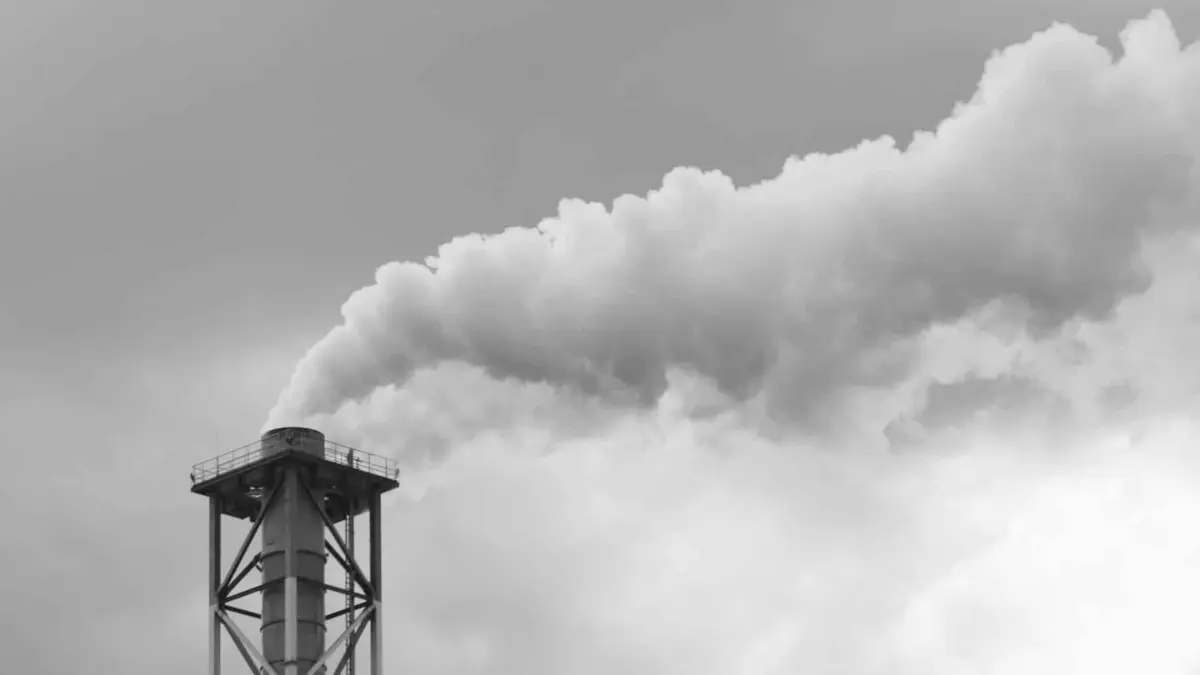
Maricopa County has historically struggled to meet federal air quality standards, particularly concerning ozone and particulate pollution. These emissions are heavily driven by a combination of desert dust, vehicular traffic, and a dense concentration of stationary industrial sources—such as manufacturing plants, distribution facilities, and power generation units.
Heavy industry is notoriously difficult to decarbonize quickly due to the high energy thresholds required for production and the logistical complexities of retrofitting legacy infrastructure. Under traditional Clean Air Act enforcement mechanisms, regions facing non-attainment status often encounter severe restrictions on industrial permitting, halting factory expansions and discouraging new capital investment.
The Solution: Rule 204 and the Offset Mechanism
To bypass this traditional regulatory bottleneck, the EPA is moving to approve Rule 204, which establishes a sophisticated Emissions Reduction Credit (ERC) and compensation system.
- Incentivizing Early Action: Stationary engine operators and industrial facilities that proactively modernize their equipment, adopt cleaner technologies, or reduce emissions beyond baseline legal requirements will earn valuable credits.
- Balancing New Growth: These credits can then be utilized to offset the emissions generated by new or expanding industrial facilities within the county.
- Collaborative Compliance: Instead of forcing businesses to choose between survival and compliance, the policy creates a localized market where clean investments generate regulatory "currency," allowing the regional economy to expand without net deterioration of air quality.
2. Chronology: The Path to Rule 204
The journey toward Maricopa County’s innovative regulatory framework has evolved over several years, shaped by local air quality data, industrial lobbying, and shifting federal policy priorities.
- Early 2010s – 2020: The Persistent Non-Attainment Era
Maricopa County spends years grappling with moderate non-attainment designations under National Ambient Air Quality Standards (NAAQS). Local regulators face mounting pressure from federal mandates to curb smog, leading to friction with industrial stakeholders who argue that rigid controls threaten regional competitiveness. - 2021 – 2023: Local Drafting and Stakeholder Collaboration
Recognizing the limitations of conventional approaches, local environmental agencies, business coalitions, and municipal leaders in Arizona begin collaborating on a localized rule that introduces flexibility. The concept of Rule 204 is drafted to harness market forces rather than strict prohibitions. - Late 2023 – Mid 2024: Expanding Federal Review
The EPA under various program reviews begins re-evaluating how stationary sources—including gasoline distribution networks and industrial engines—are regulated nationwide. The agency signals a growing openness to market-based offsets that maintain environmental integrity while reducing administrative burdens. - Current Phase (2025): Formal EPA Proposal
EPA Administrator Lee Zeldin officially proposes the federal approval of Maricopa County’s Rule 204. The announcement marks a significant philosophical shift toward empowering local economies through collaborative, incentive-driven environmental governance. The proposal now enters the mandatory public comment and administrative review period ahead of final codification.
3. Supporting Data: Industry, Emissions, and the Arizona Economy
To understand the stakes of the EPA’s proposal, one must examine the socio-economic and environmental landscape of Maricopa County.
Economic Footprint of Maricopa County
Maricopa County is not merely a regional economy; it is a national economic engine.
- Population Growth: As one of the fastest-growing counties in the United States, Maricopa houses over 4.5 million residents, creating an insatiable demand for infrastructure, housing, and consumer goods.
- Industrial Diversity: The county hosts major semiconductor manufacturing facilities, aerospace engineering firms, logistics and distribution hubs, and extensive construction operations.
- GDP Contribution: The industrial and manufacturing sectors in the Phoenix metropolitan area account for tens of billions of dollars in annual economic output, providing hundreds of thousands of high-paying jobs.
The Emissions Equation
Despite its economic vibrancy, the region’s geography and climate present unique environmental hurdles:
- Topography and Climate: Surrounded by mountains and characterized by intense sunlight and low rainfall, the Phoenix basin naturally traps pollutants, accelerating the chemical reactions that form ground-level ozone (smog).
- Stationary vs. Mobile Sources: While mobile sources (cars and trucks) contribute heavily to local air pollution, stationary industrial equipment—such as backup generators, industrial boilers, and manufacturing machinery—produce concentrated plumes of nitrogen oxides ($NO_x$) and volatile organic compounds (VOCs).
- The Offset Ratio: Under modern non-attainment management, emissions offsets often require ratios greater than 1:1, meaning a new factory must secure reductions greater than its projected output. Rule 204 formalizes this process, ensuring that every ton of new industrial pollution is aggressively countered by verified technological reductions elsewhere in the system.
4. Official Responses and Perspectives
The EPA’s proposal has elicited a diverse array of reactions from federal officials, industry leaders, and environmental advocates, highlighting the complex debate surrounding regulatory flexibility.
The EPA Perspective: Economic Freedom Meets Environmental Protection
Administrator Lee Zeldin has framed the proposal as proof that environmental protection and economic growth are not mutually exclusive.
"We do not have to choose between clean air and economic opportunity," Zeldin emphasized during the policy rollout. "The EPA is committed to acting as a reliable partner in environmental protection while actively fostering economic vitality. By rewarding innovation rather than imposing blanket restrictions, we are empowering businesses to grow while safeguarding public health."
Supporters within the agency argue that traditional command-and-control regulations often create perverse incentives, where aging, highly polluting facilities are kept running simply because upgrading them triggers punitive new permitting hurdles. Rule 204 aims to remove these regulatory tripwires.
Industrial and Business Reactions
The business community in Arizona has cautiously welcomed the proposal. Local manufacturing and trade associations have long argued that federal air quality rules failed to account for rapid technological advancements in emissions reduction.
- Predictability for Investors: Corporate leaders note that a credit-based offset system provides long-term regulatory certainty, allowing firms to plan multi-million-dollar capital investments without the constant fear of sudden, sweeping moratoriums on industrial permits.
- Incentivizing R&D: By attaching financial and operational value to emissions reductions, companies now have a direct profit-motivated incentive to invest in cleaner stationary engines and proprietary green technologies.
Environmental and Public Health Concerns
While industry groups celebrate the flexibility, some environmental watchdogs have expressed cautious skepticism regarding market-based offset systems.
- Ensuring Real Reductions: Critics emphasize that the EPA and local regulators must maintain rigorous, transparent oversight to ensure that claimed emission credits represent actual, verifiable reductions rather than paper maneuvers.
- Cumulative Impacts: Environmental justice advocates raise concerns about localized pollution hotspots. Even if net emissions balance out across Maricopa County as a whole, specific communities living adjacent to industrial zones could bear a disproportionate burden if new facilities cluster in already overburdened neighborhoods.
5. Broader Implications: A Blueprint for National Industrial Policy?
The potential codification of Maricopa County’s Rule 204 extends far beyond the borders of Arizona. It serves as a testing ground for a broader philosophical shift in American environmental governance.
The Shift Away from Rigid Mandates
For decades, federal environmental policy has oscillated between stringent federal oversight and sweeping deregulation. The Maricopa model represents a third path: collaborative federalism paired with market mechanisms. By granting regional authorities the flexibility to design localized incentive structures, the EPA is acknowledging that local economic realities and geographic idiosyncrasies require tailored solutions rather than one-size-fits-all edicts.
Decarbonization in Hard-to-Abate Sectors
Heavy industries—such as cement production, chemical manufacturing, and heavy-duty logistics—are notoriously difficult to transition entirely to renewable energy sources in the short term. Systems like Rule 204 acknowledge this reality by establishing a transitional bridge. While zero-emission technology remains out of reach or economically prohibitive for certain stationary operators, incentive-based offsets keep the momentum of decarbonization alive by rewarding incremental, continuous improvements.
Future Outlook
As the EPA moves forward with the administrative review of Rule 204, all eyes will be on Maricopa County. If the program successfully proves that industrial expansion can occur in tandem with measurable air quality improvements, it could quickly become a template for non-attainment zones across the United States.
For Arizona’s industrial sector, the message is clear: the future belongs to those who innovate. For regulators, the challenge will be proving that flexibility does not compromise accountability, ensuring that both the economy and the desert air of Maricopa County remain clear, breathable, and built for the long haul.


Leave a Reply