By Global Infrastructure & Urban Mobility Desk October 2026
Main Facts
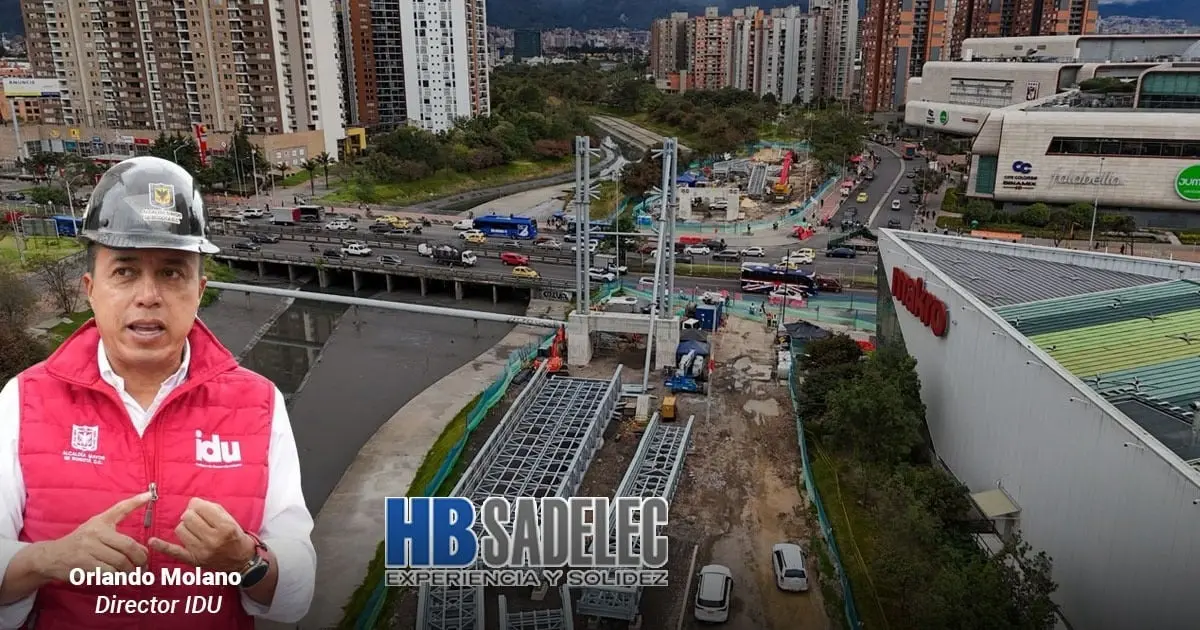
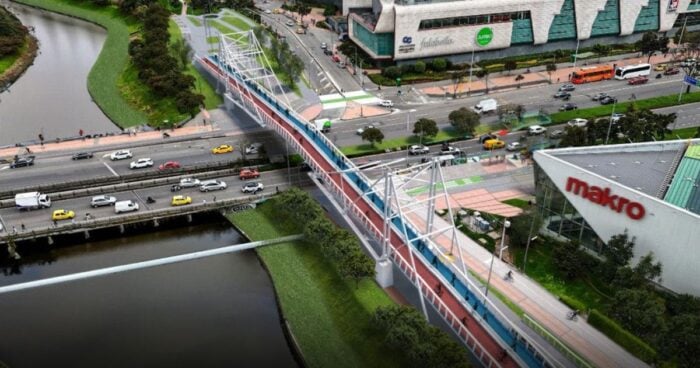
Bogotá is steadily redefining its relationship with non-motorized transport. At the intersection of Avenida Boyacá and Calle 86A, cutting across the Salitre Canal in the northwestern locality of Engativá, one of the most ambitious infrastructure projects in the Colombian capital’s recent history is rapidly taking shape. Designed to replace an aging, dangerously inadequate structure built at the turn of the millennium, the new bicipeatonal (bicycle and pedestrian) bridge aims to solve chronic congestion, improve safety, and accommodate the sheer scale of daily active commuters in a rapidly expanding metropolis.
With an impressive length of 280 meters and a width of 7 meters, the new steel structure is among the largest of its kind in Bogotá. Its core design principle is the total separation of pedestrian and bicycle traffic, a crucial intervention given the sheer volume of daily users. According to local transit data, approximately 37,000 pedestrians and 57,000 cyclists cross this specific corridor every single day.
The project is financed through public investments managed by the District Institute of Urban Development (IDU—Instituto de Desarrollo Urbano). Originally contracted for roughly $40.265 billion COP (with total estimated project costs, including oversight and complementary works, reaching approximately $46.260 billion COP), construction has been heavily driven by the private sector. The engineering and fabrication fall under the purview of HB Estructuras Metálicas S.A.S., a subsidiary of the prominent Grupo Empresarial Ethuss—founded by the late Antioquian entrepreneur William Vélez.
As of late September 2026, overall execution of the megastructure has reached 78 percent. While foundation work, ramps, stairs, and public space developments advance steadily on-site along Avenida Boyacá, the bridge’s metallic skeleton is being pieced together in the industrial sector of Fontibón. Soon, heavy-duty telescopic cranes with capacities of up to 250 tons will hoist the structure into place, divided into 21 precise sections.
Beyond its sheer dimensions, the bridge sets a new benchmark for inclusive urban design. It features independent ramps for pedestrians and cyclists with gentle gradients remaining strictly below 8 percent, fully complying with modern universal accessibility standards and seismic resistance codes. Furthermore, the project includes the revitalization of 8,000 square meters of surrounding public space—comprising 6,000 square meters of lush green areas and 2,000 square meters of hardscaping—alongside critical drainage and stormwater management systems.
Chronology
To understand the scale and political timeline of the Avenida Boyacá bridge, one must look back at the infrastructure limitations it seeks to correct, as well as the administrative hurdles that have delayed its final delivery.
The Turn-of-the-Century Predecessor (2000)
The original bridge crossing the Salitre Canal at this location was constructed in the year 2000. At the time, it was considered an adequate solution for local traffic. However, Bogotá’s cycling revolution and suburban expansion quickly outpaced its capacity. The old structure measured a meager 154 meters in length and just 2.25 meters in width. Compounding the space constraints, its ramps featured steep inclines reaching up to 12 percent, creating a severe bottleneck and safety hazard for families, the elderly, and cyclists navigating the corridor. Furthermore, the aging bridge lacked modern seismic resistance ratings and safety barriers.
Contracting and the López Administration (Late 2023)
Recognizing the urgent need for a replacement, the District government—under the mayoral administration of then-Mayor Claudia López—tendered and awarded the contract during the second half of 2023. The project was handed over to the Consorcio Ciclopuente Boyacá, a joint venture consisting of HB Estructuras Metálicas S.A.S. (holding a 90% stake in the execution) and Compañía de Iluminaciones Especiales S.A.S. (holding the remaining 10%).
Delays and Revised Deadlines (2026)
Mega-infrastructure projects in densely populated urban centers rarely proceed without friction, and the Boyacá bridge has faced notable scheduling setbacks. According to the original contractual timelines, the bridge was slated for complete delivery on February 2, 2026. However, unforeseen logistical challenges, structural engineering complexities, and public space coordination forced a postponement to July 2026. As the third quarter of 2026 draws to a close, construction has crossed the 78% completion threshold, with final structural hoisting and finishing touches pushed toward the end of October 2026.
Supporting Data & Technical Specifications
The engineering parameters of the new bridge highlight a massive leap forward in urban infrastructure quality compared to its predecessor. Below is a breakdown of the key metrics defining the project:
Category
Old Bridge (2000)
New Bicipeatonal Bridge (2026)
Length
154 meters
280 meters
Width
2.25 meters
7 meters
Daily Users
Overcrowded / Unmeasured
37,000 pedestrians & 57,000 cyclists
Ramp Incline
Up to 12% (Steep)
Under 8% (Accessible)
Traffic Separation
Mixed / Shared space
Strict physical separation
Seismic & Safety
Outdated standards
Fully compliant with modern NSR norms
Public Space Integration
Minimal
8,000 sq. meters total (6,000 sq. m. green spaces)
Total Investment
Historic baseline
~$46.260 billion COP
Fabrication and Assembly Logistics
The construction methodology is a masterclass in urban logistics. Because closing Avenida Boyacá entirely for on-site welding and assembly would paralyze a vital arterial route in northern and western Bogotá, engineers opted for a modular off-site fabrication strategy.
The steel skeleton is currently being forged and assembled in the plant of HB Estructuras Metálicas S.A.S., located in the Fontibón locality, specifically in the Las Brisas neighborhood. Once components are certified, they are transported to the site in 21 distinct structural sections. Final placement will be executed using heavy telescopic cranes capable of handling weights up to 250 tons, minimizing traffic disruptions during the overnight hoisting windows scheduled for late October.
Official Responses and Stakeholder Perspectives
District authorities and private contractors have emphasized the transformational nature of the project, framing it as a vital investment in public health, safety, and sustainable mobility.
Orlando Molano Pérez, Director of the IDU, has been a vocal proponent of the project’s design philosophy. Speaking on the necessity of segregating active transport flows, Molano Pérez highlighted the chaotic conditions of the previous infrastructure:
"The design of the structure allows us to completely separate the flow of pedestrians from that of cyclists, preventing them from crossing paths in restricted spaces—a critical problem we observed on the old bridge due to its narrow profile and the massive volume of citizens transiting through."
District planners have also pointed out that the incorporation of expansive green spaces—6,000 square meters out of the 8,000 square meters of total regenerated public space—will transform what was once an austere concrete crossing into an inviting, ecologically integrated urban parkland.
On the private sector side, the consortium led by HB Estructuras Metálicas S.A.S. (part of the Grupo Ethuss legacy established by the late William Vélez) has defended its timeline adjustments, citing the rigorous safety checks, precise metallurgical testing, and deep foundation reinforcement required to ensure that a bridge of this magnitude can withstand Bogotá’s seismic profile and heavy daily loads for decades to come.
Implications for Bogotá’s Urban Mobility
The completion of the Avenida Boyacá bicipeatonal bridge carries profound implications for the future of urban planning in Colombia’s capital.
1. Elevating Active Mobility Infrastructure
For years, Bogotá has earned global renown for its pioneering cycling culture, anchored by the iconic Ciclovía and an extensive network of ciclorrutas. However, many legacy structures—built during past decades when cycling was viewed more as a recreational hobby than a primary mode of mass transit—have become structural bottlenecks. By building a 280-meter, 7-meter-wide dedicated bridge, Bogotá is signaling that cycling infrastructure must match the capacity and dignity of mass transit corridors like TransMilenio.
2. Social Inclusion and Universal Access
Infrastructure that fails to account for disabled citizens, parents with strollers, or the elderly is fundamentally exclusionary. By mandating ramp gradients below 8 percent and separating pedestrian walkways from high-speed commuter bicycles, the IDU is directly addressing urban equity. The design ensures that physical mobility limitations do not bar citizens from accessing key commercial, residential, and institutional hubs across the Engativá and Suba localities.
3. Environmental and Aesthetic Reclamation
Urban renewal is rarely just about asphalt and steel; it is about reclaiming public spaces for community use. The addition of 6,000 square meters of green areas, alongside advanced drainage systems along the Salitre Canal, demonstrates a growing commitment to biophilic urban design. As Bogotá battles the urban heat island effect and seeks to improve air quality, every square meter of restored greenery contributes to the ecological resilience of the city.
4. Accountability in Public Contracting
While the project’s technical achievements are undeniable, the timeline slippages—pushing final delivery from early 2026 to the latter half of the year—highlight ongoing challenges in public works execution across Colombia. Citizens and local watchdog groups will undoubtedly closely monitor the final hoisting phases in October 2026 to ensure that the consortium delivers a fully operational, high-quality asset without further budgetary inflation.
As the massive steel sections prepare to leave the Fontibón manufacturing plant and rise into the Bogotá skyline over Avenida Boyacá, the bridge stands as a testament to the city’s evolving identity—one that prioritizes the millions of pedestrians and cyclists who move the capital forward, one pedal stroke and one step at a time.









Leave a Reply