


By International Desk
Published: October 2026
Main Facts: A Cinematic Dive into Real-Life Terror
Nearly a decade after a routine diving expedition turned into a harrowing fight for survival in the unforgiving waters of the Colombian Pacific, the harrowing true story has been brought to life on the big screen. Directed, written, and shot by Riccardo Gabrielli R., the feature film Pacífico premiered across 112 theater screens nationwide, distributed by Cine Colombia.
Clocking in at 95 minutes, the drama-adventure film boasts an all-star Latin American cast led by Juan Pablo Raba and Carolina Guerra, alongside Marlon Moreno, Tata Ariza, Sebastián Eslava, Elkin Díaz, Nicolás Montero, and Luis Fernando Hoyos. Raba also serves as an executive producer on the project, a joint production by Spike Cine and Movie Box.

Shot in 4K digital, the production required a grueling 12-day shoot across some of Colombia’s most remote and punishing maritime locations, including Malpelo Island, Gorgona Island, the ARC Málaga Naval Base, the Naval Aviation School, and Barranquilla. The final cut utilizes over 200 hours of breathtaking—and terrifying—underwater footage featuring sharks, stingrays, and deep-sea currents that mirror the psychological isolation of the film’s subjects.
Chronology: The 50-Hour Nightmare of September 2016
To understand the emotional and physical weight of Pacífico, one must look back at the events of August 31, 2016. What began as a dream diving excursion departing from Buenaventura aboard the vessel María Patricia quickly descended into a nightmare.
The Inset and the Separation
After several successful days of diving, the group prepared for one final descent near La Catedral, a stunning rock formation off the remote island of Malpelo—situated roughly 500 kilometers off the mainland coast. However, the Pacific Ocean is notoriously volatile. Without warning, a subterranean current ripped through the area, tearing the diving group apart.

Among the group, experienced divers Peter Morse, Erika Vanessa Díaz, Carlos Jiménez, Hernán Darío Rodríguez, and Jorge Iván Morales found themselves isolated. As chaos ensued underwater, the group splintered. Morse drifted away in one direction, Díaz and Jiménez forged another path, while Rodríguez and Morales clung to one another as they attempted to swim back toward the jagged outlines of Malpelo.
With every kick, the island receded further into the horizon until nothing remained save for an endless expanse of water and sky.
Survival Against the Odds
Adrift in freezing waters, stripped of their vessel and any points of reference, Rodríguez and Morales faced the ultimate test of human endurance. As hypothermia set in and their strength waned, the two men took a desperate measure: they tied themselves together with a rope like a matrimonial vow, ensuring neither would slip away unnoticed into the dark abyss.

To conserve their air tanks, they swam on their backs. In a profound display of psychological resilience amidst mounting terror, Rodríguez attempted to make jokes, weaponizing humor against the encroaching shadow of death.
The Hollywood-Style Rescue
Back on land, families battled despair while the Colombian Armada launched a high-stakes, clock-is-ticking search and rescue operation utilizing both maritime vessels and aircraft.
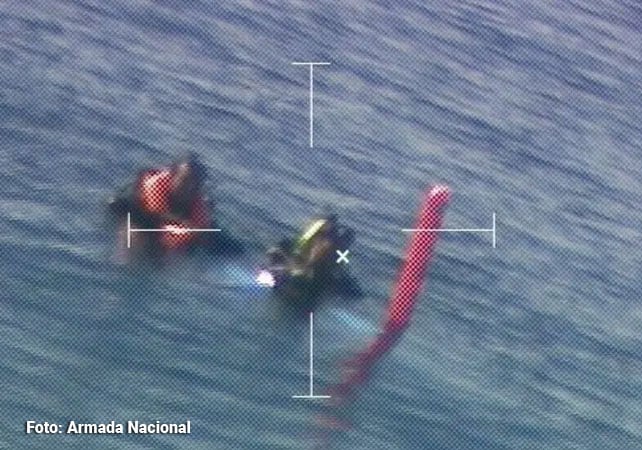
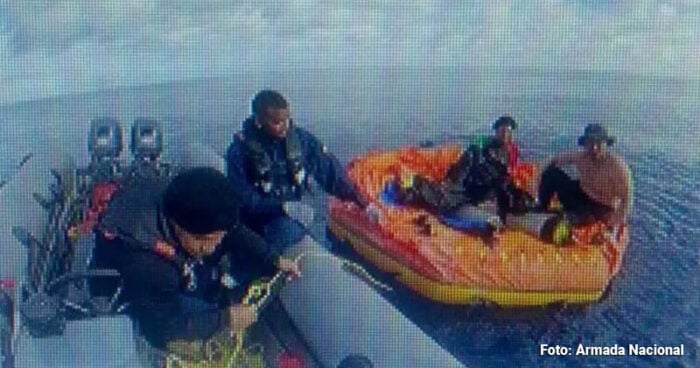
On September 2, after nearly 50 hours—or roughly three days—adrift at sea and approximately 39 nautical miles (72 kilometers) away from Malpelo, a scouting aircraft spotted the two men bobbing in the vast ocean. A life raft was dropped from the sky, swiftly followed by rescue divers from the Armada.

Rodríguez and Morales were hauled aboard, utterly exhausted, suffering from severe dehydration, and bearing painfully swollen feet from prolonged exposure to saltwater. While Peter Morse had been located earlier, the operation ended in tragedy for the others: Erika Vanessa Díaz was eventually found dead, and Carlos Jiménez was never seen again, swallowed whole by the Pacific.
Supporting Data & Production Logistics: Recreating the Abyss
Recreating such an intense historical event required a production methodology that mirrored the hardship of the original shipwreck.
Journey to the Edge of the World
Cast and crew embarked on a grueling 40-hour boat journey from Buenaventura to reach the volcanic rock of Malpelo. The production team remained at sea for nearly two weeks, living aboard vessels and working in the punishing, shifting currents around Malpelo and Gorgona.
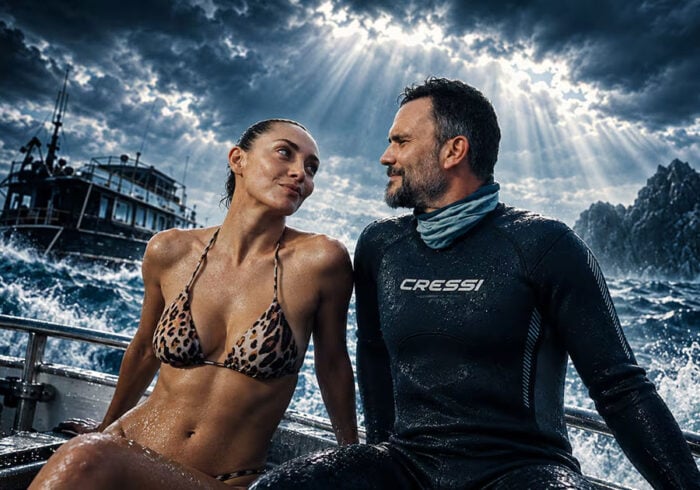
For lead actor Juan Pablo Raba, who portrays the character Pablo, the shoot presented an irony of the highest order: Raba does not particularly enjoy diving, and the relentless motion sickness aboard the ship tested his psychological and physical limits far beyond what was written in the script.
To prepare for the unforgiving conditions, co-star Carolina Guerra completed an advanced diving course in Taganga alongside specialists deeply familiar with Malpelo’s treacherous undertows.
Technical Mastery and Musical Scored
The production amassed over 200 hours of marine footage. However, safety considerations for night shoots forced the crew to pivot to a surprisingly domestic environment: a calm, controlled swimming pool far from the unpredictable marine life.
The film’s auditory landscape is equally monumental. The original score was composed by Alejandro Ramírez-Rojas and recorded by a 36-piece orchestra from the Czech Philharmonic, elevating the psychological dread of the open ocean. Post-production was further bolstered by a financial stimulus from Colombia’s Film Development Fund (FDC) in its 2025 call for feature film post-production grants.
Official Responses and Maritime Authorities
The Colombian Armada’s 2016 operation remains a benchmark for deep-sea rescue missions in national waters. Naval authorities continually emphasize the unpredictable nature of oceanic currents around protected sanctuaries like Malpelo and Gorgona, where pristine biodiversity coexists with extreme environmental hazards.
Following the theatrical release of Pacífico, marine conservationists and safety advocates have lauded the film for shedding light not only on the heroism of the survivors, but also on the inherent dangers faced daily by professional divers, researchers, and tourists exploring Colombia’s remote oceanic frontiers. Biologists and national park authorities, such as those long dedicated to safeguarding the region’s marine ecosystems, view the film as a cultural homage to the powerful, untamed nature of the Colombian Pacific.
Implications: Cultural Resonance and the Legacy of Pacífico
The transition of this tragedy into a cinematic triumph carries profound cultural and psychological implications for Colombia:
- Humanizing the Statistics of Survival: Rather than functioning as a standard Hollywood-style action flick, Pacífico leans heavily into psychological horror and emotional endurance. By consulting directly with survivor Hernán Rodríguez during pre-production, director Riccardo Gabrielli ensured the film captured the authentic mental landscape of isolation—the ticking clock of dwindling oxygen, the hallucinations, and the psychological tether of human companionship.
- Highlighting Colombia’s Pacific Coast: For decades, Colombia’s cinematic output has often gravitated toward urban dramas, narco-narratives, or Andean magical realism. Pacífico directs the national and international gaze toward the Colombian Pacific—a region of immense ecological richness, geopolitical isolation, and untapped storytelling potential.
- A Memorial to the Lost: Beyond celebrating the survival of Rodríguez and Morales, the film serves as a poignant cinematic monument to Erika Vanessa Díaz and Carlos Jiménez. It ensures that their names and the collective memory of the 2016 tragedy are preserved, transforming private grief into a shared national experience on screens across the country.



Leave a Reply