

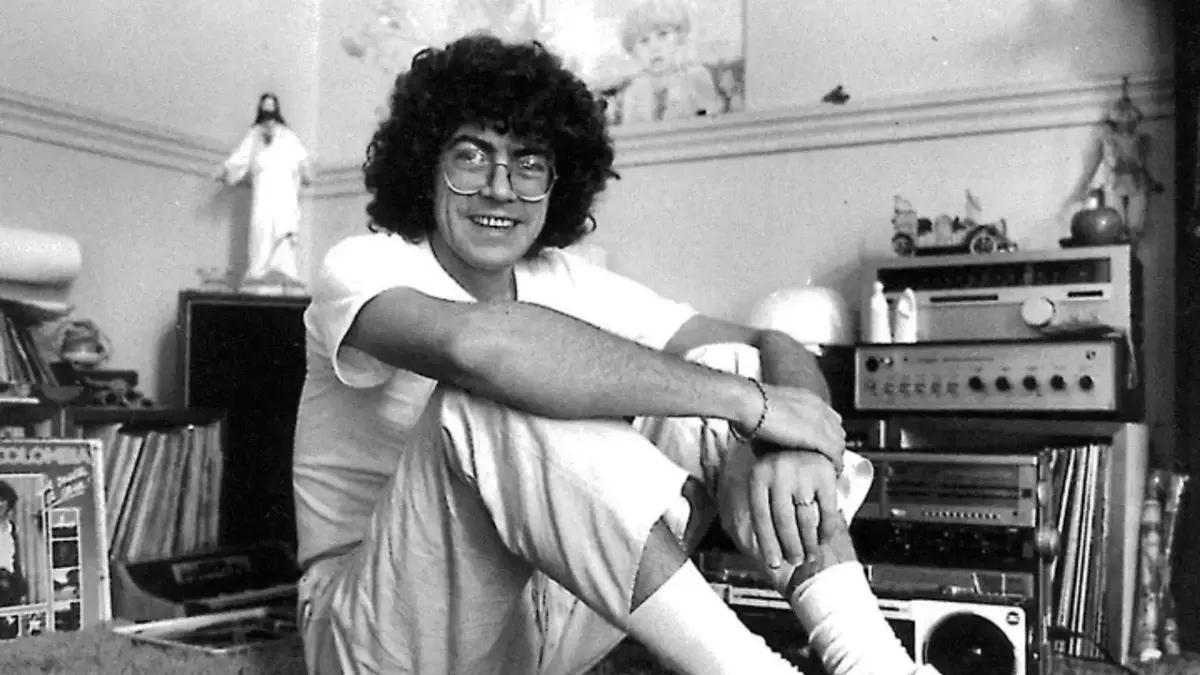
BUENOS AIRES — Latin American music is in mourning following the death of Piero Antonio Franco De Benedictis, universally known simply as Piero. The legendary Italian-Argentine and naturalized Colombian singer-songwriter passed away on Wednesday, October 7, 2026, at the age of 81 in Buenos Aires, Argentina.
Piero leaves behind a monumental musical legacy that spanned over six decades. He transformed the landscape of the canción de autor (singer-songwriter movement), infusing traditional ballads with profound social commentary, poetic depth, and a relentless commitment to peace, human rights, and the working classes. With anthems like “Mi viejo” and “Para el pueblo lo que es del pueblo,” Piero transcended national borders to become a voice for generations of Latin Americans navigating political turmoil, social change, and the universal complexities of the human experience.
1. Main Facts: The Passing of a Legend
Piero died at the prestigious Hospital Italiano in Buenos Aires, where he had been hospitalized following a series of delicate health complications that had concerned his fans and family in recent months. His family officially confirmed his passing through the artist’s authorized communication channels, sparking an immediate wave of grief, tributes, and retrospectives from cultural institutions, political figures, and fellow artists across the Spanish-speaking world.
Born in Italy in 1945 before immigrating to Argentina as a young child, Piero forged a unique identity that bridged European sensibilities with the soul of Latin America. Though he spent the majority of his formative and later years shuttling between Argentina and Colombia—the latter of which officially granted him citizenship in 1996—his art belonged to the entire hemisphere.
His final documented performance in Colombia took place on April 19, 2026, at the renowned Teatro Colsubsidio in Bogotá, where he celebrated the 50th anniversary of his iconic conceptual work, La Sinfonía Inconclusa en la Mar. Despite his advancing age and health struggles, Piero maintained an active connection to the stage, proving that his voice and message remained as vital as ever.
2. Chronology: A Life Dedicated to Art and Social Conscience
To understand Piero’s impact, one must trace a timeline marked by artistic evolution, political resistance, and deep transnational bonds.
The Formative Years and the Rise to Stardom (1945–1968)
- 1945: Piero Antonio Franco De Benedictis is born in Italy, migrating to Argentina shortly thereafter, where he grows up and absorbs the rich folkloric and urban musical traditions of Buenos Aires.
- 1964: Piero makes his official television debut in Argentina, stepping into an emerging cultural scene characterized by youthful rebellion and artistic reinvention.
- 1968: A fateful meeting occurs when Piero crosses paths with poet and journalist José Tcherkaski. This partnership forms one of the most prolific creative duos in the history of Latin American popular music.
The Masterpiece and International Acclaim (1969–1970s)
- 1969: The duo releases “Mi viejo.” With lyrics by Tcherkaski and music and performance by Piero, the song instantly captures the emotional complexity of father-child relationships. It becomes a runaway success and eventually one of the most covered songs in Latin American history, with over 500 recorded versions worldwide, according to the Konex Foundation.
- Early 1970s: Piero broadens his thematic scope, shifting from intimate ballads to socially charged compositions. Tracks like “Para el pueblo lo que es del pueblo” cement his reputation as an artist unafraid to speak truth to power.
Exile and Artistic Resilience (1970s–1980s)
- Amidst the rising tide of military dictatorships and political violence in the Southern Cone, Piero faces censorship and threats, ultimately enduring a period of political exile in Spain.
- Far from silencing him, exile broadens his global perspective, allowing him to tour extensively and connect with European audiences while maintaining his ideological roots in Latin America.
Deepening Roots in Colombia and Later Years (1990s–2026)
- 1996: In recognition of his decades-long cultural footprint and profound affection for the nation, Piero is officially granted Colombian citizenship.
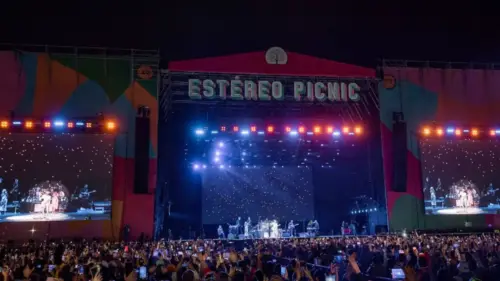
- September 2022: Piero performs at the inaugural edition of the Festival Cordillera in Bogotá, thrilling a multi-generational crowd that spans grandparents and grandchildren alike.
- June 2025: He stages a triumphant concert at Bogotá’s historic Teatro Jorge Eliécer Gaitán, alongside various performances celebrating La Sinfonía Inconclusa.
- April 19, 2026: Piero gives his final major performance in Bogotá at the Teatro Colsubsidio, marking half a century of La Sinfonía Inconclusa en la Mar.
- October 7, 2026: Piero passes away in Buenos Aires at the age of 81.
3. Supporting Data and Musical Discography
Piero’s footprint in the archives of Latin American music is vast. Over a career spanning more than six decades, he recorded over 25 studio and live albums and performed thousands of concerts.
Essential Repertoire
While “Mi viejo” remains his most globally recognized composition, Piero’s catalog is rich with stylistic diversity, moving seamlessly from delicate acoustic ballads to upbeat rock and socially conscious folk:
- “Llegando, llegaste”
- “Tengo la piel cansada de la tarde”
- “Pedro Nadie”
- “Para el pueblo lo que es del pueblo”
- La Sinfonía Inconclusa en la Mar (a masterwork of conceptual storytelling)
According to data compiled by cultural institutions such as the Konex Foundation—which recognized him multiple times for his contributions to popular music—Piero’s ability to blend poetic lyricism with accessible melodies ensured his longevity in a notoriously volatile industry. Furthermore, his work has been studied by sociologists and musicologists as a key artifact of 20th-century Latin American Nueva Canción and protest movements.
4. Official Responses and Tributes
Following the announcement of his death by his family, cultural ministries, prominent musicians, and public figures across Argentina, Colombia, and the broader Latin American community flooded social and mainstream media with condolences and tributes.
"Piero was not just a singer; he was the soundtrack of our conscience, the voice of our fathers, and a tireless defender of dignity and freedom. His music belongs to the eternal patrimony of Latin America." — (Representative Cultural Statement)
In Colombia, where he spent a significant portion of his artistic life and held dual citizenship, cultural commentators noted that Piero felt as much a son of the Andes as he did of the Río de la Plata. Fellow artists praised his humility, his unwavering commitment to social justice, and his extraordinary stage presence that remained magnetic well into his twilight years.
Fans gathered outside the Hospital Italiano in Buenos Aires and at traditional gathering spots in Bogotá to sing his songs softly in unison—a fitting tribute for a man who believed that music was, above all, a tool for human connection and collective healing.
5. Implications: The Enduring Legacy of a Troubadour
The passing of Piero marks the closing chapter of a golden era for the Latin American canción de autor. Figures like Piero, alongside contemporaries across the continent, used their art not merely for commercial entertainment, but as an ethical framework for societies grappling with dictatorship, inequality, and the search for identity.
Cultural Continuity Across Generations
One of Piero’s most remarkable achievements was his ability to bridge the generational divide. At festivals like Bogotá’s Festival Cordillera in 2022, audiences who had lived through the political upheavals of the 1970s stood shoulder-to-shoulder with twenty-somethings experiencing his music for the first time. Songs like “Mi viejo” functioned as household heirlooms—passed down from parents to children—while his social anthems resonated anew with younger generations confronting contemporary socio-political struggles.
A Transnational Identity
Piero’s dual identity as an Italian-born, Argentine-raised, and Colombian-naturalized citizen serves as a powerful reminder of the borderless nature of true art. He did not merely tour countries; he integrated himself into their cultural fabrics. His legacy demonstrates that an artist can belong simultaneously to multiple homelands if their work speaks to universal human truths.
As Latin America bids farewell to Piero Antonio Franco De Benedictis, his voice remains embedded in the collective memory of the continent. Whether through the quiet nostalgia of a father remembered in a Sunday afternoon ballad or the defiant echo of a people reclaiming their dignity, Piero’s songs will continue to resonate—proving that while troubadours may pass away, their art remains timeless.

Leave a Reply