

By Global Culture & News Desk
October 2026
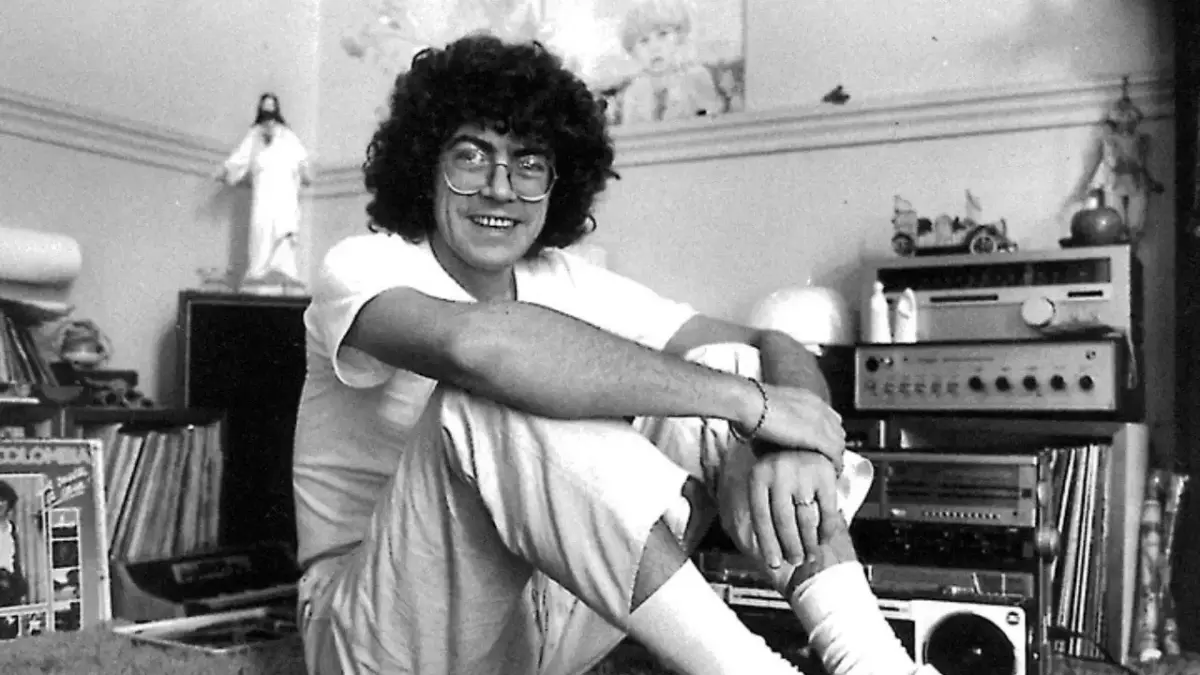
The landscape of Latin American popular music has lost one of its most defining and enduring voices. Piero Antonio Franco De Benedictis, universally known simply as Piero, passed away this Wednesday, October 7, 2026, at the age of 81 in Buenos Aires, Argentina. The Italo-Argentine singer-songwriter, who was also a proud naturalized citizen of Colombia, leaves behind a monumental legacy that shaped the soundtrack of social consciousness, generational affection, and political resilience across an entire continent.
Piero’s passing follows a period of delicate health complications that required hospitalization at the prestigious Hospital Italiano in Buenos Aires. His family formally announced his death through the artist’s official communication channels, prompting an immediate wave of grief, tributes, and remembrances from fans, cultural institutions, and fellow musicians across the Spanish-speaking world.
Spanning a career that surpassed six decades, Piero was much more than a balladeer. He was a troubadour of the people, a composer whose gentle yet piercing melodies captured the complexities of family love, the struggles of the working class, the pain of political exile, and an unwavering hope for a fairer society. With anthems like Mi viejo and Para el pueblo lo que es del pueblo, he cemented his status as a pillar of Latin American culture—a status that time, shifting musical trends, and geographical borders could never diminish.
1. Main Facts: The Passing of a Musical Titan
Piero Antonio Franco De Benedictis breathed his last on the morning of October 7, 2026, surrounded by the quiet gravity of a Buenos Aires hospital and the profound sorrow of a global fanbase. Born in Italy in 1945 before immigrating to Argentina as a young child, Piero lived a life defined by transnational identity. He was profoundly Italian by birth, profoundly Argentine by upbringing and career development, and deeply Colombian by adoption and affection.
The immediate cause of his transition followed weeks of respiratory and age-related health battles that necessitated intensive medical oversight at the Hospital Italiano. Despite the best efforts of medical personnel, his body finally yielded to the passage of time at 81 years old.
His family’s official statement reflected the grace and humility that characterized his life: "Piero has left us physically, but his voice, his poetry, and his profound love for humanity remain immortal. He sang for the fathers, the workers, the dreamers, and the dispossessed. Today, his song becomes eternal."
The cultural impact of his departure was instantaneous. Cultural ministries, legendary artists, and everyday citizens took to digital and traditional platforms to mourn the loss of a man whose songs served as personal and political milestones. From Buenos Aires to Bogotá, from Madrid to Mexico City, tributes poured in, highlighting how deeply intertwined Piero’s artistry was with the collective memory of Latin America.
2. Chronology: A Life Dedicated to Art, Exile, and Social Consciousness
To understand Piero is to trace a timeline of artistic courage, political turbulence, and relentless creativity. His journey through music spans more than sixty years, divided into distinct chapters of discovery, massive commercial success, political persecution, and triumphant artistic maturation.
Early Beginnings and the Birth of a Star (1945–1968)
Piero arrived in Argentina as an immigrant child, absorbing the rich folkloric traditions of his new homeland while remaining connected to his European roots. By the early 1960s, the young artist was drawn to the burgeoning café-concert and television scenes in Buenos Aires. He officially debuted on Argentine television in 1964, showcasing a unique vocal timbre and a distinct ability to blend traditional acoustic instrumentation with modern folk-pop sensibilities.
The turning point of his early career occurred in 1968, when he crossed paths with the visionary poet and journalist José Tcherkaski. This fateful meeting formed one of the most prolific creative partnerships in Latin American music history. Tcherkaski provided the lyrical depth and poignant imagery, while Piero translated those words into unforgettable melodies and delivered them with emotional transparency.
The Phenomenon of "Mi viejo" (1969)
In 1969, the fruit of the Piero-Tcherkaski collaboration materialized in the release of "Mi viejo". The song was an instant cultural earthquake. Dedicated to the complex, often unspoken bond between fathers and children, it resonated instantly across generations.
Far from being a localized hit, Mi viejo became a universal anthem. According to archival data from the prestigious Fundación Konex, the song has since been recorded in more than 500 distinct versions by artists spanning various genres, languages, and nationalities. It transformed Piero from a promising young artist into an international icon almost overnight.
The Years of Turbulence and Exile (1970s–1980s)
As the political climate in Latin America deteriorated into brutal military dictatorships throughout the 1970s, Piero’s commitment to social justice and human rights made him a target for censorship and intimidation. His compositions increasingly reflected the socio-political realities of the continent, featuring tracks like "Para el pueblo lo que es del pueblo".
Facing direct threats to his safety during the height of the Argentine military junta, Piero was forced into political exile, relocating temporarily to Spain. Exile, while painful, expanded his artistic horizons. It exposed him to the European nueva trova and protest song movements, further refining his worldview. When he eventually returned to the stage following the restoration of democracy, his music carried an even deeper resonance of resilience, freedom, and human dignity.
3. Supporting Data: The Repertoire, Discography, and Deep Colombian Ties
Throughout his illustrious career, Piero built an exhaustive catalog that defied easy categorization, seamlessly moving between delicate acoustic ballads, upbeat folk rhythms, rock elements, and politically charged protest anthems.
A Vast Discographical Legacy
Data compiled by cultural institutions such as the Fundación Konex indicates that Piero published more than 25 studio albums over his career, staging thousands of live performances across the globe. Some of his most enduring and celebrated tracks include:
- "Llegando, llegaste"
- "Tengo la piel cansada de la tarde"
- "Pedro Nadie"
- "Para el pueblo lo que es del pueblo"
- "Juan Bumbury"
His ability to merge poetic introspection with biting social commentary earned him numerous accolades, including recognition as one of the definitive architects of the canción de autor (singer-songwriter) movement in Latin America.
A Profound Bond with Colombia
While Piero’s roots were deeply planted in Argentina, his connection to Colombia was uniquely profound. In 1996, he was officially granted Colombian citizenship, a recognition of decades of artistic and cultural exchange within the Andean nation. He did not view Colombia merely as a tour stop; he embraced its people, its cultural fabric, and its struggles as his own.
This enduring romance with the Colombian public remained vibrant right up until his final months. Some of his most memorable recent milestones in the country included:
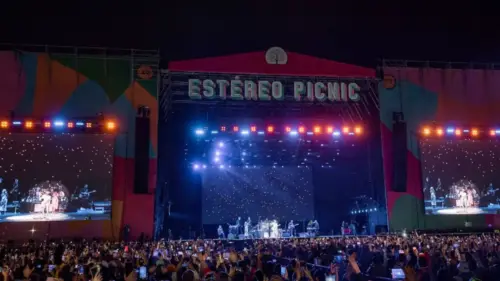
- September 2022: Piero performed at the inaugural edition of the Festival Cordillera in Bogotá, proving his timeless appeal to younger generations of music lovers.
- June 2025: He delivered a celebrated, emotionally charged performance at the iconic Teatro Jorge Eliécer Gaitán in Bogotá.
- Throughout 2025 and early 2026: He toured extensively with productions celebrating La Sinfonía Inconclusa en la Mar.
- April 19, 2026: In what would tragically become his final documented performance in Colombia, Piero took the stage at the Teatro Colsubsidio in Bogotá, participating in the 50th-anniversary celebrations of La Sinfonía Inconclusa en la Mar.
For Colombian audiences, Piero was family—a gentle-voiced patriarch who understood their joys and sorrow, and who sang about the beauty and pain of the continent with unmatched authenticity.
4. Official Responses: Tributes from the Cultural World
News of Piero’s passing triggered an immediate wave of official statements and heartfelt tributes from cultural leaders, literary figures, and musical peers across the Americas.
The Argentine Ministry of Culture released a formal statement reading: "Piero embodied the conscience, the tenderness, and the unwavering voice of an entire generation. Through his art, he taught us how to look at our parents with understanding, how to look at our societies with critical love, and how to never surrender our ideals. Argentina mourns a fundamental pillar of its cultural identity."
Colombian cultural authorities likewise expressed deep sorrow over the loss of their adopted compatriot. The Mayor’s Office of Bogotá and the Ministry of Cultures issued joint condolences, emphasizing his immense contributions to the nation’s artistic landscape. "Piero chose us, and we adopted him as one of our own. His songs rang out during our moments of hope and sustained us through our darkest hours. His memory will forever echo in the theaters, streets, and mountains of Colombia."
Collaborators and peers shared deeply personal memories. Tributes flooded social media from legendary figures of the nueva canción and rock en español movements, remembering him not just as a brilliant composer, but as a man of extraordinary warmth, humor, and humility. Many noted that even in his advanced age, Piero possessed the sparkling curiosity of a young student and the wisdom of an ancient sage.
5. Implications: The Eternal Echo of a Cultural Architect
The passing of Piero marks the closing of a golden chapter in Latin American popular music. As the generation of artists who blended high poetry with mass commercial appeal, social activism with acoustic intimacy, gradually passes into history, the question arises: what happens to their legacy?
For Piero, the implications of his death extend far beyond mourning; they point toward a necessary cultural reappraisal. In an era dominated by hyper-processed digital tracks and transient algorithmic hits, Piero’s body of work stands as a monument to the power of the human voice, a single guitar, and a lyric that tells the truth.
His songs—whether exploring the melancholic beauty of Mi viejo or championing social justice in Para el pueblo lo que es del pueblo—possess a timeless architecture. They belong to no single decade. They are transmitted from grandparents to parents, and from parents to children, ensuring that the messages of empathy, generational reconciliation, and human rights will not fade.
Furthermore, Piero’s dual nationality and binational identity (Argentine-Colombian, with Italian roots) serve as a powerful reminder of Latin America’s cultural unity. He proved that art recognizes no borders, that the pain of a worker in Buenos Aires is mirrored in Bogotá, and that a song written in the late 1960s can still speak directly to a twenty-something festival-goer in the 2020s.
As the final notes of his storied career fade into history, Piero leaves behind an immortal blueprint for what it means to be an artist of the people. He did not merely entertain Latin America; he helped it understand itself, feel its own heart beating, and dream of a better tomorrow. Rest in peace, Maestro.


Leave a Reply