

By Global Environmental Desk
Published in partnership with international conservation updates
Main Facts
The latest data from the World Wide Fund for Nature (WWF) has painted a stark portrait of the global environmental crisis. According to the Living Planet Report 2026, the size of monitored wildlife populations across Latin America and the Caribbean suffered an average decline of 95% between 1970 and 2022. This catastrophic drop marks the most severe regional reduction analyzed by the conservation body anywhere on Earth.
To compile these sobering findings, the WWF’s Living Planet Index examined 35,803 population trends spanning 5,790 vertebrate species—including mammals, birds, amphibians, reptiles, and fish. Analysts emphasize an important statistical distinction: this 95% figure represents the average variation in the magnitude of tracked populations rather than the absolute extinction or total disappearance of 95% of all individual animals or species in Latin America. Nevertheless, the metric signals a profound systemic collapse in ecosystem vitality.
On a global scale, monitored wildlife populations experienced an average reduction of 73% over the same five-decade timeframe. Regionally, the declines vary drastically:
- Latin America and the Caribbean: 95%
- Africa: 80%
- Asia-Pacific: 49%
- North America: 28%
- Europe and Central Asia: 23%
When broken down by ecological habitat, freshwater ecosystems bore the brunt of the global crisis, recording a staggering average decrease of 85%—largely driven by over-extraction, pollution, dam construction, and the fragmentation of river networks.
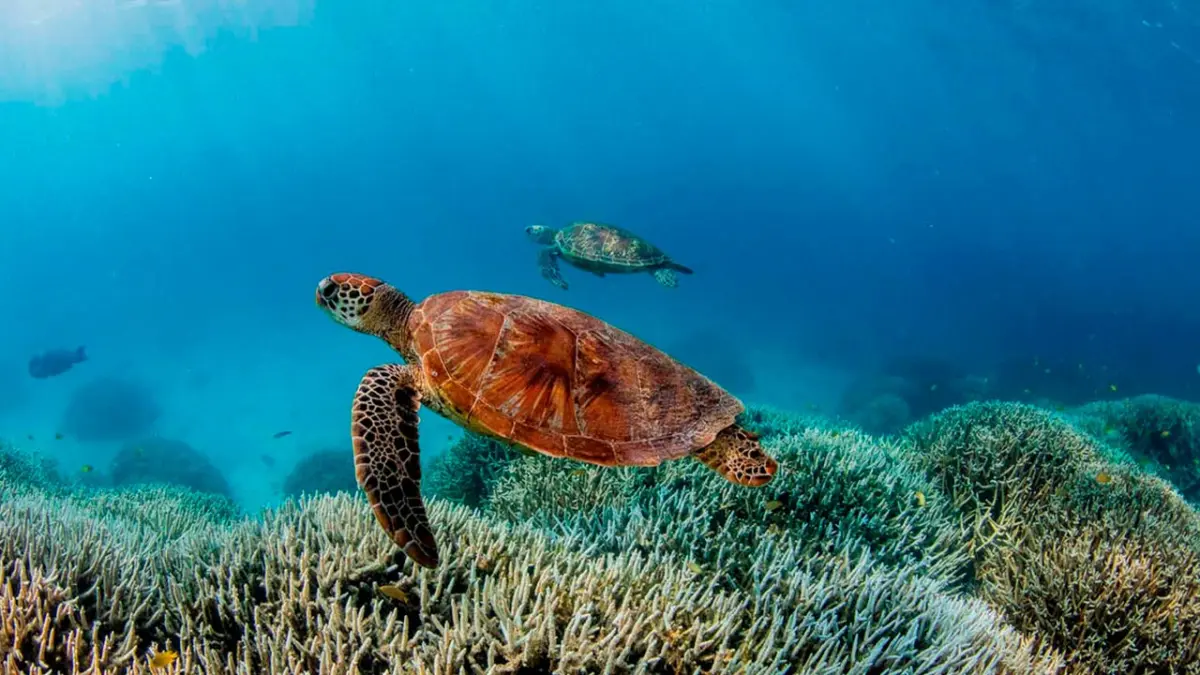
Despite these grim global metrics, the report highlights a critical nuance: roughly 50% of the populations included in the index are currently stable or increasing. Furthermore, targeted conservation initiatives have proven that decisive human intervention can pull species back from the brink of extinction. Notable global comebacks include the wild tiger population—which surged by more than 70% between 2010 and 2025, rising from approximately 3,200 to 5,700 individuals—as well as the recovery of Atlantic and Pacific bluefin tuna and the green sea turtle.
Closer to Latin America, local success stories in nations like Colombia demonstrate that long-term monitoring, habitat protection, and community-driven conservation can reverse historical declines, even as systemic regional pressures mount.
Chronology: Five Decades of Environmental Transformation
To understand how global ecosystems reached this critical juncture, it is necessary to examine the trajectory of environmental policy, industrial expansion, and conservation science over the past fifty years.
1970–1980s: The Dawn of Global Environmentalism and Initial Monitoring
The baseline for the Living Planet Index begins in 1970, an era that coincided with the birth of modern environmental awareness, the establishment of the United Nations Environment Programme (UNEP), and the passage of landmark conservation laws in numerous nations. However, this period also marked the acceleration of aggressive industrial agriculture, large-scale tropical deforestation in the Amazon basin, and the widespread commercial exploitation of marine and terrestrial wildlife.
1990–2000s: Globalization, Trade, and Habitat Fragmentation
As global trade agreements expanded through the 1990s and 2000s, economic drivers shifted toward mass commodity production—particularly cattle ranching, soy monocultures, and palm oil plantations. During this window, habitat fragmentation accelerated dramatically. Scientists began documenting "empty forest syndromes," where lush canopies remained intact, but vertebrate populations had been hollowed out by hunting, logging roads, and edge effects.
2010–2020: The Climate Crisis and the Rise of Targeted Intervention
Entering the 2010s, climate change emerged alongside habitat loss as a compounding threat. Coral bleaching events, shifting precipitation patterns, and prolonged droughts began to alter natural ranges. Conversely, this decade also witnessed the maturation of precision conservation. Programs targeting iconic species—such as the global push to double wild tiger numbers (Tx2 initiative)—began yielding measurable, science-backed results.
2015–2026: Localized Recoveries Amid Systemic Pressures
In recent years, regional efforts across Latin America began showing tangible dividends. Between 2015 and 2024, reintroduction programs for species like the Orinoco crocodile (caimán llanero) gained momentum in Colombian national parks. Simultaneously, decade-long monitoring frameworks for the Andean bear (oso andino) and the yellow-eared parrot (loro orejiamarillo) began publishing data in 2026, revealing unexpected resilience in high-altitude and cloud-forest habitats. Yet, these victories stand in sharp contrast to the broader backdrop of the 2026 Living Planet Report, which underscores that isolated wins cannot offset systemic, macro-level ecosystem degradation without structural economic reforms.
Supporting Data: The Anatomy of Decline and Financial Disconnect
The numbers underpinning the 2026 Living Planet Report offer an unvarnished look at the drivers of biodiversity loss and the structural economic imbalances that continue to favor environmental destruction over preservation.
Primary Drivers of Wildlife Loss
The WWF identifies habitat loss and degradation—primarily driven by unsustainable agricultural expansion, infrastructure development, and urban sprawl—as the single most frequently reported threat across all monitored regions. Following habitat destruction, the hierarchy of threats includes:
- Overexploitation: Unsustainable hunting, poaching, illegal wildlife trade, and overfishing.
- Climate Change: Altered temperature regimes, extreme weather events, and habitat shifting.
- Pollution: Chemical runoff, plastic accumulation, and heavy metal contamination in terrestrial and aquatic systems.
- Invasive Species and Disease: The introduction of non-native species and pathogens that devastate immunologically naive native populations.
The Macroeconomic Paradox: Destruction vs. Conservation Finance
Perhaps one of the most provocative revelations of the 2026 report is the glaring financial disconnect between global economic flows and environmental stewardship.
- Harmful Subsidies: In 2023 alone, an estimated $7.3 trillion USD was channeled globally into public and private subsidies, tax breaks, and investments that directly or indirectly damaged natural ecosystems—primarily supporting fossil fuels, intensive industrial agriculture, and extractive industries.
- Conservation Funding: By comparison, only about $220 billion USD was directed globally toward initiatives aimed at protecting, managing, or restoring nature during the same period.
This financial asymmetry—where destructive activities outpace conservation funding by a factor of more than 30 to 1—explains why local conservation victories struggle to scale into macro-level ecosystem recovery.
Detailed Breakdown of Global and Regional Metrics
- Total Monitored Species: 5,790 vertebrate species.
- Total Population Trends Tracked: 35,803.
- Freshwater Decline: 85% average reduction, making aquatic biomes the most fragile on the planet.
- Tiger Recovery Metric: A 70%+ increase in global wild tigers between 2010 and 2025 (from ~3,200 to ~5,700).
Official Responses and Expert Perspectives
The release of the Living Planet Report 2026 has prompted urgent commentary from international conservation leaders, policy-makers, and scientific institutions.
Dr. Kirsten Schuijt, Director General of WWF International, emphasized the duality of the report’s findings. "The staggering 95% average drop in Latin America is not just a statistic about animals; it is a flashing red warning light for the life-support systems upon which human societies depend," Schuijt noted during the global launch. "However, the recovery of populations like the Atlantic bluefin tuna, the green sea turtle, and wild tigers proves beyond a doubt that nature is resilient. When we commit to science-based protection, adequate funding, and community-led conservation, species can and do bounce back."
Regional conservationists in Latin America have echoed these sentiments while calling for immediate economic policy overhauls. Latin American environmental policy researchers have pointed out that while nations in the region harbor some of the world’s richest biodiversity hotspots—such as the Amazon, the Mesoamerican reef system, and the high Andean páramos—they also face intense geopolitical and economic pressure from global commodity markets.
Local wildlife authorities and park administrators stress that conservation cannot succeed in a vacuum. Representatives from national park agencies in Colombia and neighboring countries have argued that safeguarding biodiversity requires integrating indigenous communities and local farmers into co-management frameworks. By recognizing traditional ecological knowledge and securing land rights for indigenous groups, conservation efforts achieve significantly higher rates of habitat integrity than purely top-down, fortress-conservation models.
Furthermore, economic analysts contributing to the report’s financial assessments have called on multilateral development banks and G20 finance ministers to redirect harmful agricultural and energy subsidies toward regenerative land-use practices. Without repurposing these trillion-dollar financial flows, experts warn that global conservation targets will remain out of reach.
Implications: A Pivotal Crossroads for Conservation and Policy
The implications of the Living Planet Report 2026 extend far beyond the conservation sector, touching upon global food security, economic stability, and climate resilience.
Ecosystem Collapse and Human Well-being
The dramatic decline of vertebrate populations is a symptom of broader ecosystem decay. Forests, wetlands, and marine biomes that have lost their foundational fauna often experience cascading ecological failures. For instance, the loss of large herbivores and seed-dispersing birds in Latin American forests impairs natural forest regeneration, reducing the landscape’s capacity to sequester carbon and regulate regional hydrological cycles. In freshwater systems, the 85% decline in vertebrate populations threatens fisheries that millions of rural and indigenous communities rely upon for daily protein and sustenance.
The Light of Local Resilience: Colombia’s Case Studies
Despite the macro-level crisis, the micro-level successes documented in countries like Colombia offer a blueprint for actionable hope:
- The Orinoco Crocodile (Caimán llanero): Through systematic reintroductions in the El Tuparro National Natural Park between 2015 and 2024, 96 individuals were successfully returned to their native habitat, marking a vital step in restoring apex predators to Orinoquía’s river systems.
- The Andean Bear (Oso Andino): A decade-long conservation strategy evaluated in 2026 revealed that the bear’s territorial occupation in priority landscapes of Colombia’s Western Cordillera rose from 52% to 76%, while reaching 61% in the Central Cordillera. This indicates that connectivity corridors are successfully maintaining viable populations across fragmented montane forests.
- The Yellow-Eared Parrot (Loro Orejiamarillo): Once on the brink of extinction, the species was recently documented in the municipalities of Cachirá and Ábrego in Norte de Santander, marking its return to the department after an absence of 167 years.
The Path Forward
These localized triumphs validate the core thesis of the 2026 report: the loss of biodiversity is not an inevitable, irreversible tragedy. When governments, non-governmental organizations, and local communities unite around rigorous habitat protection, continuous population monitoring, and sustained financial backing, ecosystems possess a remarkable capacity for self-repair.
Ultimately, the Living Planet Report 2026 serves as both an indictment of past economic models and a strategic roadmap for the future. As nations prepare for upcoming global biodiversity summits, the central challenge will be bridging the vast chasm between trillion-dollar destructive subsidies and underfunded conservation mandates. Only by aligning global finance with planetary health can the world hope to bend the curve of biodiversity loss and secure a stable future for both wildlife and humanity.




Leave a Reply