

BOGOTÁ, Colombia — The monumental corruption scandal that shook the foundations of Colombia’s public administration—the embezzlement network within the National Unit for Disaster Risk Management (UNGRD)—has taken a volatile new turn. A fierce legal battle has erupted following a government directive to transfer the architects of the multi-billion-peso despoilment from comfortable military garrison confinement to the notorious, high-security La Picota Prison in Bogotá.
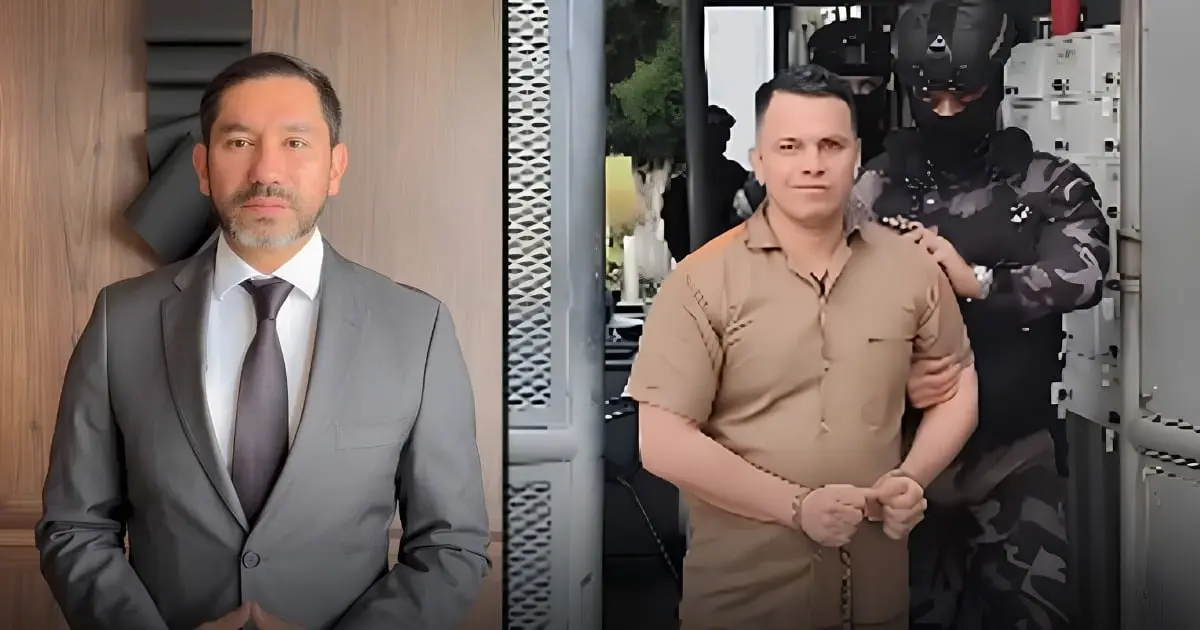
At the center of the storm is Sneyder Pinilla, the former subdirector of Disaster Management at the UNGRD and a pivotal cooperating witness whose explosive revelations exposed a sprawling web of political kickbacks, institutional looting, and the infamous, overpriced water tanker trucks meant for the arid department of La Guajira.
Pinilla’s defense attorney, Gustavo Moreno—himself a figure of immense historical notoriety in Colombian jurisprudence—has launched an aggressive legal challenge to block the transfer. Moreno argues that moving Pinilla from his current, secure military quarters to La Picota not only disregards prior judicial safety provisions but directly imperils his life, compromises ongoing investigations, and threatens to derail his critical cooperation with the nation’s justice system.
Main Facts: The Transfer Order and the Core Conflict
The controversy ignited when the Colombian government announced a sweeping, hardline policy regarding individuals detained for white-collar corruption and high-impact financial crimes. Under this new directive, high-profile inmates who had previously enjoyed privileged confinement in military installations—often characterized by wide open green spaces, tranquility, and isolation from general prison populations—were ordered to be relocated to traditional penitentiaries, specifically La Picota in Bogotá.
Before the government’s intervention, the primary protagonists of the UNGRD scandal experienced vastly different conditions of deprivation of liberty compared to ordinary inmates:
- Olmedo López, the former Director General of the UNGRD, was held at the Cantón Caldas, a sprawling, heavily wooded military installation.
- Sneyder Pinilla, the former subdirector of Disaster Management, was detained at the Artillery School, boasting wide open facilities, training fields, and extensive green areas.
These conditions stood in stark contrast to the overcrowded, hazardous environments of standard maximum-security penitentiaries. However, the government’s recent policy shift swept away these privileges. Alongside López and Pinilla, a wave of other political and judicial figures linked to corruption investigations—such as Wadith Manzur, Hecson Alexys Benito Castro, Andrés Calle, Juan Carlos Abadía, Víctor Gamboa, and Álex Vernot—have found themselves facing the grim reality of La Picota.
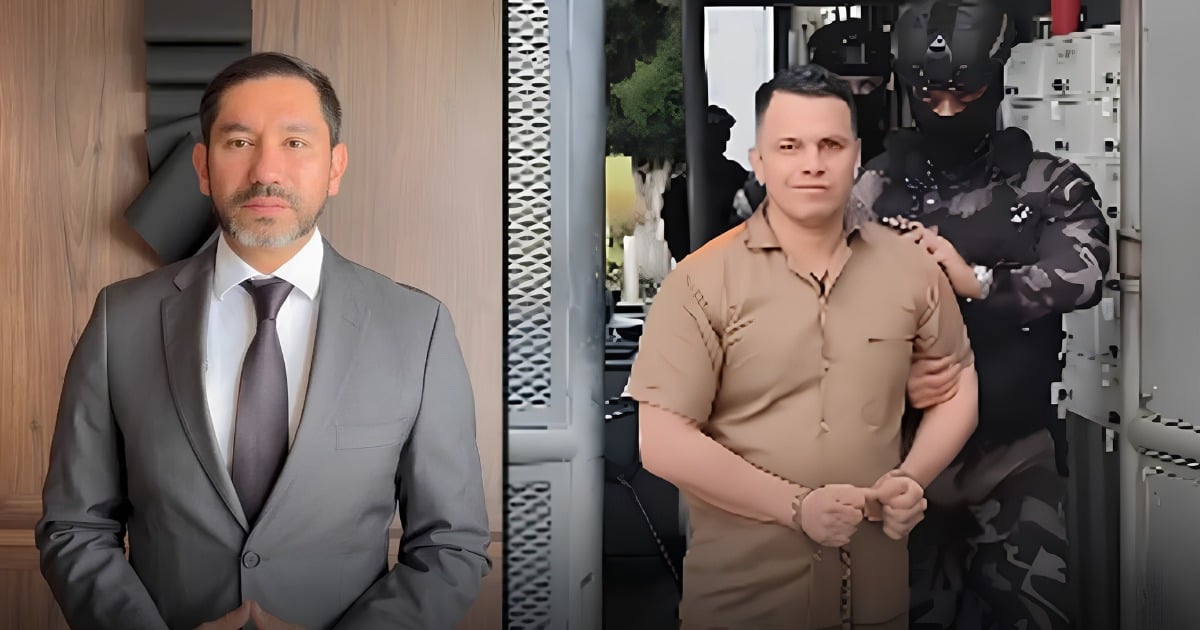
For Pinilla, who has already secured a pre-agreement resulting in a sentence of 5 years and 8 months for his role in the embezzlement, the transfer represents an existential threat. His defense team contends that sending a primary witness and cooperator to La Picota places him in immediate proximity to individuals, factions, and networks implicated by his own testimony, thereby converting a detention facility into a potential hazard zone for a vital state witness.
Chronology of Events: From Disaster Relief Looting to Prison Showdown
To understand the gravity of the current legal standoff, it is essential to trace the chronology of the UNGRD scandal and the professional trajectory of the legal minds defending its key players.
Phase 1: The UNGRD Heist and the Water Tanker Scandal
The scandal came to light when investigations revealed that the UNGRD—an entity designed to protect vulnerable Colombian populations from natural disasters—had been systematically weaponized as a cash cow for political patronage and personal enrichment. At the epicenter were Director General Olmedo López and Subdirector Sneyder Pinilla.
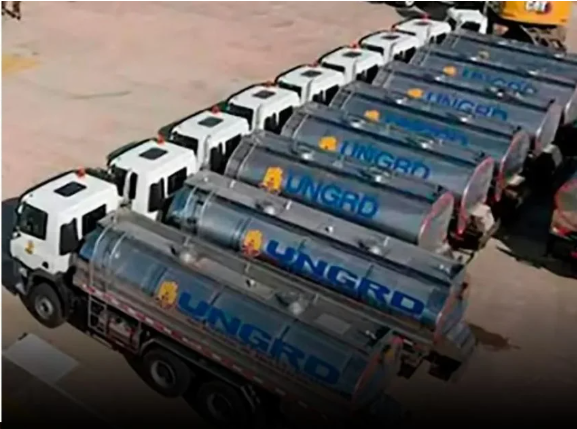
The scheme involved inflated contracts, kickbacks directed to high-ranking congressional leaders, and the infamous acquisition of 40 water tanker trucks (carrotanques) for La Guajira, a region chronically plagued by drought. The contracts were grossly overbilled, and the trucks ultimately sat idle, failing to deliver a single drop of water to vulnerable communities while millions of pesos vanished into private pockets.
Phase 2: Collaboration and Pre-Agreement
Facing overwhelming evidence gathered by the Prosecutor General’s Office (Fiscalía General de la Nación), both López and Pinilla opted to collaborate with the authorities. Pinilla entered into a pre-agreement with prosecutors, accepting a sentence of 5 years and 8 months. As part of his cooperation, Pinilla initiated efforts at restorative justice, including the return of COP $618 million—funds corresponding directly to the capital he unlawfully appropriated within the framework of the La Guajira tanker contract.
In exchange for his testimony, mapping out the entire corruption matrix and naming politicians, lawmakers, and intermediaries who benefited from the loot, Pinilla was granted specialized protective detention in military garrisons, ensuring his security and his continued availability to investigators.

Phase 3: The Government’s Hardline Shift and Gustavo Moreno’s Counter-Offensive
As public outrage mounted over the perceived comfort enjoyed by white-collar criminals in military installations, the executive branch ordered the revocation of these privileges. The inclusion of López and Pinilla in the transfer list to La Picota triggered an immediate reaction from Sneyder Pinilla’s legal counsel, Gustavo Moreno.
Moreno filed urgent legal remedies to review and halt the execution of the transfer order. Emphasizing that Pinilla’s safety is inextricably linked to the integrity of the state’s ongoing anti-corruption probes, Moreno has turned the courtroom and public discourse into a battleground over the state’s obligation to protect its cooperators.
Supporting Data: The Scale of the UNGRD Entanglement
The UNGRD scandal is not merely an isolated case of bureaucratic embezzlement; it represents one of the most complex institutional corruption networks in recent Colombian history.
- 26 Individuals: The Prosecutor General’s Office has formally identified, investigated, and targeted an initial cohort of 26 people deeply entrenched in the UNGRD corruption matrix, spanning former cabinet officials, lawmakers, regional contractors, and administrative middlemen.
- COP $618 Million: The specific sum returned by Sneyder Pinilla as part of his early restitution efforts, representing a fraction of the total funds diverted under his watch, specifically tied to the fraudulent La Guajira tanker contract.
- 5 Years and 8 Months: The prison sentence handed down to Pinilla under his judicial pre-agreement, a relatively lenient term earned through his willingness to unveil the wider conspiracy.
- Multiple High-Profile Transfers: Pinilla and López join a growing list of politically exposed persons (PEPs) relocated to La Picota, including former congressional leaders and legal fixers, highlighting a systemic institutional policy change regarding white-collar detention.
Official Responses and Legal Arguments
The defense mounted by Gustavo Moreno rests on two distinct pillars: physical security and the preservation of investigative momentum.
The Argument for Physical Safety
According to Moreno, sending Pinilla to La Picota is a reckless endangerment of a protected witness. In a maximum-security prison housing violent criminals, rival gang leaders, and—critically—individuals or associates of those whom Pinilla has incriminated, a cooperating witness becomes an immediate target. Moreno argues that the state has a constitutional and legal obligation to guarantee the life and physical integrity of individuals who trade information for reduced sentences. Exposing Pinilla to the general prison population or even compromised security sectors of La Picota effectively undermines the state’s credibility as a protector of whistleblowers.
The Threat to Institutional Cooperation
Beyond physical survival, Moreno emphasizes the operational impact of the transfer. Cooperation is not a one-time event; it is an ongoing, dynamic process. A cooperating witness requires stable, secure conditions to review documents, prepare testimonies, meet with prosecutors, and recall complex financial transactions involving dozens of actors. If Pinilla is forced to navigate the chaotic, high-stress, and hazardous environment of La Picota, his ability—and psychological willingness—to continue feeding vital information to the Fiscalía could be severely impaired.
"The state cannot demand truth and collaboration while simultaneously stripping away the security conditions necessary for that collaboration to survive," legal analysts following the case point out.
The Defender’s Shadow: Who is Gustavo Moreno?
The prominence of this legal battle is amplified significantly by the biography of Sneyder Pinilla’s defense attorney, Luis Gustavo Moreno. Moreno is no stranger to the highest echelons of Colombian legal controversy, public scandal, and redemption arcs.
Moreno achieved national notoriety when he served as the "Anti-Corruption Czar" (Director Nacional Anticorrupción) of the Prosecutor General’s Office. In a cinematic twist that stunned the nation, Moreno was caught in a DEA sting operation in Miami, Florida. Federal agents recorded him accepting a $10,000 USD cash bribe in exchange for diluting, delaying, and sabotaging investigations targeting former Córdoba Governor Alejandro Lyons.
Captured in 2017 and facing imminent extradition to the United States, Moreno chose the path of the cooperator. He blew the lid off one of the darkest chapters in the Colombian judiciary: the infamous "Cartel of the Toga" (Cartel de la Toga), a corruption ring involving high-ranking supreme court magistrates who sold judicial rulings to corrupt politicians. Moreno pleaded guilty, served time both in the U.S. and Colombia, and cooperated extensively with American and Colombian authorities.
After spending 5 years and 3 months deprived of liberty—ironically, spending a significant portion of that time accommodated within public force garrisons much like the ones his client now fights to stay in—Moreno was released in October 2022. Upon regaining his freedom, he reactivated his legal career, founding Gustavo Moreno Abogados, through which he now represents high-profile figures navigating turbulent judicial waters—culminating in his high-stakes defense of Sneyder Pinilla.
Wider Implications: The Future of Whistleblowing in Colombia
The standoff over Sneyder Pinilla’s prison transfer transcends the individual fate of a disgraced former bureaucrat. It strikes at the heart of Colombia’s criminal justice policy regarding corruption.

If the government insists on lumping high-level cooperating witnesses into standard maximum-security prisons like La Picota alongside violent offenders and unrepentant syndicate leaders, it risks sending a chilling message to future whistleblowers. The foundational premise of plea bargains and pre-agreements in complex white-collar crimes relies on a tacit contract: truth and asset restitution in exchange for security and leniency.
As the courts review Moreno’s petitions, the judicial system faces a delicate balancing act. It must demonstrate to an indignant public—demanding strict accountability and zero tolerance for elite corruption—that powerful criminals do not receive undue comfort. Simultaneously, however, the state must safeguard the very instruments of truth that allow prosecutors to dismantle multi-million-peso cartels from the inside out.
For now, Sneyder Pinilla remains a man caught between the state’s desire for punitive justice and the pragmatic necessity of institutional self-preservation, while his veteran defense attorney fights tooth and nail to keep him alive, secure, and talking.



Leave a Reply