

By Jhoan Sebastián Salazar
Enriched and Expanded Editorial Report
Main Facts
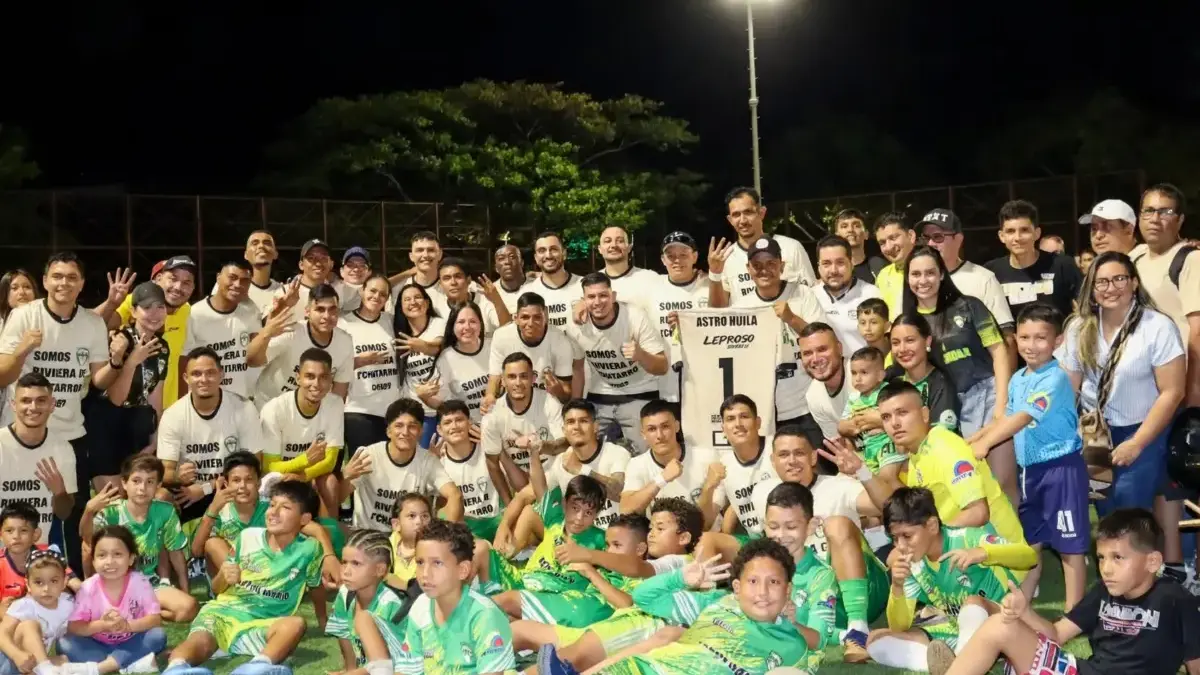
The landscape of Colombian amateur football is reaching its boiling point, and the department of Huila has a new protagonist making waves on the national stage. Aston Huila, competing in the prestigious Primera C—widely regarded as the most important and fiercely contested amateur football tournament in the country—has officially secured its place among the elite top 30 teams in all of Colombia.
This monumental achievement guarantees the ambitious club more than just continued survival in the current tournament; it locks in a coveted direct qualification for the elite special federation tournament scheduled for the upcoming year. Having navigated a grueling, emotionally draining elimination series against Real Sport de Armenia, the opita squad—led tactically by Professor Deibon Pérez and administratively by club president Alfonso Caballero—now stands on the precipice of continental-style knockout football.
The immediate horizon presents a formidable new obstacle: Aracataca FC. Hailing from the department of Magdalena on Colombia’s Caribbean coast, Aracataca has proven to be a dark horse with immense tactical discipline and physical prowess. The fourth-phase series is set to commence this very weekend, with Aston Huila traveling to the Caribbean coast for the opening leg before returning to the capital of Huila, Neiva, to seal their fate at the Cándido synthetic pitch on the weekend of October 17–18.
As the stakes grow exponentially higher, Aston Huila is no longer just a surprise participant; they are a calculated project with their eyes firmly fixed on hoisting the national championship trophy.
Chronology: The Path to the Top 30
To understand the magnitude of Aston Huila’s current standing, one must retrace the steps of a turbulent, resilient campaign that tested the psychological and physical limits of the squad. Participating in the Primera C for the very first time in the club’s history, the journey has been nothing short of a baptism by fire.
Phase One and Two: Establishing Identity
When Aston Huila first entered the regional qualification brackets, the primary objective mapped out by the coaching staff was modest yet demanding: secure a spot in the fiercely competitive group stages. Operating with a blend of youthful exuberance and seasoned lower-division veterans, Professor Deibon Pérez crafted a tactical identity built on high-intensity pressing, positional discipline, and rapid transition play. Week after week, the opita squad ground out results against established regional powerhouses, eventually securing their ticket to the group phase and checking off the first major milestone of their master plan.
The Third-Phase Nail-Biter: Real Sport de Armenia
The tension reached a fever pitch during the third-phase elimination series against Real Sport de Armenia, a tie that will forever be etched into the folklore of Aston Huila.
Carrying a delicate aggregate advantage into the second leg played on home turf in Neiva, Aston Huila failed to close out the match as expected. Trapped in a tense tactical stalemate, the home side conceded a heartbreaking goal in the dying seconds of regular time. The lapse in concentration on the ultimate play of the match leveled the aggregate score at 4-4, stunning the home crowd and sending the bench into a brief state of shock.
With extra time providing no breakthrough, the series was forced into the ultimate psychological lottery: the penalty shootout.
Under immense pressure, the resilience of the opita squad shone through. While Real Sport de Armenia buckled under the weight of the moment, Aston Huila’s penalty takers displayed ice-cold composure. Winning the shootout 4-1, the club erupted in celebration, transforming a potential tragedy into a historic triumph that punched their ticket to the final 30.
Supporting Data & Context: The Weight of Primera C
The Primera C in Colombia is much more than a developmental tournament; it is the ultimate crucible for raw, unfiltered football talent. Historically operating on the fringes of professional soccer, the modern iteration of the Primera C has evolved into a heavily scouted, highly structured ecosystem overseen by the Colombian Football Federation (FCF).
- The Scale of Competition: Hundreds of clubs from every corner of the nation—ranging from the coffee axis to the Andean peaks, the Pacific coast, and the Amazonian lowlands—enter the initial preliminary phases. Surviving down to the last 30 teams puts Aston Huila in an elite statistical tier of less than 5% of participating clubs.
- The Economic and Institutional Impact: Securing a spot in next year’s special federation tournament changes the financial and logistical trajectory of an amateur club. It guarantees developmental stability, attracts regional corporate sponsorships, and provides young players with a certified storefront to showcase their talents to scouts from Dimayor (Primera A and B) clubs.
- The Journey of a Rookie: For a debutant club like Aston Huila to reach this level in its very first attempt underscores an unprecedented level of institutional organization, coaching acumen, and athletic dedication.
Official Responses and Statements
The psychological state of the club, transitioning from the euphoria of the penalty shootout to the cold, calculated preparation for Aracataca FC, was detailed exclusively in statements given to LA NACIÓN.
Professor Deibon Pérez: Tactical Realism and Unyielding Ambition
Head coach Deibon Pérez did not shy away from evaluating his team’s recent defensive lapses, maintaining a strict professional standard despite the historic victory.
"The overall balance is positive because we advance to the fourth phase, and it is positive because we secure that coveted spot in the premier federation tournament of the following year," Pérez stated candidly. "However, we are left with things to evaluate and correct. A momentary loss of concentration on the very last play of the match allowed them to score, forcing us into the sudden death of penalties. Fortunately, we managed to overcome that difficult mental space and prevailed from the 11-meter spot."
When questioned about the grander blueprint of the season, Pérez revealed that the club operates on a meticulously structured three-tier target system:
"As a club, we set three primary objectives for this Primera C campaign, of which we have already achieved two. Our first goal was to successfully navigate the group stages, and we achieved that. Our second challenge was to break into the top 30 teams in the country to secure our place in next year’s special tournament, and thanks to God, we accomplished that as well. Now, only our third and final objective remains: to fight, just as we do in every tournament, to reach the ultimate finals and bring a national championship title back to the department of Huila."
Looking ahead to the upcoming tactical chess match against Aracataca, Pérez emphasized that the training ground has been ground zero for accountability:
"The preparation is going exceptionally well. We have concentrated heavily on rectifying the tactical errors we committed in the previous match. Nevertheless, we have absolute confidence in the group of players we possess. We know what we are capable of producing on the pitch, and if God permits, we hope to secure a positive result away from home so we can comfortably define the series here in the city of Neiva."
Alfonso Caballero: Respect for the Coastal Opposition
Club President Alfonso Caballero echoed the sentiments of his coach, emphasizing that as the tournament narrows down, the margin for error evaporates. The executive offered a respectful yet ambitious assessment of their upcoming Caribbean rivals.
"We are well aware that as we advance deeper into the phases, the matches and the series inherently become much more difficult," Caballero remarked in his interview with LA NACIÓN. "Now we must face Aracataca FC, an exceptionally interesting team that has been executing a very important sporting project in the Caribbean region. Our young players are preparing thoroughly for this fixture. We begin the series away from home, and our primary expectation is to bring back a favorable result."
Implications of the Fourth Phase: The Road Ahead
As Aston Huila prepares to pack their bags for the long journey to the Caribbean coast, the implications of this fourth phase stretch far beyond the immediate 90 minutes of football.
1. The Geographic and Cultural Clash
Facing Aracataca FC represents a classic clash of Colombian football cultures: the disciplined, altitude-tested, tactical grit of the Andean interior (Huila) colliding with the flair, physical endurance, and dynamic pace of the Caribbean coast (Magdalena). Adapting to the climatic conditions of the coast will be the first major tactical hurdle for Professor Pérez’s squad.
2. Squad Depth and Physical Recovery
Playing high-intensity knockout football on a week-to-week basis places immense physical stress on amateur athletes who often balance employment, education, and rigorous training schedules. The depth of Aston Huila’s bench will be tested during this two-legged series. Minimizing the defensive errors seen against Real Sport de Armenia will be non-negotiable if they hope to stifle Aracataca’s potent attack on their home turf.
3. Rallying the City of Neiva
The return leg, scheduled for the weekend of October 17–18 at the Cándido synthetic pitch in Neiva, has the potential to be a watershed moment for local sports culture. With the club sitting among the elite 30 teams in the country and fighting for a national title, the sporting community of Huila is being called upon to fill the stands, turn the venue into an impenetrable fortress, and propel their boys across the final psychological barrier.
4. Cementing a Legacy
For a team playing its inaugural Primera C season, merely participating was a victory. Reaching the top 30 was a historic milestone. But as every competitor in sports knows, history is written by the victors of the final phases. Should Aston Huila manage to dispatch Aracataca FC, the dream of hoisting the national trophy—and placing Huila permanently on the map of elite Colombian football development—will move one step closer to reality.
The whistle for the first leg is about to blow. The journey of Aston Huila continues, carrying the hopes, dreams, and undeniable grit of an entire department into the national spotlight.

Leave a Reply