

By: Global Culture & Music Desk
Date: October 8, 2026
Main Facts
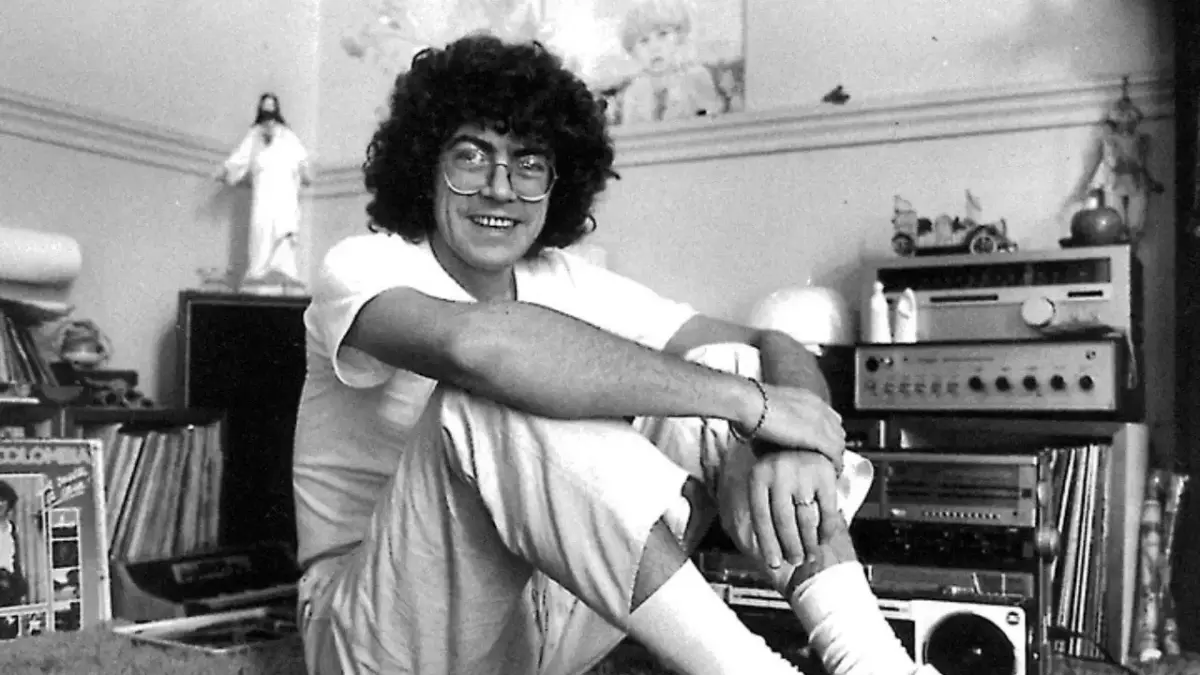
The landscape of Latin American popular music mourns the loss of one of its most defining and beloved figures. Piero Antonio Franco De Benedictis, universally known simply as Piero, passed away on Wednesday, October 7, 2026, at the age of 81 in Buenos Aires, Argentina. The iconic Italian-Argentine and naturalized Colombian singer-songwriter—whose poignant voice, profound lyricism, and unwavering commitment to social justice shaped the soundtrack of generations—died following a period of declining health. He had been hospitalized at the prestigious Hospital Italiano in Buenos Aires, where he spent his final days surrounded by medical care and the quiet support of his loved ones. His family officially confirmed his passing through the artist’s authorized communication channels, triggering an outpouring of grief, tributes, and retrospectives from fans, cultural institutions, and fellow musicians across the globe.
Piero’s artistic footprint spans more than six decades. Born in Italy in 1945 before immigrating to Argentina as a young child, he bridged continents, cultures, and musical traditions. He became a towering pillar of the nueva trova, the ballad movement, and the genre of canción de autor (singer-songwriter tradition). Throughout his storied career, Piero released more than 25 studio albums and performed thousands of concerts, leaving an indelible mark with anthems of generational bonding, political resistance, and human dignity. Songs like "Mi viejo" and "Para el pueblo lo que es del pueblo" transcend mere commercial success; they are cultural artifacts etched into the collective memory of Latin America.
His relationship with Colombia was uniquely profound. Formally granted Colombian citizenship in 1996, Piero maintained an active, vibrant artistic and cultural presence in the Andean nation for decades, considering it a second home. From massive festival stages in Bogotá to intimate theatrical retrospectives, his connection to the Colombian public remained unbroken until his final months of life, cementing his status as a truly Pan-American artist.
Chronology: The Life and Times of Piero
To understand Piero’s monumental impact on Hispanic music, it is essential to trace the arc of his artistic evolution from post-war Europe to the vibrant cultural epicenters of South America and Europe.
Early Years and Artistic Beginnings (1945–1967)
Piero Antonio Franco De Benedictis was born in Italy in 1945, amidst the turbulent aftermath of the Second World War. Seeking new horizons, his family emigrated to Argentina while he was still a child. Growing up in South America, Piero absorbed the rich folkloric traditions of Argentina alongside the emerging global sounds of rock and roll and traditional Italian melody.
By the early 1960s, Piero was drawn to the burgeoning café-concert and television scenes in Buenos Aires. He officially launched his professional career during this decade, making his television debut in Argentina in 1964. During these formative years, he cultivated a distinct style that fused the poetic introspection of the traditional folk singer with the melodic accessibility of pop and the rhythmic cadence of the continent’s vernacular music.
The Creative Partnership and the Phenomenon of "Mi viejo" (1968–1969)
A pivotal turning point in Piero’s career occurred in 1968 when he met the acclaimed Argentine poet and journalist José Tcherkaski. This fateful encounter birthed a legendary creative partnership. Tcherkaski’s evocative, deeply human lyrical craftsmanship, paired with Piero’s emotive musical compositions and distinct vocal delivery, created a formidable artistic engine.
In 1969, the duo unveiled "Mi viejo", a composition that would alter the course of Piero’s life and redefine Latin American popular song. Written as a tribute to the working-class father figure, the song captured a universal emotional resonance regarding filial love, aging, and respect for the older generation. "Mi viejo" became an instant classic. According to data compiled by the prestigious Fundación Konex, the song has since been recorded in more than 500 different versions by artists across various genres and nationalities, cementing its status as an undisputed masterpiece of the Spanish-language songbook.
Exile, Social Consciousness, and Musical Expansion (1970s–1980s)
As the 1970s progressed, political instability and brutal military dictatorships swept across the Southern Cone of Latin America. Piero’s music, which increasingly incorporated sharp social commentary, anti-authoritarian sentiments, and messages of peace, placed him at odds with oppressive regimes.
Tracks like "Para el pueblo lo que es del pueblo" ("To the people what belongs to the people") transformed him into a voice for the marginalized and oppressed. Because of his outspoken ideological stances and the dangers posed by state-sponsored repression, Piero was forced into political exile, relocating temporarily to Spain.
During his time in Europe and subsequent return to a democratizing Latin America, Piero continued to expand his artistic palette. He ventured into children’s music, spiritual reflections, and rock-infused ballads, proving that his artistic vision could not be confined to a single box. His repertoire expanded to include beloved standards such as "Llegando, llegaste", "Tengo la piel cansada de la tarde", and "Pedro Nadie".
The Colombian Chapter and Later Years (1990s–2026)
Piero’s connection to Colombia deepened significantly in the 1990s. Recognizing his decades-long cultural contributions and the profound affection shared between the artist and the Colombian people, the government formally awarded him Colombian citizenship in 1996. From that moment on, Piero divided his time, energy, and creativity between Argentina and Colombia, touring extensively and participating in cultural initiatives across the country.
Even in his later years, Piero showed no signs of slowing down. He embraced contemporary festival circuits while maintaining his reverence for traditional theatrical presentation, performing well into his late 70s and early 80s with remarkable vigor.
Supporting Data and Repertoire Analysis
Piero’s legacy is quantified not only by the deep emotional ties he forged with his audiences, but also by a staggering body of recorded work and critical recognition.
- Discography: According to the Fundación Konex, Piero published more than 25 original albums over a career spanning over six decades.
- Global Reach: His signature song, "Mi viejo," boasts over 500 recorded covers globally, demonstrating its universal appeal far beyond the Spanish-speaking world.
- Key Songs of the Social Era:
- "Para el pueblo lo que es del pueblo": A foundational anthem of political awareness and social justice in Latin America.
- "Pedro Nadie": A haunting portrait of the forgotten common man living on the margins of urban society.
- "Llegando, llegaste" and "Tengo la piel cansada de la tarde": Showcases of his softer, poetic balladry that highlighted his introspective side.
Final Performances in Colombia
Piero’s enduring bond with Colombia was vividly illustrated during the final chapters of his touring career.
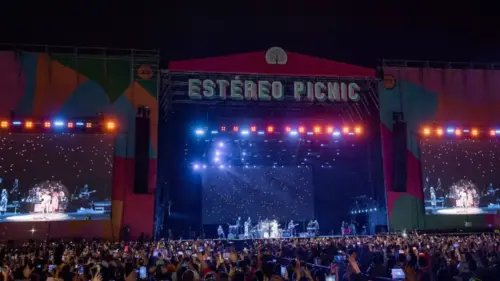
- September 2022: Piero was a celebrated marquee act at the inaugural edition of the Festival Cordillera in Bogotá, sharing stages with younger generations of alternative and rock artists who cited him as a primary influence.
- June 2025: He performed a memorable, emotionally charged concert at the historic Teatro Jorge Eliécer Gaitán in Bogotá, accompanied by extensive presentations of his collaborative symphonic project La Sinfonía Inconclusa en la Mar.
- April 19, 2026: In what would be his final documented performance in Colombia, Piero took the stage at the Teatro Colsubsidio in Bogotá. The concerts were part of a milestone celebration marking the 50th anniversary of La Sinfonía Inconclusa en la Mar. Standing before a rapturous audience, Piero delivered a performance that synthesized a lifetime of storytelling, political conviction, and artistic grace, leaving an unforgettable final impression on his Colombian devotees.
Official Responses and Tributes
Following the announcement of his death by his family on October 7, 2026, an overwhelming wave of condolences and tributes poured in from cultural ministers, political leaders, and legendary fellow artists throughout Latin America.
Cultural authorities in Argentina issued statements highlighting Piero’s role as a moral compass during the dark days of dictatorship, emphasizing how his songs served as clandestine hymns of hope and liberty. In Colombia, institutions, public figures, and cultural broadcasters remembered him as a son of the soil by adoption, praising his unwavering solidarity with rural communities, workers, and social movements.
Fellow musicians turned to social media and press outlets to express their grief. Prominent Latin American singer-songwriters underscored how Piero broke down the barriers between commercial pop and high poetic art, proving that a single voice with an acoustic guitar could shake oppressive institutions and heal broken hearts. Colleagues noted his trademark humility, his infectious warmth behind the scenes, and his fierce dedication to preserving the integrity of the songwriter’s craft.
Implications: The Enduring Legacy of an Uncompromising Artist
The passing of Piero marks the closing of a golden chapter in the history of Latin American popular music. Yet, the implications of his life and work extend far beyond the immediate grief of his passing.
First and foremost, Piero’s legacy redefines the role of the modern artist in times of sociopolitical turmoil. He demonstrated that commercial success and artistic integrity are not mutually exclusive; an artist can scale the charts with a touching tribute to a father ("Mi viejo") while simultaneously penning biting critiques of political corruption and social inequality ("Para el pueblo lo que es del pueblo"). His music proved that art is a vital instrument for human rights, memory, and reconciliation.
Furthermore, Piero’s dual nationality—rooted in Italy, shaped by Argentina, and embraced by Colombia—serves as a testament to the borderless nature of true cultural art. He did not merely tour foreign countries; he integrated himself into their cultural fabric, becoming an adopted son whose identity mirrored the diverse, hybridized spirit of modern Latin America.
As future generations discover his catalog—whether through the haunting melodies of his ballads, the timeless wisdom of his poetry, or recordings of his late-career symphonic performances—Piero will remain a permanent fixture of the continent’s cultural heritage. The man from Italy who became the voice of the Argentine working class and the beloved citizen of Colombia has left the physical stage, but his songs remain deeply embedded in the soil, the streets, and the hearts of millions.

Leave a Reply