

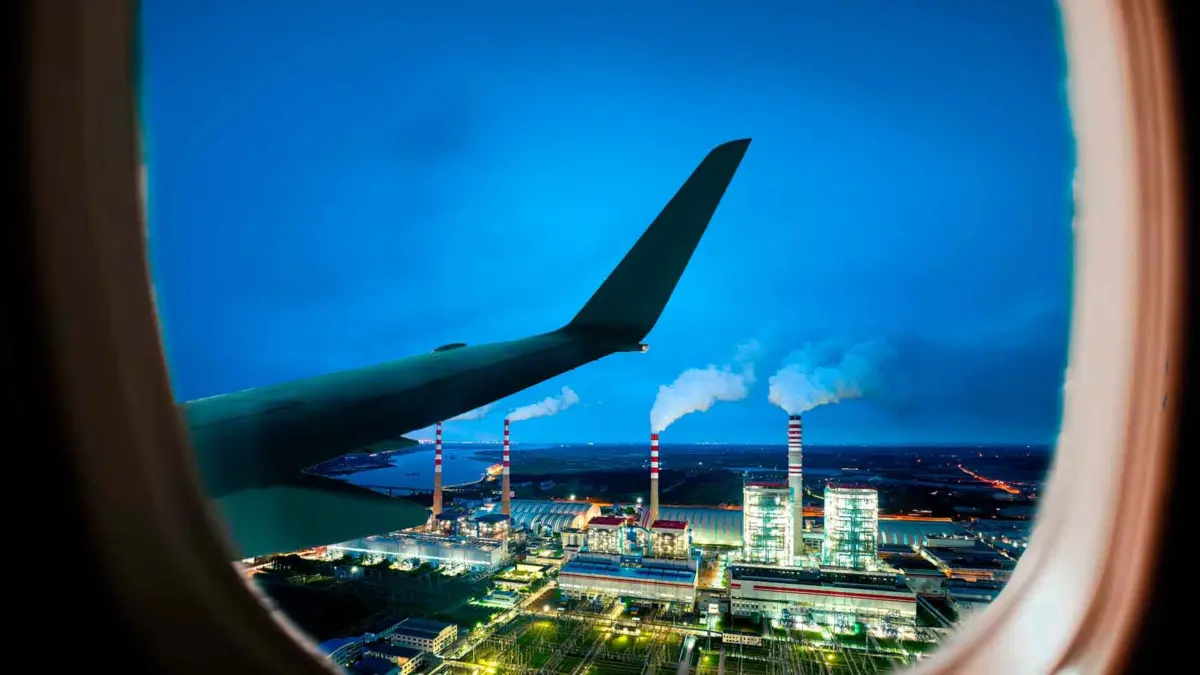
HOUSTON, TEXAS — High above the sprawling industrial landscape of Houston, a specialized scientific aircraft sliced through a complex cocktail of airborne pollutants. Below it lay one of the most heavily industrialized and economically vital regions in the United States—a chaotic mosaic of bustling maritime ports, dense vehicular traffic, sprawling petroleum refineries, and massive electrical power plants.
Untangling the distinct origins of the particles floating in this atmospheric soup was no simple task. Yet, during a series of meticulous low-altitude research flights, scientists detected a distinct chemical and physical signature. Originating from the coal-fired W.A. Parish generating station, a massive plume of particulate matter detached itself from the urban background noise, remaining traceable across more than 65 miles of the metropolitan area.
The findings, recently detailed in the Journal of Geophysical Research: Atmospheres by researchers from the Scripps Institution of Oceanography at UC San Diego and their collaborators, offer a profound look into atmospheric chemistry. The study reveals that when it comes to atmospheric pollution and its meteorological consequences, quantity is only half the story. Size, origin, and atmospheric evolution dictate how industrial emissions shape the skies above us.
Main Facts: Unmasking Houston’s Aerosol Sources
Houston serves as a natural laboratory for atmospheric scientists. Its unique geography—bordered by the Gulf of Mexico and packed with heavy industry, dense urban transit, and maritime shipping lanes—creates a rich, albeit polluted, troposphere.
To map this complex environment, researchers deployed a Convair CV-580 research aircraft outfitted with advanced instrumentation capable of measuring aerosol properties, trace gases, and cloud microphysics in real-time. By combining these airborne measurements with ground-based monitoring networks and regional weather radars, the research team successfully categorized five distinct types of aerosols based on their origin:
- Marine Air: Clean, natural sea-salt aerosols sweeping in from the Gulf of Mexico.
- Rural Background: Biogenic and soil-derived particles from surrounding agricultural and natural lands.
- Urban Traffic: Exhaust and secondary organic aerosols generated by cars, trucks, and city transit.
- Refinery Emissions: Complex hydrocarbon and sulfur-rich mixtures released by Houston’s vast petrochemical complex.
- Power Plant Plumes: High-volume emissions dominated by the W.A. Parish coal-fired power station.
Among these, the plume from the W.A. Parish facility emerged as the single largest identifiable source of cloud-forming aerosols in the metropolitan area. While the city’s numerous oil refineries pumped staggering quantities of microscopic particles into the air, the physical properties of those refinery aerosols differed markedly from those produced by the power plant.
The core revelation of the study centers on Cloud Condensation Nuclei (CCN)—microscopic airborne particles that act as the foundational "seeds" upon which water vapor condenses to form cloud droplets. The research demonstrated that simply filling the air with massive numbers of particles does not automatically translate to enhanced cloud formation. Many refinery-derived particles were exceedingly small and chemically ill-suited to act as CCN. In contrast, emissions from W.A. Parish contained a high proportion of particles primed for cloud droplet activation, which furthermore evolved and grew as they traveled downwind.
Chronology: The Scientific Mission Over the Texas Skies
The insights gathered over Houston are the culmination of intensive logistical planning, cutting-edge atmospheric deployment, and rigorous data analysis.
- Preparation and Deployment: Recognizing Houston’s unique convergence of anthropogenic and natural emission sources, an interdisciplinary team of researchers—including lead author G.C. Roberts and colleagues—organized an extensive field campaign utilizing the Convair CV-580 atmospheric research aircraft.
- Flight Operations: Over several weeks, the aircraft executed targeted flight patterns designed to intercept plumes at varying distances from their sources. Flying directly through industrial exhaust plumes at different altitudes, the onboard instruments continuously sampled aerosol size distributions, hygroscopic growth factors, and chemical compositions.
- Data Synthesis: Following the field phase, scientists cross-referenced the airborne telemetry with ground-station observations and radar data. This multi-tiered approach allowed researchers to isolate individual plumes from the overlapping pollution sources of the nation’s fourth-largest city.
- Tracing the W.A. Parish Plume: Researchers identified a particularly robust signal tracking back to the W.A. Parish power station. Driven by prevailing winds, this plume remained cohesive and identifiable for more than 65 miles across the metropolitan expanse.
- Publication of Results: The comprehensive findings were published in the Journal of Geophysical Research: Atmospheres (Vol. 131, Issue 13, e2025JD044628), providing a new benchmark for understanding how industrial point sources interact with regional weather patterns.
Supporting Data: Understanding Cloud Condensation Nuclei (CCN)
The physics of cloud formation rely heavily on microscale interactions between water vapor and atmospheric aerosols. Without aerosols, relative humidity in the atmosphere would need to reach several hundred percent before water molecules could spontaneously bond together to form liquid droplets. Aerosols lower this energy barrier by providing a surface for heterogeneous nucleation.
However, not all aerosols are created equal. The Scripps-led study emphasized several critical metrics regarding CCN efficiency:
- Size Matters: Particles must generally exceed a certain dimensional threshold to serve effectively as cloud seeds. While refineries produced immense quantities of ultrafine particles, many were too small to nucleate cloud droplets efficiently under typical atmospheric saturation conditions.
- Chemical Composition and Hygroscopicity: Particles containing soluble inorganic compounds readily attract water molecules. The emissions from the W.A. Parish plant possessed chemical characteristics and size profiles that made them exceptionally efficient CCN.
- Atmospheric Aging: As the W.A. Parish plume drifted downwind over tens of miles, the particles did not remain static. Coagulation, condensation of ambient gases, and photochemical reactions caused the particles to grow, enhancing their ability to attract water as they aged.
- Health and Environmental Context: While the primary focus of the research was atmospheric physics—specifically how aerosols modify cloud microstructures—the study noted that a significant fraction of these power plant and industrial particles fall within the fine particulate matter range (such as PM2.5). These microscopic dimensions allow them to penetrate deep into human respiratory tracts, though the paper explicitly focused on atmospheric dynamics rather than medical or epidemiological health assessments.
Official Responses and Academic Perspectives
The academic community has widely praised the study for bridging the gap between local industrial emissions and regional atmospheric processes. By deploying airborne platforms rather than relying solely on surface measurements, the research team bypassed the confounding variables that often obscure urban pollution studies.
Dr. G.C. Roberts and the co-authors—including K. Ranjbar, L. Nichman, M. Wolde, C.S. McCluskey, A. Takeishi, R. Patnaude, S. Patil, G.M. McFarquhar, and P. Kollias—highlighted the critical need to reevaluate how regional climate and weather models account for industrial point sources.
"What leaves a smokestack does not simply stay local," the research team noted in summary discussions of the data. "It can travel dozens of miles, mutating and evolving along the way, ultimately participating in atmospheric processes far from its origin."
Environmental regulatory agencies and atmospheric modelers have taken note of the findings. Traditional air quality inventories often quantify emissions based purely on mass or total particle count. This study demonstrates that regulatory frameworks and climate models must also account for particle morphology, hygroscopic growth potential, and downwind evolution if they are to accurately predict both air quality and regional precipitation patterns.
Implications: Rethinking Industrial Emissions and Regional Weather
The implications of the Houston aerosol study extend far beyond the borders of Texas, touching upon climate science, environmental policy, and atmospheric modeling.
1. Advanced Climate Modeling
Global climate models frequently struggle to accurately represent the complex interactions between aerosols and clouds—a phenomenon known as aerosol-cloud interactions, which remains one of the largest sources of uncertainty in climate projections. By demonstrating that a single industrial facility can act as a dominant regional source of high-efficiency cloud seeds over a 65-mile span, the study provides empirical data that can refine how models simulate cloud brightness, lifetime, and precipitation.
2. Refining Pollution Control Strategies
Environmental policy has historically targeted total mass emissions (such as tons of sulfur dioxide or particulate matter per year). However, the contrast between Houston’s oil refineries and the W.A. Parish power plant illustrates that two facilities emitting similar particulate masses can have vastly different environmental and meteorological footprints. Future regulatory approaches may need to consider the physical and chemical micro-properties of emitted particles—such as their capacity to form clouds or impact human health—rather than focusing solely on gross tonnage.
3. The Myth of Localized Impact
A persistent misconception in urban planning is that industrial pollution remains largely concentrated near the fence-line of the emitting facility. The tracking of the W.A. Parish plume over vast distances underscores the transboundary and regional nature of air pollution. Industrial exhaust is an active, dynamic participant in the regional atmosphere, capable of traveling across entire metropolitan zones while transforming chemically and physically.
4. Future Research Directions
The methodology pioneered during the Houston flights—combining airborne aerosol mass spectrometry, cloud microphysics probes, and radar integration—paves the way for similar investigations in other mega-cities worldwide. Understanding how industrial corridors interact with marine, rural, and urban air masses will be crucial as researchers seek to untangle the complex feedback loops linking human activity to regional weather and global climate systems.
For readers interested in a deep-dive into the technical parameters, methodology, and full statistical analysis, the complete study is openly accessible:
Roberts, G. C., Ranjbar, K., Nichman, L., Wolde, M., McCluskey, C. S., Takeishi, A., Patnaude, R., Patil, S., McFarquhar, G. M., & Kollias, P. (2026). Marine aerosol to refinery emissions: Transport and evolution of CCN in the Houston metropolitan area and their impact on cloud formation. Journal of Geophysical Research: Atmospheres, 131(13), e2025JD044628. DOI: 10.1029/2025JD044628


Leave a Reply