

PANAMA CITY / WASHINGTON — In the wake of a high-impact natural disaster, international solidarity has quickly materialized to aid Central America. The United States Department of State has formally announced the mobilization of specialized consular personnel and emergency resources to support the Republic of Panama following a powerful 7.7 magnitude earthquake that struck off the nation’s southern coast.
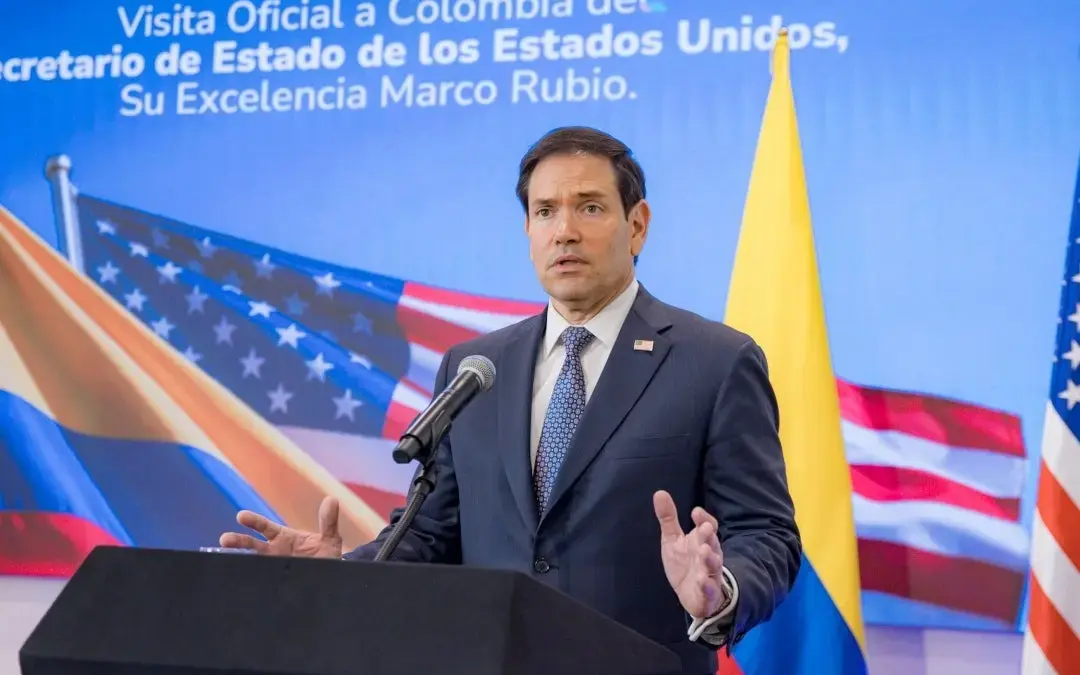
The announcement, spearheaded by US Secretary of State Marco Rubio, represents a direct response to a formal request for international assistance issued by the Panamanian government. As local authorities scramble to assess structural integrity, care for the injured, and manage infrastructural bottlenecks, Washington’s intervention underscores the deep diplomatic ties and strategic cooperation between the two nations during times of crisis.
Main Facts
The seismic event, which struck with terrifying force on Tuesday afternoon, immediately triggered emergency protocols across Panama. According to official data corroborated by the United States Geological Survey (USGS), the earthquake registered at a formidable 7.7 magnitude, making it one of the most significant seismic events to impact the region in recent years.
- Epicenter Location: Approximately 12 kilometers (7.5 miles) from the coastal town of Tonosí, situated in the Los Santos Province in southern Panama.
- Hypocenter Depth: Shallow tectonic activity, which typically exacerbates the surface intensity and increases the potential for localized structural damage.
- Distance to Capital: Roughly 239 kilometers (148 miles) southwest of Panama City, where the tremors were nonetheless felt intensely, prompting widespread panic and preventive evacuations.
- US Response: Under the direction of Secretary of State Marco Rubio, the State Department activated emergency response protocols, deploying consular assets and logistical support teams to coordinate directly with Panamanian disaster relief agencies.
- Local Impact: High-rises and office complexes, particularly within Panama City’s bustling banking district, were swiftly evacuated as sirens wailed and citizens poured into the streets.
While precise figures regarding structural damage, injuries, or potential casualties remain under preliminary evaluation by local civil protection agencies, the sheer scale of a 7.7-magnitude quake has necessitated external logistical backing to ensure rapid search, rescue, and humanitarian supply distribution.
Chronology of Events
Understanding the unfolding of Tuesday’s disaster requires a detailed timeline of how the seismic event and its immediate aftermath developed across the country:
12:56 PM – The Strike
At precisely 12:56 PM local time (17:56 GMT), a sudden and violent subterranean rupture occurred off the Azuero Peninsula. The energy released by the tectonic shift propagated rapidly through the earth’s crust, sending severe shockwaves toward both coastal communities and the nation’s densely populated urban centers.
1:00 PM – Immediate Panic and Urban Evacuations
Within minutes of the initial tremor, buildings across Panama City began to sway violently. In the capital’s financial hub—home to numerous high-rise glass towers and international corporate headquarters—building managers and emergency wardens executed swift evacuation protocols. Thousands of office workers, residents, and shoppers flooded the streets, seeking open spaces away from potential falling glass and masonry. Similar scenes played out in schools, hospitals, and government complexes.
1:30 PM – USGS Confirms Magnitude 7.7
As initial reports flooded social media and local news networks, the United States Geological Survey (USGS) updated its telemetry, confirming that the earthquake had struck with a staggering 7.7 magnitude. The epicenter was pinpointed just 12 kilometers from Tonosí, raising immediate concerns for coastal villages closest to the origin point.
2:15 PM – Government Activation and Request for International Aid
The Government of Panama, led by national emergency management boards (Sistema Nacional de Protección Civil – SINAPROC), convened an emergency cabinet meeting. Recognizing that the geographic spread of the tremors could strain domestic resources—particularly if remote coastal infrastructure sustained heavy damage—the administration formally requested technical and logistical assistance from international partners, including the United States.
4:00 PM – Washington Responds: Secretary Rubio’s Announcement
Demonstrating rapid diplomatic and humanitarian turnaround, US Secretary of State Marco Rubio took to the public sphere via the social media platform X (formerly Twitter). Rubio formally announced that the State Department was mobilizing specialized personnel and resources to assist Panama. Simultaneously, the Department of State opened dedicated consular hotlines to field urgent inquiries from US citizens residing or traveling in Panama, as well as concerned family members abroad.
Supporting Data and Technical Analysis
Seismological data provides crucial insight into why a quake originating near Tonosí was felt so acutely hundreds of kilometers away in the nation’s capital.
Tectonic Context
Panama sits within a complex and active tectonic setting. The region is influenced by the interactions of several microplates, including the Nazca Plate, the Cocos Plate, and the Caribbean Plate, all converging around the Panama Block. Subduction and transform faulting along these boundaries routinely generate seismic activity, though events exceeding a 7.7 magnitude are relatively rare and possess the capacity to cause regional disruption.
USGS Metrics Summary
- Event Time: 12:56:00 UTC-5 (Local Time)
- Magnitude: 7.7 Mw
- Geographical Coordinates: Near 7.4° N, 80.4° W (approximate epicenter near Tonosí, Los Santos)
- Impact Radius: Felt across the entirety of Panama, extending into parts of neighboring Costa Rica and Colombia.
Infrastructure Vulnerability and Resilience
Panama City has experienced a massive real estate and construction boom over the last two decades, resulting in a skyline dominated by ultra-modern skyscrapers. Fortunately, modern Panamanian building codes heavily incorporate strict seismic-resistant engineering standards, heavily influenced by California and international structural codes. Preliminary reports suggest that these engineering safeguards largely prevented catastrophic structural collapses in the capital, though non-structural damage (such as cracked drywall, shattered glass, and broken utility lines) remains widespread in areas closest to the epicenter.
Official Responses
The international and domestic response to the 7.7-magnitude earthquake highlights both the severity of the crisis and the strength of bilateral cooperation between Washington and Panama City.
United States Department of State
In his official statements, Secretary of State Marco Rubio emphasized the unwavering commitment of the United States to its Central American allies. The mobilization of State Department resources includes:
- Consular Support Teams: Deployed to assist American expatriates, tourists, and dual-nationals requiring emergency documentation, medical referrals, or evacuation assistance.
- Logistical Coordination: Working hand-in-hand with Panamanian disaster relief authorities to identify critical gaps in emergency medical supplies, search-and-rescue gear, and structural assessment capabilities.
- Direct Channels: The establishment of emergency communication lines through US Embassies and consular offices to provide real-time updates and guidance.
Panamanian Authorities
The Government of Panama, through SINAPROC and the executive branch, has urged calm while aggressive assessment operations continue. President and high-ranking disaster officials mobilized regional response teams toward the Los Santos and Azuero provinces to inspect bridges, roads, hospitals, and residential areas near the epicenter.
"Our primary objective at this moment is human life and the verification of structural safety across our critical infrastructure," stated a senior official from the emergency response directorate. "The formal request for international support is a prudent measure to ensure that, should specialized rescue operations or logistical reinforcement be required in hard-to-reach rural zones, we possess the full backing of our allies."
Implications
An earthquake of this magnitude carries profound short- and long-term implications for Panama, stretching from immediate humanitarian concerns to broader economic and structural considerations.
1. Short-Term Humanitarian and Logistical Challenges
In the immediate aftermath, the greatest hurdles involve verifying the safety of populations living in rural and semi-rural communities surrounding Tonosí and the wider Azuero Peninsula. While cities possess robust communication networks, isolated towns may face interrupted potable water systems, localized power outages, and blocked roadways due to landslides. The deployment of US consular and support resources will primarily facilitate high-level logistical mapping and rapid response coordination.
2. Economic and Financial Sector Resilience
As a major global logistics and financial hub—anchored by the Panama Canal and the massive banking district in Panama City—any prolonged disruption to commerce has international repercussions. The prompt evacuation of banking towers caused temporary business interruptions, but early indicators suggest that core financial infrastructure and the Panama Canal operations escaped catastrophic harm. Ensuring structural soundness in these key economic drivers remains paramount to maintaining investor confidence.
3. Review of Disaster Preparedness and Early Warning Systems
Events of this scale invariably prompt a rigorous national post-mortem. Panamanian authorities will likely use this incident to further upgrade national early warning infrastructure, reinforce public earthquake drills, and audit older or historical buildings that may lack modern seismic retrofitting. Furthermore, the seamless cooperation demonstrated with the United States sets a positive precedent for regional disaster response frameworks across Central America.
As recovery efforts press forward, the combined mobilization of local emergency services and international backing from Washington signals a united front in mitigating the damages wrought by nature’s unpredictable forces. Updates regarding infrastructural assessments and relief deployment will continue to be issued by official government channels as the situation develops.



Leave a Reply