

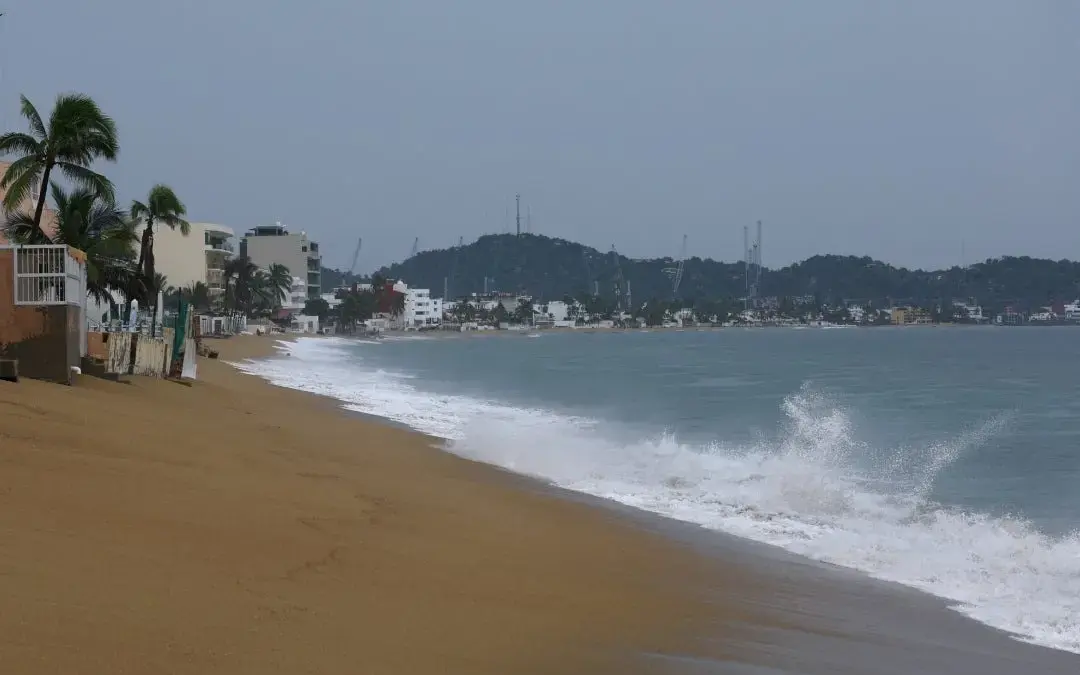
MEXICO CITY — Emergency management agencies and coastal communities along Mexico’s central-western Pacific seaboard are on high alert as Hurricane Simón rapidly intensifies into a formidable Category 4 storm. Packing destructive winds, life-threatening storm surges, and catastrophic rainfall, the system poses an imminent danger to millions of residents and vital maritime infrastructure.
Meteorological authorities have warned that the window for preparation is rapidly closing as the storm barrels toward a potential landfall. With major tourist hubs, crucial shipping lanes, and vulnerable mountain communities directly in its path, national and international agencies have mobilized resources in a race against time to mitigate potential loss of life and property damage.
Main Facts
Hurricane Simón represents a severe meteorological threat to the Mexican coastline, characterized by a potent combination of extreme wind speeds, torrential rainfall, and storm surge inundation.
- Current Intensity: Category 4 on the Saffir-Simpson hurricane wind scale.
- Maximum Sustained Winds: 240 kilometers per hour (approximately 150 miles per hour), with higher gusts.
- Location: Approximately 185 kilometers (115 miles) south-southwest of Manzanillo, moving steadily northward.
- Projected Landfall: Expected to strike the central-western coast of Mexico late Saturday or early Sunday.
- Primary Hazards: Destructive winds, life-threatening storm surges, widespread inland flooding, and catastrophic mudslides in mountainous terrain.
- Impacted Regions: Hurricane warnings extend along the Pacific coast south of Puerto Vallarta—including the critical port city of Manzanillo—while tropical storm alerts stretch further south toward Lázaro Cárdenas. The offshore Islas Marías archipelago is also under active alerts.
- Rainfall Totals: General accumulations of 25 to 51 centimeters (10 to 20 inches) are expected, with isolated maximum amounts reaching up to 76 centimeters (30 inches) in parts of Michoacán, Colima, and Jalisco.
Chronology of Events
The rapid evolution of Hurricane Simón caught many by surprise, tracing a classic path of explosive intensification frequently observed in warm Pacific waters during the peak of the hurricane season.
Friday: The Genesis of Rapid Intensification
The system, which originated as a tropical depression earlier in the week, began to organize more cohesively over the warm waters of the eastern Pacific. Favorable environmental conditions—including high sea surface temperatures and low vertical wind shear—unlocked a rapid strengthening phase. Within a 24-hour period, the storm transitioned from a moderate tropical system into a major hurricane.
Saturday Morning: Reaching Category 4 Status
By early Saturday morning, U.S. National Hurricane Center (NHC) advisories placed the center of Simón roughly 185 kilometers south-southwest of Manzanillo. Sustained winds surged to 240 km/h, officially elevating the system to a powerful Category 4 storm. Satellite imagery revealed a well-defined eye and robust convective banding wrapping tightly around the center, signaling an intense core capable of inflicting catastrophic structural damage upon impact.
Saturday Afternoon to Sunday: The Approach and Imminent Landfall
Meteorologists project that Simón will maintain its intensity—or potentially strengthen further—before making landfall along the central-western Mexican coastline late Saturday night or early Sunday morning. Coastal areas have already begun experiencing deteriorating weather conditions, marked by rapidly rising seas, gale-force outer-band squalls, and persistent heavy rainfall. Evacuation orders and emergency shelter operations are running concurrently with the deteriorating conditions, putting intense pressure on local civil protection agencies.
Supporting Data and Meteorological Analysis
The sheer velocity of Simón’s intensification has alarmed weather experts, who point to underlying oceanic and atmospheric dynamics as the primary catalysts for the storm’s explosive growth.
The Science of Rapid Intensification
"Simón has intensified with an incredible rapidity, and that is what makes storms like this so dangerous," explained Dan Pydynowski, a senior meteorologist at AccuWeather. When sea surface temperatures are significantly elevated, tropical cyclones can tap into a vast reservoir of thermal energy, converting ocean heat into kinetic energy with startling efficiency. This leaves coastal populations with drastically reduced lead times to execute evacuation plans and secure property.
Rainfall Projections and Topographic Risks
The torrential rains accompanying Simón present one of the most widespread and lethal aspects of the disaster. According to the NHC, large swaths of southwestern Mexico are forecast to receive between 25 and 51 centimeters of rain through Sunday. More alarmingly, isolated pockets in the states of Michoacán, Colima, and Jalisco could record up to 76 centimeters of precipitation.
Because the terrain in these regions features steep mountain ranges and vulnerable valleys, massive volumes of water running off elevated slopes will inevitably trigger life-threatening flash floods and devastating debris flows and landslides.
Official Responses and Government Actions
In response to the escalating threat, federal, state, and local governments in Mexico have activated emergency protocols at the highest levels.
Civil Protection and Warnings
The U.S. National Hurricane Center, in close coordination with Mexico’s Servicio Meteorológico Nacional (SMN), issued rigorous warnings and urged all residents within the alert zones—including the picturesque yet exposed Islas Marías archipelago—to accelerate final preparations.
Mexican authorities have issued explicit warnings for the states of Guerrero, Michoacán, Colima, and Jalisco, emphasizing that residents in flood-prone areas or near riverbanks must relocate to designated emergency shelters immediately. State governors have mobilized civil protection units, police forces, and military personnel under the Plan DN-III-E (the Mexican military’s disaster relief plan) to assist with evacuations and preposition rescue equipment.
Port Closures and Maritime Precaution
Given that Manzanillo serves as Mexico’s largest Pacific port, maritime authorities have enacted strict emergency protocols. Commercial shipping traffic has been suspended, vessels have been ordered to seek safe harbor or head out to open sea, and port infrastructure has been secured to withstand hurricane-force gales and aggressive storm surges.
Implications and Long-Term Outlook
The aftermath of a Category 4 hurricane extending across heavily populated and topographically complex regions carries profound socio-economic and humanitarian implications.
Infrastructure and Economic Disruptions
The physical impact of Simón’s sustained winds and storm surges is expected to devastate local infrastructure. "The strong winds could cause structural damage to homes and businesses, while floods and landslides could wash out roads and hamper emergency crews’ access to some communities," Pydynowski noted.
The disruption of transportation networks will immediately impede commerce, tourism, and supply chains in the affected states. Furthermore, extended power outages and structural damage to electrical grids, water treatment facilities, and communication lines are anticipated.
Humanitarian Concerns and Recovery Challenges
Beyond the immediate threats to life and limb during the storm’s passage, the long-term recovery phase presents a daunting hurdle. "Even after the storm passes, power outages and infrastructure damage could complicate recovery," Pydynowski warned.
The combination of standing floodwaters, compromised sanitation systems, and isolated communities cut off by landslides will require a sustained, multi-agency humanitarian response. Federal authorities have pledged financial and logistical support to rebuild damaged homes, clear blocked arteries, and restore basic services as swiftly as possible once the meteorological threat dissipates.
As Hurricane Simón bears down on the coast, the resilience of Mexico’s emergency infrastructure and the swift compliance of coastal residents will be critical in mitigating what threatens to be one of the most severe weather events of the season.


Leave a Reply