

Main Facts: A European Estate Amidst Andean Chaos
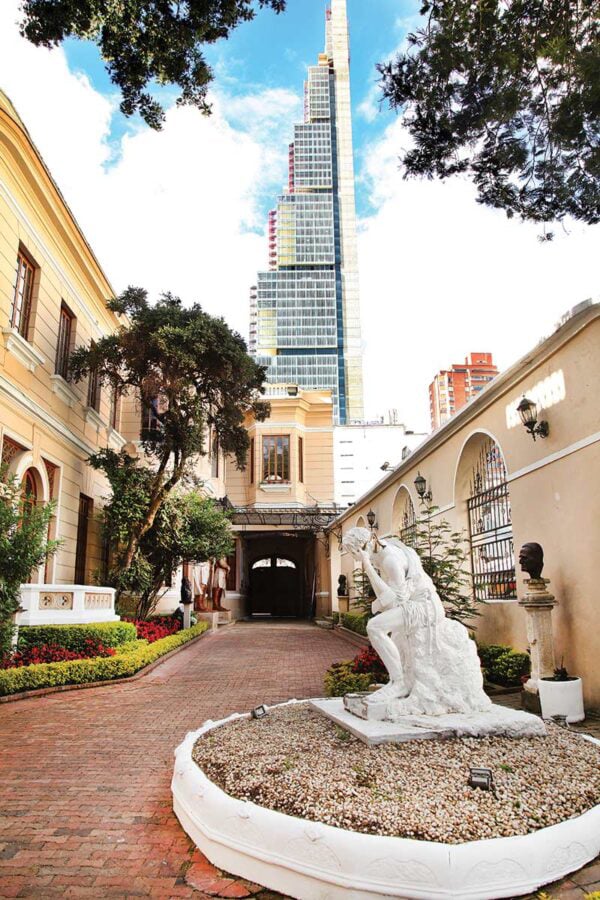
In the bustling heart of downtown Bogotá, where the relentless symphony of modern urban life—car horns, street vendors, rushing office workers, and students—echoes relentlessly along the Carrera Quinta and Calle 17, stands an architectural paradox. Behind a heavy, weathered door that has remained sealed to the general public for decades lies a world entirely detached from the capital’s chaotic present: the Kopp Mansion (Mansión Kopp).
Today, this stately European-style estate serves as the headquarters of the Grand Lodge of Colombia (Gran Logia de Colombia) and houses the Colombian Masonic Museum. However, its origins are deeply entwined with the economic and industrial evolution of late-nineteenth and early-twentieth-century Colombia. Named after the legendary German immigrant Leo Siegfried Kopp—the visionary industrialist who founded the Bavaria brewery and whose profound impact on Bogotá’s social fabric earned him a nearly saint-like status among local workers—the mansion bridges eras.
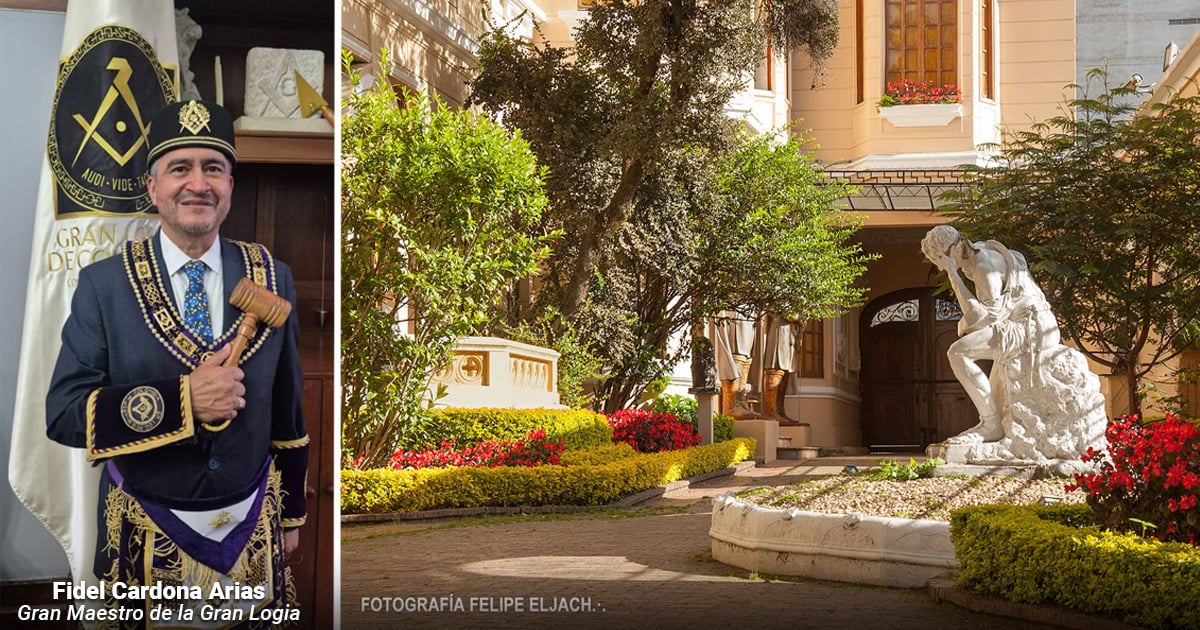
The estate is a treasure trove of esoteric architecture. Visitors crossing its threshold are greeted by two life-sized guardian statues dressed as medieval knights and armed with sheathed swords. Inside, the mansion boasts a dramatic black-and-white checkered chess-floor layout, celestial ceilings mapped with constellations and zodiac signs, and centuries-old Masonic symbols—including the omnipresent compass and square, the all-seeing eye, and imposing columns. Far from being mere decorative flourishes, these elements reflect a living tradition of philosophy, moral discipline, and political history that helped shape the Colombian republic.
Chronology: From Industrial Fortune to a Sanctuary of Brotherhood
The timeline of the Kopp Mansion mirrors the broader socio-political transformation of Bogotá, evolving from a pastoral Andean village into a burgeoning metropolis.

- Late 19th Century: Leo Siegfried Kopp arrives in Colombia by ship from Germany, plunging into a nation on the brink of industrialization. In 1889, he founds Bavaria, transforming the local economy and introducing a commercial enterprise that would permanently alter the cultural landscape of Bogotá—giving rise to iconic traditions such as local chicherías and the beloved beer affectionately dubbed "pola" after heroine Policarpa Salavarrieta.
- 1917: During a fraternal gathering, Leo Kopp demonstrates his deep commitment to the Masonic movement by pledging a monumental donation of 5,000 gold pesos to help Colombian Freemasons secure a permanent, dedicated headquarters.
- February 19, 1922: Five distinct Masonic lodges in Bogotá unite to officially establish the Grand Lodge of Colombia, laying the organizational groundwork for the country’s institutional masonry.
- 1923: Commissioned by renowned architect Alberto Manrique Martín, the grand mansion is constructed as a private residence for Leopoldo Kopp Castello (Leo Kopp’s son) and his wife, Olga Dávila Alzamora. The estate quickly becomes a covert salon for the nation’s elite—politicians, intellectuals, military leaders, and industrialists.
- 1953: Following the passing of Leopoldo Kopp, Olga Dávila marries Alfonso López Pumarejo, a towering figure in Colombian history who served two terms as president (1934–1938 and 1942–1945) and spearheaded the modernizing "Revolution on March" (Revolución en Marcha) reforms. Consequently, the residence develops an intimate, direct link to the highest echelons of national executive power.
- 1988: The Grand Lodge of Colombia formally acquires the Kopp Mansion, transforming the historic family estate into its definitive national headquarters and establishing the Colombian Masonic Museum to preserve the archival memory of the fraternity.
- Present Day: The mansion continues to operate as the active seat of the Grand Lodge, led by Grand Master Fidel Cardona Arias (serving the 2025–2027 term), preserving both the architectural heritage of early 20th-century Bogotá and the secretive historical records of the nation’s political architects.
Supporting Data: Architecture, Archives, and Notable Figures
To understand the Kopp Mansion is to examine the intersection of high architecture, elite genealogy, and political history. The estate’s physical layout and institutional contents offer quantifiable insight into its historical weight:
- The Investment: Leo Kopp’s initial 1917 contribution of 5,000 gold pesos was an immense financial asset for the era, serving as the foundational capital that materialized into the 1923 construction project executed by architect Alberto Manrique Martín.
- The Pantheon of Influence: The mansion’s interior spaces are mapped out as tributes to figures who shaped both Colombian independence and the Masonic fraternity.
- The Santander Salon: Dedicated to Francisco de Paula Santander—the foundational "Man of Laws" and a prominent Grand Master of national masonry—this room highlights the historical irony of Santander’s complex relationship with Simón Bolívar, another prominent Mason who frequently clashed with Santander over governance and power, culminating in the dramatic Conspiración Septembrina of 1828.
- The Hall of Guardians & Thinkers: Statues and portraits throughout the estate commemorate figures such as Antonio Nariño (translator of the Rights of Man), Simón Bolívar, Tomás Cipriano de Mosquera, Eduardo Santos, Jorge Eliécer Gaitán, and international luminaries like Galileo Galilei.
- The Museum Holdings: Managed under the auspices of the Grand Lodge, the Colombian Masonic Museum preserves rare historical documents, regalia, ceremonial tools, and photographic archives detailing the involvement of Colombian public servants, statesmen, and intellectuals in the fraternity over the past century.
- Geographical and Structural Footprint: Located at the nexus of downtown Bogotá (Carrera 5 and Calle 17), the mansion integrates European revivalist domestic architecture with specialized ritual chambers, culminating in the Grand Temple—a vast hall featuring a zodiacal ceiling and checkered flooring designed for initiatory and philosophical assemblies.
Official Responses: The Institutional Perspective of Modern Colombian Masonry
While historical scrutiny often casts Freemasonry as an enigmatic or secretive society, contemporary leadership emphasizes transparency regarding the fraternity’s philosophical and civic contributions.
Fidel Cardona Arias, serving as the Grand Master of the Grand Lodge of Colombia for the 2025–2027 term, has consistently championed the cultural preservation of historical spaces like the Kopp Mansion. According to official statements from the Grand Lodge, the institution views its mission not merely as the maintenance of esoteric traditions, but as the active curation of Colombia’s republican memory.
In public addresses and institutional outreach through the Colombian Masonic Museum, lodge representatives maintain that Freemasonry in the country has historically served as a secular, progressive crucible for liberty, equality, and fraternity. By opening archival access to researchers and utilizing the mansion as a cultural bridge, the leadership seeks to demystify the organization. They emphasize that the symbols embedded in the Kopp Mansion—from the precise geometry of the compass and square to the celestial alignment of the Grand Temple—are tools for individual moral elevation and civic duty, echoing the ideals that early republicans like Santander and Nariño sought to instill in a newly liberated nation.

Implications: Preserving Hidden History in a Rapidly Transforming Capital
The persistence of the Kopp Mansion in downtown Bogotá carries profound implications for urban heritage, historical memory, and architectural conservation in Latin America.
As Bogotá continues its relentless cycle of modernization—tearing down colonial and republican-era structures to make way for high-rises and commercial concrete—properties like the Kopp Mansion represent vital architectural resistance. They serve as tangible reminders of the cosmopolitan ambitions harbored by early 20th-century immigrants and local elites who sought to weave European aesthetic and philosophical currents into the Andean fabric.
Furthermore, the mansion forces a re-examination of how political history is written and remembered in Colombia. Mainstream historical narratives often overlook the subterranean networks of influence—such as Masonic lodges, elite salons, and private family estates—where pivotal decisions regarding the nation’s legal, educational, and economic structures were debated away from the public eye. By housing both the Grand Lodge and a public-facing museum inside a former presidential residence tied to the Kopp and López Pumarejo families, the estate blurs the boundary between private domesticity and public statecraft.
Ultimately, the Kopp Mansion stands as a silent witness to the passage of time. While the streets outside churn with the unyielding momentum of twenty-first-century urban existence, the interior walls—guarded by stone knights, illuminated by painted constellations, and steeped in the legacy of Bavaria’s founding industrialist—preserve a deeply layered, secretive chapter of Colombia’s national identity.




Leave a Reply