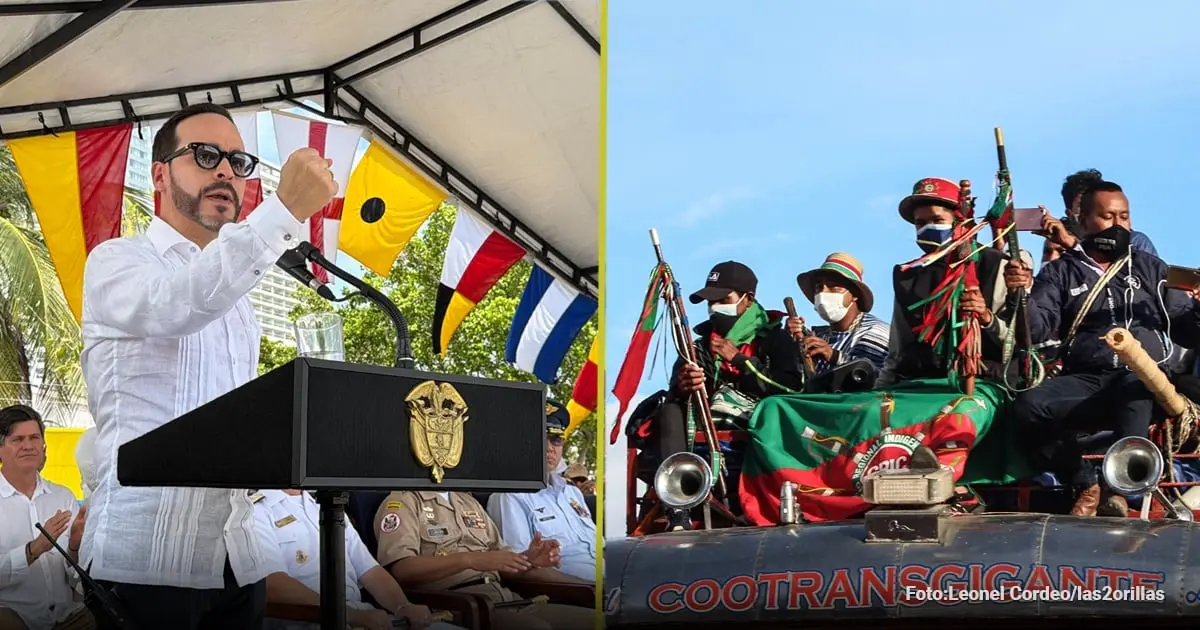
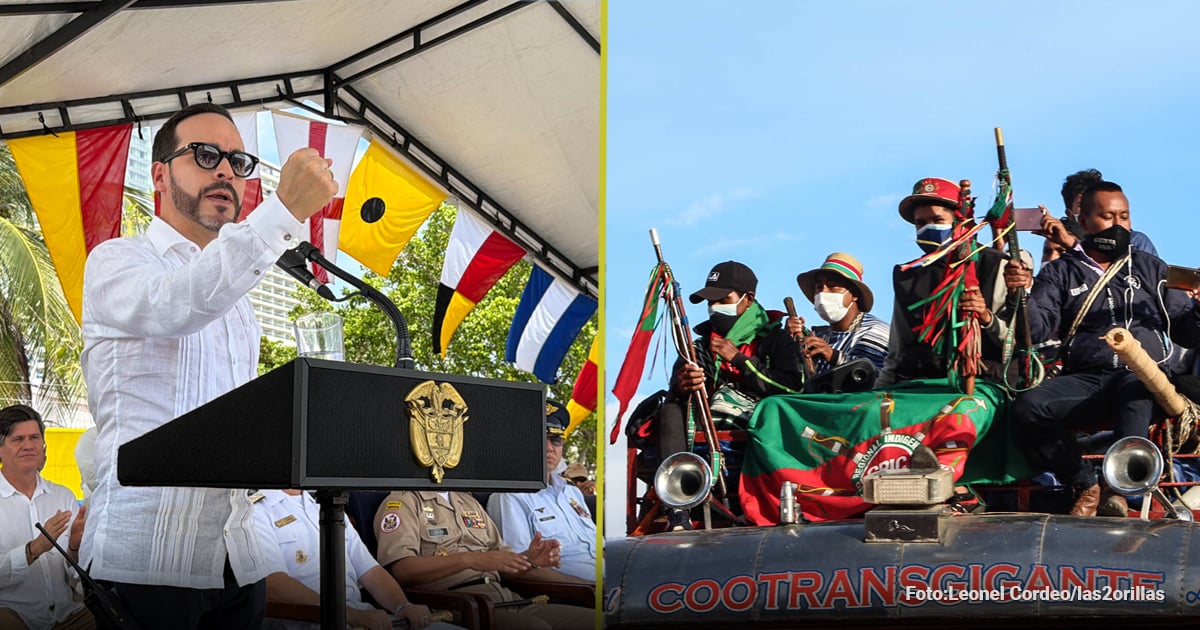
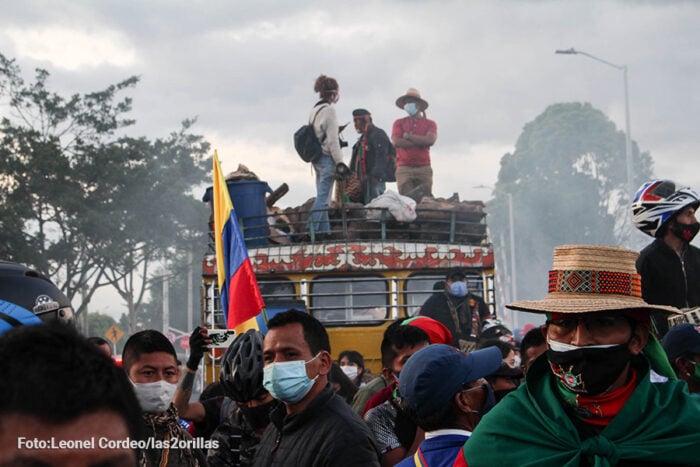
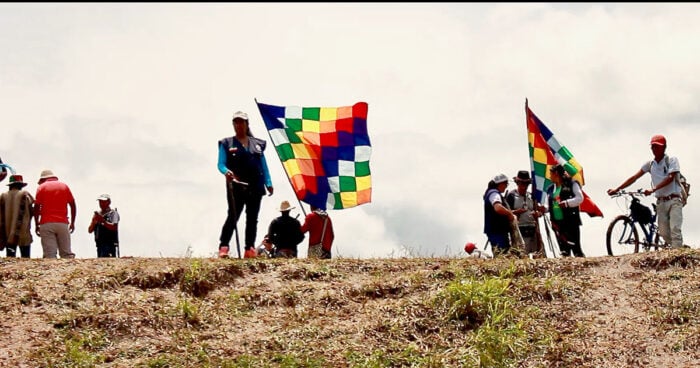
The political landscape in Colombia is bracing for a critical confrontation between the administration of President Abelardo de la Espriella and the Regional Indigenous Council of the Cauca (CRIC). At the center of the dispute is a scheduled indigenous mobilization and social summit taking place from October 11 to 14 in the municipality of Caldono, Cauca.
While the CRIC insists the gathering is a peaceful democratic exercise focused on autonomy, territorial rights, and social organization, the national government has drawn a hard line. President De la Espriella has explicitly warned that his administration will not tolerate highway blockades or negotiations under duress. Adding economic pressure to the political standoff, the executive branch announced a comprehensive, contract-by-contract audit of $1.13 billion (COP) previously allocated to the organization under past agreements.
This unfolding crisis highlights a profound ideological divide over the boundaries of social protest, the implementation of historical agreements, and the management of state funds in one of Colombia’s most volatile and conflict-ridden regions.
Chronology of Events
The escalation between the De la Espriella administration and the CRIC did not happen overnight; it is the culmination of mounting policy clashes and historical grievances that have steadily accelerated over recent months:
November 2022: Following years of negotiations, the CRIC secured a landmark agreement under the administration of former President Gustavo Petro for a second four-year strategic plan (2023–2026). This pact earmarked approximately $1.3 billion to bolster indigenous self-governance systems, territorial expansion, and agrarian reform.
August 2026: Tensions first flared between the newly inaugurated De la Espriella administration and indigenous leadership when the Ministry of Information Technology and Communications suspended regional programming across 20 community radio stations and 74 frequencies of Radio Nacional. The CRIC strongly condemned the move, arguing it crippled vital community communication networks in conflict zones.
October 6, 2026: Following a high-level Cabinet meeting, President De la Espriella addressed the impending indigenous mobilization. While asserting that the state would fiercely protect peaceful protest, he issued a strict warning against blockades and announced an immediate, exhaustive audit of the funds disbursed to the CRIC.
October 7–8, 2026: CRIC leadership, through spokespersons like Councilor Édgar Fernández, pushed back against the president’s statements, denouncing them as intimidatory rhetoric and clarifying that the October 11–14 summit is designed for dialogue, not paralyzing regional infrastructure.
October 11–14, 2026: The scheduled window for the cumbre (summit) in Caldono, Cauca, serving as the immediate focal point where the standoff will be tested on the ground.
Supporting Data and Financial Background
The financial audits ordered by the executive branch target substantial sums of public money directed toward the Cauca region.
The Figure in Question: The government’s audit focuses on $1.13 billion (COP) reported as disbursed to the CRIC and its affiliated programs under prior cooperative agreements.
The Scope of the Audit: According to statements from the Casa de Nariño, the review will meticulously examine individual contracts, administrative agreements, and specific operational deliverables tied to the 2023–2026 four-year plan.
Contextualizing the Numbers: Administration officials emphasize that ordering an administrative and financial review does not constitute an explicit accusation of embezzlement or financial misconduct. Rather, it represents an administrative exercise to verify project execution, resource allocation, and tangible outcomes on the ground.
Humanitarian Metrics: Beyond finance, the socioeconomic reality of the Cauca remains grim. According to internal human rights documentation compiled by the CRIC, at least 606 indigenous children and adolescents fell victim to forced recruitment by illegal armed groups operating within indigenous territories over a three-year observation period. This compounding humanitarian crisis underscores the perilous security matrix in which these political battles are fought.
Official Responses
The divergence in narrative between the central government and the indigenous movement captures two fundamentally different philosophies regarding governance, rights, and public order.
The National Government (Abelardo de la Espriella Administration)
The executive branch has adopted a zero-tolerance posture toward disruptions of public mobility and economic activity. President De la Espriella reiterated during his national address that while constitutional rights to peaceful assembly remain inviolable, the state will not bow to pressure tactics.
"We guarantee the right to peaceful protest, but we will not negotiate under the shadow of threats, nor will we permit the paralysis of our nation’s highways and the economic strangulation of our citizens," administration officials affirmed following the October 6 Cabinet session.
On the financial front, the administration maintains that accountability is non-negotiable. Reviewing the $1.13 billion pipeline is framed as a fiduciary duty to taxpayers to ensure that public investments in autonomous regional projects yield measurable benefits rather than fueling bureaucratic inefficiencies or unauthorized activities.
The Regional Indigenous Council of the Cauca (CRIC)
Indigenous authorities have strongly rejected the government’s framing of their actions as coercive or criminal. Councilor Édgar Fernández labeled the president’s warnings as an attempt to criminalize social mobilization and stifle legitimate dissent.
"Our call is for a summit of life, dignity, and survival. We are not organizing blockades; we are organizing our communities to deliberate on our autonomy, our territorial defense, and our survival as original peoples," Fernández stated.
The CRIC contends that the sudden financial audit is a politically motivated tactic designed to undermine the legitimacy of their historical agreements and weaken their collective bargaining power. Furthermore, the organization continues to demand answers regarding the restriction of regional indigenous broadcasting, viewing the suppression of community radio as an assault on their cultural identity and safety infrastructure.
Implications
The standoff in Caldono carries profound implications for the future of governance, security, and social relations in Colombia.
1. The Precedent for Social Protest
How this weekend unfolds will set a vital precedent for the De la Espriella administration’s handling of social unrest. If the mobilization proceeds peacefully without highway disruptions, it could establish a working framework for constructive dialogue between the state and powerful social movements. Conversely, a breakdown into widespread blockades and subsequent security interventions risks triggering a broader cycle of civil unrest across the Andean and Pacific regions.
2. The Future of State-Indigenous Agreements
The comprehensive financial audit of the $1.13 billion allocated to the CRIC signals a potential paradigm shift in how the national government manages decentralized funds for indigenous autonomies. If the audit uncovers irregularities, it could give the executive political leverage to renegotiate or restructure long-term financial commitments. If the funds are cleared of wrongdoing, however, it may strengthen the CRIC’s legal and moral standing, forcing the government to honor existing pacts without administrative interference.
3. Regional Stability and the Armed Conflict
Cauca remains a complex geopolitical crucible characterized by historic land disputes, drug trafficking corridors, and the aggressive expansion of dissident factions and criminal cartels. Pitting the national government against the CRIC—historically the most formidable civil counterweight to armed actors in the region—risks fracturing local security architectures. Weakening trust between state forces and indigenous guard structures could inadvertently create strategic vacuums that armed groups are primed to exploit.
As the October 11–14 mobilizations get underway, all eyes remain fixed on Caldono. The outcome of this delicate juncture will determine whether Colombia’s current political leadership can forge a stable path forward with its indigenous populations, or if the country is headed toward a prolonged era of institutional friction and social polarization.






Leave a Reply