

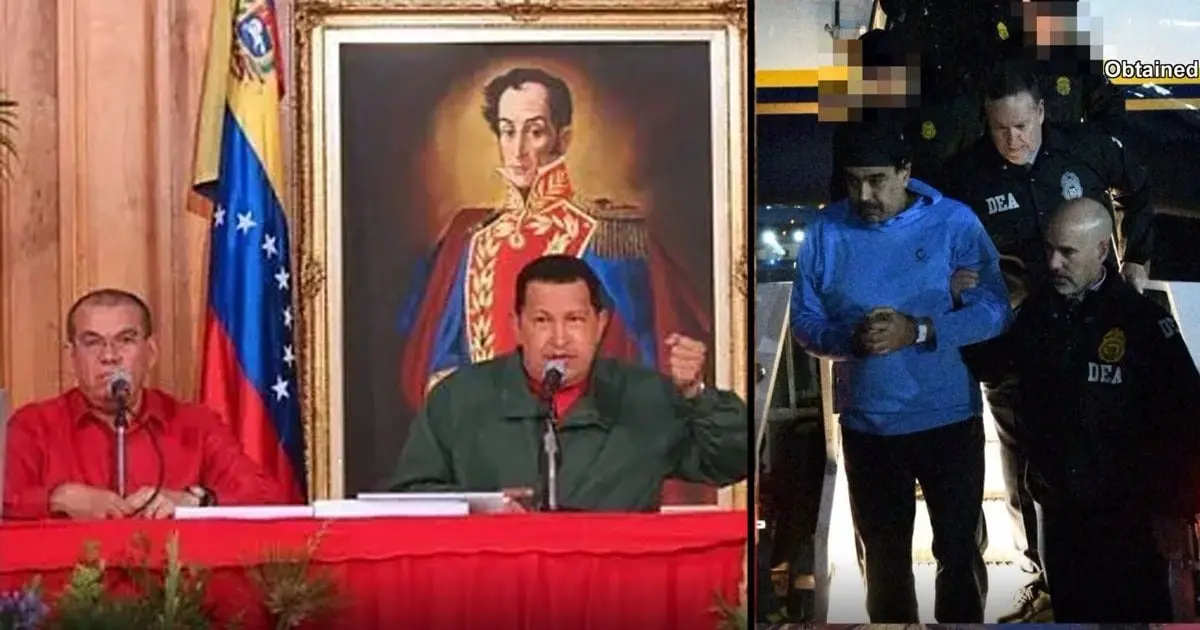
NEW YORK & BOGOTÁ — Decades before federal prosecutors in Manhattan unsealed a sweeping indictment that would alter the geopolitical landscape of South America, the infrastructure of Venezuelan state-sponsored narco-terrorism was already being quietly constructed in the borderlands. At the center of this historical nexus sits Captain Ramón Rodríguez Chacín, a retired Venezuelan Navy officer, former Minister of Interior, and former governor of Guárico state.
At 75 years old, Rodríguez Chacín has largely spent his twilight years retreating from the public eye. However, his reappearance in the landmark judicial file—United States v. Nicolás Maduro in the Southern District of New York—sheds new light on his role as a foundational bridge between the Venezuelan state and Colombian guerrilla groups, specifically the Revolutionary Armed Forces of Colombia (FARC) and the National Liberation Army (ELN).
According to U.S. federal prosecutors, Rodríguez Chacín was not merely an ideological sympathizer of the Colombian insurgency, but a crucial logistical architect. His alleged operations—spanning from clandestine meetings in the early 2000s to covert involvement in peace process preparations and modern drug-for-arms trafficking schemes—reveal how the institutions of the Venezuelan state were co-opted to serve a transnational criminal enterprise.
Main Facts: The New York Indictment and the Rodríguez Chacín Connection
The latest charging documents from the U.S. Department of Justice outline a deeply institutionalized criminal conspiracy operating out of the highest echelons of power in Caracas. The indictment details how the administration of Nicolás Maduro utilized state military resources, intelligence apparatuses, and official infrastructure to facilitate drug trafficking, launder illicit proceeds, and trade state-owned weaponry for metric tons of cocaine.
Within this framework, Ramón Rodríguez Chacín is explicitly identified as a primary liaison. Federal prosecutors allege that Rodríguez Chacín coordinated high-level access, arranging clandestine summits between guerrilla commanders and the political leadership at the Palacio de Miraflores.
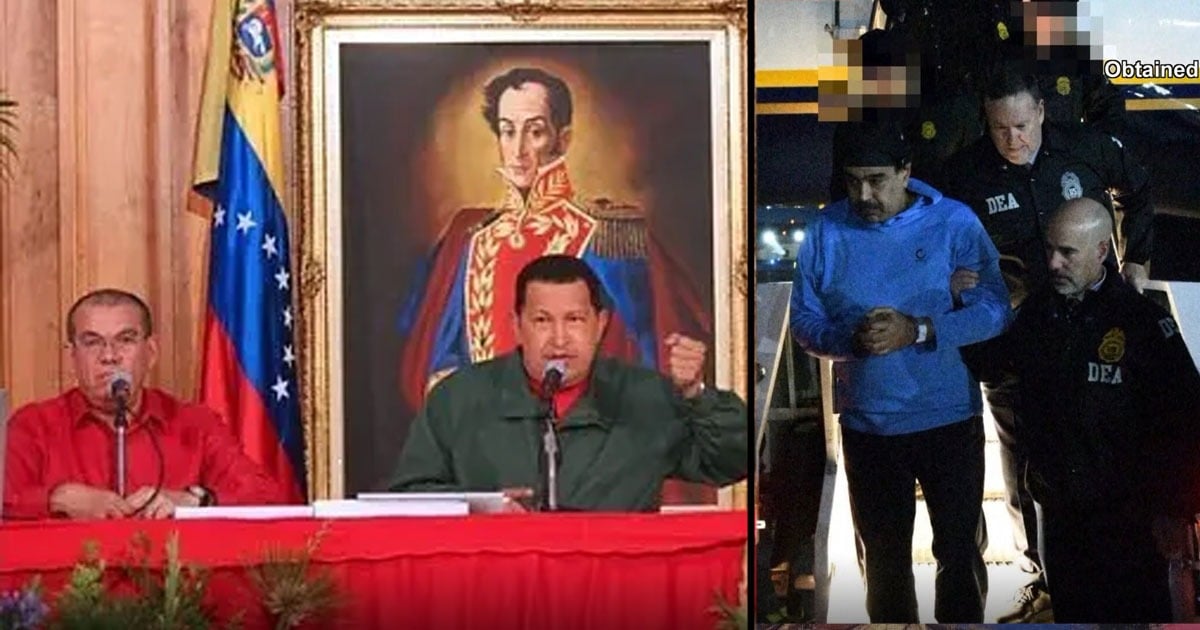
The mechanics of this alliance, as described in the dossier, relied on state-sanctioned deception:
- Logistical Camouflage: Official Venezuelan state vehicles, including fuel tankers belonging to the state-owned oil company PDVSA, were routinely repurposed. These trucks traveled to designated rendezvous points carrying state-subsidized fuel while simultaneously serving as a facade to conceal weapons shipments and narcotics.
- The Arsenal Trade: To settle financial and logistical debts stemming from cocaine shipments, the Venezuelan regime allegedly tapped into its military reserve stockpiles, supplying the FARC and ELN with heavy weaponry, anti-personnel landmines, and military-grade explosives via secure overland routes.
- Border Sanctuaries: The notorious "Cartel of the Suns"—a network of high-ranking Venezuelan military officials—guaranteed territorial protection for guerrilla encampments in border regions, particularly in the states of Apure and Zulia, where clandestine airstrips were constructed to dispatch narcotics toward Central America and North America.
Chronology of an Alliance: From Chávez to the Manhattan Federal Court
The history of Rodríguez Chacín’s entanglement with Colombian guerrilla movements is deeply intertwined with the rise of the Bolivarian Revolution under the late President Hugo Chávez.
December 2001: The First Public Exposure
Rodríguez Chacín first entered the crosshairs of Colombian intelligence and investigative journalism on December 7, 2001. The Colombian newsmagazine Cambio—then owned by Nobel laureate Gabriel García Márquez and a collective of prominent journalists—published an explosive report detailing the Venezuelan officer’s direct ties to the FARC, including documented meetings with guerrilla emissaries on Venezuelan soil.
The fallout was immediate and diplomatically explosive. Hugo Chávez mounted a vociferous public defense of his close confidant. In an unprecedented logistical display, Chávez dispatched two executive PDVSA aircraft to Bogotá to airlift Colombian journalists to Caracas for an emergency press conference at the Palacio de Miraflores.
During the conference, Chávez launched a blistering attack against Cambio and García Márquez—his mutual friend with Fidel Castro—dismissing the investigative report as an "infundio" (fabrication) orchestrated by an oligarchical media outlet. While Chávez vehemently defended Rodríguez Chacín’s character, notably arguing semantics over his military rank, he never denied the existence of the properties cited in the report, including "Corocito," a sprawling ranch owned by Rodríguez Chacín that served as a clandestine meeting ground.

The 2012 Havana Peace Talks: A Facade of Diplomacy
More than a decade after the Miraflores incident, Rodríguez Chacín resurfaced in a surprising diplomatic capacity. When Colombian government commissioners Alejandro Éder (later mayor of Cali) and Jaime Vásquez traveled secretly to Venezuela to lay the groundwork for the 2012 peace negotiations in Havana under President Juan Manuel Santos, they were greeted personally by Rodríguez Chacín at his Corocito estate.
Rodríguez Chacín offered his property as a neutral zone for early exploratory talks with the FARC secretariat. Eager to cement Venezuela’s role as an official facilitator, the former minister attempted to seat himself directly at the negotiating table.
However, his presence alarmed Colombian officials and international observers. With the discreet intervention of international delegates—including Norway’s Dag Nylander and Elisabeth Slattum, Cuba’s Carlos Fernando de Cossío and Abel García, and International Committee of the Red Cross (ICRC) representative Michael Kremer—Rodríguez Chacín was kept at a distance. Colombian officials later confided that they viewed his hospitality with extreme caution, suspecting that his primary objective was intelligence gathering rather than genuine diplomatic facilitation.
The 2020 Medellín Summit and Modern Disidencia Ties
The shadow network expanded into the modern era under Nicolás Maduro. According to U.S. court documents, the criminal partnership adapted to internal shifts within the Colombian guerrilla movement following the 2016 peace accord.
In 2020, Nicolás Ernesto Maduro Guerra, the son of the Venezuelan president, allegedly held a secret meeting in Medellín, Colombia, with emissaries of FARC dissident factions. The objective of the summit was clear: establish new operational rules for cross-border cocaine routes and coordinate the exchange of heavy weaponry for narcotics.

Investigations further indicate that Rodríguez Chacín’s rural properties in Venezuela were maintained as permanent staging grounds capable of housing up to 200 armed guerrillas at any given time, blurring the lines between state diplomacy and transnational mercenary warfare.
Supporting Data and Geographic Footprint
The geographical architecture of the Venezuelan-guerrilla alliance, as mapped by the U.S. Southern District of New York, highlights specific zones where sovereignty was abdicated in favor of criminal syndicates:
- The Apure and Zulia Corridors: Strategic sectors such as South Machiques and the Catatumbo region—particularly near Río Negro and Casa de Hierro, close to the Zulia River—functioned as secure logistics hubs.
- Clandestine Aviation: Intelligence dossiers note that multiple unpaved airstrips were carved into the remote plains and jungle sectors of western Venezuela, enabling the unhindered takeoff of multi-ton cocaine flights destined for international waters and transit hubs in Central America.
- Infrastructure Utilization: The integration of state assets extended beyond vehicles and munitions. Intelligence reports indicate that communications equipment, military intelligence reports, and diplomatic passports were routinely placed at the disposal of guerrilla commanders traveling through international transit networks.
Official Responses and Geopolitical Implications
The inclusion of high-ranking Venezuelan political and military figures in U.S. federal indictments marks a fundamental shift in how international jurisprudence addresses state capture by criminal networks.
While the regime in Caracas has consistently dismissed the U.S. indictments as politically motivated "imperialist aggression" and fabrications designed to destabilize the Bolivarian government, regional analysts view the legal documents as an exhaustive roadmap of modern transnational crime.
For Colombia, the revelations validate decades-long security concerns regarding the safe havens afforded to irregular armed groups across the porous 2,200-kilometer shared border. Successive administrations in Bogotá, regardless of ideological orientation, have faced the intractable challenge of managing cross-border security threats compounded by state complicity in Caracas.
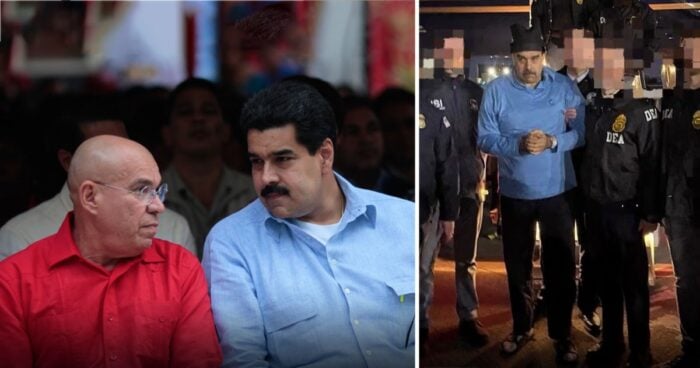
Implications for International Justice and Regional Stability
The indictment of Nicolás Maduro and the renewed scrutiny on figures like Ramón Rodríguez Chacín carry profound implications for the future of international law enforcement and regional security in Latin America:
- The Erosion of State Immunity: By classifying the Venezuelan government not as a traditional political administration, but as a racketeering enterprise akin to a drug cartel (under RICO-style frameworks), U.S. federal prosecutors have set a precedent for holding heads of state accountable for transnational organized crime.
- The End of Impunity for Enablers: Figures like Rodríguez Chacín, who successfully oscillated between the roles of military commander, government minister, regional governor, and self-appointed peace broker, demonstrate how institutional positions were leveraged to shield illicit activities. Their exposure in foreign courts closes the door on safe retirement for historical architects of the conflict.
- Border Militarization and Regional Security: As long as transnational cartels and insurgent groups maintain operational depth and logistical support within neighboring sovereign territories, lasting peace and security in Colombia remain severely compromised. The unmasking of these networks in a New York courtroom serves as a stark reminder that the war on drugs and terror in the Andes cannot be resolved without addressing the systemic institutional decay across the border.


Leave a Reply