

Main Facts
The year 1994 remains etched in the collective memory of Colombia as a paradoxical twelve-month period defined by intense societal transformation, profound national pride, and historic tragedy. It was a watershed year where the country navigated massive shifts in politics, telecommunications, and culture, while simultaneously grappling with deeply scarring episodes that altered its international reputation and domestic trajectory.
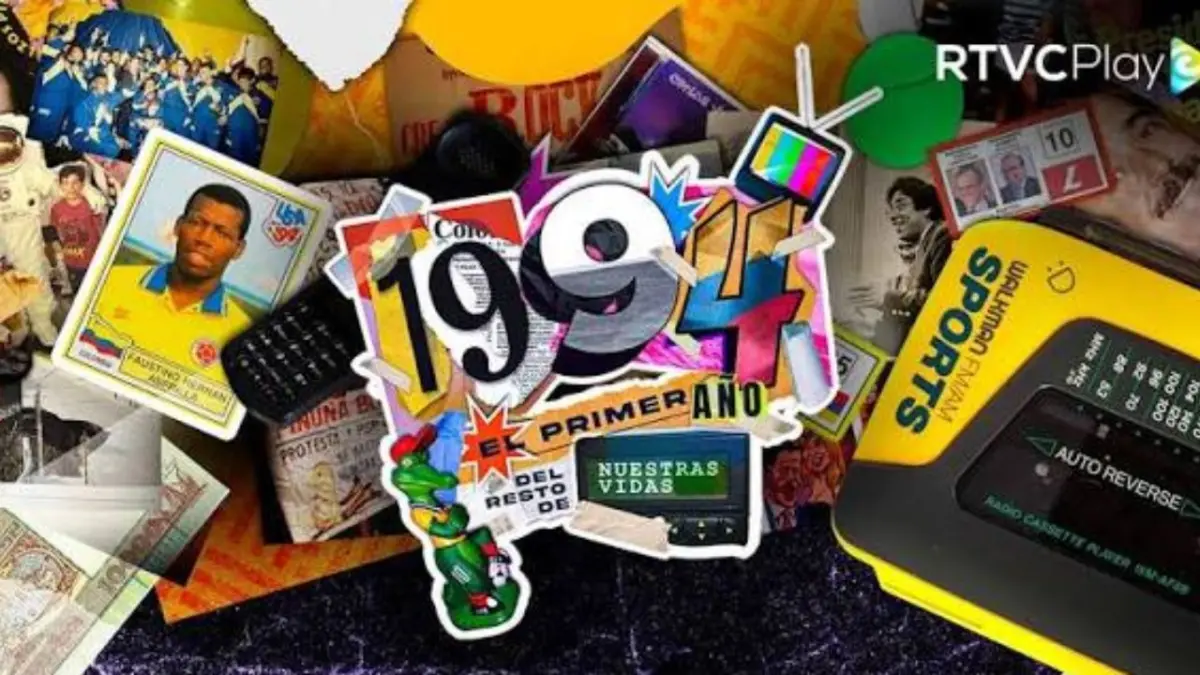
These defining moments—ranging from near-triumphs on the global beauty pageant stage and seismic shifts in television and musical expression to heartbreak on the football pitch and the dawn of mobile connectivity—are the focal point of a major documentary film: 1994, el primer año del resto de nuestras vidas (1994, The First Year of the Rest of Our Lives).
Directed by Julián Duque and Juan Pablo Astudillo, based on an original concept by Paco Cepeda and Juan Pablo Astudillo, the documentary is a co-production between RTVC Sistema de Medios Públicos, the Fundación Patrimonio Fílmico Colombiano, and Diptongo Media Group. Through rich archival footage, contemporary multimedia artifacts, and the firsthand testimonies of prominent cultural figures, the film meticulously reconstructs the social, political, athletic, and musical currents of a year that continues to spark intense debate and nostalgia.
Chronology of a Tumultuous Year
The calendar of 1994 reads like a cinematic thriller, weaving together soaring national ambitions and devastating lows. The timeline of key events illustrates how rapidly the country’s mood shifted from elation to grief:
- June 1994: Commercial cellular telephony officially launches in Colombia with the operational rollout of companies like Celumóvil, forever changing the landscape of national telecommunications.
- June – July 1994: The Colombian Men’s National Football Team competes in the FIFA World Cup in the United States, suffering a shocking first-round elimination despite entering the tournament as favorites.
- May 1994 (Miss Universe): Carolina Gómez secures the title of Virreina Universal (First Runner-Up) at the Miss Universe pageant in Manila, cementing an unprecedented era of dominance for Colombian beauty queens on the global stage.
- July 2, 1994: National grief engulfs the country with the tragic assassination of beloved defender Andrés Escobar in Medellín, an act of violence directly linked to the national team’s World Cup exit.
- November 30, 1994: The cultural phenomenon Café con aroma de mujer, written by Fernando Gaitán and directed by Pepe Sánchez, premieres on Colombian television, marking a golden age for national soap operas.
- May 1995 (The Legacy of 1994): Propelled by the underground rock movements nurtured in the early nineties, the foundational ideas of Mario Duarte, Julio Correal, and Bertha Quintero materialize into the inaugural edition of Rock al Parque, solidifying Bogotá as a hub for alternative culture.
Supporting Data and Cultural Milestones
To truly understand 1994, one must examine the specific pillars that supported this cultural earthquake. The era produced statistics, records, and cultural milestones that endure to this day.
The Golden Era of Pageantry: Three Consecutive Near-Misses
Long before Paulina Vega and Catalina Robayo captured international crowns, Colombian delegates dominated the Miss Universe stage through a streak of near-misses that captivated the country. In 1994, Carolina Gómez advanced to the final two alongside India’s Sushmita Sen, ultimately finishing as the universal runner-up.
This result extended an extraordinary sequence:
- 1992: Paola Turbay finished as First Runner-Up.
- 1993: Paula Andrea Betancur secured the First Runner-Up position.
- 1994: Carolina Gómez claimed the third consecutive second-place finish for Colombia.
This historic run set a high benchmark for national pride in international pageants, a streak later mirrored by Taliana Vargas in 2008 before Paulina Vega broke through to win Colombia’s second Miss Universe crown in 2014.
The Football Paradox: From the 5–0 Dream to World Cup Heartbreak
The sporting narrative of 1994 was a tragedy of expectations. Fueled by a historic qualification campaign—highlighted by the legendary 5–0 thrashing of Argentina in Buenos Aires on September 5, 1993—the Colombian squad headed to the United States World Cup touted by global pundits as dark-horse candidates to lift the trophy.
Reality, however, proved unforgiving. Losses to Romania and the United States rendered a subsequent victory over Switzerland meaningless, sealing a bitter first-round exit. The athletic failure was eclipsed entirely by national tragedy when defender Andrés Escobar was murdered outside a Medellín discotheque on July 2, 1994. The killing cast a long, dark shadow over Colombian society, exposing the toxic intersection of drug trafficking, societal polarization, and sports fanaticism.
The Small Screen and Sonic Revolutions
On the cultural front, Colombian households were transfixed by storytelling and sound. On November 30, 1994, Café con aroma de mujer hit television screens. Starring Margarita Rosa de Francisco as "Gaviota" and Guy Ecker as Sebastián Vallejo, the telenovela—crafted by master writer Fernando Gaitán—not only redefined national broadcast standards but also achieved unprecedented international syndication.
Simultaneously, the undercurrents of youth culture were shifting. In Bogotá, independent rock bands had long struggled for performance spaces. Driven by the grassroots efforts of Mario Duarte (frontman of La Derecha), promoter Julio Correal, and cultural manager Bertha Quintero, the groundwork was laid for a massive musical counterculture. This momentum culminated in the birth of Rock al Parque, which held its first festival from May 26 to 29, 1995, featuring 43 national acts alongside international artists, thereby democratizing live music access.
The Dawn of Mobile Connectivity
Technologically, 1994 marked Colombia’s entry into the modern digital era. The authorization of private telecom licenses and the launch of operations by carriers such as Celumóvil brought mobile phones out of the realm of science fiction and into the hands of executives and public figures. The completion of the first commercial cellular calls in mid-1994 laid the crucial infrastructural groundwork for the hyper-connected society of the 21st century.
Official Responses and Media Perspectives
The cultural weight of 1994 has not faded with time; rather, it has matured into an object of intense historical analysis. Broadcasters and cultural institutions have increasingly turned their lenses toward the era to help younger generations contextualize the modern Colombian identity.
Radio Nacional de Colombia captured the sentiment surrounding the era’s retrospective analysis via social media, noting:
"What happened in 1994? Politics, sports, music, and culture were the protagonists of a year that left a mark on the country’s history. Join us to remember the events that marked an era."
Through projects like 1994, el primer año del resto de nuestras vidas, public media outlets seek to bridge the gap between historical trauma and cultural triumph. Executive producers and cultural historians have emphasized that the decade of the nineties was not merely a preamble to the security improvements of the 2000s, but a crucible in which the resilience of the Colombian populace was forged.
Implications for Modern Colombia
The reverberations of 1994 continue to shape contemporary Colombia across multiple dimensions:
- Social Resilience: The trauma of 1994—particularly the socio-political violence surrounding the national football team—forced the country into a painful introspective dialogue about tolerance, celebrity culture, and systemic violence. The memory of Andrés Escobar remains a powerful moral touchstone against sports fanaticism and violence.
- Cultural Globalization: The international success of Café con aroma de mujer and the institutionalization of festivals like Rock al Parque proved that Colombian creative industries could project both traditional folklore and modern cosmopolitanism onto the global stage.
- Technological Leap: The introduction of cellular telephony in 1994 initiated a rapid modernization of the country’s service sectors, bridging geographic divides and integrating Colombia into global economic networks.
As Señal Colombia prepares to broadcast 1994, el primer año del resto de nuestras vidas on Sunday, October 11, at 8:00 p.m., viewers are invited to look back not out of mere nostalgia, but to understand the foundational fractures and triumphs that built the Colombia of today.



Leave a Reply