


BOGOTÁ — In the wake of the catastrophic seismic event that recently devastated western Colombia, the administration of President Abelardo de la Espriella has formally laid the groundwork for an unprecedented national recovery effort. Dubbed the Fondo Milagro (Miracle Fund), the initiative launches with a formidable initial capitalization of one trillion Colombian pesos ($1 trillion COP). Designed to orchestrate the rapid reconstruction of pulverized urban centers, residential neighborhoods, and critical infrastructure, the fund represents a hybrid model of state oversight and private-sector execution.
Rather than relying strictly on traditional bureaucratic procurement, the government has placed the steering wheel of the Fondo Milagro directly into the hands of some of the nation’s most prominent and successful business leaders—many of whom hail directly from the disaster-stricken zones. Under the managerial leadership of paisa executive Jaime Uribe, this elite board is tasked with making high-stakes decisions on project allocation, resource distribution, and strategic rebuilding.
Main Facts: Structure, Funding, and Governance
The architecture of the Fondo Milagro is built to bypass historic bottlenecks associated with disaster relief in Colombia, merging state backing with corporate agility. Capitalized at one trillion pesos, the fund’s strategic direction is dictated by a high-level executive board, while its fiduciary administration has been entrusted to the Fiduciaria Colombiana de Comercio Exterior (Fiducoldex)—a financial services subsidiary linked to the Ministry of Commerce, Industry, and Tourism, and affiliated with Bancóldex.
For its operational management, Fiducoldex will deploy a dedicated core structure consisting of eleven full-time professionals. In exchange, the fiduciary entity will receive a fixed monthly commission equivalent to 142 legal monthly minimum wages, totaling approximately $248.6 million COP.
The operational chain of command requires that Jaime Uribe, serving as the fund manager, issue explicit contracting instructions and formally petition the Ministry of Finance—acting as the trust settlor (fideicomitente)—to issue payment orders once administrative and technical requirements have been rigorously satisfied.
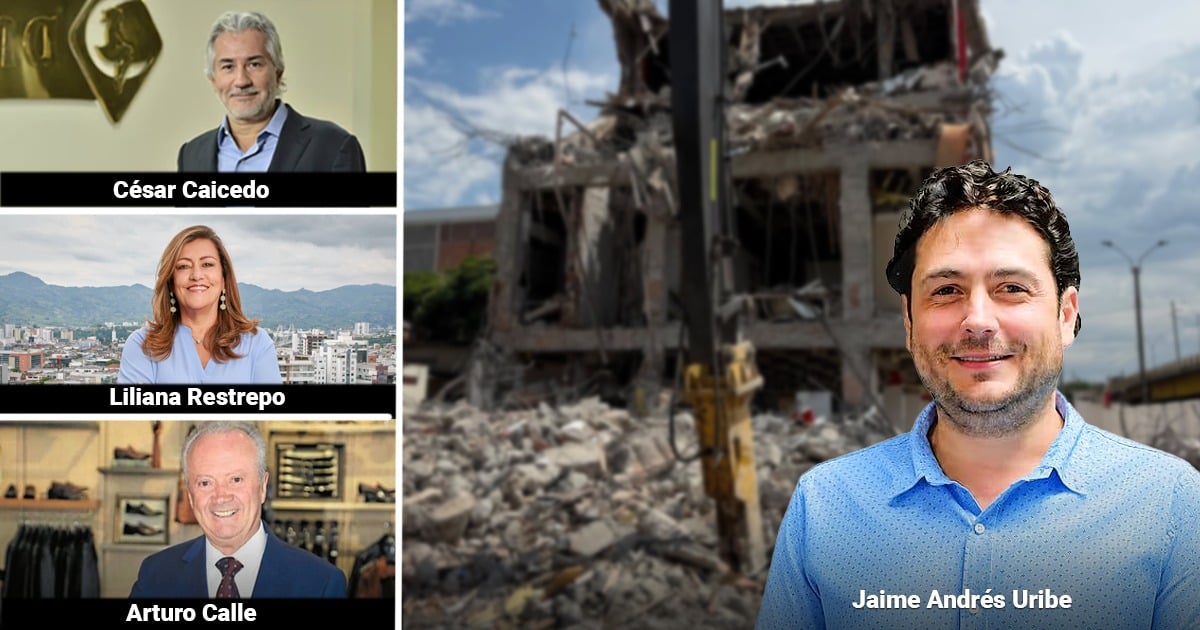
The Executive Board of the Fondo Milagro
The decision-making body steering the trillion-peso reconstruction effort comprises heavyweights from diverse economic sectors:
- Liliana Restrepo: Co-founder of the iconic restaurant chain Frisby, representing the hard-hit coffee region of Pereira.
- Germán Bahamón: General Manager of the Federación Nacional de Cafeteros (FNC), representing the nation’s vast network of coffee-growing families.
- César Caicedo: President and CEO of Colombina S.A., representing the industrial and entrepreneurial leadership of Valle del Cauca.
- Arturo Calle: Legendary textile and retail magnate, representing the pinnacle of Colombian commercial enterprise and presidential advisory.
- Carlos Ríos: Secretary General of the Presidency of the Republic.
Additional institutional representation includes a designated delegate from the National Department of Planning (DNP) and another from the Ministry of Finance. Meanwhile, the National Unit for Disaster Risk Management (UNGRD) holds a seat with voice but no vote. The President of the Republic retains the prerogative to appoint the council’s presiding officer.
Chronology: From the Seismic Shock to Corporate Mobilization
The timeline of the Fondo Milagro’s inception reflects the urgent, crisis-driven pace demanded by the western Colombia earthquake:
- August 10: A powerful earthquake strikes western Colombia, heavily impacting departments such as Valle del Cauca, Risaralda, and surrounding coffee-growing regions, leaving widespread devastation in housing, urban centers, and infrastructure.
- Late Summer / Early Fall: President Abelardo de la Espriella conceptualizes the Fondo Milagro, determining that public-private synergy is vital to avoid the bureaucratic delays that historically plague national emergencies.
- July (Preceding Appointment): Jaime Uribe is initially appointed to head ProColombia. However, due to his proven capacity to interface between the state and private investors, his path pivots toward leading the trillion-peso recovery effort, with Samuel Bluman Levy stepping in at ProColombia.
- October: The executive board of the Fondo Milagro is formally consolidated, pulling in corporate leaders Restrepo, Bahamón, Caicedo, and Calle alongside government officials. Administrative agreements with Fiducoldex are finalized, setting the operational framework for the 11-person management team.
Supporting Data: Profiles of the Board Members
To understand the immense weight behind the Fondo Milagro, one must examine the track records of the business leaders whom President De la Espriella has entrusted with the reconstruction.
César Caicedo (Colombina S.A.)
A towering figure in the business community of Valle del Cauca, César Caicedo serves as the executive president of Colombina S.A., a 90-year-old titan of sweets and confections. An economist with a master’s degree in finance from Tufts University, Caicedo took the helm in 2002 at just 33 years of age, transforming the Cali-based company into a multinational operating across 15 countries, anchored by household brands like Bom Bom Bun and Nucita.

Caicedo’s management style is lauded for modernizing traditional industry, driving exports, and expanding international footprints—highlighted by his 2015 acquisition of Spanish confectionery firm Fiesta to breach the European market, alongside early investments in Venezuela. Widely viewed as a socially responsible corporate leader, he has championed gender equality and established manufacturing plants in conflict-scarred zones like Santander de Quilichao, generating over 1,200 jobs. Regionally, he has presided over the Valle del Cauca section of the ANDI and held leadership roles in Propacífico, the Unión de Acción Vallecaucana, and football club Deportivo Cali. He arrives at the Fondo Milagro from ground zero of the August 10 disaster.
Liliana Restrepo (Frisby)
As the co-founder alongside her late husband, Alfredo Hoyos Mazuera, of Colombia’s pioneering breaded chicken chain in Pereira (established in 1977), Liliana Restrepo assumed absolute leadership following his passing in 2020. Today, Frisby commands a network of over 260 restaurants and 5,000 employees. During the pandemic, her strategic pivot skyrocketed home delivery sales from 20% to 40% by April 2020.
Recognized by Forbes as one of Colombia’s most powerful women, Restrepo has consistently wedded corporate profitability with social welfare—a philosophy she terms "conscious capitalism." Her humanistic management approach includes unconventional wellness practices for staff, such as biodanza, and heavy investments in education through the Technological Institute of Dosquebradas and the Frisby University. In the Fondo Milagro, she acts as a fierce advocate for Pereira, which suffered extensive structural damage during the tremor.
Arturo Calle (Arturo Calle Enterprises)
Born in Medellín in 1938, Arturo Calle represents the archetype of self-made entrepreneurial success in Colombia. Launching a modest menswear shop in Bogotá in 1966, he built a retail empire boasting over 100 stores nationwide and international footprints in Panama, Costa Rica, El Salvador, Guatemala, and Peru.
Operating under a disciplined business model characterized by zero debt, strict value-chain oversight, and equitable pricing, his company generates over $600 billion COP annually. Beyond commerce, Calle is renowned for his philanthropic endeavors—notably safeguarding employee salaries throughout the pandemic despite mandatory store closures. Maintaining a close relationship with the De la Espriella administration, Calle heads the ad honorem consultative committee of sages and now anchors the executive committee of the Fondo Milagro.

Germán Bahamón (Federación Nacional de Cafeteros)
A native of Huila, Germán Bahamón assumed the general manager position of the National Federation of Coffee Growers (FNC) in April 2023, representing the livelihoods of over 540,000 coffee-growing families. An agro-industrial production engineer from the Universidad de La Sabana, Bahamón brings a diverse multinational background featuring stints at Apple, Sony Ericsson, América Móvil, and Kimberly-Clark, alongside extensive work in land formalization and marginalized communities. A third-generation coffee grower, he produces his own specialty brand, Zuluaga Coffee, in Huila. His mandate on the board ensures that the millions of rural coffee farmers whose homes and drying stations were damaged by the tremor receive direct, prioritized assistance.
Carlos Ríos and Jaime Uribe
Complementing the private sector titans are institutional anchors. Carlos Ríos, an Antioquian attorney from EAFIT University with master’s degrees in political studies and national security, serves as Secretary General of the Presidency. With a background as a Medellín city councilman, Vice Minister of Defense, and director of Dagran in Antioquia, Ríos brings deep public administration expertise.
Meanwhile, fund manager Jaime Uribe—who previously stepped down from his post at ProColombia to focus on this mandate—brings executive sharpness optimized for marshaling resources and aligning private investors with state goals.
Official Responses and Institutional Alignment
The establishment of the Fondo Milagro has triggered a cascading alignment across Colombia’s institutional and private sectors. The national government has emphasized that transparency and execution speed are non-negotiable. By placing heavy-hitting entrepreneurs at the decision-making table rather than leaving projects entirely to insulated state ministries, the administration aims to leverage private-sector logistics, supply chain mastery, and engineering efficiency.
Furthermore, ancillary sectors are mobilizing. Reports indicate that the country’s ten largest construction firms are actively aligning their capacities to bid on and execute the massive infrastructure overhaul required in the wake of the disaster. The inclusion of Fiducoldex guarantees that fiduciary controls, auditing requirements, and public accounting standards will be rigorously maintained, balancing corporate agility with absolute fiscal accountability.

Implications for Colombia’s Economic and Social Landscape
The deployment of the Fondo Milagro carries profound structural implications for Colombia:
- Redefining Public-Private Collaboration: By giving private industrialists direct voting control over state-allocated disaster relief funds, the De la Espriella administration is setting a new precedent for crisis management in Latin America. The traditional friction between government red tape and private sector efficiency is deliberately bypassed.
- Regional Equity and Decentralized Recovery: Because leaders like César Caicedo (Valle del Cauca), Liliana Restrepo (Pereira/Risaralda), and Germán Bahamón (Coffee Belt/Huila) sit directly on the board, the allocation of the one trillion pesos is insulated from the historical centralization of Bogotá. Decisions will be informed by localized, lived urgency.
- The Test of Conscious Capitalism: With figures like Restrepo and Calle—who champion corporate social responsibility and employee retention through crises—driving the effort, the reconstruction is framed not merely as a bricks-and-mortar endeavor, but as a test of human-centric economic recovery.
- Economic Stimulus: The injection of $1 trillion COP into regional construction, supply chains, and employment acts as a vital macroeconomic stimulant for western Colombia, staving off prolonged recessionary impacts in zones already battered by seismic shocks.
As Jaime Uribe begins directing payment orders and Fiducoldex activates its professional task force, all eyes in Colombia remain fixed on the Fondo Milagro. If successful, the model could permanently alter how the Andean nation responds to catastrophic emergencies, proving that the fusion of state capital and corporate executive muscle can indeed produce modern miracles of resilience.



Leave a Reply