

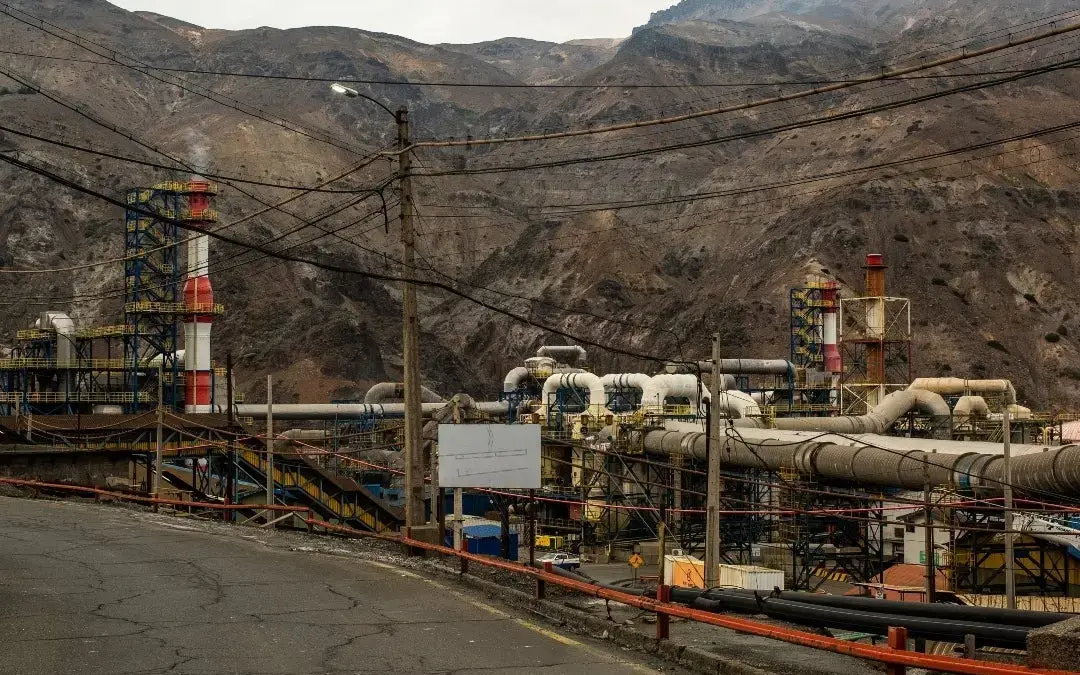
SANTIAGO, Chile — Rescue teams are locked in an intense, round-the-clock operation at Chile’s colossal El Teniente mine, following a sudden landslide that trapped two contract workers. The incident, triggered by severe adverse weather conditions in central Chile, strikes at the heart of state-owned Codelco’s operations. It compounds an already volatile period for the world’s largest copper producer, which is grappling with aging deposits, sliding output, rising operational friction, and an alarming string of fatal safety incidents across the nation’s vital mining sector.
The accident has once again cast a harsh spotlight on industrial safety protocols in South America’s mining powerhouse, occurring just one year after a devastating incident claimed six lives at the very same subterranean complex, and less than a fortnight after a separate fatal accident at another Codelco-operated property. As rescue units race against time, the broader implications of the disaster resonate globally, threatening to tighten an already strained international copper market.
Main Facts
The emergency unfolded at approximately 2:00 p.m. local time on Sunday within the Cráter Norte sector of El Teniente, a massive open-pit and underground copper mining complex situated in the Andes Mountains of central Chile.
According to preliminary reports released by Chile’s national geology and mining regulator, Sernageomin, and corroborated by local media outlets such as Radio Cooperativa, three employees of the private contracting firm AURA were performing routine inspection duties in the area when the terrain gave way. The ground failure was directly attributed to heavy, unseasonal rainfall and severe meteorological phenomena battering the region.
- The Casualties and Response: Of the three AURA contractors deployed in the Cráter Norte zone, one worker was successfully rescued shortly after the slide and promptly transferred to a nearby medical center for evaluation and treatment. The remaining two workers have been located by emergency crews, but complex terrain and unstable ground conditions have turned extraction into a delicate and protracted process.
- Identity Withheld: As of Sunday evening, Codelco and contracting firm representatives have withheld the identities of the trapped personnel, citing privacy protocols and ongoing family notifications.
- The Operations Affected: Codelco—officially known as the Corporación Nacional del Cobre de Chile—has yet to issue a definitive assessment regarding how the Cráter Norte landslide and subsequent rescue operations will impact overall output at El Teniente, historically one of the crown jewels of the company’s asset portfolio.
Chronology of Events
To understand the gravity of Sunday’s landslide at El Teniente, industry analysts and safety regulators are placing the incident within a broader timeline of mounting operational distress across Chile’s mining landscape over the past month.
Early May: A Cascade of Fatalities
- Radomiro Tomic Incident: Just over a week prior to the Cráter Norte emergency, a worker lost their life in a fatal accident at the Radomiro Tomic mine, an open-pit operation in northern Chile wholly owned by Codelco. The incident triggered immediate internal safety reviews and drew swift condemnation from labor unions demanding tighter protections.
- Escondida Sinking: Barely days before the Radomiro Tomic tragedy, a separate fatal workplace accident was recorded at the massive Escondida copper mine, operated by the global mining titan BHP. The clustering of three major industrial fatalities within weeks has intensified public scrutiny on the mining industry’s safety culture.
Sunday Afternoon: The Cráter Norte Landslide
- 12:00 PM – 1:30 PM: AURA inspection crews, including the three contracted workers, are deployed to the high-altitude Cráter Norte sector of El Teniente to assess ground stability and infrastructure following severe storms that swept across central Chile.
- 2:00 PM local time: Meteorological conditions deteriorate sharply, triggering an unexpected mass movement of earth and rock. The landslide engulfs the inspection zone, trapping the three workers.
- Afternoon – Evening: Emergency response protocols are activated instantly. Codelco mobilizes specialized rescue teams, mining engineers, and medical personnel. One worker is extricated and airlifted/transported to a regional medical facility.
- Late Sunday: Rescuers confirm the exact location of the two remaining trapped contractors. Heavy machinery and manual stabilization techniques are deployed to clear debris safely without provoking secondary slides.
Supporting Data: The Global Copper Crisis
The timing of the El Teniente emergency could hardly be worse for the global commodities market. Chile produces roughly a quarter of the world’s copper, making its operational stability vital to the global energy transition, construction, and electronics sectors.
Surging Prices and Supply Deficits
Global supply chains have faced a cascade of disruptions over the past year, driven by declining ore grades in legacy mines, geopolitical friction, trade bottlenecks, and frequent weather anomalies. These compounding factors pushed international copper prices to historic highs, touching a staggering US$15,000 per metric ton last month.
While prices have corrected slightly from their absolute peaks, market fundamentals remain exceptionally tight. Commodities analysts at major financial institutions project that persistent supply shocks could trigger secondary price rallies later in the year, particularly if major producers like Codelco experience extended downtime.
Codelco’s Production Dilemma
For years, Codelco has battled a structural decline in production. Decades of continuous extraction have naturally depleted the high-grade copper veins at its flagship mines, including El Teniente and Chuquicamata. To maintain output, the state enterprise embarked on multi-billion-dollar structural projects—such as the underground expansion of El Teniente and the transformation of Chuquicamata from an open pit to an underground mine.
However, these mega-projects have been plagued by engineering delays, budget overruns, and persistent rock-mechanic challenges. Consequently, Codelco’s production figures have steadily drifted downward, undercutting national output totals and depriving the Chilean state of crucial fiscal revenues normally funneled into social programs.
Official Responses and Stakeholder Reactions
The reaction from corporate leadership, regulatory bodies, and labor organizations has been swift, reflecting the high stakes involved in industrial safety and operational continuity.
Codelco’s Statement
In an official corporate release disseminated on Sunday, Codelco expressed profound regret over the accident and emphasized that all company resources are dedicated to the safe extraction of the trapped workers.
"Codelco reiterates its unwavering commitment to the safety and well-being of all personnel, including our direct employees and those of our contracting partners," the company stated. "Our immediate priority is the successful rescue and medical attention of our colleagues in Cráter Norte. We are cooperating fully with Sernageomin and local authorities to investigate the precise mechanical and meteorological causes of this unfortunate event."
Regulatory and Union Pressure
Sernageomin, Chile’s mining watchdog, dispatched a specialized inspection team to El Teniente to secure the accident site and initiate a formal technical investigation. The agency holds the authority to mandate temporary halts on specific operational fronts if safety violations or unmitigated environmental risks are identified.
Meanwhile, labor unions representing both Codelco workers and contractors have ratcheted up pressure on corporate boards. Union leaders argue that production pressures, exacerbated by management’s push to reverse declining output trends, frequently compromise safety margins—particularly during severe weather events when inspections should be scaled back or suspended entirely.
Broader Implications for the Chilean Mining Sector
Sunday’s landslide at El Teniente is not an isolated crisis; rather, it is symptomatic of a broader confluence of perils currently threatening Chile’s mining sector. The industry is navigating a four-front war: natural disasters, safety failures, labor unrest, and production deficits.
1. Labor Friction and Strikes
Beyond safety and weather disruptions, labor stability across the Chilean copper belt is fracturing.
- Minera Centinela: Workers at the Centinela copper mine, operated by Antofagasta Plc, launched a formal strike after collective bargaining negotiations collapsed, halting significant processing capacity.
- Escondida Disputes: Concurrently, BHP’s massive Escondida operation—the single largest copper mine on Earth—is wrestling with a tense, independent wage dispute that threatens to ignite secondary walkouts if mediation efforts fail.
These labor disputes compound the output losses already rippling through the market, ensuring that global buyers will face prolonged tightness in refined copper availability.
2. Climate Vulnerability in High-Altitude Mining
The increasing frequency of extreme weather events—ranging from unseasonal torrential rains and flash floods to prolonged droughts—poses an existential operational challenge for Andean mining. High-altitude operations like El Teniente (situated up to 3,000 meters above sea level) are particularly vulnerable to geotechnical instability when heavy precipitation saturates the mountainous overburden.
Mining engineers warn that corporate risk models must be radically updated to account for accelerated climate volatility. Traditional historical baselines for rainfall and ground stability are no longer reliable predictors of disaster risks in the high Andes.
3. Reputational Damage and the Social License to Operate
For Codelco, the recurrence of fatal accidents is a deep structural wound. As a state-owned enterprise, it carries a unique public mandate to model the highest standards of worker welfare and environmental stewardship. The death of six workers at El Teniente last year, followed by the Radomiro Tomic fatality earlier this month and now the Cráter Norte crisis, inflicts severe damage on the company’s institutional reputation.
Securing the "social license to operate"—the ongoing approval of local communities, labor unions, and civil society—becomes increasingly difficult when worker safety appears secondary to extraction targets. International investors and ESG (Environmental, Social, and Governance) funds are monitoring these developments closely, and chronic safety lapses could eventually translate into higher borrowing costs and diminished institutional backing for Codelco’s future debt issuances and capital projects.
Conclusion
As rescue teams labor through the night in the unforgiving terrain of the Andes, the immediate focus remains fixed on the safe recovery of the two trapped contract workers at El Teniente. Yet, once the dust settles and the rescue operation concludes, Codelco and the wider Chilean mining establishment will face profound, uncomfortable questions.
The convergence of fatal safety lapses, climate-driven geotechnical failures, falling ore grades, and escalating labor friction paints a precarious picture for the world’s premier copper supplier. Navigating this multi-dimensional crisis will require more than temporary operational fixes; it demands a fundamental recalibration of how Chile balances its macroeconomic dependency on copper revenues against the uncompromised preservation of human life in its mines.




Leave a Reply