

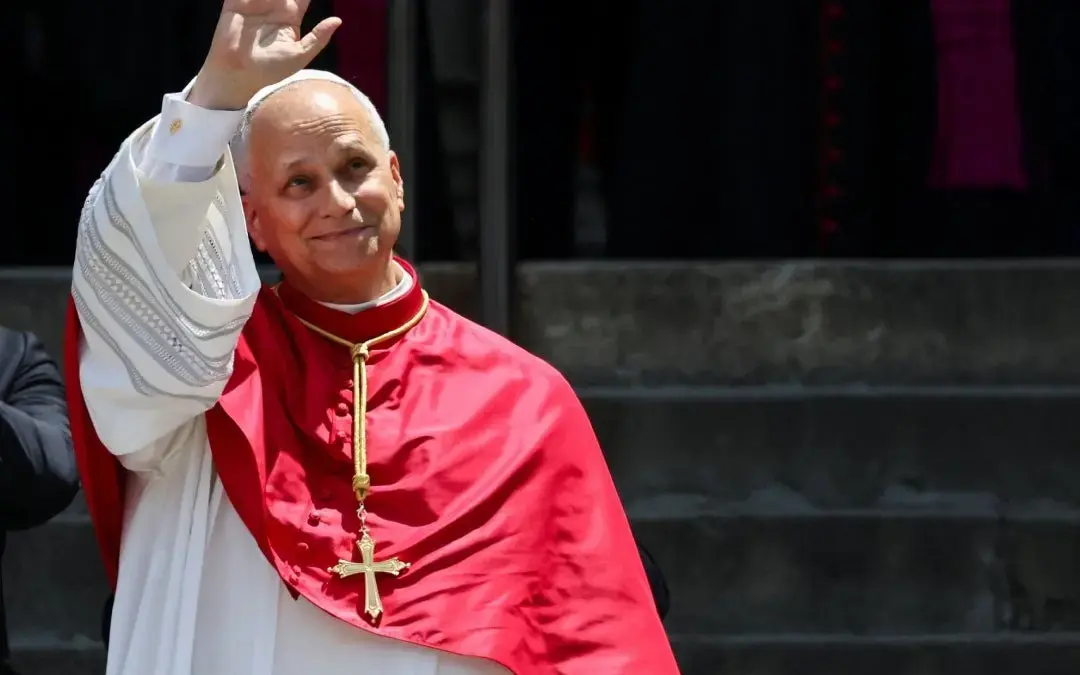
VATICAN CITY — In a development that has drawn global attention and concern, the Holy See has officially confirmed that Pope Leo XIV will be admitted to the hospital on Tuesday to undergo a scheduled surgical procedure. The operation is designed to excise a small, localized pulmonary nodule discovered during a recent routine medical examination. Despite the impending medical intervention, the 71-year-old pontiff maintained a rigorous and demanding professional schedule on Monday, signaling a business-as-usual approach from the highest office of the Catholic Church.
The announcement, which was formally released by the Holy See Press Office early Monday morning, follows personal remarks made by the Pope himself on Sunday. During his traditional weekend addresses, Pope Leo XIV reassured the faithful by describing the newly discovered nodule as "well-defined" and emphasizing that it had been caught at an early stage.
The impending surgery marks a significant moment for the papacy of Leo XIV, who was elected by the College of Cardinals in May 2025. Known for his relatively youthful vigor compared to many of his historical predecessors, the 71-year-old pontiff has cultivated an image of physical wellness—enjoying sports such as tennis and presenting no known history of smoking or prior chronic health complications. As the leader of a global congregation comprising approximately 1.4 billion Catholics, the Pope’s health remains a matter of intense international scrutiny and pastoral interest.
1. Main Facts and Medical Overview
The core of the Vatican’s announcement centers on the medical discovery of a pulmonary nodule and the subsequent plan for its surgical removal.
- The Patient: Pope Leo XIV, 71, elected to the papacy in May 2025.
- The Medical Finding: A small, localized nodule in one of the Pope’s lungs, discovered during a routine medical checkup.
- The Treatment: Surgical intervention scheduled to begin with hospital admission on Tuesday morning. The precise hour of the operation has not been publicly disclosed.
- Prognosis and Recovery: Vatican officials have estimated an anticipated recovery period of approximately one week following the procedure.
- Lifestyle Factors: The pontiff has no known history of smoking, maintains an active lifestyle (including playing tennis), and has reported no prior major medical issues.
According to preliminary briefings provided by Vatican spokespersons, the nodule was identified proactively through standard diagnostic imaging during the Pope’s routine healthcare maintenance. Pope Leo XIV personally characterized the lesion as "well-delimited," a medical descriptor that generally suggests clear boundaries between the lesion and surrounding healthy lung tissue—a favorable characteristic in surgical planning.
2. Chronology of Events
The unfolding of events leading up to the Pope’s hospitalization demonstrates a rapid transition from routine medical discovery to active surgical preparation, juxtaposed against a continuous public ministry.
Sunday: The Personal Disclosure
During his public engagements, Pope Leo XIV voluntarily shared news of his medical status with the faithful and the press. He noted that the pulmonary nodule had been identified during a recent health screening and stressed that its early detection was a positive factor in addressing the issue promptly.
Monday Morning: Official Confirmation and Normal Business
At the start of the workweek, the Holy See Press Office issued a formal statement confirming the reports circulating in the international media. The office announced that the Pope would check into the hospital late Tuesday morning ahead of the surgical procedure.
Despite the looming operation, Pope Leo XIV refused to clear his calendar for Monday. The daily bulletin published by the Holy See at midday (10:00 GMT) detailed a packed schedule of morning audiences. Among those meeting with the pontiff were visiting bishops from Argentina, Nicaragua, and the United States, alongside other scheduled delegations and administrative meetings.
Tuesday (Upcoming): Hospital Admission and Surgery
The Holy See has confirmed that Pope Leo XIV will be admitted to a medical facility in Rome during the late morning hours. While the surgery is slated to take place following his admission, the exact duration of the procedure and the specific hospital designated for the intervention have not been officially detailed in the preliminary press releases.
Wednesday and Beyond: Uncertainty Over Public Liturgies
The immediate postoperative period will see the pontiff begin a projected one-week recovery phase. This timeline casts uncertainty over several high-profile events originally scheduled for the remainder of the week, most notably a major Mass in St. Peter’s Square slated for Wednesday morning. The liturgy is intended to mark the conclusion of a weeklong assembly of bishops. As of Monday afternoon, the Vatican had not formally canceled the service, raising the possibility that a high-ranking cardinal could be designated to preside over the Mass in the Pope’s stead.
3. Supporting Medical Data: Understanding Pulmonary Nodules
To contextualize the Vatican’s announcements, medical professionals and health journalists have pointed to general data regarding pulmonary nodules—defined medically as small, focal, radiographic opacities in the lung tissue.
According to statistics cited by the American Thoracic Society (ATS):
- Benign vs. Malignant: The vast majority of newly discovered pulmonary nodules are benign (non-cancerous). Statistically, fewer than 5% of all detected pulmonary nodules ultimately result in a cancer diagnosis.
- Risk Factors: The likelihood of a nodule being malignant increases in correlation with specific patient demographics and clinical histories. Key risk factors include advanced age, the physical size of the lesion, and a history of tobacco use (smoking).
- Early Intervention: When nodules are identified early—often while still small and well-delimited—thoracic surgeons have a wide array of minimally invasive options to remove the lesion entirely, significantly lowering potential long-term complications.
In the case of Pope Leo XIV, medical commentators have noted that his relative youth (71), absence of smoking history, and active lifestyle place him in a more favorable category regarding surgical recovery and overall risk assessment. Nonetheless, definitive diagnostic confirmation regarding the exact nature of the nodule will only be possible following its surgical extraction and subsequent pathological examination.
4. Official Responses and Institutional Reactions
The Vatican’s communication strategy has sought to balance transparency with reassurance, emphasizing that the procedure is a precautionary and corrective measure handled by professional medical teams.
The Holy See Press Office has served as the primary conduit for information, releasing concise updates to accredited journalists in Rome and across the globe. By acknowledging the surgery well in advance and detailing the nature of the discovery, the Vatican has aimed to preempt sensationalized speculation while maintaining the normal administrative functions of the Church.
Across the globe, conferences of bishops, religious leaders, and heads of state have begun expressing solidarity and offering prayers for the pontiff’s swift recovery. The inclusion of visiting bishops from Argentina, Nicaragua, and the United States in Monday’s meetings underscored the international nature of the Pope’s daily responsibilities, with these visiting prelates becoming some of the last official guests to meet with Leo XIV prior to his hospital admission.
Domestically within the Roman Curia, operations are expected to continue with minimal disruption during the Pope’s anticipated one-week recuperation period. Secretariat officials have noted that while direct audiences will be temporarily suspended or curtailed during his recovery, the governance of the 1.4-billion-strong global institution possesses established protocols for brief periods of papal medical convalescence.
5. Implications for the Papacy and the Global Church
The temporary hospitalization of Pope Leo XIV, though routine from a clinical perspective, carries notable symbolic and practical implications for the Catholic Church.
The Youth and Vitality of the Pontificate
Elected in May 2025, Pope Leo XIV represents a generation of leadership that is markedly active. His public enjoyment of sports and rigorous administrative habits have defined the early months of his tenure. This medical event—the first major health hurdle of his papacy—tests the public perception of his vitality. By addressing the nodule swiftly and transparently, the Vatican projects an image of proactive health management rather than reactive crisis response.
Continuity of Governance
The Catholic Church operates under a complex global administration. A projected one-week recovery period is viewed by Vatican insiders as a minor interruption rather than a governance crisis. Modern medicine allows leaders to maintain oversight even from hospital settings, and the delegation of liturgical duties—such as the potential Wednesday Mass in St. Peter’s Square—demonstrates institutional flexibility.
Pastoral Impact
For the 1.4 million faithful worldwide, news of a papal surgery invariably triggers collective prayers and concern. Parishes, cathedrals, and religious communities across continents have integrated intentions for Pope Leo XIV into their daily prayers. The openness with which the Vatican has handled the diagnosis has served to mitigate panic, reframing the surgery not as a sudden emergency, but as a well-managed medical procedure aimed at safeguarding the health of the Bishop of Rome for the years ahead.
As Tuesday approaches, all eyes remain focused on Rome, where the Holy See is expected to issue further bulletins following the Pope’s hospital admission and the execution of the scheduled pulmonary surgery.




Leave a Reply