

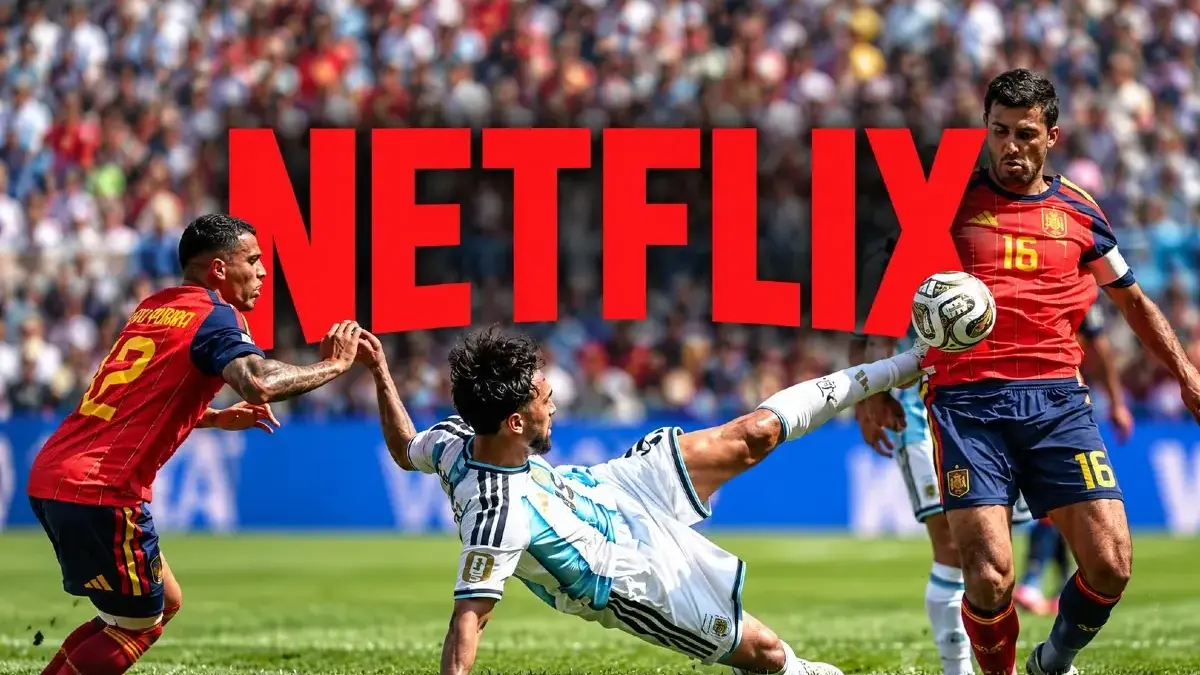
MADRID/ANDORRA LA VELLA — In a seismic shift for sports broadcasting and the streaming industry, Netflix has clinched the exclusive rights to broadcast the 2030 FIFA World Cup in Spain and Andorra. Announced officially on October 13, this landmark agreement marks a monumental departure from traditional television models, pushing one of the world’s most-watched sporting spectacles squarely into the realm of subscription-based streaming.
While the entirety of the tournament’s sweeping 104-match schedule will be available live on Netflix, the agreement guarantees that Spanish fans will not be entirely locked behind a paywall. Through a secondary sub-licensing agreement, free-to-air (FTA) television will retain access to key marquee fixtures, including every match played by the Spanish national team, both semi-finals, and the grand final, regardless of which nations contest them.
This unprecedented multi-territory partnership signifies a fundamental evolution in how live sports are consumed in Southern Europe. As Netflix continues its aggressive push into live sports and entertainment programming, the 2030 World Cup—a tournament carrying immense cultural and historical weight as the centennial edition of the beautiful game’s premier international competition—serves as the ultimate testing ground for the streaming giant.
Main Facts: What the Netflix-FIFA Agreement Entails
The sprawling partnership fundamentally rewrites the broadcasting landscape for Spain and Andorra during the summer of 2030.
The Core Coverage
- Complete Access: All 104 matches of the expanded 2030 World Cup will be broadcast live on Netflix for subscribers in Spain and Andorra.
- Comprehensive Studio Programming: Beyond live match coverage, Netflix has committed to producing extensive pre-match build-ups, half-time tactical analysis, and post-match breakdowns tailored specifically to the Spanish and Andorran audiences.
- Daily Recaps and Specials: The platform will air daily highlight reels, tournament round-ups, and retrospective specials celebrating the tournament’s 100-year history leading up to the opening whistle.
The Free-to-Air (FTA) Compromise in Spain
To comply with local regulations concerning events of "general interest" and national importance, the deal includes provisions for public viewing:
- The Spanish National Team: Every single match featuring La Roja will be broadcast on an open, free-to-air national television network.
- The Climax of the Tournament: Both semi-final fixtures and the World Cup final will be available on free television, ensuring that the tournament’s crowning moments are accessible to all citizens without requiring a paid subscription.
- Match of the Day: The agreement contemplates the free broadcast of at least one match per matchday during the group and knockout stages, though the exact selection mechanism remains under wraps.
At present, Netflix has not yet revealed whether the World Cup streams will be included universally across all subscription tiers or if users will need to upgrade their plans or pay an additional fee. Furthermore, the identities of the on-air talent, including play-by-play commentators, studio anchors, and expert analysts, have yet to be disclosed.
Chronology: The Road to the Centennial World Cup and Streaming Dominance
The journey toward the 2030 World Cup broadcasting rights has been a complex web of geopolitical bidding, logistical planning, and corporate strategy.
- July 1930 — The Genesis: The inaugural FIFA World Cup takes place in Uruguay, with the host nation claiming the trophy. This historical milestone sets the stage for the 2030 centennial celebration a century later.
- October 2023 — The Multi-Continent Host Announcement: FIFA formally announces that the 2030 World Cup will feature an unprecedented multi-continental format. Spain, Portugal, and Morocco are named as the primary co-hosts, while Argentina, Paraguay, and Uruguay are designated to host three special centennial opening matches to honor the tournament’s roots.
- December 2023 / 2024 — Women’s World Cup Precedents: Netflix lays the groundwork for its football strategy by acquiring the broadcast rights to the 2027 and 2031 FIFA Women’s World Cups in key global markets like the United States and Canada, signaling a serious, long-term ambition to partner with soccer’s governing body.
- Mid-2024 to Late 2025 — The Bidding War: Traditional European broadcasters and emerging streaming platforms engage in quiet, high-stakes negotiations with FIFA for the lucrative Spanish and Andorran markets. Netflix emerges as the frontrunner, leveraging its massive subscriber base and proven technical infrastructure for live events.
- October 13 — The Official Announcement: Netflix makes it official, publishing a global press release detailing its exclusive acquisition of the 2030 tournament for Spain and Andorra, setting off widespread debates regarding the future of sports media access.
- 2026–2030 — The Build-Up: Over the next four years, the free-to-air network partner in Spain will be unveiled, pricing structures for the tournament on Netflix will be solidified, and production teams will ramp up operations in the primary host nations.
- Summer 2030 — The Centennial Tournament: The 24th FIFA World Cup kicks off, marking the first time the tournament is primarily broadcast via a subscription streaming service in Spain and Andorra on a massive scale.
Supporting Data: The 2030 World Cup Format and Netflix’s Sports Portfolio
Understanding the scale of this agreement requires looking at the numbers behind both the tournament and Netflix’s evolving sports catalog.
The 2030 Tournament Metrics
- 104 Matches: Due to the expansion of the tournament format to 48 teams, the 2030 World Cup will feature 104 matches, a massive increase from the 64 matches seen in previous 32-team tournaments.
- 6 Countries, 3 Continents: Matches will be played across Spain, Portugal, and Morocco, with single commemorative matches staged in Argentina, Paraguay, and Uruguay.
- 100 Years: The tournament marks the exact centenary of the FIFA World Cup, raising the global cultural and media value of the event to unprecedented heights.
Netflix’s Expanding Sports Ecosystem
Netflix is no longer merely a home for cinematic releases and binge-able television series. Over recent years, the company has methodically diversified its content library to include high-profile live sports and sports-adjacent documentaries:
- Live Sports Properties: The platform holds rights or has hosted high-profile broadcasts for the National Football League (NFL) on Christmas Day, Major League Baseball (MLB) games, World Wrestling Entertainment (WWE) content, and elite combat sports events, including boxing and mixed martial arts (MMA).
- Documentary and Reality Catalogs: In Spain, Netflix has built deep local roots through critically acclaimed sports docuseries and features focusing on LaLiga, tennis icons Rafael Nadal and Carlos Alcaraz, and global football superstars like David Beckham and Neymar Jr.
Official Responses: What Leadership is Saying
The transition of a sacred public-viewing property like the World Cup to a streaming platform has prompted strong statements from both corporate executives and sports administrators, balancing commercial ambition with promises of accessibility.
Bela Bajaria, Chief Content Officer at Netflix
Bela Bajaria emphasized the emotional and cultural resonance of bringing the World Cup to Spanish subscribers, particularly noting the timing of the tournament in the wake of Spain’s recent footballing triumphs.
"Celebrating the centennial of the World Cup in Spain and Andorra, especially following the incredible trajectory and victories of the Spanish national team, is a momentous occasion," Bajaria stated. "We are thrilled to bring every single moment of the action to our members, combining our world-class streaming technology with deep, localized storytelling that honors the rich history of the game."
Mattias Grafström, FIFA Secretary General
FIFA Secretary General Mattias Grafström highlighted the governing body’s ongoing modernization strategy and its partnership with modern media companies to ensure global reach.
"As we celebrate one hundred years of the FIFA World Cup, it is vital that our broadcasting partners reflect the changing ways in which fans consume media," Grafström noted. "Through our collaboration with Netflix, alongside our provisions for free-to-air coverage in Spain, we are ensuring that millions of fans have unprecedented access to the tournament, whether they are watching via modern streaming devices or traditional television."
Implications: The Future of Sports Broadcasting in Europe
The acquisition of the 2030 World Cup by Netflix in Spain and Andorra is much more than a routine media rights deal; it is a watershed moment that will likely shape the future of sports broadcasting for decades to come.
1. The Death of Traditional Monopolies?
For generations, major football tournaments were the exclusive domain of state-owned or legacy private television networks (such as RTVE in Spain or regional giants). By injecting a tech giant into the equation, the traditional broadcast model is fracturing. While public broadcasters retain safety nets for matches of "social interest," the day-to-day consumption of group-stage matches is officially shifting behind a broadband paywall.
2. Technological Stress-Test for Streaming
Broadcasting 104 matches live over the course of a month requires staggering technical robustness. While Netflix has successfully hosted live reality television reunions and select sports exhibitions, handling concurrent millions-strong streams for high-stakes football matches—where every second of latency matters—will test the platform’s technical infrastructure like never before.
3. The Question of Consumer Cost
As sports rights fragment across multiple streaming services and traditional channels, consumers face the threat of "subscription fatigue." Fans in Spain already navigate various platforms for domestic league matches (LaLiga) and European competitions (Champions League). Adding a Netflix subscription specifically for the World Cup—depending on how the company chooses to price or package the event—will likely trigger debates over affordability and accessibility.
4. A Template for Future Bidding Wars
If Netflix’s coverage of the 2030 World Cup proves successful, it will provide a definitive blueprint for future sports rights negotiations globally. Tech giants are increasingly viewing live sports as the final frontier for user acquisition and retention. Should Netflix capture the Spanish and Andorran markets smoothly, expect to see the streaming giant bid aggressively for even larger football properties in major markets across Europe and the Americas in the years to follow.
As the countdown to 2030 ticks away, fans, broadcasters, and industry analysts alike will be watching closely to see how this digital experiment unfolds on the pitch and on the screen.




Leave a Reply