

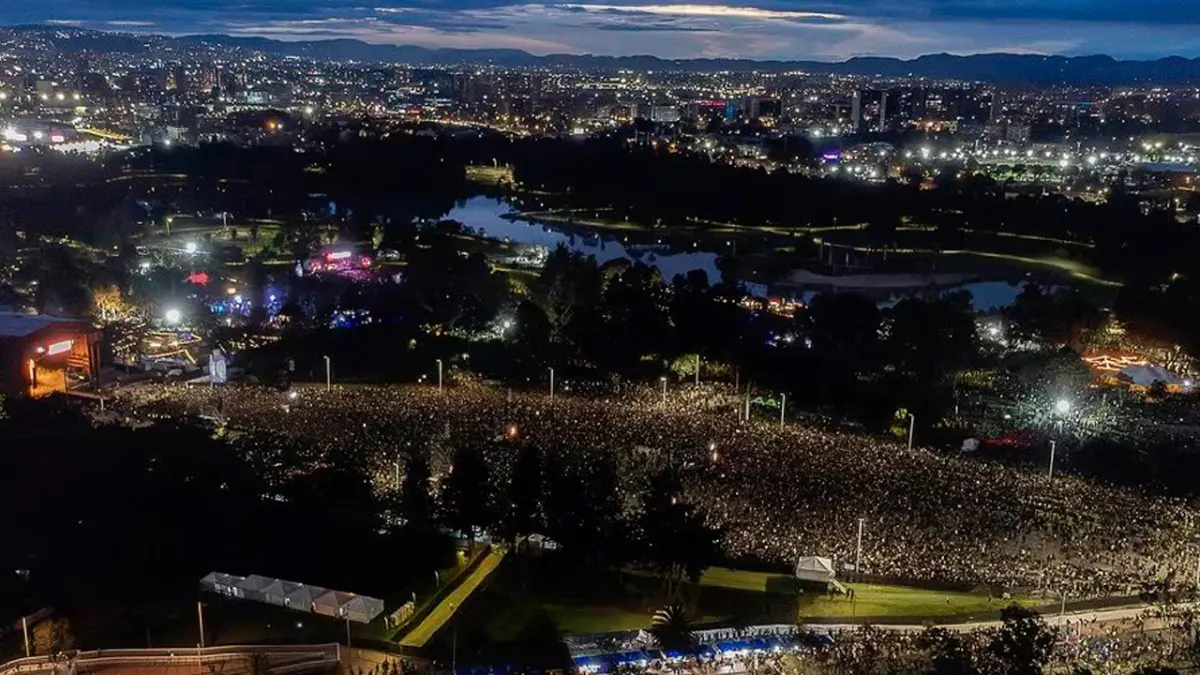
BOGOTÁ, COLOMBIA — The Parque Metropolitano Simón Bolívar has once again transformed into the beating heart of Latin American rock, metal, punk, and alternative music. As the iconic festival marks its milestone 30th anniversary, Rock al Parque 2026 has defied all historical projections. Before the final chords of the festival could even be struck, the event officially surpassed its own legendary attendance records, drawing hundreds of thousands of passionate fans from across Colombia and the international community in a powerful testament to the enduring legacy of free, public-access mega-concerts.
According to preliminary data released by the District Secretariat of Culture, Recreation, and Sports, the cumulative attendance across the first two days of the festival—Saturday, October 10, and Sunday, October 11—reached an unprecedented 465,500 people. This staggering figure not only eclipses the total final attendance counts of several celebrated historical editions of the festival in a fraction of the time, but it also signals a profound cultural resurgence for live music consumption in the Colombian capital.
Main Facts: A Landmark Edition Unfolds
The numbers underpinning the 2026 edition of Rock al Parque are nothing short of monumental. For three decades, the festival has served as a cultural anchor for Bogotá, championing democratic access to world-class arts and culture. However, the 30th-anniversary celebrations have elevated the event to unprecedented heights.
- Cumulative Attendance (Days 1 & 2): More than 465,500 registered entries into the Parque Simón Bolívar.
- Opening Day Record (Saturday, Oct 10): Over 191,000 attendees, establishing an absolute all-time high for a festival opening day.
- Second Day Surge (Sunday, Oct 11): A massive influx of 274,500 people navigating the festival grounds.
- Historical Context: The two-day partial total has already surpassed the entire three-day totals of landmark editions such as 2004, 2014, 2023, and 2015.
- The Grand Finale: A heavy-hitting lineup for Monday, October 12, poised to push the final aggregate attendance past the symbolic half-million mark.
Chronology of the Weekend: Day-by-Day Breakdown
To fully understand the magnitude of Rock al Parque 2026, one must examine the rhythm and execution of the festival’s first two historic days, which set a relentless pace for the entire weekend.
Saturday, October 10: Breaking the Opening-Day Mold
Historically, the opening day of multi-day festivals experiences a gradual ramp-up as audiences settle into the weekend rhythm. Rock al Parque 2026 shattered this precedent from the moment gates opened. By nightfall, the Secretariat of Culture, Recreation, and Sports confirmed an astonishing 191,000-plus attendees on day one alone.
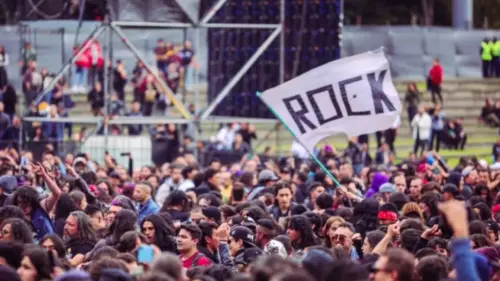
The sprawling grounds of Parque Simón Bolívar were packed early as fans flooded the multiple stages to catch a diverse bill that balanced local independent acts with heavy-hitting international heavyweights. The energy was electric, characterized by massive mosh pits, vibrant sea-of-heads vistas, and an overwhelming sense of communal celebration for a festival that has soundtracked generations of bogotanos.
Sunday, October 11: The Tsunami of Sound and Bodies
If Saturday established the baseline, Sunday redefined the capacity limits of the venue. A staggering 274,500 music lovers circulated through the park throughout the day and well into the chilly Andean night.
Sunday’s programming was an embarrassment of riches for alternative and Latin rock enthusiasts. The crowds were treated to powerhouse performances by transnational icons and beloved regional acts. Chilean singer-songwriter Mon Laferte delivered an emotionally charged, theatrical set that transfixed tens of thousands; fellow countrymen Los Bunkers and Claudio Narea delivered nostalgic yet razor-sharp rock anthems; Bogotá’s own Esteman brought infectious pop-rock energy; Japan’s legendary Tokyo Ska Paradise Orchestra ignited a massive, jumping ska party across the field; and reggae-roots staples Gondwana alongside Latin rock favorites Bándalos Chinos kept the massive crowd swaying in unison. The sheer volume of people moving between stages required immense coordination from logistical and security teams to ensure a safe, fluid environment.
Supporting Data: Historical Context and Attendance Comparisons
To contextualize the 465,500 figure recorded in just 48 hours, industry analysts and festival organizers look back at the historical arc of Rock al Parque since its inception in 1995. While counting methodologies have naturally evolved over 30 years—shifting from manual estimations and perimeter checks to more sophisticated digital tracking systems—the comparative data underscores the sheer scale of the 2026 edition.
Major Attendance Milestones in Rock al Parque History (1996–2026)
| Rank | Edition | Reported Attendance | Context / Notes |
|---|---|---|---|
| 1 | 2026* | More than 465,500 | Partial count recorded across the first 2 days (Oct 10–11). |
| 2 | 2004 | More than 400,000 | Celebrated the festival’s 10th anniversary (3-day total). |
| 2 | 2014 | Around 400,000 | Marked the 20th anniversary milestone (3-day total). |
| 4 | 2023 | More than 390,000 | A major post-pandemic return to form reported by Idartes (3-day total). |
| 5 | 2015 | More than 350,000 | Solidified mid-decade stability and genre diversification (3-day total). |
*Note: Final figures for 2026 will be calculated and published following the conclusion of the third and final day on Monday, October 12.
When weighed against previous anniversary milestones—such as the 10th anniversary in 2004 and the 20th anniversary in 2014, both of which hovered around the 400,000 mark for their entire three-day runs—the 2026 edition’s partial tally demonstrates a dramatic expansion in the festival’s gravitational pull.
Official Responses and Administrative Logistics
Managing half a million people in an urban green space requires monumental administrative oversight. Municipal authorities, cultural institutions like Idartes (Instituto de Artes de Bogotá), and emergency response teams enacted comprehensive protocols months in advance to guarantee the safety, cleanliness, and accessibility of the festival.
District officials praised the exemplary behavior of the public, noting that despite the record-breaking density of the crowds, incidents remained remarkably low. Public transportation systems, notably the city’s TransMilenio network, adjusted their operating hours and deployed feeder routes specifically tailored to absorb the massive influx of concertgoers heading to and from Parque Simón Bolívar.
"Rock al Parque is not merely a concert series; it is a profound social equalizer," noted a spokesperson for the District Secretariat of Culture. "Seeing nearly half a million people gather peacefully, driven purely by a shared love for music across just two days, reaffirms Bogotá’s identity as a global capital of cultural resistance, diversity, and tolerance."
Implications: The Cultural and Economic Impact on Bogotá
The staggering turnout for Rock al Parque 2026 carries deep implications that ripple far beyond the boundaries of the Parque Simón Bolívar, impacting the local economy, the international perception of Colombia’s cultural sector, and the future of open-air festivals in Latin America.
1. Economic Activation and Tourism
A festival of this magnitude acts as a massive economic engine. Hotels across Bogotá reported surging occupancy rates, while restaurants, bars, and informal vendors experienced a lucrative windfall. Music tourism—attracting travelers from neighboring countries like Ecuador, Peru, Argentina, and Mexico, as well as North America and Europe—has grown steadily, positioning Rock al Parque as a primary cultural tourism destination in South America.
2. Validation of the Free-Access Model
In an era where major global music festivals rely on increasingly prohibitive ticket pricing models, Rock al Parque’s steadfast commitment to free, open-to-the-public access is a radical anomaly. The 2026 attendance figures prove that public funding for large-scale cultural events is not just a philanthropic expenditure, but a high-yield investment in social cohesion, community mental health, and civic pride.
3. Generational Continuity
Thirty years represent a generational bridge. The 2026 festival floor presented a striking visual tapestry: veteran rockers who attended the inaugural 1995 edition standing shoulder-to-shoulder with Generation Z teenagers discovering metal, punk, and ska for the first time. This continuity ensures that the countercultural ethos birthed in the 90s continues to evolve and inspire contemporary youth movements in Colombia.
Looking Ahead: The Grand Finale on Monday, October 12
Even with historic records already shattered, Rock al Parque 2026 still has one final chapter to write. The third and final day, slated for the Monday holiday on October 12, promises a relentless closing salvo across the festival’s four stages.
The holiday lineup features heavy-duty industrial metal pioneers Ministry, legendary Argentine metallers Rata Blanca, British alternative institution Editors, the beloved Chilean indie-rock outfit Los Bunkers, the iconic Ratones Paranoicos, Mexican modern rockers División Minúscula, and vibrant local fusion acts including Ghetto Kumbe, Los Elefantes, and La Severa Matacera.
Gates open at 2:00 p.m., with final performances running until 10:00 p.m. With thousands more expected to flood the venue for the grand finale, final attendance counts are projected to soar well past the 500,000 threshold, cementing Rock al Parque 2026 in the history books as the largest, most successful iteration in the festival’s storied thirty-year existence.
For continuous updates, live streams, and complete backstage coverage of the final day, follow the official broadcast via Radiónica at #RadiónicaEnRockAlParque.

Leave a Reply