

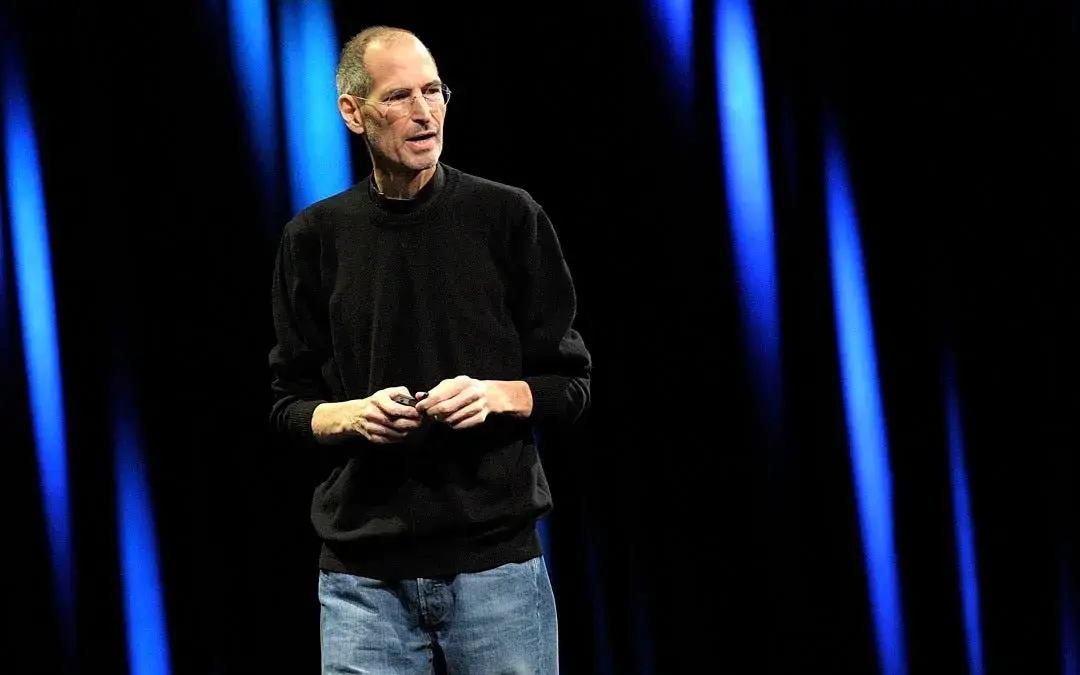
SAN FRANCISCO — In the meticulous world of corporate marketing and product presentation, few details are ever truly accidental. New Balance, the century-old footwear titan renowned for its blend of heritage craftsmanship and dad-shoe irony, has set the digital world abuzz with a subtle yet unmistakable visual tribute. In the official product gallery for its iconic 992 Core sneakers, the brand included a photograph that immediately transports tech historians and Apple loyalists back to January 27, 2010—the fateful morning Steve Jobs took the stage at San Francisco’s Yerba Buena Center for the Arts to unveil the original iPad.
While the brand has stopped short of issuing an official press release confirming the homage, the composition of the photograph speaks volumes. It captures the intersection where Silicon Valley utility meets high-profile pop culture, cementing a sneaker model that was once just a comfort choice for tech executives into an enduring symbol of modern minimalist style.
Main Facts: Decoding the Visual Reference
The image in question resides quietly within the digital storefront of the New Balance 992 Core series. At first glance, it appears to be a standard lifestyle product shot designed to showcase how the gray suede and mesh runners look in a relaxed setting. However, closer inspection reveals a meticulous recreation of an iconic historical moment.
The frame features an individual seated casually in a plush black leather armchair. The model is clad in classic blue denim jeans, dark socks, and the unmistakable silhouette of gray New Balance 992 sneakers. The posture is the defining element: one leg is crossed over the other, knee resting at an angle, perfectly mirroring the relaxed yet commanding stance Steve Jobs assumed as he introduced the world to tablet computing over a decade ago.
- The Subject: The New Balance 992 Core sneakers (retail price typically hovering around $175–$200 USD).
- The Inspiration: Steve Jobs’ legendary product keynotes, specifically the January 2010 iPad launch.
- The Outfit Formula: Black mock turtleneck (historically an Issey Miyake design), Levi’s 501 blue jeans, and New Balance 992 sneakers.
- The Corporate Stance: As of publication, New Balance has maintained official silence, treating the photograph as an organic lifestyle asset rather than a marketing collaboration.
The internet, however, has filled in the blanks. Tech enthusiasts, fashion historians, and sneaker collectors quickly circulated side-by-side comparisons across platforms like X (formerly Twitter), Reddit, and Instagram, turning a quiet visual Easter egg into a viral marketing triumph.
Chronology: The History of Steve Jobs and the New Balance 992
To understand why this photographic nod resonates so deeply, one must retrace the intertwined timelines of Apple’s golden era and New Balance’s manufacturing milestones. The relationship between the visionary CEO and a humble pair of running shoes was neither a paid endorsement nor a fleeting trend; it was a decade-long uniform born out of a desire for cognitive efficiency.
1990s–2000s: The Evolution of the Tech Uniform
Before the 992, Steve Jobs experimented with various iterations of casual footwear, occasionally sporting New Balance models such as the 991 or 990 series during late-90s Macworld keynotes. However, as Apple returned to profitability and Jobs cemented his status as a cultural icon, his stage wardrobe became uniform: the black Issey Miyake mock turtleneck, the washed Levi’s jeans, and New Balance sneakers.
2006: The Birth of the 992
To mark the 100th anniversary of the company, New Balance introduced the 992 in 2006. Engineered with ABZORB SBS cushioning in the heel for enhanced stability and shock absorption, the shoe was originally designed as a high-performance running shoe for neutral and underpronating runners. It quickly caught the eye of high-profile figures—none more influential than Steve Jobs, who reportedly worked directly with the design team to tweak elements of the shoe’s aesthetic, preferring its chunkier, orthopedic-adjacent silhouette and neutral gray palette.
January 27, 2010: The iPad Unveiling
The zenith of the Jobs-New Balance pairing occurred during the January 2010 iPad keynote. Sitting comfortably in a leather armchair on stage, Jobs paced the presentation through slides before sitting down to demonstrate the device’s web browsing and e-reading capabilities. As he shifted in his seat, his crossed ankle exposed the gray New Balance 992s to the global press corps. The image was captured by thousands of lenses, immortalizing the footwear choice alongside a device that redefined personal computing.
October 2011 – Present: Posthumous Iconography
Following Jobs’ passing in October 2011, items associated with his daily life took on relics-like status. The exact pair of New Balance sneakers he wore during keynotes has fetched tens of thousands of dollars at auction. Recognizing the cultural weight of the shoe, New Balance brought the 992 back from its archive in 2020 through a highly publicized retro release, igniting a new generation of demand among streetwear enthusiasts and tech workers alike.
Supporting Data: The Economics of the "Steve Jobs Aesthetic"
The intersection of tech-executive practicality and luxury fashion has yielded staggering economic dividends over the past decade. The "normcore" movement—championed unintentionally by figures like Jobs, and later by Silicon Valley founders wearing Patagonia vests and Allbirds shoes—fundamentally altered menswear.
- The Sneaker Resale Market: According to data from platforms like StockX and GOAT, retro releases of the New Balance 992 experience an immediate 30% to 50% price markup on the secondary market upon restock.
- The "Dad Shoe" Phenomenon: Market research firm NPD Group notes that sales of chunky, comfort-first footwear surged by over 40% between 2018 and 2023, largely driven by brands like New Balance reclaiming their heritage aesthetics.
- Auction Valuations: In 2021, a pair of worn New Balance sneakers owned and signed by Steve Jobs sold at Julien’s Auctions for over $200,000, proving that the monetary value of his minimalist wardrobe far exceeds its material worth.
| Metric | Data Point | Significance |
|---|---|---|
| Model Launch Year | 2006 | Designed to celebrate New Balance’s centenary; adopted by Jobs same year. |
| Keynote Date | January 27, 2010 | The definitive visual pairing of the iPad and the 992 sneaker. |
| Average Retail Price | $175 – $200 USD | Positioned as a premium lifestyle/heritage runner. |
| Auction Record | $200,000+ | Value of actual footwear owned by Jobs, sold in 2021. |
Official Responses and Industry Reactions
The ambiguity of New Balance’s strategy has left fashion critics and Apple analysts fascinated. By refusing to slap a giant "Steve Jobs Tribute" label on the marketing campaign, the brand has allowed consumers to discover the reference organically, generating an authentic wave of brand love.
Brand Strategy Insights
Industry insiders suggest that avoiding an explicit licensing agreement or direct naming rights allows New Balance to sidestep potential legal hurdles with Apple’s notoriously strict legal team, while still reaping the cultural benefits.
"Brands today understand that modern consumers—especially Gen Z and Millennials—despise heavy-handed corporate marketing," notes Sarah Jenkins, a retail strategist based in New York. "An Easter egg like this feels like an inside joke shared between the brand and the consumer. It rewards cultural literacy. You either get the reference, or you just think it’s a cool photo of a guy in an armchair."
Public and Social Media Reception
On platforms like Reddit’s r/NewBalance and r/apple communities, the reaction has been overwhelmingly positive. Users praised the art direction of the product shoot, with many noting that the lighting, chair selection, and posture were too specific to be a coincidence.
"That isn’t just a guy in a chair; that is frame-for-frame the iPad keynote. Absolute masterclass in visual storytelling by New Balance’s creative team." — Comment from a viral Reddit thread.
Implications: What This Means for Fashion, Tech, and Marketing
The subtle invocation of Steve Jobs in a sneaker product gallery highlights several broader cultural shifts at the intersection of fashion, technology, and consumer behavior.
1. The Weaponization of Nostalgia
Nostalgia remains one of the most potent currencies in modern marketing. As consumers face economic uncertainty and rapid technological shifts (such as the current boom in artificial intelligence), brands are increasingly leaning into the early 2000s—a golden era of consumer tech optimism. By linking the 992 to the dawn of the tablet era, New Balance taps into a collective yearning for a time when technology felt simpler, more tangible, and anchored by charismatic visionaries.
2. The Blurring Lines Between Tech and Streetwear
Silicon Valley is no longer just a hub of code and server racks; it is a global cultural capital whose arbiters dictate aesthetic trends. Just as tech founders once adopted hoodies to signal anti-establishment ethos, the "Steve Jobs uniform" represents a calculated rejection of traditional corporate dress codes in favor of radical simplicity. New Balance’s nod acknowledges that their shoes are no longer just athletic equipment—they are cultural artifacts worn by the architects of the modern world.
3. The Future of Quiet Luxury in Footwear
In an era dominated by loud branding, neon colorways, and overly complex collaborations, the enduring appeal of the gray New Balance 992 lies in its quiet confidence. It doesn’t scream for attention; it waits to be recognized by those who know the history. By subtly aligning itself with the ultimate minimalist icon, New Balance reinforces its positioning not as a fast-fashion trend, but as an enduring institution of timeless design.
Conclusion
Whether or not New Balance eventually steps forward to officially claim the photograph as a deliberate tribute to Steve Jobs matters little. The image has already achieved its purpose. It has bridged the gap between the functional utility of a 2006 running shoe and the mythos of modern technological innovation, proving that while gadgets become obsolete in a few short years, a well-crafted pair of gray sneakers—and the legacy of the man who wore them—can last forever.




Leave a Reply