

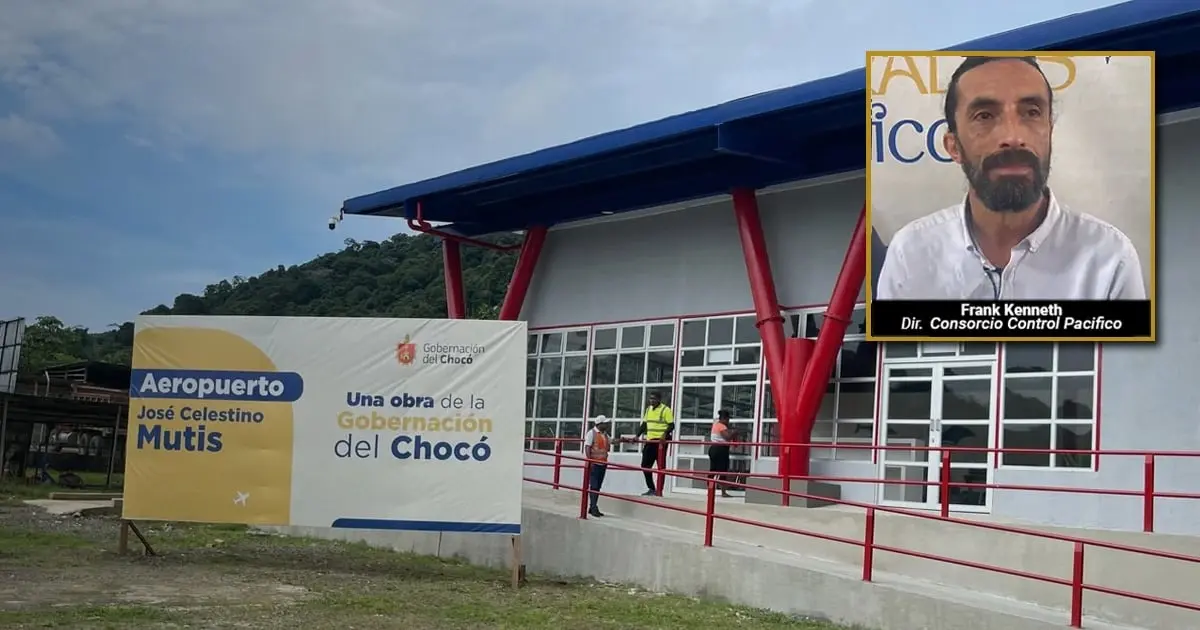
BARRANQUILLA / BOGOTÁ — For seven decades, travelers stepping off propeller planes onto the tarmac of Bahía Solano were greeted by a quintessential, rustic image of Colombia’s remote Pacific coast: a modest terminal defined by corrugated zinc roofs and structural columns made of guadua bamboo. For generations, this humble structure served as the vital, albeit fragile, umbilical cord connecting an isolated paradise to the rest of the country.
That nostalgic chapter officially closed when the new passenger terminal of the José Celestino Mutis Airport opened for operations. Funded largely through national royalty allocations and executed by the Control Pacífico consortium, the modern 2,200-square-meter facility marks a watershed moment for a region striving to modernize its infrastructure, boost its burgeoning tourism economy, and recover from a devastating natural disaster.
The inauguration arrives at a critical juncture. It coincides not only with the peak of the region’s famous humpback whale-watching season—a major draw for eco-tourists—but also comes exactly 45 days after a powerful earthquake shattered parts of the Chocó department, underscoring the urgent need for resilient, high-capacity infrastructure in Colombia’s most historically neglected regions.
Main Facts: A Modern Transformation Built on Resilience
The newly operational terminal represents a massive leap forward in architectural safety, capacity, and comfort. Spanning 2,200 square meters, the facility cost approximately COP $31,195 million. It features modernized check-in counters, dedicated boarding and arrival lounges, administrative offices, five commercial retail spaces, modern public restrooms, and streamlined security and baggage-claim exits.
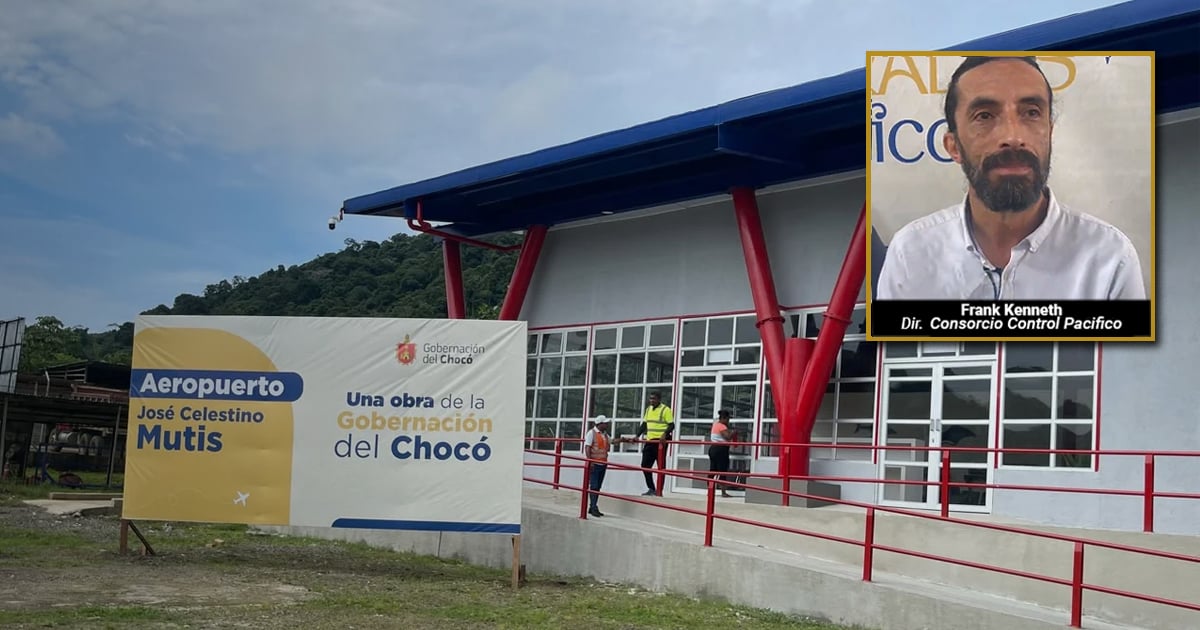
Crucially, the building was designed and constructed to meet stringent modern earthquake-resistant standards. This engineering foresight was tested almost immediately: just weeks before its opening, a 7.4-magnitude earthquake rocked the region. According to Frank Kenneth, director of the Control Pacífico oversight consortium, the new terminal structure emerged from the seismic event completely unscathed, proving its structural integrity and validating the investment.
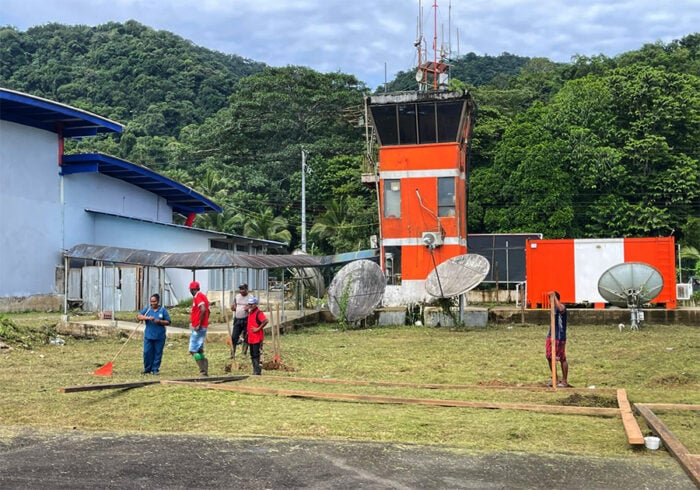
Despite the successful launch of the passenger terminal (the "land side" of the airport), the overarching modernization project remains a work in progress. Future phases will incorporate a dedicated Fire Extinguishment Service (SEI) station valued at COP $12,478 million, perimeter security fencing, and a new control tower. When all planned components are finalized, total investments in the airport infrastructure are projected to reach upwards of COP $43,673 million.
Simultaneously, the Colombian National Army is spearheading complementary air-side interventions, including the expansion of the existing runway to 1,211 meters in length, with its width increasing from 18 to 23 meters to safely accommodate larger aircraft and heavier flight frequencies.
Chronology: A Four-Year Journey Marked by Delays and Dedication
The path to the new José Celestino Mutis Airport terminal was neither straightforward nor swift. The project’s institutional history spans four years of bureaucratic planning, contractual shifts, and infrastructural hurdles:

- 2022: The Association of Municipalities of Urabá Darién-Caribe (Asomudacar), headquartered in Necoclí and directed at the time by Luis Alberto Casarrubia Barrera, was officially designated as the executing entity for the project. Funded through the national royalty system, Asomudacar was tasked with overseeing contractor selection and administering the execution of the first phase of airport improvements.
- August 5, 2022: Asomudacar formally signed a COP $19,678 million contract with the Consorcio Aeropuerto Bahía to begin construction, with an initial projected timeline of 12 months.
- 2023–2025: Construction commenced but quickly bogged down. The project accumulated significant delays, necessitating architectural modifications, legal extensions, and substantial financial additions to bridge budget gaps and complete the ambitious scope of work.
- August 10, 2026: A devastating 7.4-magnitude earthquake struck Chocó, with its epicenter in San José del Palmar. While the unfinished terminal structure withstood the tremors, the disaster threw the wider department into a state of emergency, placing unprecedented pressure on regional logistics.
- September 25, 2026: The first phase of the terminal is formally completed and opened to the public, replacing the 70-year-old bamboo-and-zinc structure right in the middle of the Pacific whale-watching season.
- Late September 2026: The National Government announces a broader, trillion-peso connectivity package aimed at repairing regional road corridors and funding the final "air-side" components of the José Celestino Mutis Airport.
Supporting Data: Surging Tourism and Economic Targets
The primary economic justification for the multimillion-peso investment lies in tourism and regional connectivity. Bahía Solano, alongside neighboring Nuquí, forms the beating heart of Colombia’s Pacific ecotourism sector. Renowned globally for deep-sea sport fishing, pristine rainforests, and seasonal humpback whale migrations between July and October, the region has seen a sharp uptick in international interest.
Data from regional tourism boards indicates that in 2025, Bahía Solano and Nuquí welcomed more than 280 registered foreign visitor groups—representing a 35% year-on-year increase compared to 2024.
Commercial aviation operators such as Satena, Clic, and Moonflight service the route regularly. During peak tourism windows, carriers have reported operating up to seven daily flight frequencies, with passenger seat occupancy rates hovering near maximum capacity at 90%.
With the inauguration of the new terminal, aviation authorities and regional stakeholders project a dramatic 50% increase in overall flight operations. The long-term target is equally ambitious: doubling annual visitor arrivals from the historical baseline of 80,000 tourists per year to an estimated 160,000 travelers annually.
Official Responses and Institutional Strategy
The modernization of the Bahía Solano terminal does not exist in a vacuum; it is part of a larger federal strategy to integrate and uplift the Chocó department, an area historically marginalized by central government investment.
The urgency of this integration was starkly highlighted by the August 10 earthquake. Striking at 7:34 a.m. with a magnitude of 7.4, the seismic event heavily impacted San José del Palmar and rippled across 14 municipalities in Chocó. Bahía Solano was officially included by the National Unit for Disaster Risk Management (UNGRD) among the hardest-hit zones, qualifying for emergency economic aid directed at families whose homes were destroyed or rendered uninhabitable.
Recognizing that basic humanitarian relief was insufficient for long-term recovery, the National Government unveiled an expansive infrastructure package on September 27. Valued at roughly COP $1 trillion, the initiative allocates funds not only for the structural completion of the José Celestino Mutis airport’s air-side facilities—including the control tower and runway expansions—but also for the construction and paving of five critical regional road corridors.
"The reconstruction efforts must not merely seek to repair what was lost to the earthquake, but fundamentally elevate the structural connectivity and economic potential of the entire department," a representative of the national infrastructure sector noted during project reviews.

Implications: A Catalyst for Recovery and Future Growth
The opening of the first phase of the José Celestino Mutis Airport terminal carries profound implications for Bahía Solano and the wider Chocó department.
Economically, the expanded terminal provides the necessary logistical foundation to absorb higher volumes of affluent eco-tourists, researchers, and business travelers. By lifting passenger capacity ceilings and improving the passenger experience, the airport directly supports local hoteliers, tour operators, restaurateurs, and artisans who rely heavily on a steady, predictable influx of visitors.
Logistically, the integration of a modern terminal with upgraded runways, a forthcoming fire-suppression station, and an eventual control tower transforms Bahía Solano from an isolated coastal pocket into a secure, weather-resilient transport hub. In a region where terrestrial roads are virtually nonexistent or notoriously treacherous, reliable air transport is a lifeline for medical evacuations, emergency supply chains, and swift commercial transit.
Psychologically, the transition away from the antiquated zinc-and-guadua terminal serves as a powerful symbol of progress and resilience. Coming on the heels of a terrifying natural disaster, the modern steel-and-concrete facility stands as proof that Chocó can rebuild, modernize, and look toward the future with confidence.
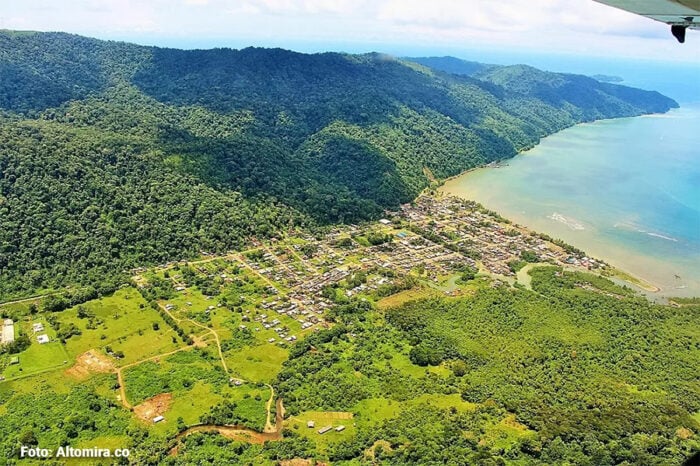
While finishing touches—such as the control tower and runway enhancements—remain underway, the new gateway is already open. For Bahía Solano, the era of rustic isolation has officially given way to a promising horizon of sustainable development, safety, and global connectivity.




Leave a Reply