

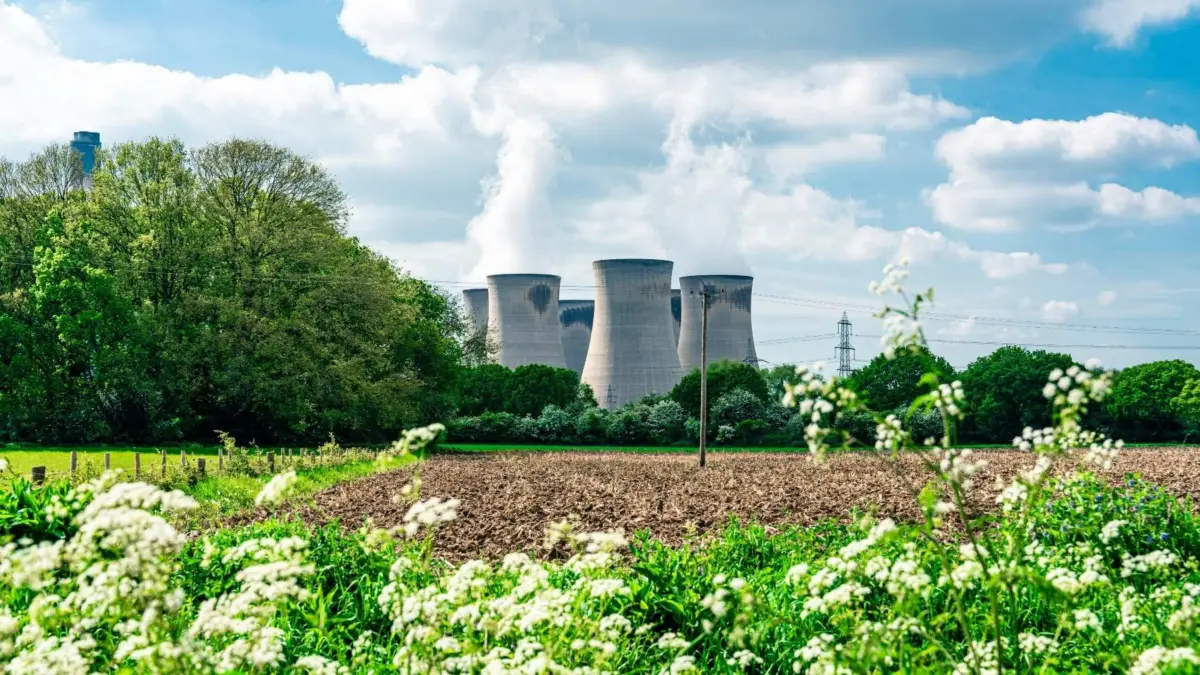
WASHINGTON — In a landmark policy convergence of artificial intelligence and heavy federal industry, the U.S. Department of Energy (DOE) officially announced this Tuesday the integration of the Savannah River National Laboratory (SRNL) into the ambitious Genesis Mission. The strategic move is designed to fundamentally accelerate the nation’s environmental restoration efforts and streamline the notoriously complex management of legacy nuclear waste through advanced machine learning and high-performance computing.
The inclusion of the Savannah River facility marks a major milestone for the nationwide initiative, which has rapidly expanded to incorporate over 300 selected projects across a historic mobilization of state and federal scientific resources. By deploying cutting-edge algorithms to predict chemical reactions, model waste behavior, and optimize operational timelines, federal agencies hope to slash billions of dollars from long-term remediation budgets while establishing a new global standard for environmental safety.
1. Main Facts: The Genesis Mission and the Role of Savannah River
At its core, the Genesis Mission represents a sweeping federal directive aimed at supercharging the nation’s technological and scientific productivity. Launched under the administration of President Donald Trump, the initiative seeks to "double scientific productivity in the United States" by aggressively fusing advanced artificial intelligence, high-performance computing, and cross-disciplinary energy research.
The incorporation of the Savannah River National Laboratory brings specialized, mission-critical infrastructure into the fold. Historically tasked with processing and managing the radioactive materials left over from Cold War-era defense production, SRNL is uniquely positioned to pilot AI-driven solutions for environmental restoration.
Under the new directives, SRNL will spearhead two critical technological frameworks:
- VITA-SCALE: An advanced predictive modeling system engineered to forecast the long-term behavior of nuclear waste containers and matrices, enabling faster, lower-cost cleanup operations.
- SCOPE: An integrated process leveraging artificial intelligence, quantum physics, and advanced chemistry to predict how radioactive liquid wastes behave during complex chemical treatments. This preemptive modeling is expected to prevent the costly, unplanned formation of solids within processing pipelines—a historically stubborn bottleneck in nuclear waste management.
Concurrently, other elite federal facilities are leveraging the initiative’s momentum. Notably, the Oak Ridge National Laboratory confirmed it will deploy AI-powered "digital twins"—virtual replicas of physical systems—to design and optimize future commercial fusion power plants, pushing the boundaries toward economically viable clean energy technology.
2. Chronology: The Evolution and Expansion of the Federal AI Initiative
The rapid acceleration of the Genesis Mission highlights a concerted push by the federal government to institutionalize artificial intelligence across critical infrastructure and national security sectors.
- Months Prior (The Inception): The Trump administration formally conceives the Genesis Mission as a multidisciplinary scientific strategy to counter international technological competition and dramatically increase domestic R&D output. Initial calls for proposals are opened nationwide, triggering an unprecedented wave of applications across all U.S. states.
- Recent Weeks (Scaling the Network): The initiative undergoes a massive structural expansion, growing its network of targeted national scientific and technological challenges from 26 to 33. This growth coincides with the formal integration of 15 distinct federal agencies into the collaborative framework.
- This Tuesday (The Savannah River Announcement): The DOE formally issues an official communication confirming that the Savannah River National Laboratory is joining the Genesis Mission ecosystem, officially locking in its mandate to revolutionize environmental cleanup and nuclear waste stewardship.
- Projected Fiscal Horizons (2026–2027): Defense and scientific agencies outline heavy funding allocations, with the Department of Defense committing over $200 million for fiscal year 2026 and scaling up to more than $1.3 billion by fiscal year 2027 to accelerate AI integration in defense and engineering applications.
3. Supporting Data: Financial Scope and Projected Savings
The scale of the Genesis Mission is matched by unprecedented capital deployment. Backed by an initial white-hot injection of approximately $5 billion from the White House, the initiative pools resources from a vast coalition of federal organizations, including the National Aeronautics and Space Administration (NASA), the Department of Defense (referred to in federal updates as the Department of War), the National Institute of Standards and Technology (NIST), the Department of Homeland Security (DHS), and the Department of Health and Human Services (HHS).
The financial stakes for nuclear remediation alone are astronomical. According to the latest comprehensive reports published by the DOE’s Office of Environmental Management, the successful deployment of custom-built AI models across the nuclear cleanup complex is projected to generate an astounding $150 billion in life-cycle cost savings.
By eliminating trial-and-error methodologies in chemical processing, preventing equipment degradation, and optimizing workforce deployment through predictive analytics, the federal government anticipates turning what was once a financial black hole into a streamlined, technologically managed asset.
4. Official Responses and Leadership Perspectives
The convergence of artificial intelligence and federal nuclear operations has drawn high-profile endorsements from key figures across the scientific and defense communities.
Dr. Johney Green, Director of the Savannah River National Laboratory, underscored the unique historical capabilities that make his facility the ideal candidate for this technological leap.
"Our decades of deep operational experience managing complex nuclear materials make SRNL the natural home for these groundbreaking AI initiatives," stated Green. "Integrating artificial intelligence into our protocols will allow us to accelerate scientific discovery in ways that directly strengthen our national security, environmental, and energy missions."
The enthusiasm is shared at the highest levels of national defense engineering. Emil Michael, Under Secretary of the Department of Defense (Research and Engineering), emphasized the overarching geopolitical and strategic importance of the initiative.
"President Trump ordered that the United States must be the undisputed global leader in artificial intelligence, and the Genesis Mission represents an unprecedented opportunity to unleash the scientific might of our nation," Michael declared in an official statement outlining the agency’s multi-billion-dollar funding commitments for 2026 and 2027.
5. Implications: What the Genesis Mission Means for the Future
The integration of artificial intelligence into America’s nuclear cleanup and energy infrastructure carries profound implications that extend far beyond government balance sheets.
Environmental and Public Safety Transformation
For decades, the cleanup of legacy nuclear sites—such as Hanford in Washington state, Savannah River in South Carolina, and Oak Ridge in Tennessee—has been plagued by technical uncertainties, radiological hazards, and skyrocketing expenditures. By deploying machine learning models capable of analyzing vast, complex datasets in real-time, environmental scientists can map contamination plumes, design safer containment vessels, and treat radioactive sludge with unprecedented precision. This drastically reduces the window of human exposure to hazardous environments and accelerates the return of remediated lands to public and commercial use.
A New Paradigm for Federal R&D
The Genesis Mission serves as a working blueprint for modernizing the federal bureaucracy. By breaking down traditional silos between civilian energy research, national security operations, and space exploration, the initiative creates a unified "super-network" of researchers. Agencies that historically operated independently are now sharing machine learning architectures, cloud computing resources, and algorithmic frameworks.
Economic and Global Competitiveness
As international rivals race for technological supremacy, the aggressive push to automate scientific discovery ensures that the United States retains its competitive edge in foundational technologies. Whether through the development of digital twins for commercial fusion energy or the optimization of multi-billion-dollar industrial cleanups, the marriage of AI and hard physics is redefining what is economically and operationally possible.
Ultimately, the inclusion of the Savannah River National Laboratory in the Genesis Mission signals a definitive turning point. The atom—once managed solely through heavy industry, manual chemistry, and decades-long timelines—is now entering the era of algorithms, promising a cleaner, safer, and radically more efficient future for American environmental stewardship.




Leave a Reply