

By Environmental Policy and Energy Desk
Updated October 2023
The promise of municipal clean energy often carries a utopian vision: local governments harnessing natural forces to power public infrastructure, reduce carbon footprints, and save taxpayers money. For the coastal town of Falmouth, Massachusetts, this vision materialized as a pair of towering wind turbines erected a few years apart. Yet, what began as a progressive step toward a sustainable future devolved into a decade-long saga characterized by fierce neighborhood opposition, administrative roadblocks, zoning battles, and an eventual court-ordered shutdown.
Years after their blades ground to a halt, the town was left with a multi-million-dollar cleanup bill and a cautionary tale for municipalities nationwide. This is the comprehensive story of Falmouth’s wind turbines—Wind 1 and Wind 2—and how a well-intentioned renewable energy project ended in demolition.
Main Facts: The Rise and Fall of Falmouth’s Wind Infrastructure
The project centered on two commercial-scale industrial wind turbines, each boasting a generating capacity of 1.65 megawatts (MW). They were acquired and installed by the town of Falmouth to generate clean electricity and offset municipal energy costs.
- Wind 1: Installed and operational by 2010. Its tenure was cut short administratively when the local zoning board denied its operating permit, leading to its shutdown in 2015.
- Wind 2: Installed and operational by 2012. It continued to operate under increasing legal pressure until a 2017 judicial ruling forced it to power down permanently.
- The Conflict: Persistent resident complaints regarding low-frequency noise, vibration, and associated health disruptions—such as sleep deprivation and chronic fatigue—sparked a multi-year legal and administrative war.
- The Resolution: After failed attempts to sell or relocate the machinery, Falmouth voters approved approximately $2.5 million in public funds to dismantle the structures. Between late September and early October 2022, both turbines were demolished.
Chronology of a Conflict: From Installation to Demolition
2010–2012: The Optimistic Beginnings
The municipality of Falmouth moved forward with the installation of Wind 1 in 2010, followed by Wind 2 in 2012. At the time, the local government viewed the 1.65 MW turbines as a vital component of its energy portfolio, aligning with broader state and federal pushes toward green infrastructure. The deployment was heralded as a progressive milestone for the Cape Cod community.
2012–2015: The Escalation of Resident Grievances
Almost immediately after the turbines went online, a vocal group of homeowners living in close proximity to the sites began reporting severe quality-of-life issues. Residents described a relentless, low-frequency hum and aerodynamic thumping that penetrated their homes day and night.
As complaints mounted, they transitioned from informal grievances aired at town hall meetings to formal administrative challenges. The core of the neighborhood’s argument rested on the disruptive nature of the noise, which they claimed made habitable living nearly impossible.
2015: The First Major Blow
The regulatory cracks in the project widened significantly in 2015. The Falmouth Zoning Board of Appeals (ZBA) formally denied the necessary operating permits for Wind 1. Deprived of legal authorization to function, Wind 1 was shut down, marking the beginning of the end for the town’s municipal wind initiative. Meanwhile, Wind 2 continued to operate under a cloud of mounting legal scrutiny and public anger.
2017: The Judicial Verdict
The conflict officially crossed from local politics into the state judicial system. The ZBA formally classified both Wind 1 and Wind 2 as a "nuisance" under municipal zoning laws—a legally actionable determination that the turbines’ operations were unreasonably interfering with the use and enjoyment of neighboring properties.
Although the town appealed the determination, a Massachusetts Superior Court judge dealt a definitive blow to the project in 2017. The court upheld the ZBA’s nuisance ruling and ordered that both turbines cease operations immediately. Confronted with mounting legal fees and a hostile regulatory environment, the town of Falmouth elected not to pursue further appeals. Wind 2 was powered down, joining its sister turbine in permanent dormancy.
2018–2021: The Search for an Exit Strategy
With two multi-million-dollar industrial assets sitting idle and legally barred from operating in their current locations, Falmouth faced a logistical and financial nightmare. The town government scrambled to find a viable exit strategy that would recoup some of the investment rather than resulting in total waste.
Municipal presentations explored several alternatives:
- Outright Sale: The town engaged in serious discussions regarding the sale and relocation of the turbines. Notably, Plymouth County evaluated purchasing and moving one of the turbines, but ultimately backed out of the deal.
- Manufacturer Intervention: Falmouth held protracted talks with Vestas, the original manufacturer of the wind turbines, to explore buyback or decommissioning partnerships.
- Relocation: In theory, Wind 2 possessed a residual market value and could have been dismantled and re-erected in a more remote, industrial zone with fewer residential abutters. However, the costs associated with disassembly, transport, re-permitting, and re-installation proved prohibitive.
Compounding these operational headaches were lingering financial obligations. The town was still bound by debt service and agreements tied to state environmental agencies that had co-financed the green energy initiative in its infancy.
2022: Demolition Day
Realizing that neither a sale nor relocation was economically feasible, municipal leaders brought the matter to the voters. Recognizing the ongoing liabilities and the eyesore of non-functional industrial machinery, Falmouth voters approved approximately $2.5 million in funding specifically earmarked for the complete removal of the turbines.
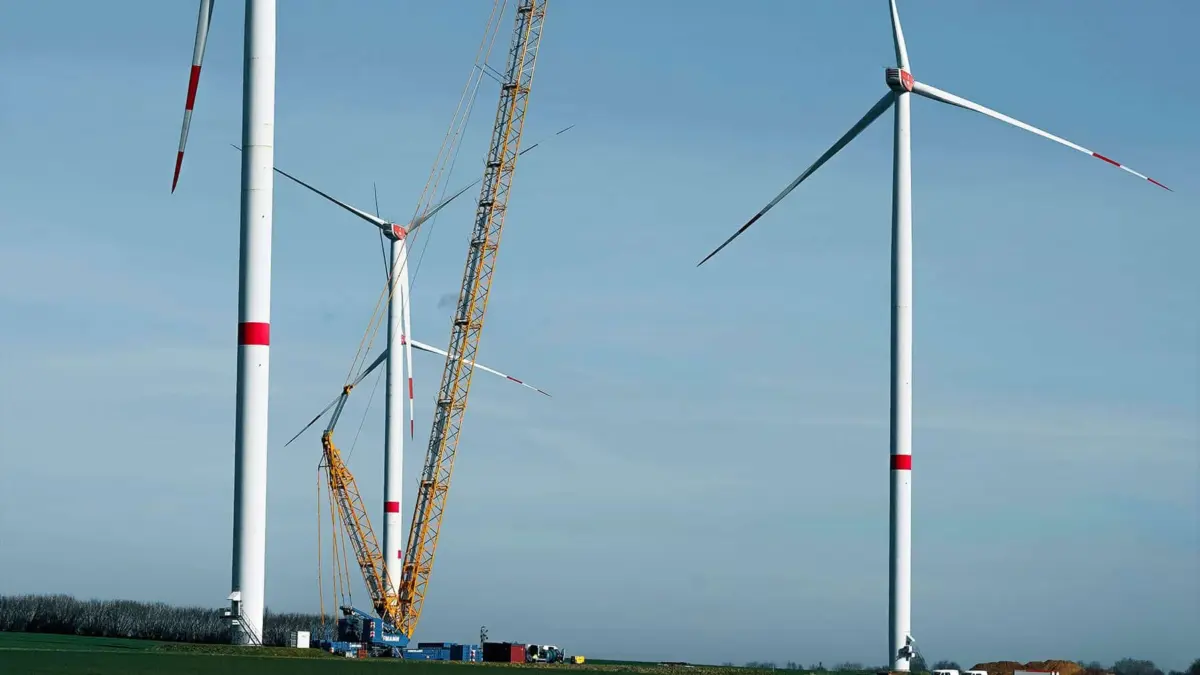
Between late September and early October 2022, heavy machinery moved in. Giant cranes and specialized cutting teams dismantled the blades, nacelles, and towers of Wind 1 and Wind 2. More than a decade after the first turbine spun to life, Falmouth’s municipal wind experiment was reduced to scrap metal.
Supporting Data and Financial Fallout
The failure of the Falmouth wind project serves as a stark reminder of the hidden costs of poorly sited renewable infrastructure. While exact net losses fluctuate depending on state grants, legal defense funds, and insurance settlements, the primary figures underscore the project’s heavy toll:
- Generating Capacity: 1.65 MW per turbine (3.3 MW total capacity), representing a substantial loss of regional renewable generation potential.
- Demolition Budget: ~$2.5 million approved directly by local taxpayers solely for the removal and site remediation of the idle units.
- Timeline of Litgation: Over 10 years of continuous administrative hearings, zoning board reviews, and Superior Court litigation.
- Operational Lifespan: Wind 1 functioned for roughly 5 years (2010–2015); Wind 2 functioned for roughly 5 years (2012–2017). Both spent more time idle or embroiled in lawsuits than operating productously.
Official Responses and Stakeholder Perspectives
The Falmouth turbine controversy exposed deep fractures between municipal ambitions, state-level green mandates, and local property rights.
Municipal Government and Taxpayers
For the town of Falmouth, the experience was a bitter lesson in community integration and the limits of municipal project management. Town leaders had initially embraced the turbines as a forward-thinking investment in fiscal self-sufficiency and environmental stewardship. However, as legal fees mounted and neighborhood relations deteriorated, the town administration shifted its focus from energy production to damage control. The eventual vote to allocate $2.5 million for demolition was widely viewed by taxpayers not as a victory, but as the pragmatic end to a financial drain.
The Resident Coalition
For the homeowners living within the shadow of the blades, the demolition of Wind 1 and Wind 2 was the vindication of a long, exhausting fight. Neighborhood coalitions consistently argued that they were not fundamentally opposed to green energy, but rather to the reckless placement of industrial-scale machinery mere hundreds of feet from residential dwellings. Their successful legal campaign established a significant legal precedent in Massachusetts regarding how municipal projects must weigh local nuisance laws against broader environmental goals.
State Agencies and Industry Observers
State-level environmental entities watched the Falmouth debacle with quiet concern. The case highlighted a systemic policy gap: while state governments aggressively pushed municipalities to adopt wind and solar power through grants and subsidies, they frequently left local zoning boards and small towns unequipped to handle the complex, low-frequency acoustic impacts and legal pushback associated with commercial wind energy.
Broader Implications for Municipal Renewable Energy
The dismantling of Falmouth’s wind turbines holds profound lessons for local governments across the globe as they attempt to scale up renewable infrastructure in the face of climate change.
- The Importance of Siting and Buffer Zones: The primary failure in Falmouth was not the technology itself, but where it was placed. Industrial wind turbines generate acoustic profiles, shadow flicker, and mechanical vibrations that require substantial buffer zones between the asset and human populations. Future projects must prioritize rigorous spatial planning over convenience.
- Community Buy-In and Transparency: Renewable energy projects frequently stall or fail when local communities feel imposed upon rather than consulted. Early, transparent engagement with residents can prevent minor grievances from metastasizing into decade-long legal battles.
- Zoning Clarity: The clash between municipal energy initiatives and local zoning boards in Falmouth revealed the dangers of jurisdictional overlap. Clear regulatory frameworks must be established before capital is expended on hardware.
- End-of-Life Planning: The Falmouth saga demonstrates that municipalities must factor decommissioning, asset liquidation, and removal costs into their initial financial models. Governments must always answer the question: What happens if this project fails?
Ultimately, the story of Falmouth’s wind turbines is not an indictment of wind energy as a technology, but rather a masterclass in the complexities of project execution. As nations race toward net-zero carbon emissions, the ghosts of Wind 1 and Wind 2 will serve as a permanent reminder that the path to a sustainable future requires careful listening, rigorous planning, and absolute respect for the communities asked to live alongside the transition.




Leave a Reply