


Main Facts
The global architectural framework for addressing climate change is undergoing a profound philosophical and practical transformation. At the heart of this shift is climate finance—no longer conceptualized as an act of international philanthropy or aid, but recognized as a vital, strategic economic investment. According to the United Nations Environment Programme (UNEP), successfully navigating the escalating impacts of global warming, transitioning to clean energy systems, and protecting vulnerable populations require a complete overhaul of how capital is deployed globally.
The core assertion from international bodies is clear: climate finance is a smart, forward-looking economic imperative. As extreme weather events, accelerating environmental degradation, and shifting ecosystems threaten millions of lives and destabilize regional economies, traditional aid models have proven insufficient. Instead, governments, development banks, commercial lenders, and private insurers are being called upon to integrate climate risks and opportunities directly into their core business models.
This financial evolution relies heavily on the integration of global agendas, where public policy and private investment align to decarbonize economies. No single nation can tackle the compounding crises of pollution and biodiversity loss in isolation. Consequently, international coalitions—such as the UNEP Finance Initiative (UNEP FI)—are working to mobilize trillions of dollars, connecting financial institutions worldwide to establish robust environmental, social, and governance (ESG) frameworks.
However, stark financial gaps remain. To achieve net-zero global emissions by 2050, annual investments in clean energy must more than triple by 2030, reaching approximately $4 trillion globally. Simultaneously, funding for nature-based solutions must scale up 2.5 times to $571 billion annually by 2030 to meet international climate, biodiversity, and land degradation targets. With sobering statistics revealing that for every single dollar spent protecting the natural world, roughly $30 is funneled into its destruction, the imperative to rechannel global capital has never been more urgent.
Chronology of an Economic Evolution: The Rise of Sustainable Finance
To understand where global climate finance stands today, it is necessary to examine the historical trajectory that brought the financial sector and the environmental movement to the same negotiating table.
The Foundation Decades (1990s–2000s)
For decades following the inception of modern international climate diplomacy, environmental policy and financial markets operated in separate spheres. Climate change was viewed primarily through a scientific and regulatory lens, managed via multilateral treaties under the United Nations Framework Convention on Climate Change (UNFCCC). Governments negotiated emissions reduction targets, while Wall Street, Frankfurt, and London viewed environmental issues as externalities rather than material financial risks.
However, during this period, the foundations of sustainable finance began to take root. Recognizing the need to engage the private sector, UNEP launched its Finance Initiative in the early 1990s. For over thirty years, this initiative has acted as a bridge, connecting the United Nations with commercial banks, investment funds, and insurance companies. Initially, participation was voluntary and marginal, focused more on corporate social responsibility (CSR) than on core asset management.
The Turning Point and Integration (2010s)
As the economic costs of climate-related disasters mounted throughout the 2010s, institutional investors could no longer ignore the material risks posed by physical climate impacts and the impending transition to low-carbon economies. The adoption of the Paris Agreement in 2015 marked a watershed moment. For the first time, global leaders formally recognized the necessity of making "finance flows consistent with a pathway towards low greenhouse gas emissions and climate-resilient development."
During this decade, concepts like carbon pricing, green bonds, and climate risk disclosure moved from the periphery to the mainstream. Financial regulators began developing stress tests to evaluate how climate shocks could affect banking portfolios, while asset managers began demanding transparent carbon accounting from corporations.
The Contemporary Era: From Aspiration to Implementation (2020s–Present)
Today, climate finance occupies center stage in global geopolitical and economic forums, as evidenced by its prominent positioning during recent UN General Assembly Debates. The narrative has decisively shifted. Climate finance is no longer discussed merely at specialized environmental summits; it is a central pillar of macroeconomic policy, trade negotiations, and corporate strategy.
Coalitions of net-zero financial alliances—encompassing thousands of financial institutions representing trillions of dollars in assets—have pledged to align their portfolios with Paris Agreement targets. Yet, despite these structural advancements, the speed of capital mobilization continues to lag behind scientific warnings, setting the stage for ongoing friction between developing nations demanding adaptation funds and industrialized economies managing complex financial transitions.
Supporting Data and Financial Realities
The transition to a resilient, low-carbon global economy is fundamentally a numbers game. Current capital flows are dwarfed by the sheer magnitude of the investments required to avert catastrophic climate tipping points and protect vulnerable regions.
Clean Energy Capital Requirements
To stay on track for net-zero emissions by 2050, the International Energy Agency (IEA) and UNEP emphasize that global clean energy investments must scale dramatically:
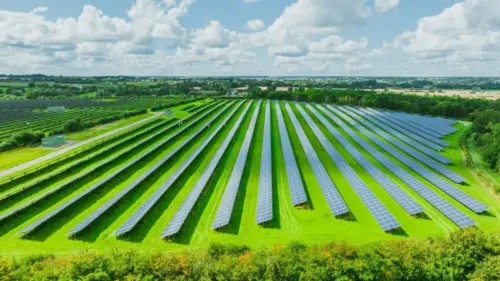
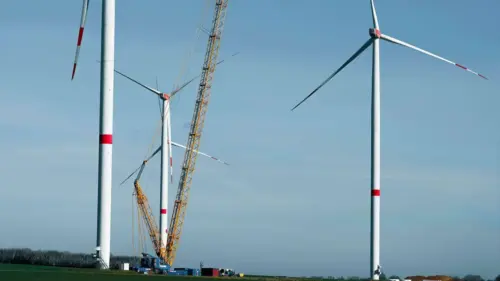
- The 2030 Target: Annual investments must triple from historical baselines to reach approximately $4 trillion by the end of the decade.
- Cost Reductions: Alongside increased volume, low-carbon energy technologies—such as solar, wind, green hydrogen, and advanced battery storage—must continue to experience cost declines to drive widespread market adoption, particularly in emerging markets and developing economies.
Nature-Based Solutions and the Biodiversity Gap
Climate change and biodiversity loss are inextricably linked. Deforestation and land degradation exacerbate global warming, while a changing climate accelerates ecosystem collapse.
- The Funding Gap: Global investments in nature-based solutions must increase by 2.5 times, reaching $571 billion annually by 2030 to meet internationally agreed-upon climate and biodiversity targets.
- The Destruction Disparity: Economic incentives remain heavily skewed against environmental preservation. For every $1 invested globally in protecting nature, an estimated $30 is spent on activities that directly or indirectly destroy it—through fossil fuel subsidies, intensive agricultural expansion, and unchecked industrial exploitation.
Carbon Markets and Pricing Mechanisms
To bridge these financial deficits, market-based mechanisms are increasingly being deployed. Carbon pricing and emissions trading systems create economic incentives for corporations to reduce their greenhouse gas footprints. By placing a financial value on every ton of carbon emitted, these markets generate substantial revenue streams. When properly managed, these funds can be redirected toward climate adaptation projects, supporting the communities most vulnerable to environmental shocks without relying on unpredictable international aid budgets.
Official Responses and Institutional Perspectives
International organizations, financial regulators, and development institutions have articulated a unified stance: the traditional dichotomy between profit-driven finance and public-interest sustainability must end.
The UNEP Perspective: Investment, Not Charity
United Nations Environment Programme leadership has consistently emphasized that treating climate finance as charity is a strategic mistake that dooms global climate efforts to underfunding. In official briefs and addresses at forums like the UN General Assembly Debate, UNEP representatives argue that vulnerable nations do not need pity; they need structural economic partnerships that de-risk private investment in frontline regions.
By fostering networks like the UNEP Finance Initiative, the organization helps financial institutions manage climate-related transition risks while identifying lucrative commercial opportunities in renewable energy, sustainable agriculture, and climate-resilient infrastructure.
Perspectives from the Banking and Insurance Sectors
Commercial financial institutions are increasingly echoing these sentiments, driven by both fiduciary duty and risk management. Major global banks and insurance companies recognize that unmitigated climate change threatens the stability of global asset values, mortgage markets, and agricultural supply chains.
Insurance providers, facing historic payouts due to extreme weather events, are actively reshaping underwriting policies. Insurers are pulling back coverage from high-risk, carbon-intensive industries while designing innovative financial products—such as parametric insurance and climate-resilient bonds—that protect developing economies against climate shocks.
Governmental and Regulatory Alignment
Governments are under mounting pressure to harmonize national regulatory frameworks with global climate goals. Central banks and financial regulators worldwide are implementing mandatory climate-related financial disclosures, requiring corporations and financial institutions to transparently report their carbon footprints and exposure to physical climate risks. This regulatory alignment ensures that capital is no longer blindly misallocated into stranded assets, but is instead funneled toward sustainable, long-term economic growth.
Implications for the Global Economy and Society
The structural integration of climate finance into the global economic architecture carries profound implications for geopolitics, social equity, and long-term human survival.
Redefining Global Equity and Vulnerability
Developing nations have historically contributed the least to global cumulative greenhouse gas emissions, yet they bear the brunt of climate impacts. Traditional international aid has often been erratic, bureaucratic, and politically conditional. By framing climate finance as an investment in global systemic stability rather than charity, a more reliable and equitable framework can emerge. Ensuring that local communities and vulnerable regions have direct access to capital allows them to build adaptive infrastructure, secure food supplies, and safeguard local economies against climate disruptions.
Mitigating Systemic Economic Risk
Unchecked climate change is the ultimate systemic economic risk. Left unmanaged, cascading environmental disasters will trigger severe supply chain disruptions, mass migrations, resource conflicts, and financial market collapses. By aggressively re-directing investments toward clean energy, energy efficiency, and nature-based solutions, the global financial system can preemptively mitigate these shocks.
The Long-Term Horizon: Action vs. Inaction
The modern reality of climate change is ineludible; the planet has already warmed, and certain environmental impacts are locked in. However, the severity of future outcomes remains entirely within human control.
Through clear, measurable global objectives, robust carbon pricing mechanisms, and a total mobilization of the financial sector, society can significantly reduce climate pressures. When governments, investors, and communities operate under a unified, long-term vision, the transition to a sustainable global economy ceases to be an idealistic aspiration and becomes an achievable, highly profitable reality.

Leave a Reply