

By Environmental Science Correspondent
Published: October 2023
Main Facts
The global transition toward clean, renewable energy sources is widely recognized as an existential necessity in the fight against climate change. Among these alternatives, geothermal energy stands out as a reliable, continuous baseload power source that typically demands a smaller surface footprint than sprawling solar farms or massive wind turbine installations. However, a groundbreaking study conducted in the arid landscapes of Nevada has revealed that "clean" energy does not automatically equate to a zero-impact footprint on local ecosystems.
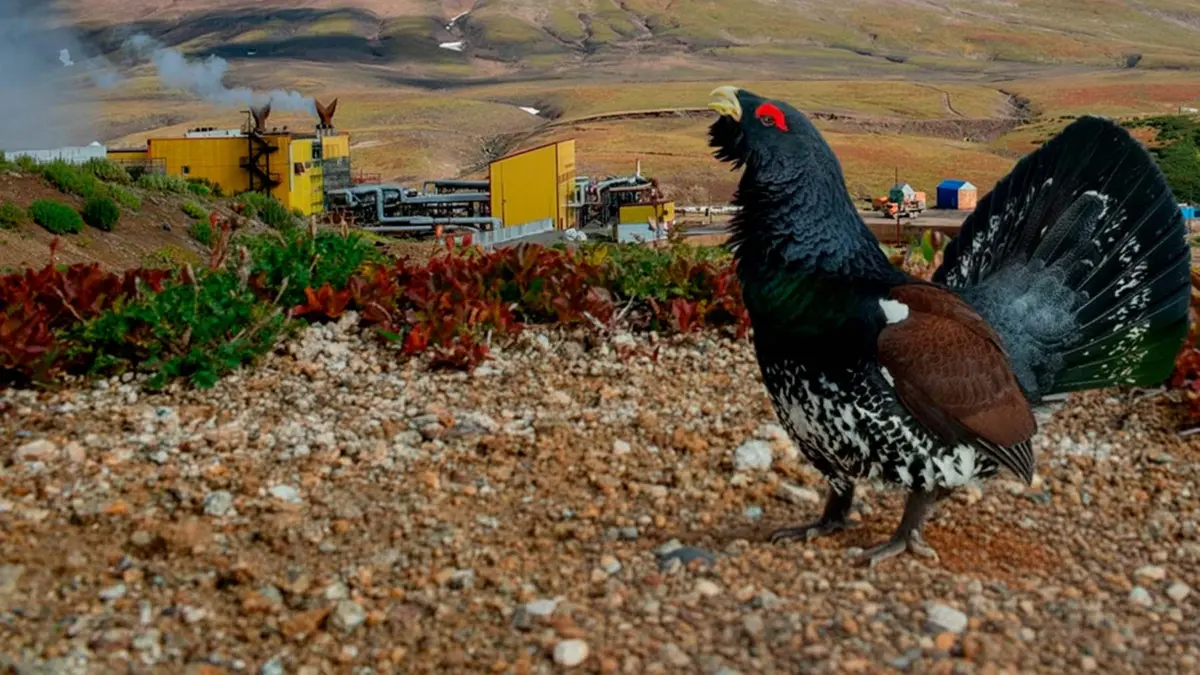
According to research published in the journal Biological Conservation by scientists from the U.S. Geological Survey (USGS) and collaborating academic institutions, geothermal energy production can exert significant, localized pressure on sensitive wildlife populations. Specifically, the study tracked the fate of the greater sage-grouse (Centrocercus urophasianus)—an iconic indicator species of the sagebrush biome in western North America—surrounding two operational geothermal facilities in Nevada.
The findings are stark. Within a three-mile radius of the studied geothermal plants, the predicted abundance of sage-grouse dropped by approximately 24%. More alarmingly, the study documented a staggering 730% increase in the "probability of absence" at traditional breeding grounds, known as leks, located within 1.2 miles of the facilities. While this massive percentage does not mean the local bird population evaporated overnight, it highlights a profound behavioral displacement: sage-grouse are increasingly abandoning their ancestral mating grounds when industrial geothermal infrastructure encroaches upon their habitat.
Chronology of the Research
Understanding how industrial energy development intersects with wildlife conservation requires a long-term view of ecological monitoring. The timeline of this scientific inquiry highlights the meticulous process researchers undertook to untangle correlation from causation in the sagebrush steppe.
- Pre-Development and Baseline Data Collection (Early 2000s–2010s): Prior to and during the initial operational phases of the two targeted geothermal power plants in Nevada, wildlife biologists began compiling extensive baseline data on greater sage-grouse movements, nest survival rates, and lek attendance. This historical data served as the control against which future industrial impacts could be measured.
- Operational Phase and Monitoring (Mid-2010s–2022): As the geothermal facilities ramped up full-scale energy production, researchers continued monitoring bird populations using telemetry, aerial counts, and ground surveys. Anomalies began to emerge regarding bird density and reproductive success close to the industrial infrastructure.
- Data Synthesis and Modeling (2022): A multi-agency team led by lead author P.S. Coates synthesized years of tracking data. They built sophisticated spatial models to analyze how variables such as proximity to power plants, noise, artificial lighting, terrain topography, and predator presence affected sage-grouse populations.
- Publication of Findings (2023): The peer-reviewed study, titled "Geothermal energy production adversely affects a sensitive indicator species within sagebrush ecosystems in western North America," was officially published in Biological Conservation.
- Tool Development and Spatial Analysis (Late 2023 and Beyond): Armed with their empirical findings, the research team developed a predictive spatial mapping tool. They tested this tool across 135 prospective geothermal development sites within the Great Basin to help planners proactively avoid high-conflict zones before new infrastructure is ever built.
Supporting Data and Ecological Mechanics
To fully grasp the implications of the Nevada study, one must delve into the specific mechanisms driving the decline in sage-grouse numbers near geothermal plants. The research points to a cumulative web of stressors rather than a single, isolated trigger.
The Disturbance Gradient: Noise, Light, and Infrastructure
Geothermal energy extraction involves more than just tapping into underground steam reservoirs. The operational phase introduces heavy machinery, industrial buildings, access roads, power lines, and round-the-clock artificial lighting into pristine wilderness areas. For a species as behaviorally sensitive as the greater sage-grouse—which relies heavily on subtle audio and visual cues during its elaborate springtime courtship displays—this sudden influx of anthropogenic sensory pollution is deeply disruptive.
The Lek Abandonment Phenomenon
Leks are communal display areas where male sage-grouse gather year after year to strut, display their puffed white chests, and attract females. These sites are culturally transmitted across generations; birds are fiercely loyal to them. However, the study revealed that within 1.2 miles of the Nevada geothermal facilities, the probability of these leks going inactive skyrocketed by roughly 730%. When the sensory threshold of noise and light crosses a critical limit, birds simply stop returning to their historical breeding hubs, leading to long-term reproductive stagnation.
The Topographic Shield
Interestingly, the USGS researchers discovered a natural moderating factor: topography. In landscapes where natural geographical formations—such as rolling hills, ridges, and valleys—intervened between the geothermal plants and the sage-grouse habitats, the negative impacts were notably dampened. These landforms acted as physical sound and light barriers, shielding the birds from the industrial disturbance.
The Avian Predator Connection: The Raven Problem
One of the most insidious indirect impacts documented in the study involves common ravens (Corvus corax). Ravens are opportunistic predators known to heavily target sage-grouse eggs and vulnerable nestlings.
Human-made infrastructure—ranging from chain-link fences and power poles to tall industrial buildings—provides unnatural elevated perches and nesting substrates for ravens in an otherwise flat, treeless landscape. The presence of geothermal plants effectively created ecological "hotspots" for avian predators, compounding the pressure on local sage-grouse populations and resulting in reduced nest and female survival rates near the facilities.
Official Responses and Conservation Implications
The release of the USGS-backed study has sent ripples through both the renewable energy sector and wildlife conservation circles. As the United States accelerates its transition to carbon-neutral energy portfolios under federal climate mandates, agencies like the Bureau of Land Management (BLM) and the Department of Energy face mounting pressure to balance aggressive green energy targets with strict environmental protection statutes.
Conservation groups have seized upon the data to advocate for stricter siting regulations. Environmental advocates argue that while geothermal energy is indispensable for decarbonizing the electrical grid, it cannot receive a regulatory free pass simply because its carbon emissions are low. Protecting biodiversity requires a holistic accounting of land-use impacts, particularly in fragile ecosystems like the Great Basin.
Conversely, representatives from the geothermal industry have emphasized that the findings, while critically important, are drawn from a limited sample size. Industry stakeholders point out that the data specifically evaluated only two operational plants in Nevada, meaning the observed negative impacts cannot be uniformly extrapolated across every existing or future geothermal installation globally. Variations in plant design, subterranean resource management, closed-loop systems, and mitigation strategies mean that operational impacts can vary dramatically.
Recognizing this nuance, the study’s authors did not call for an outright ban on geothermal expansion. Instead, they urged a shift toward proactive spatial planning.
A Path Forward: Predictive Mapping and Coexistence
Rather than viewing green energy and wildlife preservation as mutually exclusive, the researchers leveraged their empirical data to construct a practical, forward-looking solution: a predictive mapping tool designed to optimize site selection.
By synthesizing multi-layered spatial data—including known sage-grouse population densities, seasonal migration corridors, topographical shielding features, and prospective geothermal resource maps—the tool allows developers and regulatory agencies to simulate the environmental impact of a proposed plant before breaking ground.
When the research team tested this spatial model on 135 potential geothermal development sites across the Great Basin, the results offered a surprisingly optimistic outlook:
- In more than two-thirds (over 66%) of the evaluated sites, the model predicted little to no measurable impact on greater sage-grouse populations.
- This was primarily because these prospective locations fell outside of critical core breeding habitats and overlapping ranges, demonstrating that abundant geothermal resources exist in areas where industrial footprints will not collide with sensitive wildlife.
Conclusion: Location is Everything
The Nevada study serves as a vital cautionary tale and a roadmap for the future of renewable energy infrastructure. It proves that the environmental credentials of a technology—be it solar, wind, or geothermal—do not immunize it against ecological consequences.
Ultimately, the research underscores a fundamental truth for the modern conservation movement: when safeguarding vulnerable indicator species like the greater sage-grouse, where we build our clean energy infrastructure is just as important as the green technology we choose to employ. Through intelligent, data-driven spatial planning, the renewable energy transition can successfully coexist with the rich, fragile biodiversity of the American West.
Source Citation:
Coates, P. S., Prochazka, B. G., O’Neil, S. T., Webster, S. C., Espinosa, S., Ricca, M. A., Mathews, S. R., Casazza, M. L., & Delehanty, D. J. (2023). Geothermal energy production adversely affects a sensitive indicator species within sagebrush ecosystems in western North America. Biological Conservation, 280, 109889. https://doi.org/10.1016/j.biocon.2022.109889



Leave a Reply