

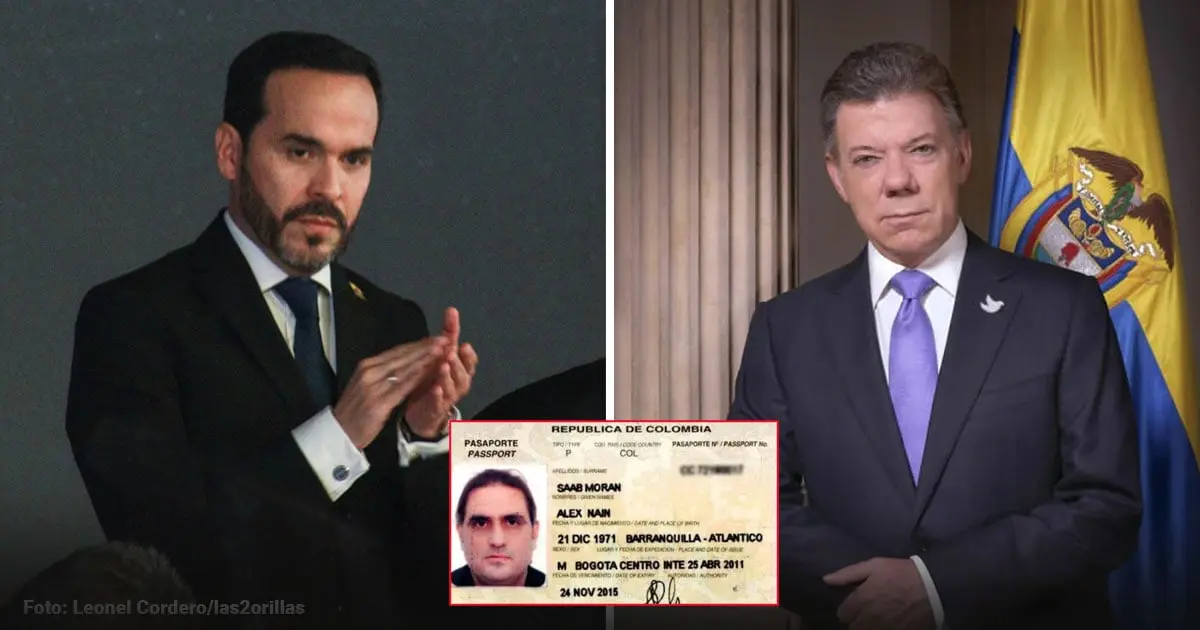
BOGOTÁ — Protocol in Colombian presidential inaugurations is typically a rigid exercise in democratic continuity, where political rivals set aside their differences to bear witness to the transfer of executive power. However, recent omissions of high-profile figures from guest lists have laid bare a web of deep-seated historical grievances, ideological chasms, and intelligence scandals.
At the heart of this ongoing political rift lies a toxic intersection of high-stakes criminal investigations involving controversial businessman Alex Saab—whose former defense team included high-profile lawyer Abelardo De la Espriella—and fundamentally irreconcilable differences regarding the 2016 peace agreement with the FARC guerrilla group.
Understanding why incoming leaders occasionally shatter protocol to exclude former heads of state requires looking back at a decade of covert intelligence operations, international contraband networks, and the intricate chess game of Latin American geopolitics.
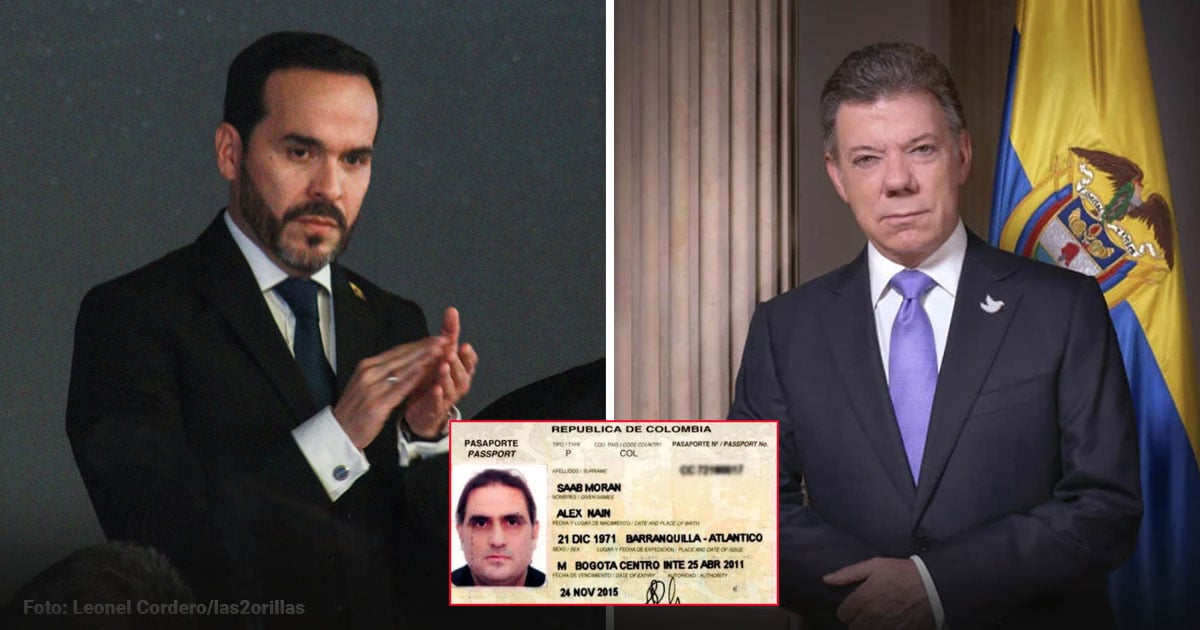
Main Facts: The Nexus of Power, Contraband, and Intelligence
The underlying tensions driving contemporary Colombian political exclusions are anchored in a series of explosive events that began unfolding a decade ago.
In 2014, at the dawn of his second presidential term, Juan Manuel Santos ordered the leadership of the Judicial Police and Interpol (DIJIN) alongside the Fiscal and Customs Police (POLFA) to initiate a discreet, high-level investigation into Alex Saab. A Colombian citizen of Lebanese descent from Barranquilla, Saab had experienced an astronomical rise in the business world, drawing the sharp scrutiny of Venezuelan opposition leaders who tipped off Bogotá.
According to intelligence reports, Saab was exploiting his intimate proximity to the burgeoning Chavista regime in Venezuela, capitalizing heavily on popular food distribution programs known as CLAP (Comités Locales de Abastecimiento y Producción).

[2014: Santos Orders Investigation]
       │
       ▼
[DIJIN & POLFA Join FBI, DEA, ICE]
       │
       ▼
[Hypothesis: Laundering & Overpriced, Contaminated Food via CLAP]
       │
       ▼
[Cartagena Seizures & Links to "Papa Pitufo"]
What began as localized intelligence gathering quickly expanded into an international operation. General José Luis Vargas (head of DIJIN) and General Juan Carlos Buitrago (head of POLFA) coordinated directly with U.S. federal agencies—including the FBI, the DEA, and ICE—to establish a joint task force. Operating initially out of the Caribbean port city of Cartagena, investigators tracked the movements of Saab, who surfaced as a key partner in Group Grand Limited, the primary corporate importer of the Venezuelan government’s subsidized food boxes.
Investigators quickly formulated a damning hypothesis: Saab was not merely acting as a sophisticated money launderer for high-ranking Venezuelan officials; he was also profiteering through egregious price-gouging, supplying low-quality foodstuffs that occasionally arrived at Venezuelan ports infested with insect larvae.
Chronology of a Collapsed Operation and Alleged Infiltration
The investigative dragnet tightened systematically over the subsequent months, corroborated by the seizure of two suspicious shipping containers in the port of Cartagena and the mapping of Saab’s financial ties to Diego Marín Buitrago, an infamous contraband kingpin widely known as alias "Papa Pitufo."
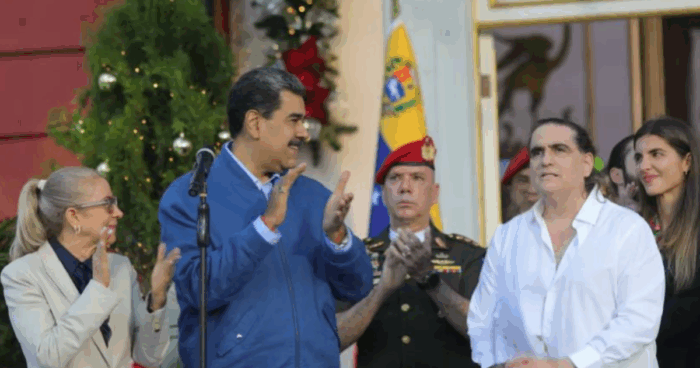
- Early Development (2014–2015): Joint Colombian-U.S. task forces gather a critical mass of financial and logistical evidence linking Saab to state-sponsored corruption and cross-border money laundering.
- The Arrest Warrant: Armed with sufficient evidence, the Colombian Attorney General’s Office (Fiscalía General de la Nación) formally issues an arrest warrant for Saab.
- The Leak and Escape: Just as tactical units prepared to execute the apprehension on the Caribbean coast, a catastrophic security leak compromised the operation. Saab managed to board a private aircraft and flee Colombian jurisdiction.
- The Extortion Allegations: Internal investigations revealed that a police officer had allegedly accepted a bribe orchestrated by an attorney working for De la Espriella Lawyers, the prominent firm founded by Abelardo De la Espriella, who was then representing Saab. While De la Espriella fiercely rejected the accusations and counter-sued the officer for extortion—claiming the policeman had demanded money to sabotage the lawful arrest—the damage to the operation was done.
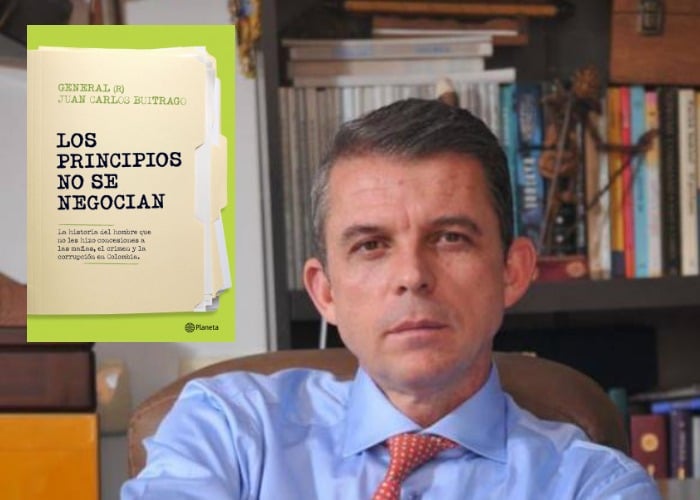
- The Fallout within POLFA: General Buitrago later detailed in his 2022 memoir, Los principios no se negocian ("Principles Are Not Negotiable"), that his relentless pursuit of the Saab-Marín network made him a primary target for political retaliation. Buitrago alleged that De la Espriella and another notable client, former President Andrés Pastrana, waged a sustained campaign to force him out of the National Police.
Supporting Data and Institutional Collateral Damage
The fallout from the aborted Saab operation extended far beyond the operational failure of the police. It leaked into the highest echelons of state intelligence and public relations.
According to General Buitrago’s accounts, shortly after Iván Duque assumed the presidency in 2018, former President Andrés Pastrana approached then-Minister of Defense Carlos Holmes Trujillo. Pastrana allegedly lobbied against Buitrago, characterizing the high-ranking police general as an operative or "infiltration asset" of the Venezuelan intelligence apparatus within Colombian security forces.
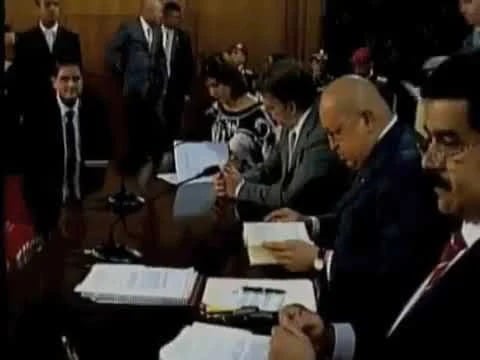
Amid these mounting bureaucratic and political crosswinds, a damaging piece of archival media surfaced. An anonymous leak provided media outlets with a video showing Juan Manuel Santos during his presidency visiting the Miraflores Palace in Caracas. The footage captured a smiling Santos shaking hands with a younger Alex Saab during an official bilateral meeting.

The video sent shockwaves through Colombian media, forcing Santos into immediate damage control. The former president publicly clarified that the encounter occurred during the brief, ill-fated "honeymoon" phase of relations with the Chávez administration, a period when Bogotá and Caracas were signing bilateral cooperation pacts regarding social housing and infrastructure. Santos maintained that when he turned to his then-Minister of Foreign Affairs, María Ángela Holguín, to ask who the man with the distinctive ponytail was, neither of them recognized Saab.
Privately, however, Santos remained convinced that the archival footage had been intentionally leaked by Saab’s defense team in coordination with Venezuelan state actors to politically delegitimize his administration’s later hardline stance against Caracas.
Official Responses and Ideological Fractures Over the FARC Peace Process
While the ghost of the Alex Saab affair continues to haunt institutional memories, a deeper, ideological chasm fractured the Colombian political landscape irrevocably: the 2016 peace accord negotiated between the Santos administration and the Revolutionary Armed Forces of Colombia (FARC).
Incoming leadership figures who have historically distanced themselves from Santos have been unsparing in their public critiques. Critics of the Havana peace process maintain that the agreement failed to deliver true retributive justice, meaningful institutional reparations, and security guarantees for the victims of decades of asymmetric internal conflict.
This fundamental disagreement over transitional justice forms the ideological bedrock of the modern political divide. When incoming administrations intentionally omit former presidents from high-level state protocols and inaugural guest lists, it is rarely an oversight; rather, it is a deliberate signaling of political divergence.
The strategy extends beyond Santos. Similar diplomatic snubs have affected figures like former President Ernesto Samper Pizano. Samper’s exclusion from recent presidential investitures has been widely attributed to his historical support for Hugo Chávez and Nicolás Maduro, the political and financial backing he received from Caracas to secure leadership roles in international multilateral bodies, and his alignment with modern leftist movements in the region.
These calculated protocol breaches are not entirely unprecedented in modern Colombian history. Former President Álvaro Uribe famously boycotted Santos’s second presidential inauguration, citing political differences that he deemed entirely irreconcilable—a precedent that established a bitter norm for contemporary transitions of power.
Implications for Regional Diplomacy and Domestic Governance
The convergence of transnational money laundering, judicial battles involving high-profile legal defense teams, intelligence agency purges, and deeply polarized debates over peace and transitional justice carries profound implications for Colombia’s political trajectory:
- The Weaponization of Archives: The unearthing and targeted leaking of historical diplomatic footage—such as the Santos-Saab handshake—demonstrate how intelligence archives and past diplomatic engagements are actively weaponized by political actors to discredit adversaries.
- The Fragility of State Intelligence: The alleged infiltration and compromise of high-profile operations against transnational smuggling networks like those of Saab and "Papa Pitufo" expose structural vulnerabilities within Colombia’s police and intelligence apparatuses when confronted with immense financial corruption.
- Institutionalized Polarization: By utilizing guest lists and state ceremonies as tools of political exclusion, successive administrations signal that consensus on foundational state policies—such as peace negotiations with insurgent groups and regional posture toward neighboring autocracies—remains entirely out of reach.
As Colombia continues to navigate shifting geopolitical alliances across Latin America, the unresolved shadows of the Alex Saab scandal and the enduring scars of the FARC peace process ensure that the past will continue to dictate the terms of the country’s turbulent political present.

Leave a Reply