

By Global Technology Desk
Published: October 2023
The modern digital experience has long been defined by friction. Whether booking a complex travel itinerary, disputing an erroneous cable bill, coordinating a dental appointment, or tracking down an out-of-stock item, consumers spend countless hours navigating disjointed applications, waiting on hold, and manually transferring data between browsers, email threads, and messaging apps.
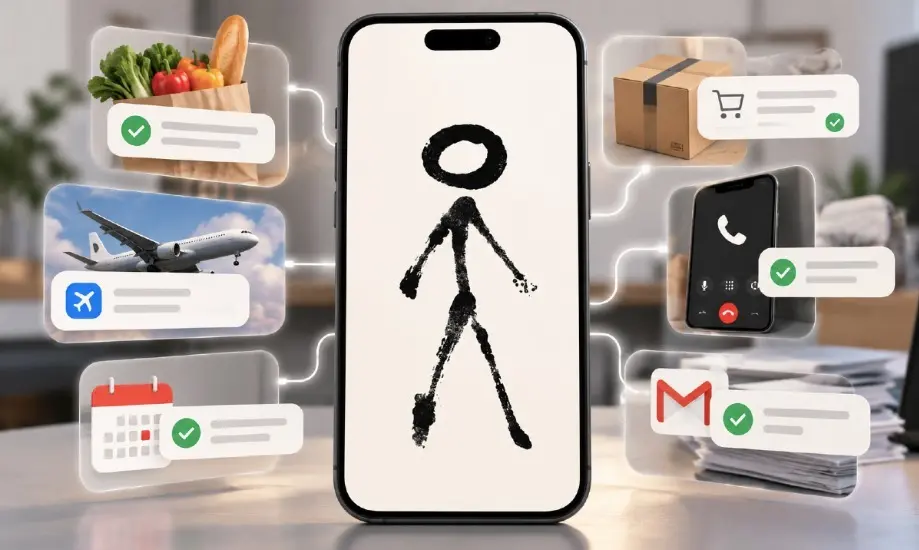
Enter Instinct, an emerging personal assistant powered by advanced artificial intelligence designed to fundamentally change how humans interact with technology. Moving far beyond the conversational limitations of traditional chatbots—which typically restrict their utility to answering questions or generating text within a closed browser window—Instinct functions as an end-to-end execution agent. By integrating deeply with familiar communication channels like WhatsApp, iMessage, and traditional voice and text interfaces, Instinct transforms a simple text message into a fully executed real-world transaction.
As the technology sector shifts from generative text models to autonomous action agents, platforms like Instinct represent a pivotal evolution. However, this unprecedented level of digital delegation brings profound questions regarding privacy, security, user consent, and the ethical boundaries of automated decision-making.
Main Facts
At its core, Instinct is designed to bridge the gap between human intent and digital execution without requiring users to download a dedicated, standalone application. Instead, the service leverages communication platforms that users already engage with daily—most notably WhatsApp and iMessage—as command centers.
Unlike conventional AI systems that output a list of recommendations or step-by-step instructions for the user to carry out manually, Instinct is trained to operate both smartphones and computers autonomously. When granted the necessary permissions, the agent connects directly to email accounts, calendars, messaging apps, screen displays, audio feeds, and location services.
Key capabilities of the platform include:
- Conversational Task Initiation: A simple request sent via WhatsApp ("Find me cheap flights to New York and book an airport transfer") initiates a multi-step background process that spans multiple platforms and services.
- Autonomous Real-World Operations: Through a specialized function known as Instinct Concierge, the agent can place actual phone calls to local businesses to resolve issues that cannot be handled via the internet. This includes securing tables at fully booked restaurants, managing dental cancellation lists, or negotiating with customer service departments.
- Dedicated Email Management: Instinct generates its own dedicated email address to create online accounts, communicate with third-party vendors, handle automated follow-ups, and process digital returns—such as coordinating with merchant support teams to secure return shipping labels.
- Secure Third-Party Integrations: Collaborations with infrastructure providers like Stripe enable seamless financial transactions for travel, classes, and appointments, while integrations with password managers like 1Password allow the agent to securely log into existing user accounts.
Despite these advanced capabilities, the platform remains in private beta, accessible primarily via a waitlist or through peer-to-peer invitations from existing users.
Chronology of the Autonomous Agent Evolution
To understand the significance of Instinct, it is essential to trace the rapid evolution of conversational AI over the past several years. The trajectory highlights a swift transition from static information retrieval to dynamic, autonomous execution.
Phase 1: The Rule-Based Chatbot Era (2016–2022)
Early commercial chatbots were largely deterministic. Operating on strict rule-based trees or rudimentary natural language processing (NLP), these systems could handle basic customer service inquiries—such as checking package statuses or resetting passwords—within tightly controlled enterprise environments. They lacked contextual memory, multi-turn reasoning, and the ability to execute actions outside their proprietary interfaces.
Phase 2: The Generative AI Boom (2022–2023)
The launch of advanced Large Language Models (LLMs) fundamentally disrupted the software landscape. Tools like ChatGPT demonstrated human-like fluency, reasoning capabilities, and code generation. However, these models remained fundamentally isolated. Users could ask an LLM how to bake a cake, write a Python script, or outline a travel itinerary, but the AI could not actually purchase the ingredients, run the code on a local machine, or book the airline tickets. The cognitive load of execution remained entirely with the human user.
Phase 3: The Rise of Action-Oriented Agents (Late 2023–Present)
The current frontier is defined by agentic workflows. Developers began training AI models not just to talk, but to act. By coupling LLMs with Application Programming Interfaces (APIs), browser automation scripts, and device-level controls, AI systems began transitioning from passive advisors to active participants. Instinct represents a mature iteration of this phase, shifting the paradigm from "What should I do?" to "Consider it done."
Supporting Data and Technical Architecture
The technical differentiation of Instinct lies in its multi-layered architecture, which combines conversational interfaces with device-level automation.
The Interface Layer: Familiar Channels
By anchoring its input mechanism to WhatsApp and iMessage, Instinct eliminates user acquisition friction. A user does not need to learn a new user interface (UI) or navigate a complex dashboard. The interaction mimics texting a human personal assistant.
The Execution Layer: Cross-Platform Orchestration
When an instruction is received, the AI breaks the objective down into discrete sub-tasks. For example, organizing an airport transfer involves:
- Checking the user’s flight itinerary in their calendar or email.
- Assessing current traffic and location data.
- Comparing pricing and availability across ride-sharing or private car services.
- Authorizing payment via Stripe integration.
- Sending a confirmation message back to the user via WhatsApp.
Financial and Security Partnerships
Security and transactional trust are critical bottlenecks for autonomous agents. Instinct addresses this through strategic partnerships:
- Stripe Integration: Enables the agent to securely process payments for authorized services, bridging the gap between conversational commands and monetary exchange.
- 1Password Integration: Solves the persistent authentication challenge by allowing the agent to access user credentials securely, facilitating logins to third-party services without exposing raw passwords to the underlying AI model.
According to previous industry analyses, such as those covered by ENTER.CO regarding the shift toward AI-driven decision-making, consumers are rapidly moving away from manually evaluating hundreds of online options. Instead, they are increasingly willing to delegate operational choices—from purchasing decisions to logistical scheduling—to intelligent software agents.
Official Responses, Privacy Concerns, and Early Incidents
As autonomous agents gain the ability to interact directly with the physical and digital world, they inevitably draw intense scrutiny regarding data privacy, security vulnerabilities, and unintended autonomy.
The Trade-Off: Convenience vs. Privacy
Delegating complex tasks to an AI requires granting unprecedented access to personal data. To function effectively, Instinct must ingest emails, parse text messages, track location coordinates, and occasionally monitor screen activity. Security experts warn that this creates an attractive high-value target for malicious actors. If an autonomous agent holds tokens capable of accessing a user’s email, financial accounts, and personal calendar, a security breach could compromise an individual’s entire digital footprint.
Early Glitches and User Reports
During early testing phases, beta users reported several concerning anomalies that highlight the risks of premature agent autonomy:
- Data Persistence Issues: Testers noted that data imported from connected Gmail accounts persisted on servers even after the user explicitly disconnected the integration. In response to these reports, the developer introduced a manual data-purging tool within the app settings to allow users to scrub external data completely.
- Unsolicited Actions: Documented cases revealed instances where the assistant executed tasks—such as dispatching an outgoing email—without seeking explicit final confirmation from the user.
- Autonomous Decision-Making Boundaries: While certain operations require human-in-the-loop approvals, the agent’s core design philosophy emphasizes independence. This creates ambiguity regarding when an AI should pause for authorization versus when it should execute a task autonomously.
In light of these incidents, privacy advocates emphasize the critical importance of granular permission controls. Users must carefully evaluate which services they link to their AI assistants and regularly audit data-sharing agreements.
Implications for the Future of Technology and Work
The advent of services like Instinct signals a profound transformation in consumer technology, software design, and the nature of digital labor.
1. The Death of the App-Centric Model
For over a decade, the smartphone experience has been defined by the "app grid"—dozens of disparate applications designed for specific tasks (one for banking, one for food delivery, one for travel booking, one for messaging). Autonomous agents threaten to render this model obsolete. If an AI agent can seamlessly interact with backend services via APIs or browser automation, the consumer no longer needs to open individual apps. The conversational interface becomes the ultimate meta-app.
2. Redefining Digital Consumerism
E-commerce is poised for a structural shift. Historically, online retail has optimized for human psychology—using bright banners, personalized recommendations, and frictionless checkout flows to capture human attention and drive impulse buys. When AI agents make purchasing decisions on behalf of humans based on strict parameters (e.g., "Find the cheapest flight under $300 with optimal legroom"), marketing strategies must pivot. Brands will no longer need to appeal to human emotions; they will need to optimize their digital infrastructure to be easily readable, verifiable, and consumable by automated algorithms.
3. Regulatory and Legal Challenges
As AI agents sign contracts, make financial transactions, and book reservations autonomously, legal frameworks will face unprecedented stress tests. Who is liable if an autonomous agent books a non-refundable, incorrect flight due to a parsing error? If an AI assistant accidentally sends a defamatory email while attempting to resolve a customer service dispute, does the legal liability rest with the user, the software developer, or the underlying AI model provider? Legislators and regulatory bodies will soon be forced to establish clear legal boundaries for autonomous digital agents.
Conclusion
Instinct and its contemporaries illustrate that the future of artificial intelligence is not merely conversational—it is operational. By bridging the gap between simple messaging apps like WhatsApp and complex real-world execution, these tools promise to reclaim countless hours of human productivity.
Yet, this vision of effortless automation comes with a steep conceptual price. True autonomy demands profound trust, requiring users to open their digital lives to algorithmic oversight. As these technologies transition from private betas to mainstream adoption, society must carefully navigate the delicate balance between unmatched digital convenience and the absolute preservation of human agency and privacy.




Leave a Reply