

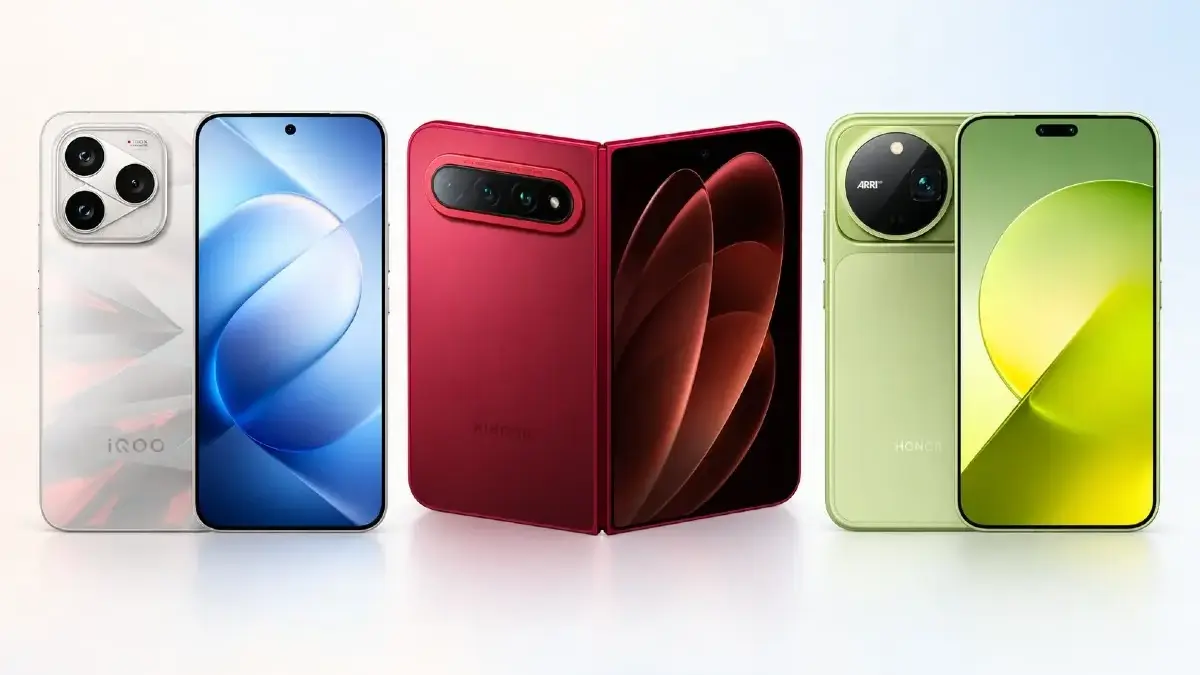
GLOBAL TECHNOLOGY DESK — In what marks a watershed moment for the global smartphone manufacturing ecosystem, Xiaomi has officially secured the number one spot on AnTuTu’s prestigious monthly performance ranking for September. The crown jewel in this victory is not merely a piece of hardware, but the company’s silicon ambition: the proprietary Xuanjie O3 processor, manufactured using TSMC’s bleeding-edge 3-nanometer architecture.
The latest data tables released by the premier benchmarking authority reveal a shifting landscape in the mobile industry, characterized by the aggressive rise of custom-developed chipsets, fierce competition among Qualcomm’s elite Snapdragon series, and shifting consumer memory preferences in the face of fluctuating hardware costs. While Xiaomi celebrates its triumphant climb to the summit, contenders from iQOO, Honor, and OPPO have put up staggering numbers, reinforcing that raw computing performance remains the ultimate battleground for mobile supremacy.
Main Facts: The September 2026 AnTuTu Performance Hierarchy
The September 2026 AnTuTu benchmark report paints a vivid picture of innovation at the absolute limits of mobile engineering. In the flagship tier, the Xiaomi 18 Fold blitzed past the competition to claim the top position, amassing an unprecedented average score of 4,620,886 points.
This monumental performance is driven by the Xuanjie O3—Xiaomi’s home-grown silicon—coupled with a blistering configuration of 16 GB of LPDDR6 RAM and 1 TB of UFS 4.1 internal storage. By designing its own processing architecture and leveraging TSMC’s 3nm fabrication nodes, Xiaomi has signaled a decisive shift away from complete reliance on external chip suppliers for its crown-jewel devices.
Securing second place in the flagship category is the iQOO 16, which posted a formidable average score of 4,449,925 points. The device relies on Qualcomm’s powerhouse Snapdragon 8 Elite Extreme Gen 6 processor. Beyond raw processing might, the iQOO 16 distinguishes itself with a fluid 165Hz display and an integrated proprietary Q4 gaming chip designed to minimize latency and maximize frame stability during intense mobile gaming sessions.
Rounding out the flagship podium in third place is the Honor Magic9 Pro Max, logging an impressive 4,435,489 points. Like the iQOO 16, it harnesses Qualcomm’s top-tier silicon, but Honor’s engineering philosophy leans heavily into computational photography, boasting a co-developed imaging system engineered in strategic collaboration with legendary cinema camera manufacturer ARRI.
Meanwhile, the sub-flagship and upper-mid-range segment saw the OPPO Reno15 Pro take the gold medal with a score of 2,306,256 points, powered by MediaTek’s robust Dimensity 8400-Max processor. It was closely trailed by the iQOO Z11 (2,300,153 points) utilizing the max-frequency variant of the Dimensity 8500, and the standard OPPO Reno15 (2,296,591 points) rounding out the top three.
| Category | Position | Smartphone Model | Average AnTuTu Score | Core Processor / Hardware Highlights |
|---|---|---|---|---|
| Flagship | 1 | Xiaomi 18 Fold | 4,620,886 | Xuanjie O3 (3nm, TSMC), 16GB LPDDR6, 1TB UFS 4.1 |
| Flagship | 2 | iQOO 16 | 4,449,925 | Snapdragon 8 Elite Extreme Gen 6, 165Hz Display, Q4 Gaming Chip |
| Flagship | 3 | Honor Magic9 Pro Max | 4,435,489 | Snapdragon 8 Elite Extreme Gen 6, ARRI Co-Engineered Optics |
| Upper Mid-Range | 1 | OPPO Reno15 Pro | 2,306,256 | MediaTek Dimensity 8400-Max |
| Upper Mid-Range | 2 | iQOO Z11 | 2,300,153 | MediaTek Dimensity 8500 (Max Variant) |
| Upper Mid-Range | 3 | OPPO Reno15 | 2,296,591 | MediaTek Dimensity 8400-Series Variant |
Chronology of Events: How the September Rankings Unfolded
The accumulation of data for the September 2026 AnTuTu report followed a rigorous, month-long telemetry-gathering process.
- September 1–30, 2026 (Data Collection Window): AnTuTu’s analytics engines tracked tens of thousands of benchmark runs originating exclusively within the Chinese domestic market. To ensure absolute statistical validity, the platform enforced a strict threshold: every device listed on the leaderboard must have logged a minimum of 1,000 valid, uncorrupted test submissions throughout the 30-day window.
- Mid-September Realignment: Midway through the month, preliminary charts indicated a tight neck-and-neck race between early testers of Qualcomm’s Snapdragon 8 Elite Extreme Gen 6 and Xiaomi’s refined internal builds of the Xuanjie O3. As consumer units of the Xiaomi 18 Fold reached early adopters and reviewers, the sheer thermal efficiency and multi-core scheduling of the 3nm proprietary chip pushed its monthly average past the 4.6 million mark.
- Late September Stabilization: While the flagship tier saw intense volatility driven by foldable releases and gaming-centric optimizations, the upper mid-range category exhibited unusual stasis. According to market analysts, the mid-tier ecosystem has hit a plateau, waiting for MediaTek and Qualcomm to unveil their next-generation mid-range silicon architectures.
- October Publication: Following data scrubbing, duplicate elimination, and hardware configuration verification, AnTuTu published the finalized V12-backed metrics, cementing Xiaomi’s historical milestone at the top of the mobile performance food chain.
Supporting Data and Methodological Nuances
Understanding AnTuTu’s performance metrics requires looking beyond the headline numbers. The scores published in the September report do not reflect a device’s single, peak laboratory anomaly; rather, they represent the monthly average calculated across at least 1,000 baseline tests.
Consequently, these figures often diverge from peak scores advertised in marketing campaigns or isolated screenshots shared across social media platforms. A device’s standing on the chart is deeply vulnerable to real-world variables, including ambient room temperature, background task loads, thermal throttling profiles, and iterative firmware updates deployed by manufacturers.
Furthermore, industry analysts have highlighted a crucial transition in testing architecture: this month’s rankings rely entirely on AnTuTu Benchmark Version V12. Because V12 introduces a radically overhauled scoring algorithm and stress-testing methodology compared to its predecessor (V11), scores generated under V12 cannot be mathematically compared to historical performance records from older software versions.
Another fascinating insight embedded within the September data involves internal storage and memory trends. Despite the heavy representation of maxed-out specifications—such as 16 GB of RAM—market telemetry reveals a notable shift in consumer purchasing behavior. A significant percentage of buyers are opting for configurations featuring 512 GB of internal storage rather than the 1 TB variant. Industry insiders attribute this trend directly to rising global memory component costs, forcing a recalibration of consumer spending habits toward high-RAM, balanced-storage tiers.
Official Responses and Industry Reactions
The emergence of Xiaomi’s Xuanjie O3 processor at the pinnacle of the AnTuTu chart has sent ripples through the semiconductor industry. For years, the narrative of Android performance leadership was dictated by duopolies like Qualcomm and MediaTek. Xiaomi’s successful vertical integration—designing silicon in-house and partnering with TSMC for precision 3nm manufacturing—validates years of heavy research and development investments.
While representatives from Qualcomm and MediaTek have declined to comment directly on competitor benchmarks, engineering leads at both firms have reiterated their commitment to pushing architectural boundaries. Qualcomm emphasized that the Snapdragon 8 Elite Extreme Gen 6 continues to power the vast majority of globally distributed flagships, offering unmatched heterogeneous computing and power efficiency.
Meanwhile, MediaTek’s dominance in the upper mid-range—exemplified by the Dimensity 8400-Max and 8500 chips found in the OPPO Reno and iQOO Z series—remains rock solid. OPPO executives noted that the Reno15 Pro’s ability to sustain top-tier performance without excessive thermal degradation underscores MediaTek’s stellar platform maturity.
Honor, reflecting on the Magic9 Pro Max’s third-place finish, focused its official commentary on holistic user experience rather than raw benchmark chasing. The company emphasized that the integration of ARRI’s optical expertise proves that modern flagship smartphones are valued just as much for computational imaging and sensory excellence as they are for raw CPU/GPU horsepower.
Implications for the Global Smartphone Market
The implications of the September 2026 AnTuTu rankings extend far beyond bragging rights for tech enthusiasts. They signal structural transformations in how mobile devices are designed, marketed, and consumed.
1. The Rise of In-House Silicon
Xiaomi’s ascent with the Xuanjie O3 breaks the psychological barrier that independent smartphone brands cannot compete with established silicon giants on performance metrics. If proprietary chips can outpace merchant silicon on authoritative benchmarks, other major manufacturers may accelerate their own custom silicon pipelines to secure supply chain independence and profit margins.
2. Premium Pricing and Memory Realities
The consumer preference for 512 GB over 1 TB storage tiers—driven by macroeconomic memory component inflation—forces OEMs to rethink their product tiering. Manufacturers must carefully balance high-end features like LPDDR6 RAM and 3nm processors with accessible price points to prevent consumer fatigue in saturated markets.
3. Specialized Gaming and Imaging Hardware
The presence of specialized coprocessors—such as iQOO’s Q4 gaming chip and Honor’s ARRI-backed camera architecture—underscores that raw CPU and GPU scores are no longer the sole differentiators. Consumers increasingly demand holistic, purpose-built hardware optimizations tailored for mobile esports and professional-grade mobile videography.
As the industry looks toward the final quarter of the year, all eyes will be on Qualcomm and MediaTek to launch their next-generation chipsets. Until then, Xiaomi sits comfortably on the throne, having proven that the future of mobile performance belongs to those bold enough to design their own destiny.




Leave a Reply